Complete Guide to NRI Tax Consultant Services in Ahmedabad
Non-Resident Indians (NRIs) who earn, invest, or own assets in India often have to deal with different tax and compliance rules. Managing property, rental income, bank accounts, investments, business income, and tax returns from another country can become difficult without proper knowledge of Indian laws.
NRIs connected with Ahmedabad may have income or assets such as residential properties, commercial properties, ancestral property, rental income, shares, mutual funds, NRO or NRE accounts, and business interests. These transactions may create tax and reporting responsibilities in India.
An NRI tax consultant can help understand these requirements, calculate taxes correctly, manage documentation, and complete the necessary tax and compliance work.
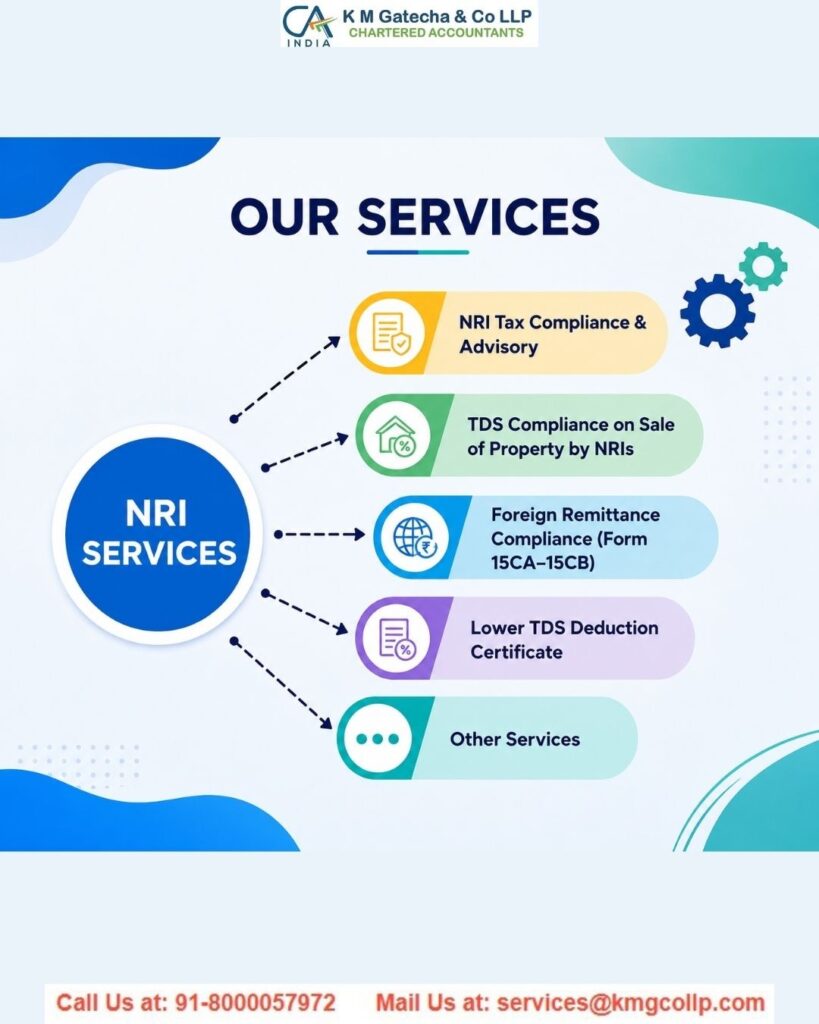
Common Tax Challenges Faced by NRIs
NRI taxation can involve several areas that require careful attention. Some common issues include:
- Tax deducted when selling property in India
- Reporting rental income from Indian property
- Tax on capital gains from property, shares, or investments
- Claiming benefits under a Double Taxation Avoidance Agreement (DTAA)
- Filing income tax returns correctly
- Reporting foreign assets and income where required
- Repatriating eligible funds from India
- Managing NRO and NRE account-related tax matters
- Understanding residential status and RNOR rules
- Responding to income tax notices
Even a small mistake in reporting or documentation can create problems later. Proper planning can help NRIs meet their tax obligations and avoid unnecessary complications.
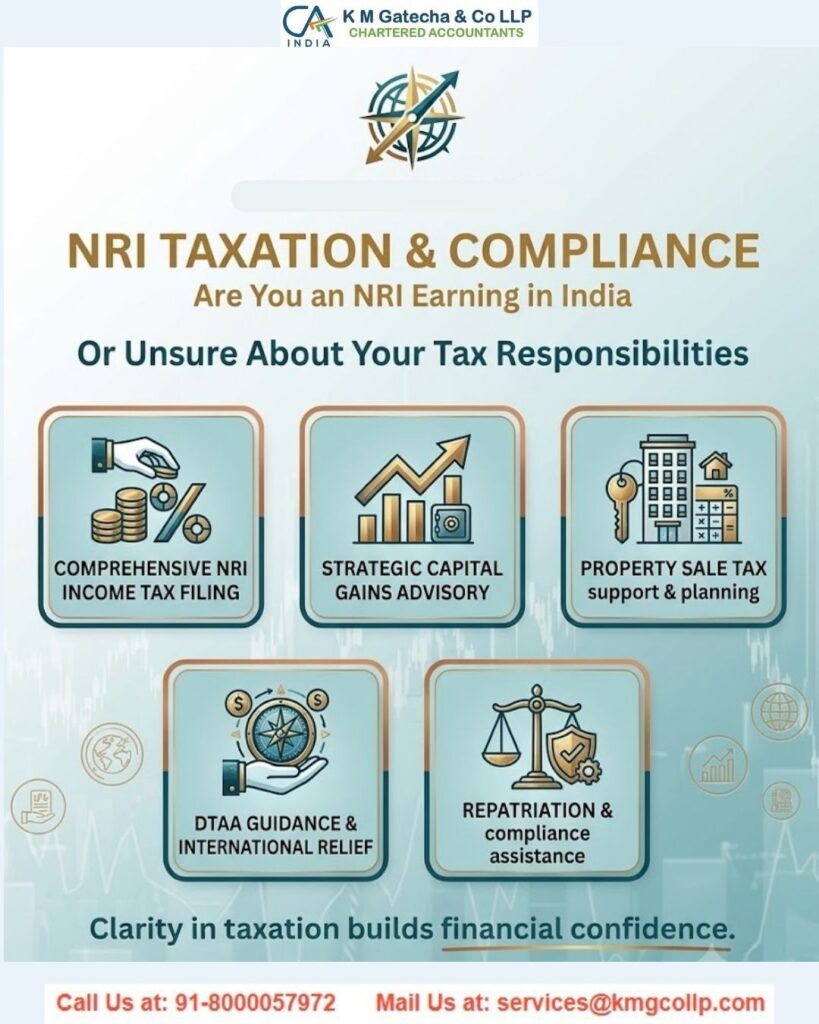
NRI Tax Services in Ahmedabad
An NRI tax consultant can provide support for different tax and financial requirements. Some of the important services include:
NRI PAN Card Assistance
A PAN is required for many financial and tax-related transactions in India. NRIs, OCI cardholders, and foreign nationals may need PAN for activities such as property transactions, investments, and filing income tax returns.
Professional assistance can help with the application process, document requirements, and corrections when needed.
NRI Income Tax Return Filing
NRIs may need to file an income tax return in India if they have taxable income or meet other applicable filing requirements.
Indian income may include:
- Rental income
- Capital gains
- Interest income
- Income from business or profession
- Income from investments
- Other taxable income earned in India
The correct ITR form depends on the type and amount of income and the taxpayer’s circumstances. Proper reporting is important to avoid errors and future notices.

DTAA and Foreign Tax Credit
NRIs may have income that is taxable in both India and their country of residence. The Double Taxation Avoidance Agreement between India and another country may provide relief from double taxation.
Depending on the applicable treaty, an NRI may be able to claim tax relief or foreign tax credit.
The correct treaty provisions, documentation, and forms must be considered before claiming the benefit.
Tax on Sale of Property by NRIs
Selling property in India can create capital gains tax liability for an NRI. The tax treatment depends on factors such as:
- Date of purchase
- Date of sale
- Type of property
- Purchase cost
- Improvement expenses
- Sale consideration
- Applicable tax rules
The buyer may also have to deduct tax at source when purchasing property from an NRI.
The amount deducted may not always match the final tax liability. Therefore, proper calculation and tax planning are important before completing the property transaction.
NRO and NRE Account Taxation
NRIs commonly use NRO and NRE bank accounts for managing their financial activities in India.
Interest earned on these accounts can have different tax treatment depending on the type of account and applicable rules.
NRO account transactions may also require proper documentation when funds are transferred outside India. Understanding the tax and foreign exchange rules can help avoid problems during repatriation.
Assistance for NRIs Returning to India
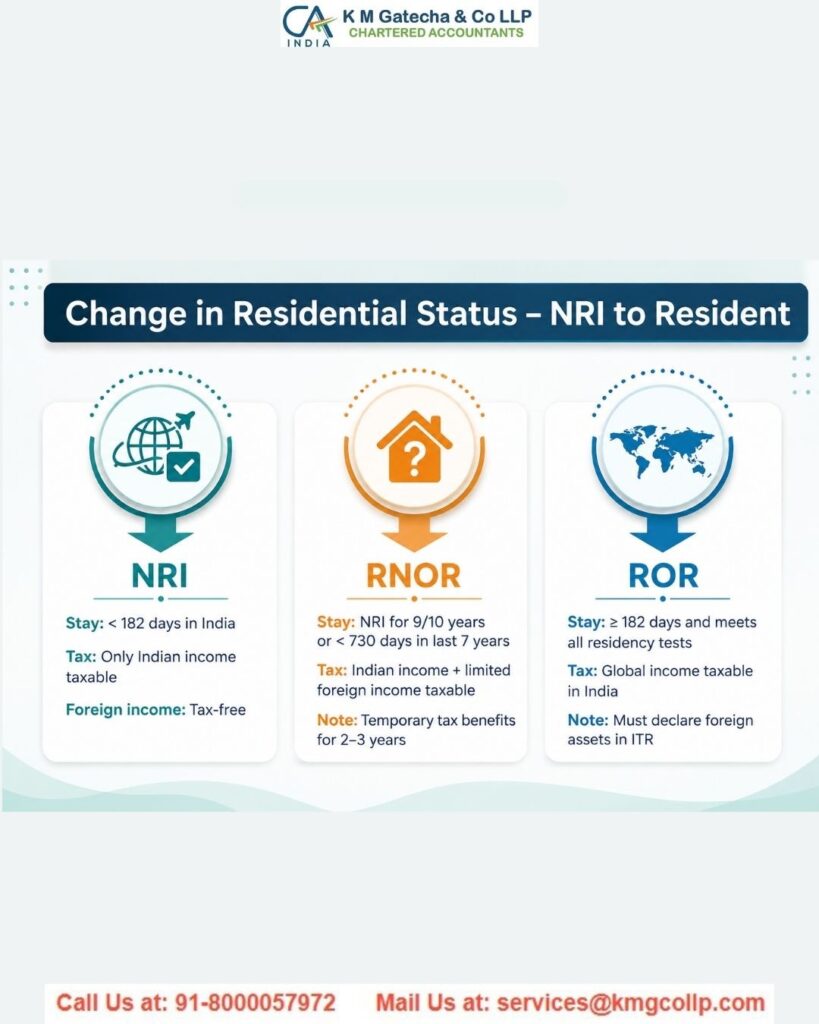
An NRI returning to India may need to review their residential status and tax position.
The transition from NRI to resident status can affect:
- Taxability of income
- Foreign assets
- Foreign bank accounts
- Investment income
- Reporting requirements
- FEMA-related matters
In some cases, RNOR status may also become relevant. Proper planning before returning to India can help in understanding the tax impact of the change in residential status.
NRI Property Taxation
Property ownership is one of the most common financial connections NRIs maintain with India.
An NRI may own:
- Residential property
- Commercial property
- Agricultural or inherited property, subject to applicable rules
- Ancestral property
- Rental property
Income from property and the sale of property can have different tax implications.
For example, rental income may need to be reported in the Indian income tax return. If the property is sold, capital gains rules may apply.
Keeping purchase documents, improvement records, sale documents, rental records, and tax deduction details is important for calculating the correct tax liability.
Capital Gains Tax for NRIs
Capital gains may arise when an NRI sells a capital asset in India.
The tax treatment depends on the nature of the asset and the period for which it was held. Property, shares, mutual funds, and other investments can have different rules.
For property transactions, the calculation may involve the purchase cost, eligible expenses, improvement costs, and other applicable provisions.
Tax rules can change over time, so NRIs should check the rules applicable to the year in which the transaction takes place.
Repatriation of Money from India
NRIs may want to transfer money earned or received in India to their country of residence.
Repatriation may involve:
- Bank documentation
- FEMA requirements
- Tax compliance
- Form 15CA, where applicable
- Form 15CB, where applicable
- Proof of the source of funds
The exact requirements depend on the nature and source of the money being transferred.
Proper documentation can make the repatriation process smoother and help avoid unnecessary delays.
Tax Notices and Compliance Support
NRIs may receive notices from the Income Tax Department for different reasons, such as differences between reported income and information available with the department.
A notice should not be ignored.
Professional tax support can help with:
- Understanding the notice
- Checking the information reported
- Preparing the required response
- Correcting errors, where necessary
- Submitting supporting documents
- Completing follow-up compliance
Responding within the applicable deadline is important.
NRI Investment and Business Tax Support
Some NRIs have investments or business interests in India. These may include partnership firms, companies, shares, mutual funds, or other investments.
Tax treatment depends on the nature of the investment and the income generated from it.
A proper review can help determine:
- Applicable tax provisions
- Reporting requirements
- TDS obligations
- Capital gains treatment
- Foreign tax credit eligibility
- Repatriation requirements
Why Choose an NRI Tax Consultant?
NRI taxation involves several areas of law and compliance. An NRI tax consultant can help bring these requirements together and provide guidance based on the individual’s financial situation.
Key areas of support include:
Accurate Tax Calculation
Income, deductions, capital gains, and taxes can be reviewed before filing.
Proper Tax Return Filing
The appropriate return and required schedules can be prepared based on the taxpayer’s income and residential status.
Tax Planning
NRIs can understand the tax impact of property sales, investments, rental income, and other transactions before making financial decisions.
Compliance Support
Tax filings, TDS matters, documentation, and other applicable requirements can be managed properly.
Repatriation Assistance
Required tax and banking documents can be reviewed before transferring eligible funds outside India.
Notice Assistance
Professional support can help NRIs understand and respond to tax notices within the required time.
How NRI Tax Consultancy Works
The process generally involves four simple steps:
Step 1: Understand Your Financial Situation
Your residential status, income, investments, property, bank accounts, and other relevant details are reviewed.
Step 2: Collect the Required Documents
Documents such as PAN, passport, tax statements, property documents, bank statements, and investment records may be required depending on the case.
Step 3: Calculate Tax and Complete Compliance
Applicable income, deductions, capital gains, TDS, and other tax requirements are reviewed and the necessary filings are prepared.
Step 4: Follow-Up and Documentation
Acknowledgements, refunds, notices, and other pending compliance matters can be followed up as required.
Why NRI Tax Planning Is Important
Tax planning should ideally begin before a major financial transaction rather than after it has already taken place.
For example, an NRI planning to sell property should understand the applicable capital gains rules and TDS requirements before completing the sale. Similarly, an NRI planning to return to India should review their residential status and foreign assets in advance.
Early planning can help identify tax obligations, required documents, and possible compliance issues.
Conclusion
Managing taxes and financial compliance from another country can be challenging for NRIs with property, investments, rental income, bank accounts, or business interests in India.
An NRI tax consultant can provide assistance with income tax returns, capital gains, property transactions, DTAA claims, TDS, repatriation, residential status, and other tax-related matters.
For NRIs connected with Ahmedabad, getting proper guidance can make it easier to manage Indian tax responsibilities while living abroad. Keeping accurate records and completing tax and compliance requirements on time can help avoid unnecessary complications and maintain a clear financial record in India.
Disclaimer: The content on this website is for informational purposes only and does not constitute legal, financial, or professional advice. Please consult qualified experts before acting on any information. K M GATECHA & CO LLP accepts no liability for errors, omissions, or outcomes from the use of this content. This site is not an advertisement or solicitation.