When starting a business in India, many founders ask, “Do I need a Chartered Accountant (CA) to register my company?”
The simple answer is no. A CA is not legally required to register a company. The Ministry of Corporate Affairs (MCA) provides an online portal where founders can complete the company registration process themselves.
However, registering a company involves more than filling out forms. It includes legal requirements, tax matters, documentation, and other compliance responsibilities. While founders can manage these steps on their own, a CA can help reduce mistakes and ensure that the business starts with proper financial and compliance systems.
This article explains the role of a CA in company registration, the benefits of taking professional help, and situations where a CA can be useful.
Understanding Who a CA (Chartered Accountant) Is
A Chartered Accountant is a qualified professional who works in areas such as accounting, taxation, auditing, and financial compliance. CAs help businesses manage financial matters and follow applicable rules.
A CA can help a business set up accounting systems, prepare financial statements, understand tax requirements, and manage areas such as income tax, GST, and audits. They can also assist with ROC filings, tax returns, GST returns, and maintaining proper books of accounts.
For startups and small businesses, a CA may also help with financial planning, preparing information for investors, and maintaining documents required for business transactions.
The Role of a CA in Company Registration
A CA is not legally required to register a company, but professional assistance can make the process easier. A CA can help founders understand the requirements, prepare documents correctly, and avoid common mistakes.
Key Contributions of a CA Include:
- Choosing the right company structure: A CA can help you understand different options such as a Private Limited Company, LLP, or Sole Proprietorship based on your business activities, goals, ownership, and tax requirements.
- Managing registrations: A CA can assist with requirements related to PAN, TAN, GST, and the Certificate of Incorporation.
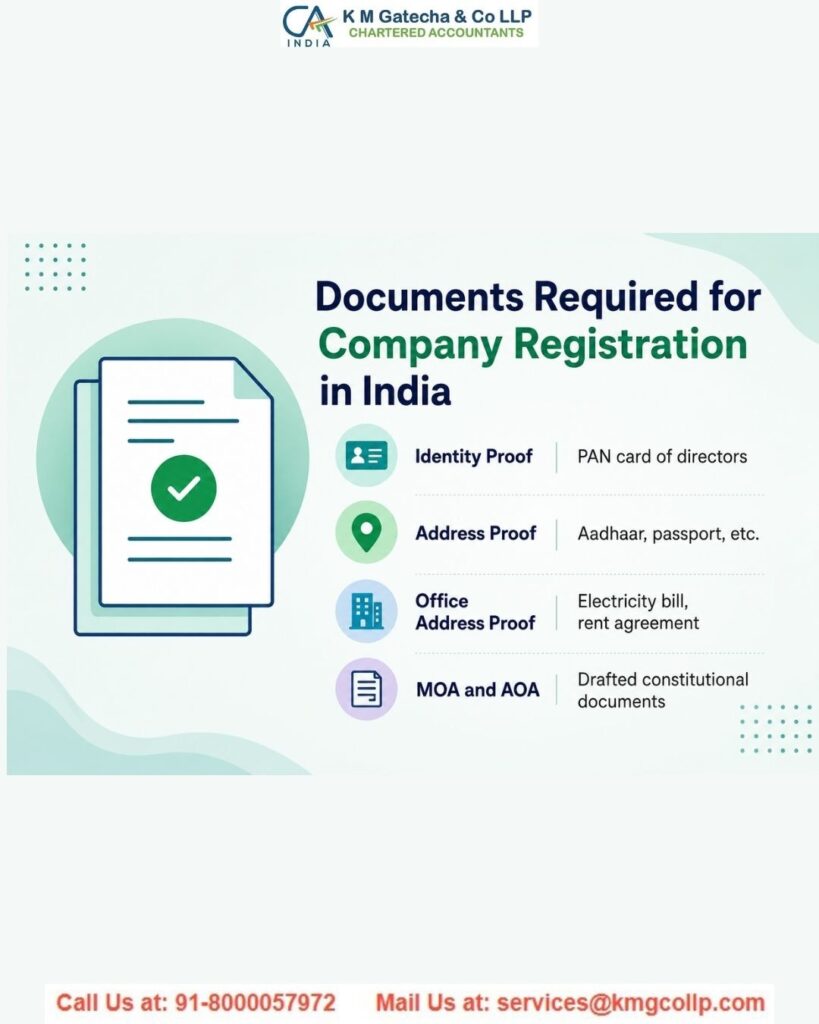
- Preparing company documents: A CA can help with documents such as the Memorandum of Association (MOA) and Articles of Association (AOA) and ensure that the required information is properly prepared.
- Setting up financial systems: A CA can help establish bookkeeping systems, financial records, internal controls, and financial projections where required.
- Tax compliance guidance: A CA can help the business understand applicable tax requirements and maintain the records needed for income tax, GST, TDS, and other compliance matters.
Taking professional help is not compulsory, but it can be useful for founders who are unfamiliar with company registration, taxation, accounting, and ongoing compliance requirements.
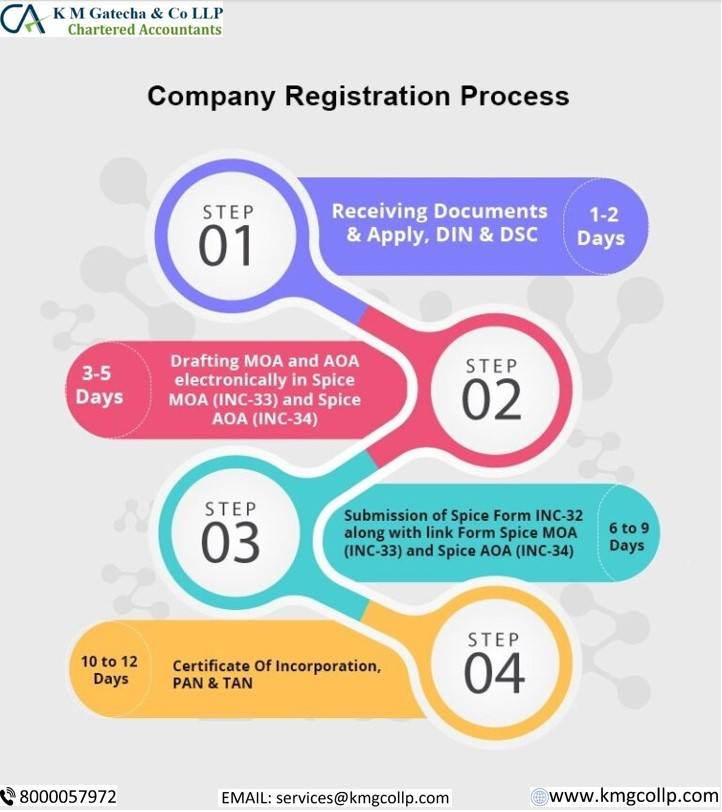
Registering a company in India involves several important steps under the Companies Act, 2013:
- Choose a business structure: Decide whether you want to form a Private Limited Company, LLP, OPC, or another suitable business structure.
- Get Digital Signature Certificates (DSC): Directors need DSCs to sign company registration documents electronically.
- File the SPICe+ form: This form is used for company incorporation and includes details such as the proposed company name and other registration information.
- Apply for PAN and TAN: These are required for the company’s tax-related activities and TDS compliance. They are generally included in the company incorporation process.
Important: A Chartered Accountant is not legally required at every stage of company registration. However, professional guidance can help prevent errors, ensure documents are submitted correctly, and reduce the chances of delays or compliance problems.
Registering a Company Without a CA: Roles and Responsibilities
Founders can complete several parts of the registration process themselves. These include:
- Obtaining a Digital Signature Certificate (DSC) for the directors
- Applying for Director Identification Number (DIN)
- Filing the SPICe+ form for company incorporation and name approval
- Applying for PAN and TAN
Professional Certification Requirements
Certain incorporation documents, including SPICe+ Part B, MOA, and AOA, may need digital certification by an authorized professional such as a CA, CS, CMA, or advocate, as applicable.
The founders are responsible for providing correct information and signing the required documents electronically.
Note: In this context, CA refers to a Chartered Accountant where mentioned as a professional.
Post-Incorporation Compliance: Form INC-20A
Companies having share capital generally need to file Form INC-20A within 180 days of incorporation, subject to the applicable requirements.
This form confirms that the company has received the required subscription money from its shareholders.
Even if the company registration is completed without professional assistance, the company should make sure that Form INC-20A is prepared and filed correctly within the required time.
Proper filing helps the company maintain accurate records and avoid compliance issues.
Conclusion: Professional Guidance Can Make Registration Easier
A Chartered Accountant is not mandatory for registering a company in India. However, professional assistance can be useful at different stages, particularly when preparing and checking incorporation documents and managing post-registration compliance.
The need for professional support depends on the company’s structure, business activities, number of founders, funding plans, and future requirements.
A simple business with straightforward requirements may be able to handle much of the registration process independently. Businesses with multiple founders, overseas investment, or operations in different states may benefit from professional guidance.
Getting the registration and initial compliance requirements right from the beginning can help create a proper foundation for the company’s future operations.
Disclaimer: The content on this website is for informational purposes only and does not constitute legal, financial, or professional advice. Please consult qualified experts before acting on any information. K M GATECHA & CO LLP accepts no liability for errors, omissions, or outcomes from the use of this content. This site is not an advertisement or solicitation.