Capital Gains Tax for NRIs Selling Property in India
Selling a property in India as a Non-Resident Indian (NRI) can have tax implications. One of the main taxes to understand is Capital Gains Tax, which applies to the profit earned from selling a property.
NRIs should also understand TDS, available exemptions, reinvestment rules, and the process for transferring sale proceeds outside India.
What Is Capital Gains Tax?
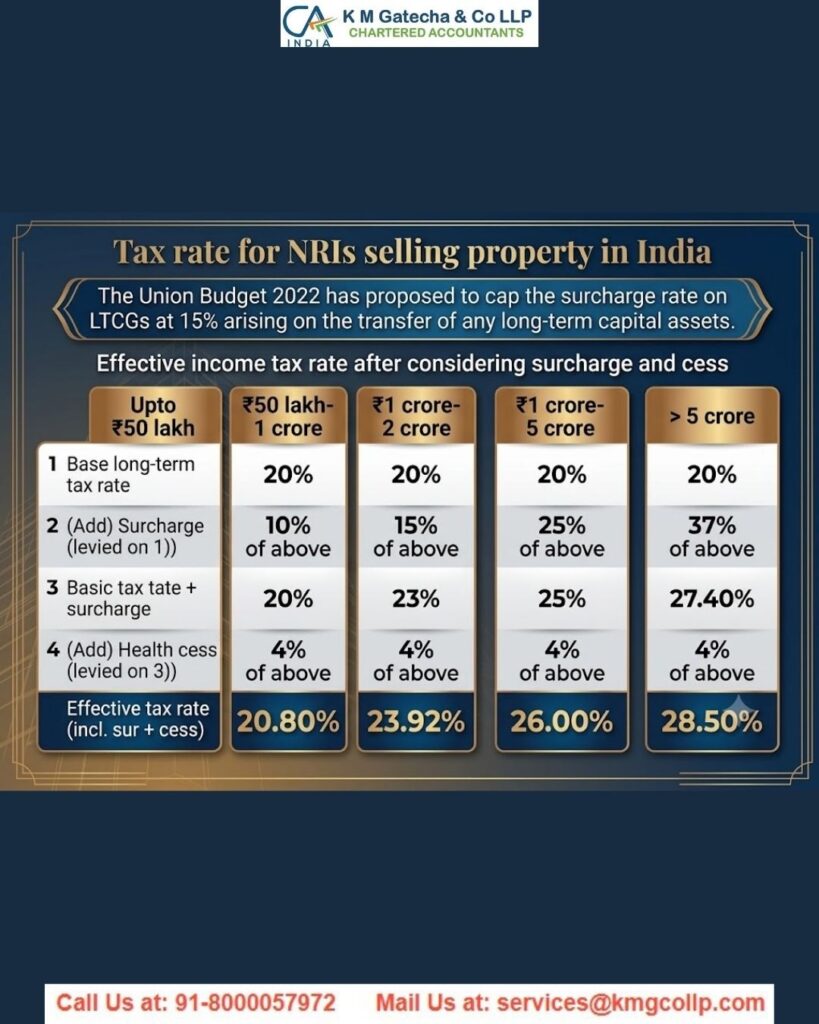
Capital Gains Tax is charged on the profit earned from selling a capital asset, such as a house, flat, land, or other property.
For an NRI, the sale of property located in India is generally taxable in India.
The taxable gain is calculated by comparing the sale value with the eligible cost of the property and other permitted expenses.
Types of Capital Gains
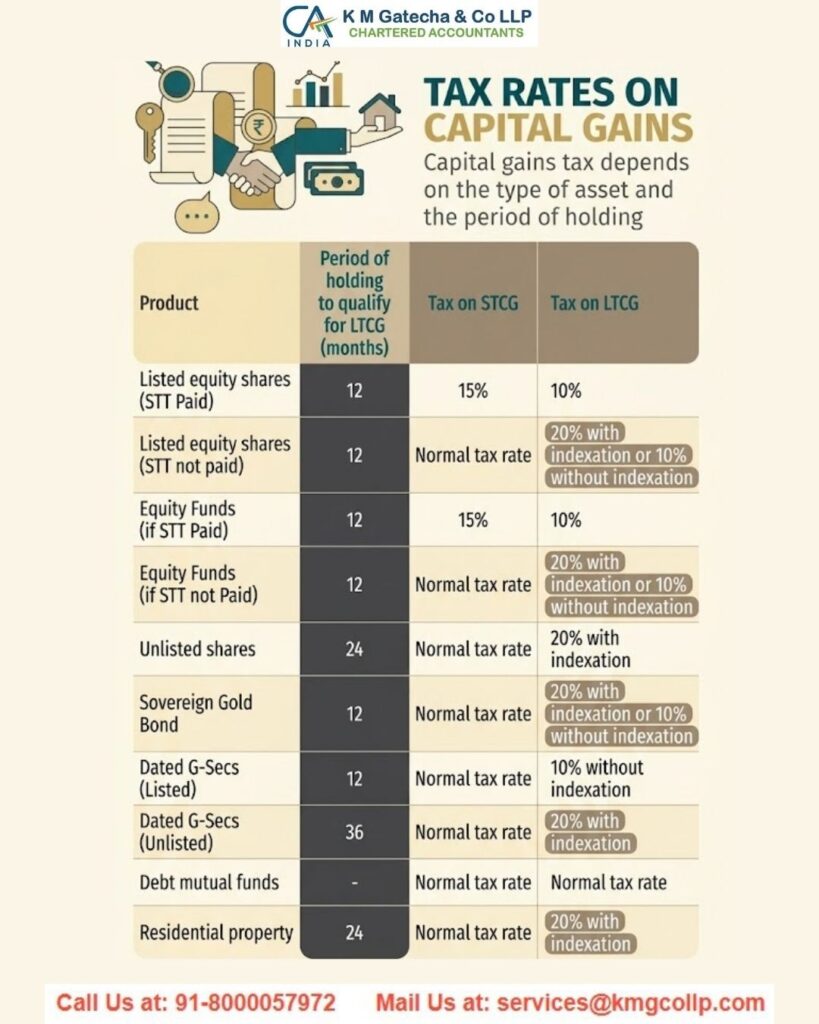
Capital gains from property are generally divided into two categories:
Short-Term Capital Gain
If the property is held for 24 months or less, the gain is generally treated as a short-term capital gain.
The gain is normally taxed according to the applicable income tax rules.
Long-Term Capital Gain
If the property is held for more than 24 months, the gain is generally treated as a long-term capital gain.
The applicable tax rate and indexation rules depend on the date of sale and the tax law applicable at that time.
What Is Indexation?
Indexation adjusts the cost of an asset to account for inflation, where the law permits it.
It can increase the adjusted purchase cost and may reduce the taxable capital gain.
However, the availability and treatment of indexation can depend on the date of purchase and sale and the rules applicable to the transaction. Therefore, NRIs should check the current provisions before calculating the tax.
TDS on Sale of Property by an NRI
When an NRI sells property in India, the buyer generally has to deduct TDS under the applicable provisions of the Income Tax Act.
The amount deducted may sometimes be higher than the seller’s final tax liability.
If the actual tax liability is lower, the seller may be able to claim a refund while filing the income tax return. In certain cases, an NRI can also apply for a lower or nil TDS certificate, subject to the applicable conditions.
Planning the TDS before completing the transaction can help avoid unnecessary blockage of funds.
How Can NRIs Reduce Capital Gains Tax?
Certain tax provisions may allow NRIs to reduce or defer their capital gains tax by meeting specific conditions.
1. Section 54
An eligible individual or HUF may claim an exemption by investing the capital gain in another residential house in India, subject to the applicable conditions and time limits.
2. Section 54EC
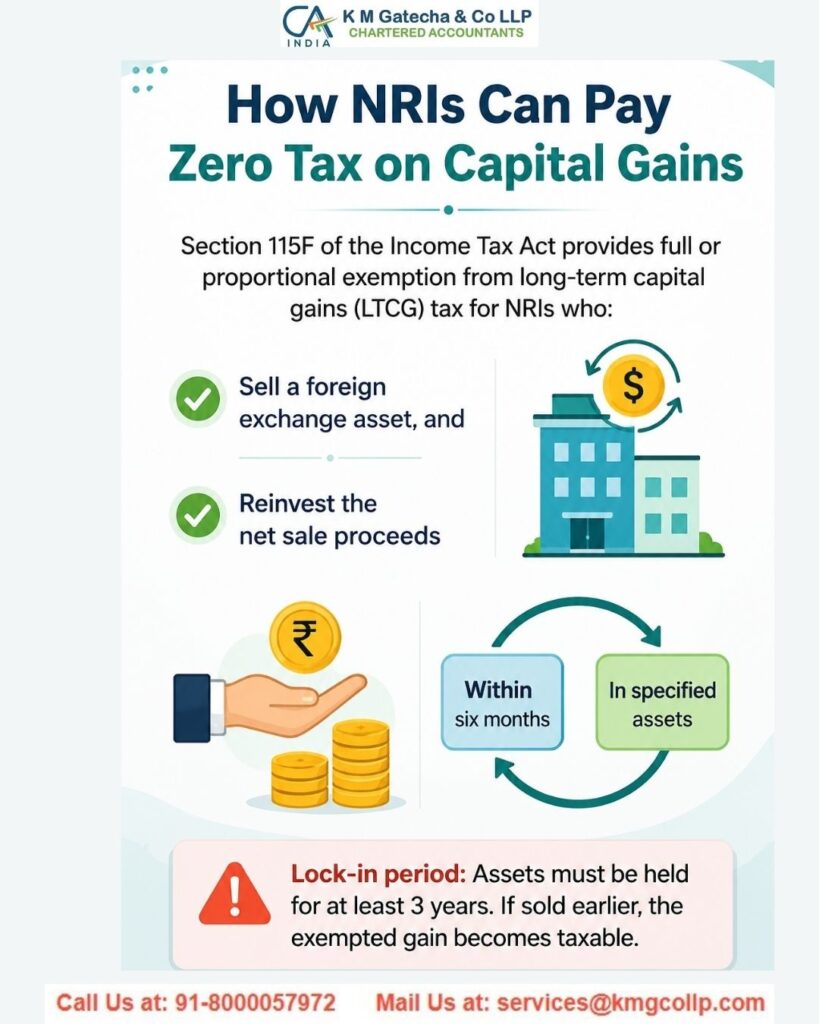
Long-term capital gains from eligible property may qualify for exemption when invested in specified bonds, subject to the applicable rules, limits, and lock-in period.
3. Capital Gains Account Scheme
If the amount cannot be reinvested before the income tax return filing deadline, an eligible taxpayer may use the Capital Gains Account Scheme, subject to the applicable conditions.
The money can then be used for the eligible investment within the prescribed period.
4. Double Taxation Avoidance Agreement
An NRI may also need to consider the Double Taxation Avoidance Agreement (DTAA) between India and the country where they are tax resident.
Depending on the treaty and the taxpayer’s circumstances, tax paid in India may be eligible for credit in the other country.
Repatriation of Property Sale Proceeds
After selling property in India, an NRI may be able to transfer the eligible sale proceeds outside India, subject to FEMA, RBI, banking, and tax requirements.
The repatriation process may require documents such as:
- Sale agreement and property documents
- Bank statements
- Tax payment records
- Form 15CA, where applicable
- Form 15CB, where applicable
- Other documents required by the bank
The exact requirements depend on the source of funds, type of property, and other applicable conditions.
Common Mistakes NRIs Should Avoid
NRIs should be careful about the following common mistakes:
- Not calculating capital gains correctly
- Ignoring applicable tax exemptions
- Allowing unnecessary TDS deduction
- Missing reinvestment deadlines
- Not maintaining property purchase and improvement records
- Ignoring DTAA provisions
- Not reporting the transaction correctly in the income tax return
- Failing to maintain documents required for repatriation
Proper planning before selling the property can help avoid many of these problems.

Why Professional Tax Guidance Can Help
NRI property transactions can involve income tax rules, TDS provisions, FEMA requirements, and DTAA considerations.
Professional guidance can help with:
- Calculating capital gains
- Checking applicable exemptions
- Planning reinvestment
- Reviewing TDS requirements
- Preparing tax documents
- Filing the income tax return
- Understanding repatriation requirements
The rules can vary depending on the property, date of purchase, date of sale, residential status, and other facts. Therefore, the transaction should be reviewed based on the individual’s specific circumstances.
Conclusion
Selling property in India as an NRI involves more than simply completing the sale. Capital gains tax, TDS, exemptions, reinvestment rules, and repatriation requirements should all be considered before the transaction is completed.
Understanding the applicable rules in advance can help NRIs plan their finances, avoid unnecessary tax deductions, and complete the property sale and related compliance requirements properly.
Disclaimer: The content on this website is for informational purposes only and does not constitute legal, financial, or professional advice. Please consult qualified experts before acting on any information. K M GATECHA & CO LLP accepts no liability for errors, omissions, or outcomes from the use of this content. This site is not an advertisement or solicitation.