Starting a business is an exciting step, but registering a startup involves several legal, financial, tax, and documentation requirements. Founders need to choose the right business structure, understand compliance rules, manage taxes, and maintain proper records.
A Chartered Accountant can help founders handle these requirements and build a proper financial and compliance foundation for the business.
1. Choosing the Right Business Structure
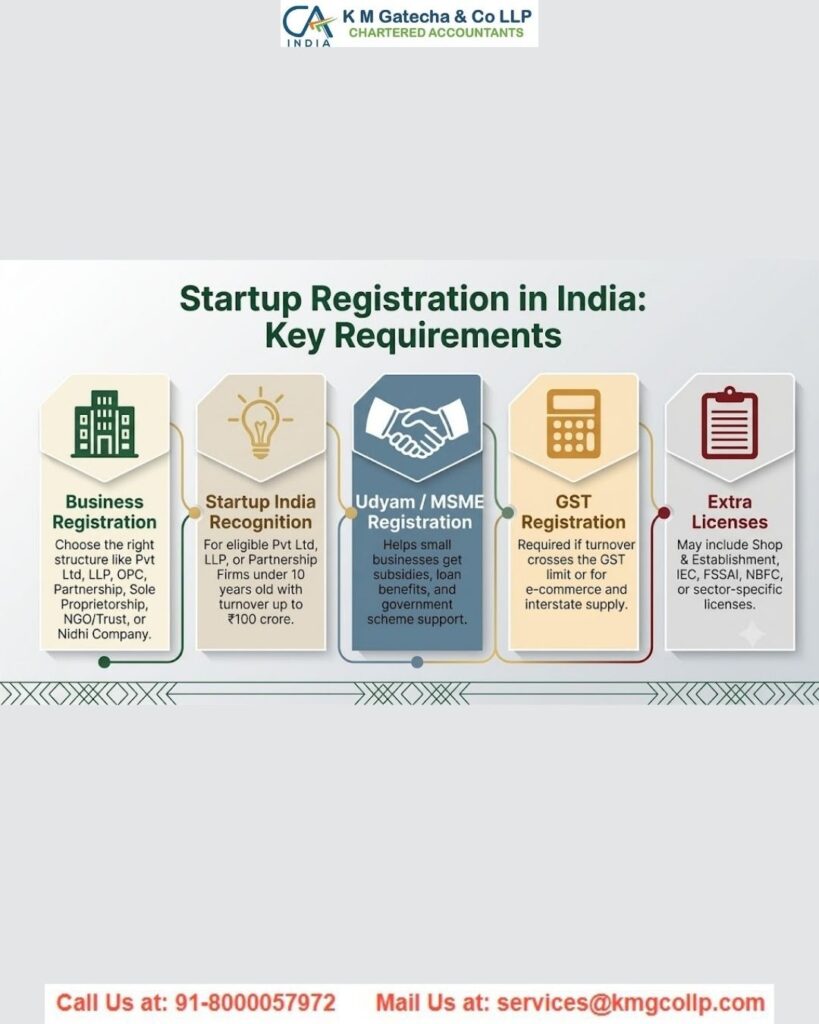
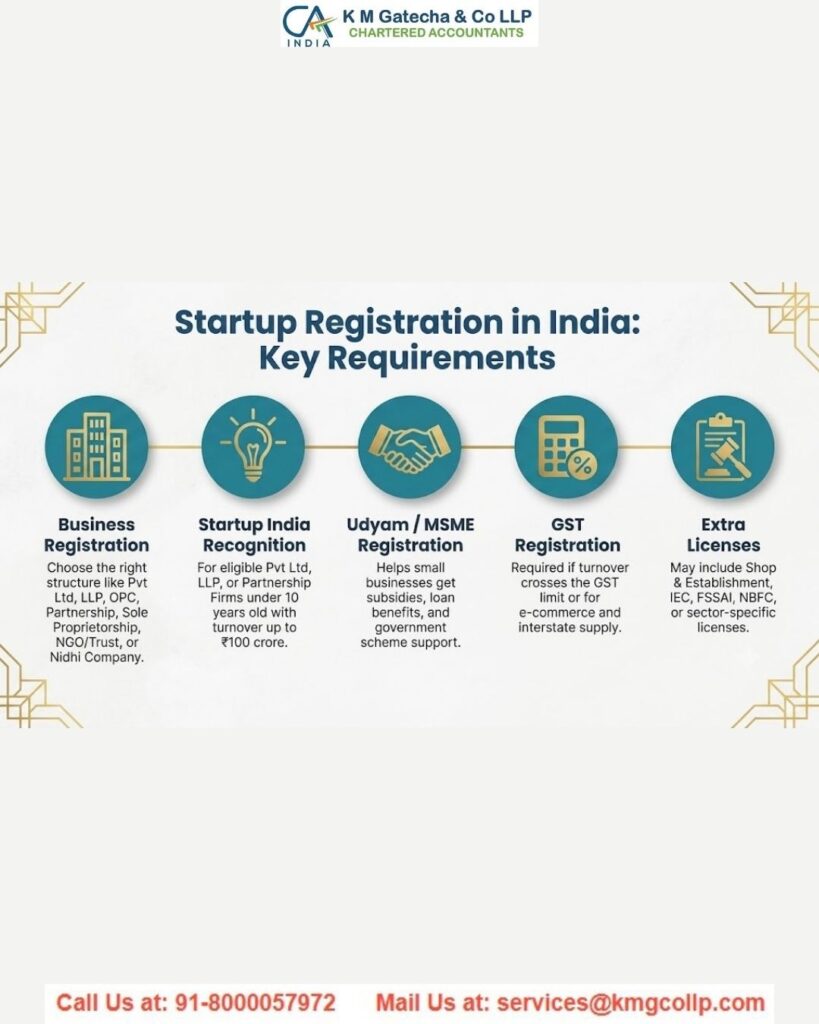
One of the first decisions for a startup is choosing the right business structure. Options may include Sole Proprietorship, Partnership, LLP, Private Limited Company, or One Person Company (OPC).
A CA can explain the legal, tax, ownership, and compliance differences between these structures. The choice can depend on the nature of the business, number of founders, funding plans, liability, future growth, and tax requirements.
Choosing the right structure at the beginning can also help avoid the need for major changes later.
2. Documentation and Legal Compliance
Startup registration requires several documents, including identity and address proofs, incorporation forms, MOA and AOA, partnership documents, and other declarations.
A CA can help check these documents and ensure that the required forms contain accurate information. This can reduce the chances of errors, corrections, and delays during the registration process.
Proper documentation also helps founders maintain organized records for future compliance and business activities.
3. Company Incorporation and ROC Filings
A startup choosing a company structure needs to complete the required incorporation process with the Registrar of Companies.
A CA can assist with various parts of the process, including:
- Digital Signature Certificates (DSC)
- Director Identification Numbers (DIN)
- Company name approval
- Incorporation forms
- Certificate of Incorporation
The support can continue after incorporation. A CA can also help with requirements such as maintaining statutory records, issuing share certificates, preparing required documents, and managing applicable ROC filings.
4. Tax Registration and Planning
Tax compliance should be considered from the beginning of the business. Depending on the business activities, registrations may include:
- PAN and TAN
- GST registration
- Professional tax registration, where applicable
- Other state-specific registrations
A CA can help the startup understand its tax responsibilities and maintain the required records. They can also provide guidance on GST, input tax credit, advance tax, applicable deductions, and other tax matters.
Early tax planning can help a startup manage its finances properly and avoid unnecessary compliance problems.
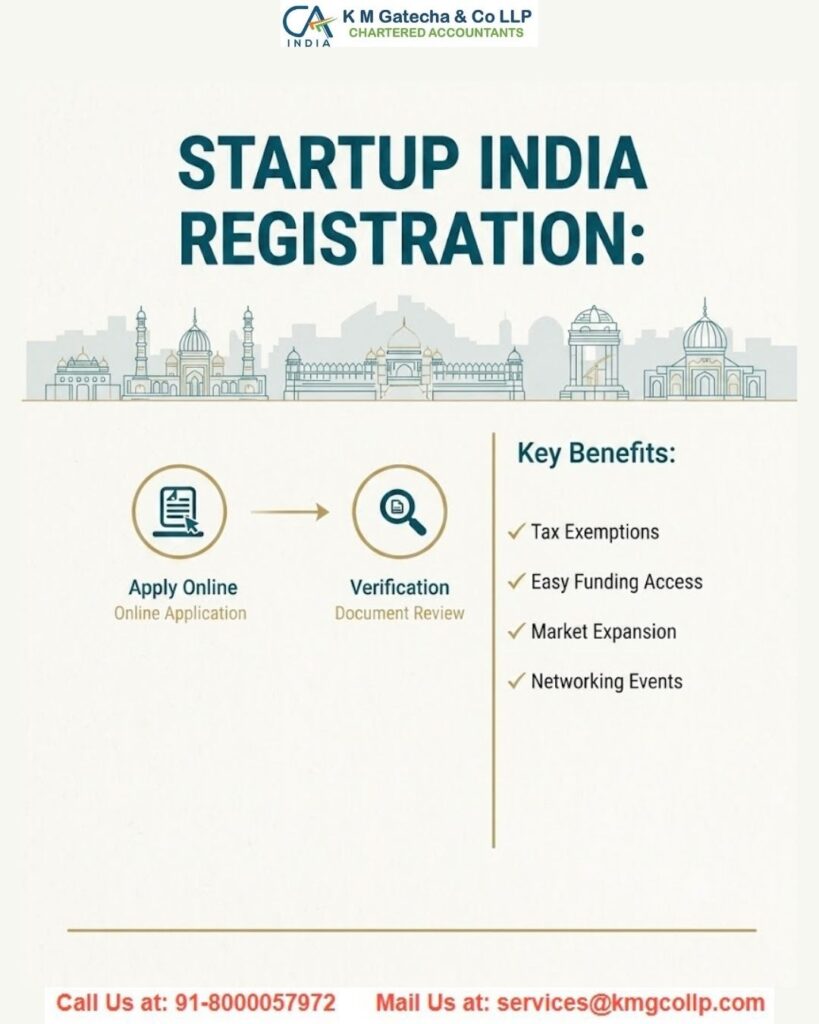
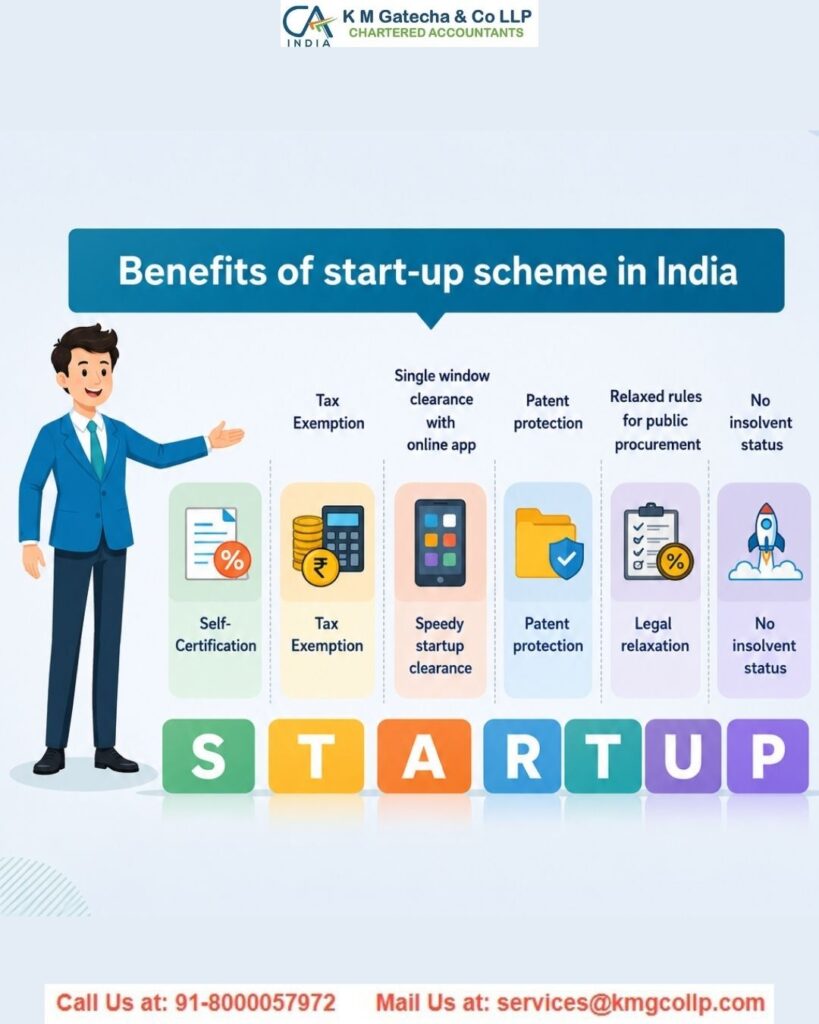
5. Startup India and Government Benefits
Eligible startups may be able to access certain government schemes, recognition programs, incentives, and other benefits.
A CA can help founders understand the eligibility conditions and documentation required for such programs. Where applicable, they can also assist with the registration and related compliance process.
Depending on eligibility, government startup programs may provide benefits related to taxation, intellectual property, funding opportunities, and compliance.
6. Accounting Setup and Financial Systems
Proper accounting should be established from the beginning. A CA can help a startup set up:
- Chart of accounts
- Accounting software
- Invoicing systems
- Expense tracking
- Payroll processes
- Financial reporting systems
A proper accounting system helps maintain accurate financial records and makes it easier to prepare tax returns, financial statements, audits, and reports required by investors or lenders.
7. Compliance Risk Management
Missing legal or tax requirements can result in additional costs, notices, penalties, and other problems.
A CA can help monitor important compliance deadlines related to income tax, GST, ROC filings, and applicable labour requirements.
Having a proper compliance calendar can help founders complete filings on time and keep the company’s records updated. This can be particularly useful for startups with small internal teams.
8. Financial Forecasting and Business Advisory
A CA’s role can extend beyond registration and routine compliance. They can also help founders understand the financial side of the business.
This may include:
- Preparing financial projections
- Cash flow planning
- Break-even analysis
- Budgeting
- Cost management
These activities can help founders make better financial decisions and understand how much money the business needs to operate and grow.
Proper financial information can also be useful when dealing with investors, lenders, or other stakeholders.
9. Support During Business Growth
As a startup grows, its financial and compliance requirements may also become more complex.
A CA can provide support with areas such as valuation, financial due diligence, fundraising-related documentation, tax planning, and ongoing compliance.
Getting the financial and legal systems in place early can make future business changes easier to manage. It can also help the startup stay prepared when it brings in investors, expands operations, or changes its ownership structure.
Conclusion
Startup registration is more than completing a few forms. The decisions made during the registration stage can affect the company’s taxation, compliance, ownership, and future growth.
A Chartered Accountant can help founders choose a suitable business structure, prepare documents, manage tax registrations, set up accounting systems, track compliance, and plan the company’s finances.
Professional guidance can help startups avoid common mistakes and create a strong financial and compliance foundation from the beginning. This allows founders to focus more on growing the business while keeping important legal and financial responsibilities organized.
Disclaimer: The content on this website is for informational purposes only and does not constitute legal, financial, or professional advice. Please consult qualified experts before acting on any information. K M GATECHA & CO LLP accepts no liability for errors, omissions, or outcomes from the use of this content. This site is not an advertisement or solicitation.