
Time Limit to File ITR-U
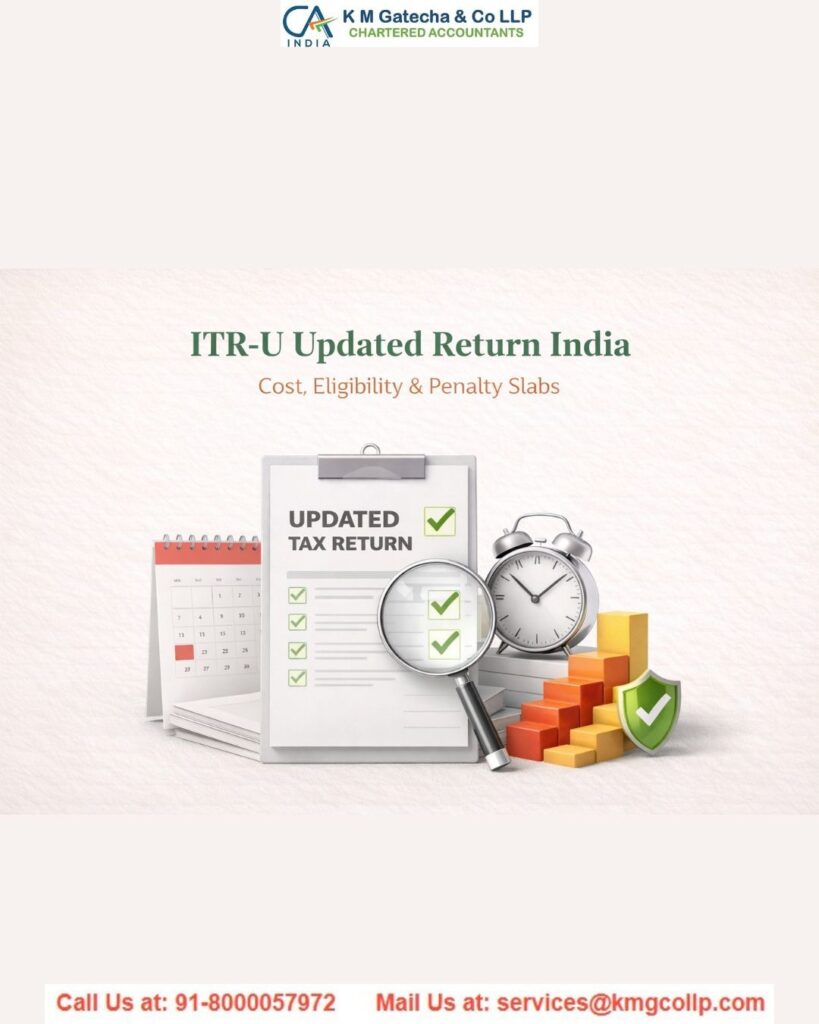
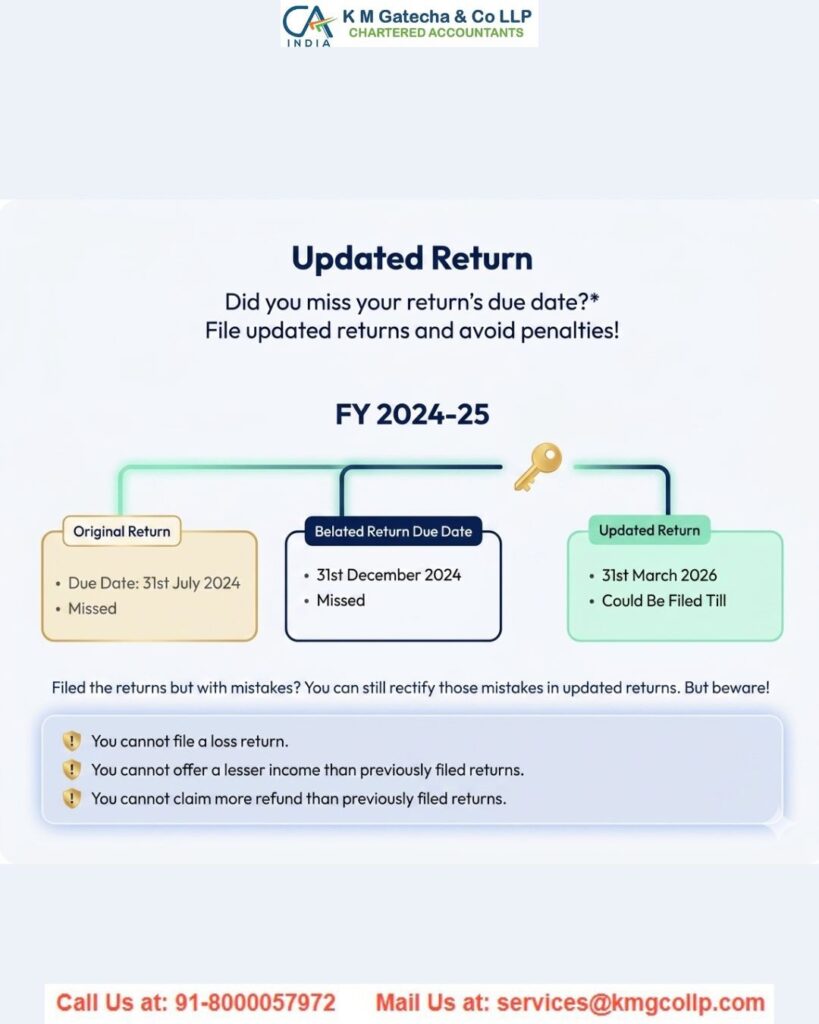
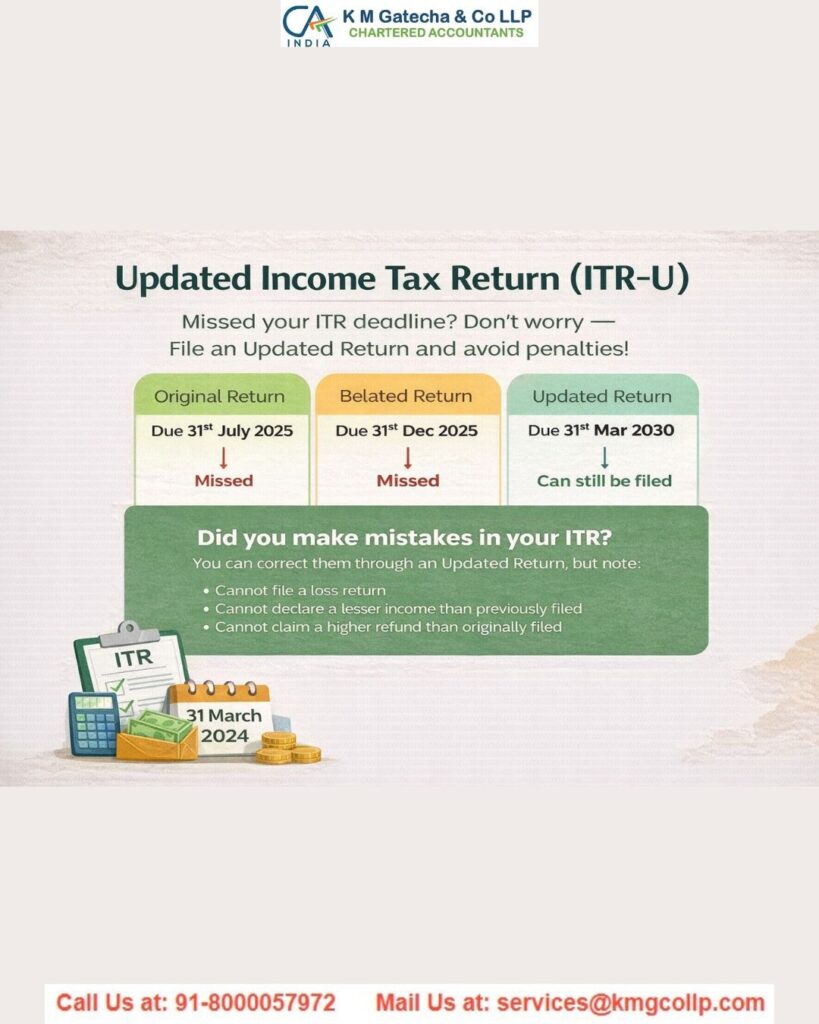
The deadline for filing ITR-U is up to 48 months from the end of the relevant assessment year. For example, the due date for AY 2025-26 is 31st March 2030, while for AY 2024-25 it is 31st March 2029.
Financial Year & Assessment Year – Last Date to File ITR-U
- FY 2020-21 (AY 2021-22): 31st March 2026
- FY 2021-22 (AY 2022-23): 31st March 2027
- FY 2022-23 (AY 2023-24): 31st March 2028
- FY 2023-24 (AY 2024-25): 31st March 2029
- FY 2024-25 (AY 2025-26): 31st March 2030
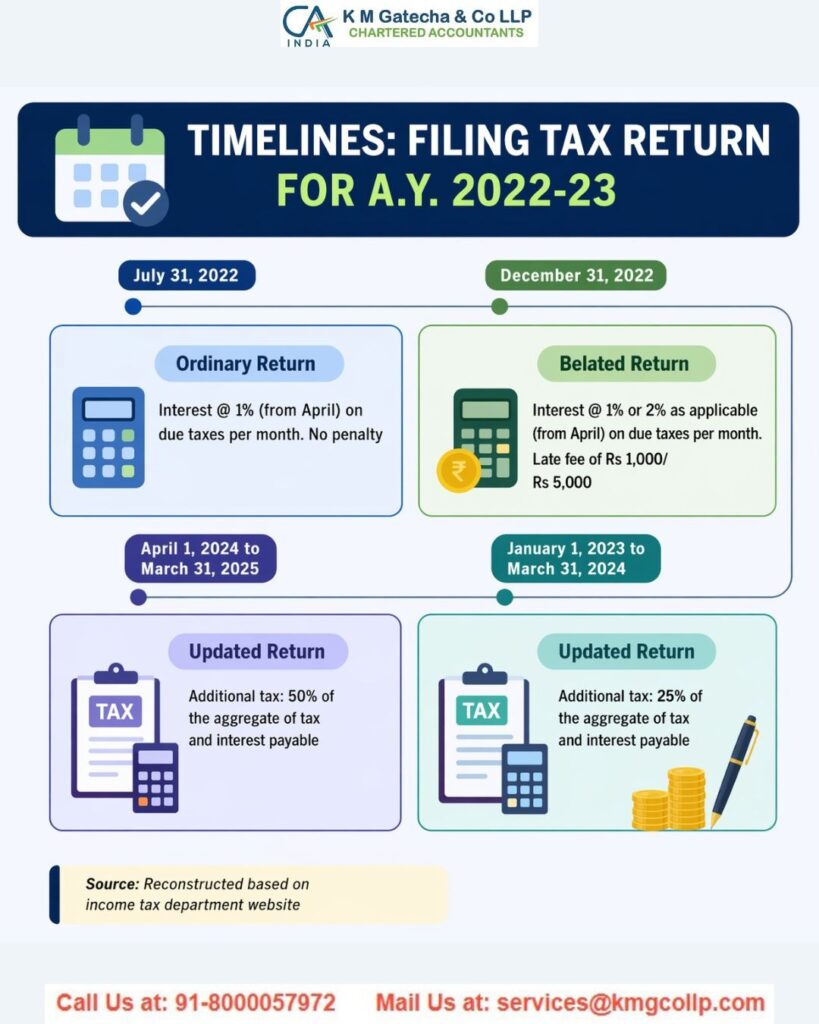
Additional Tax on Filing ITR-U
The time limit for filing an updated return has been extended from 2 years to 4 years, allowing taxpayers more time to correct or file returns voluntarily. This helps improve compliance and simplifies the tax process.
However, additional tax must be paid while filing ITR-U:
- Within 12 months: 25% of additional tax (tax + interest)
- Within 24 months: 50% of additional tax (tax + interest)
- Within 36 months: 60% of additional tax (tax + interest)
- Within 48 months: 70% of additional tax (tax + interest)
How to File Form ITR-U
As per income tax rules, ITR-U must be filed along with the applicable ITR form (ITR-1 to ITR-7). The form has two sections: Part A and Part B.
Part A – General Information
- Enter PAN, name, Aadhaar number, and assessment year
- Mention whether a return was filed earlier and its details
- Provide acknowledgement number and filing date of the previous return
- Confirm eligibility and select the relevant ITR form
- Choose the reason for updating the return
- Select the applicable time period (12–48 months)
- Provide details if losses or depreciation are affected
Part B – Computation of Updated Income and Tax
- Enter additional income under relevant heads
- Provide income details from the last filed return
- Calculate total income and tax payable
- Mention refund details, if any
- Add late filing fees, taxes paid, and assessment tax
- Compute additional tax (25% to 70%)
- Pay tax under self-assessment and enter challan details
How to Verify ITR-U
ITR-U can be verified using:
- Aadhaar OTP
- Electronic Verification Code (EVC)
- Digital Signature Certificate (DSC)
- In audit cases, only DSC is allowed
Calculation of Tax Payable for ITR-U
Total Tax Liability = Tax Payable + Interest + Late Fee + Additional Tax
Net Tax Payable = Total Tax Liability – TDS/TCS/Advance Tax/Relief
Preparation of ITR-U
To prepare ITR-U:
- Select or import client data
- Ensure the return is marked as filed
- Enable ITR-U option
- Most details get auto-filled based on the previous return
- Complete remaining fields as required
GST Consent Letter – Meaning
A GST consent letter (NOC) is required when a business uses premises that are neither owned nor rented. It is a declaration from the owner allowing the taxpayer to use the property for business purposes.
There is no fixed format for this letter.
Who Should Sign the Consent Letter
The property owner must sign the consent letter. In some cases, authorities may ask for it on stamp paper and notarised, though a simple document is usually acceptable.
Supporting Documents:
- Electricity bill or property document
- Municipal records
Upload Steps:
- Select “Consent” under nature of possession
- Upload the letter in PDF/JPEG (max 1 MB)
Failure to Submit Consent Letter
If the consent letter is not submitted with the GST registration application, the application may be put on hold. The taxpayer will be asked to provide the required documents before further processing.
MCA 21 Portal – Overview
The MCA 21 portal was introduced to provide easy digital access to corporate compliance services. It helps businesses and professionals manage legal filings and registrations online.
Objectives:
- Automate compliance under company and LLP laws
- Simplify statutory processes
Benefits:
- Easy company registration and filings
- Access to public documents
- Faster grievance resolution
- Better compliance management
MCA 21 Services
- Digital Signature Certificate (DSC) management
- Director Identification Number (DIN) application
- Company and LLP filings
- Viewing company master data
- Name search and registration services
- Complaint filing and tracking
Freelancer Income Tax – Overview
Freelancing offers flexibility, but income earned is taxable under “Profits and Gains from Business or Profession.”
Freelancers are independent and not on payroll, and their total income includes all payments received for services.
Deductible Expenses for Freelancers
Freelancers can claim expenses that are:
- Related to work
- Fully and exclusively used for business
- Not personal or capital in nature
Examples:
- Rent, repairs, depreciation
- Office and internet expenses
- Travel and client meeting costs
Expenses Used for Personal & Professional Use
Only the business-related portion of such expenses can be claimed as deduction.
Disallowed Expenses
- Income tax and penalties
- Excess payments to relatives
- Cash expenses above ₹10,000
Presumptive Taxation
Freelancers can opt for simplified taxation:
- Businesses: 6%–8% of turnover
- Professionals: 50% of gross receipts
- Limits increase if cash transactions are minimal
Filing ITR for Freelancers
- Use ITR-3 (regular) or ITR-4 (presumptive)
- Fill income, deductions, and tax details
- Verify TDS/TCS using Form 26AS
Private Trust – Meaning
A private trust is created when a person transfers property to a trustee for the benefit of specific beneficiaries. It helps in asset protection and succession planning.
Types of Private Trusts
- Specific trust
- Discretionary trust
- Revocable and irrevocable trust
- Testamentary trust
- Living trust
Registration of Private Trust
If immovable property is involved, the trust deed must be registered. It should be executed on stamp paper and registered with the Sub-Registrar.
Trust Deed Components
- Objectives of the trust
- Beneficiaries
- Trust property details
- Distribution method
- Type of trust
- Dissolution terms
Filing ITR – Final Steps
- Enter deductions and compute taxable income
- Check tax calculation
- Pay any remaining tax
- Preview return
- Validate and submit
- Verify using OTP/EVC/DSC
- Download acknowledgement
Who Cannot File ITR-1
- Income above ₹50 lakh
- Business/professional income
- Multiple properties
- Foreign income/assets
- Capital gains beyond limits
- Company directors or unlisted shares holders
Updated Return u/s 139(8A) – Key Points
- Introduced to allow correction or filing after deadlines
- Can be filed even if no return was filed earlier
- Cannot be used to reduce tax or claim refund
- Only one updated return allowed per year
- Additional tax is mandatory
Conclusion
ITR-U provides an extended opportunity to correct or file returns even after the normal deadlines. Though it involves additional tax, it helps taxpayers stay compliant and avoid future notices by properly reporting their income.
Disclaimer: The content on this website is for informational purposes only and does not constitute legal, financial, or professional advice. Please consult qualified experts before acting on any information. K M GATECHA & CO LLP accepts no liability for errors, omissions, or outcomes from the use of this content. This site is not an advertisement or solicitation.