

Section 144 of the Income Tax Act
Tax assessment plays a vital role in ensuring that every taxpayer pays the correct amount of income tax. However, when a taxpayer fails to meet their statutory obligations—such as filing returns or responding to notices—the Income Tax Act empowers the Assessing Officer (AO) to step in. Section 144 of the Income Tax Act, 1961 allows the AO to determine tax liability using the Best Judgment Assessment method.
This article explains the scope, applicability, and key aspects of Section 144 Income Tax in detail.

What Is Section 144 of the Income Tax Act?
Section 144 of the Income Tax Act, 1961 deals with best judgment assessment, where the Assessing Officer assesses a taxpayer’s income and tax liability based on available information, documents, and records. This provision is generally applied when the taxpayer fails to comply with specific requirements under the Act, making a regular assessment impossible.
Circumstances Under Which Section 144 Is Invoked
Best judgment assessment under Section 144 is not applied in every case. It is invoked only under certain situations, including the following:
1. Failure to File Income Tax Returns on Time
Every taxpayer is required to file their income tax return within the prescribed due date. Delays often occur due to last-minute filing and technical issues on the income tax portal. If a taxpayer fails to file the return within the stipulated time, the AO may invoke Section 144 and assess income based on available records.
2. Non-Disclosure or Incorrect Disclosure of Income
Tax liability depends on the accurate disclosure of income under the applicable tax regime and slab. If a taxpayer underreports income or provides incorrect or misleading details, the Assessing Officer is empowered to estimate income and complete the assessment under Section 144.
3. Non-Compliance with Notices Issued by the Tax Department
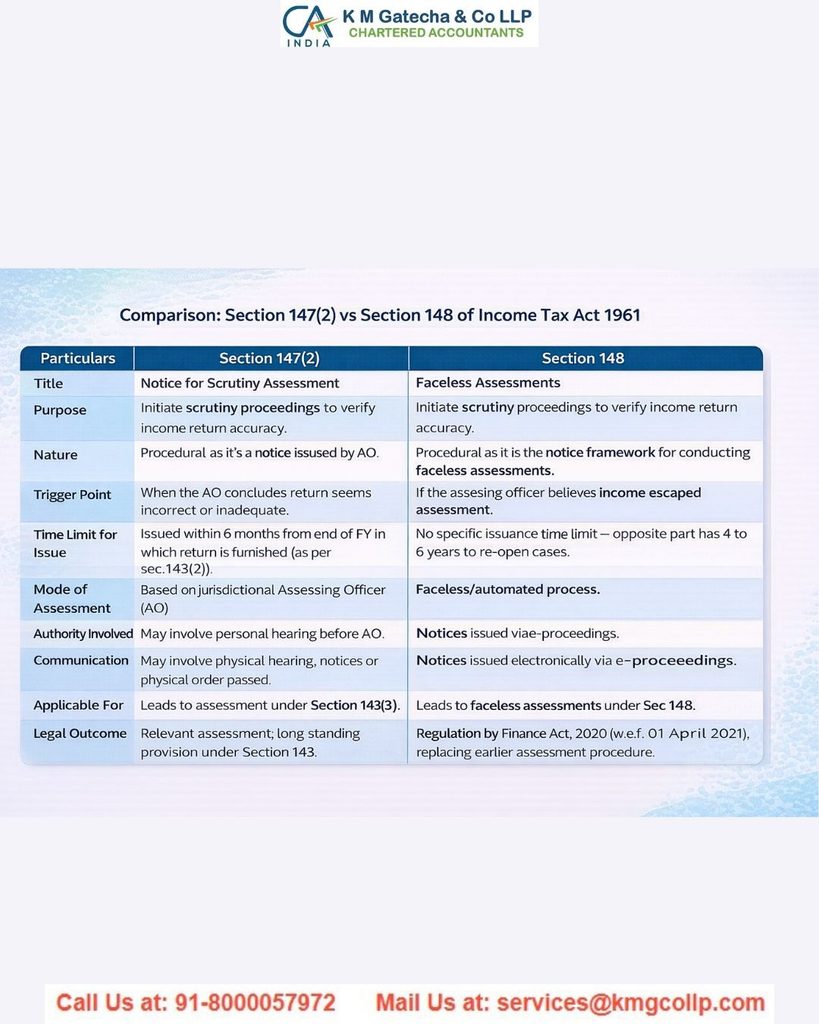
If a taxpayer fails to respond to notices issued under sections such as Section 142(1) (seeking information or documents) or Section 143(2) (scrutiny notice), the AO can proceed with a best judgment assessment under Section 144.
4. Lack of Cooperation During Assessment Proceedings
Cooperation with tax authorities during assessment proceedings is crucial. Failure to provide documents, explanations, or necessary clarifications may prompt the Assessing Officer to invoke Section 144 and complete the assessment based on their judgment.
What Is the Best Judgment Assessment Process?
When the Assessing Officer (AO) decides to invoke Section 144 of the Income Tax Act, a structured assessment process is followed to determine the taxpayer’s liability based on available information.
Step-by-Step Best Judgment Assessment Process
1. Issuance of Notice
The AO issues a notice asking the taxpayer to explain why a best judgment assessment should not be carried out. However, if a notice under Section 142(1) has already been issued and ignored, the AO may proceed directly.
2. Opportunity to Respond
Upon receiving the notice under Section 144, the taxpayer is given a chance to submit explanations, clarifications, and any missing documents within the prescribed time.
3. Evaluation by the Assessing Officer
The AO reviews the response and supporting evidence submitted. If the explanation is found unsatisfactory or incomplete, the AO proceeds with the best judgment assessment.
4. Completion of Assessment
The AO estimates income and tax liability using available financial records, third-party data, and relevant information.
5. Issuance of Assessment Order
An assessment order is passed detailing the income assessed and the tax liability determined by the AO.
6. Demand Notice
If additional tax is payable, a formal demand notice is issued specifying the amount due and the payment timeline.
Repercussions of Invoking Section 144
Receiving a notice under Section 144 can have serious financial and legal consequences.
Increased Tax Liability
The AO may disregard deductions, exemptions, or losses claimed earlier due to lack of proper evidence. As a result, the assessed tax liability may be significantly higher than expected.
Interest, Penalties, and Prosecution
In addition to higher tax, interest and penalties may be levied for non-compliance. In severe cases, prosecution proceedings may also be initiated, leading to further stress and financial burden.
Time Limit for Best Judgment Assessment Under Section 144
The time limit for completing an assessment under Section 144 is governed by Section 153 of the Income Tax Act.
| Assessment Year | Time Limit for Assessment |
| AY 2017 or earlier | Within 21 months from the end of the assessment year |
| AY 2018–19 | Within 18 months from the end of the relevant financial year |
| AY 2019–20 | Within 12 months from the end of the assessment year |
| AY 2020–21 | Within 18 months from the end of the financial year |
| AY 2021–22 | Within 9 months from the end of the assessment year |
| AY 2022–23 onwards | Within 12 months from the end of the relevant financial year |
Assessing Officer’s Toolkit for Best Judgment Assessment
To arrive at an estimate, the Assessing Officer relies on multiple data points and analytical tools, including:
- Past Income Tax Returns to identify income patterns and trends
- Bank Statements to detect undisclosed income and irregular transactions
- Industry Benchmarks to compare income with similarly placed taxpayers
- Third-Party Information from banks, employers, and financial institutions
- Lifestyle Indicators such as high-value purchases, luxury spending, and asset acquisitions
Tips to Avoid Section 144 Income Tax Proceedings
Proactive compliance can significantly reduce the risk of best judgment assessment.
File Returns Within Due Dates
Timely filing of income tax returns—whether original, revised, or updated—is the most effective way to avoid Section 144. Professional assistance can help ensure accuracy and compliance.
Disclose Complete and Accurate Income
All income sources must be correctly reported. With advanced data tracking, underreporting or concealment is easily detected and can trigger scrutiny.
Respond Promptly to Tax Notices
Carefully review any notice received and respond within the stipulated time. If unsure, consult a tax professional for guidance.
Maintain Proper Financial Records
Preserve invoices, bank statements, investment proofs, and other financial documents. These act as crucial evidence during assessments.
Cooperate Fully With Tax Authorities
Transparent communication and honest disclosures reduce the likelihood of adverse assessments and penalties.
Reconcile Accounts Regularly
Ensure consistency between bank statements and accounting records to avoid discrepancies that may raise red flags.
Maintain Digital Records
Keeping digital backups of financial documents ensures easy access and prevents data loss.
Ensure Consistency in Financial Reporting
Sudden variations or inconsistencies in income or expenses can attract scrutiny. Maintain uniformity in reporting.
Be Prepared to Explain Unusual Transactions
Large or irregular transactions should always be supported with proper documentation and justification.
Suggestions for Potential Reforms in Section 144 of the Income Tax Act
Like many provisions in tax law, Section 144 of the Income Tax Act must evolve with changing compliance practices, increased digitisation, and taxpayer expectations. The following reforms could improve fairness, transparency, and efficiency in best judgment assessments:
Clearer Guidelines
The conditions for invoking Section 144 should be more clearly defined with objective parameters. This would help reduce subjective interpretation and minimise arbitrary or inconsistent assessments by tax authorities.
Improved Taxpayer Communication
Introducing a more structured and transparent communication mechanism would allow taxpayers to better understand the reasons for scrutiny and the information required, leading to more accurate and cooperative assessments.
Graduated Compliance Mechanism
Before resorting to best judgment assessment, a graded response system—such as reminders, warnings, or partial assessments—should be implemented. This would encourage voluntary compliance without imposing harsh consequences at the outset.
Greater Use of Data Analytics
Assessing Officers should increasingly rely on data analytics, AI-driven risk profiling, and verified third-party data. This would enhance accuracy, reduce disputes, and limit reliance on estimates.
Enhanced Taxpayer Awareness
Many instances of non-compliance arise due to lack of awareness rather than intent. Regular taxpayer education initiatives explaining rights, obligations, and consequences under Section 144 would significantly reduce avoidable errors.
Conclusion
Section 144 of the Income Tax Act plays a vital role in safeguarding revenue interests where taxpayers fail to comply with statutory requirements. However, its effective implementation depends on fairness, transparency, and proportionality.
Just as timely filing and accurate disclosures can help taxpayers avoid best judgment assessments, informed compliance and responsive communication can prevent unnecessary litigation and financial strain. With clearer guidelines, better use of technology, and increased taxpayer awareness, Section 144 can function as a corrective mechanism rather than a punitive one.
For taxpayers, the key lies in timely compliance, proper documentation, and professional guidance, ensuring that assessments are based on facts rather than estimates.
Disclaimer: The content on this website is for informational purposes only and does not constitute legal, financial, or professional advice. Please consult qualified experts before acting on any information. K M GATECHA & CO LLP accepts no liability for errors, omissions, or outcomes from the use of this content. This site is not an advertisement or solicitation.


