India’s footwear industry is growing steadily due to urbanisation, growth of e-commerce, and changing lifestyles. Demand is increasing in both domestic and international markets, and the industry is expected to grow strongly in the coming years.
However, many manufacturers, especially MSMEs, still face working capital problems. One major reason is GST blockage caused by the inverted duty structure and exports made without payment of tax.
If you are a footwear manufacturer in India, this guide will help you understand:
- Why GST refund is important
- When you can claim a GST refund
- How to apply for a refund
- Common mistakes to avoid
- Ways to get faster approval
Why is GST Refund Important for Footwear Manufacturers?
GST refund is important for footwear manufacturers because it helps them manage their money and keep their business running smoothly.
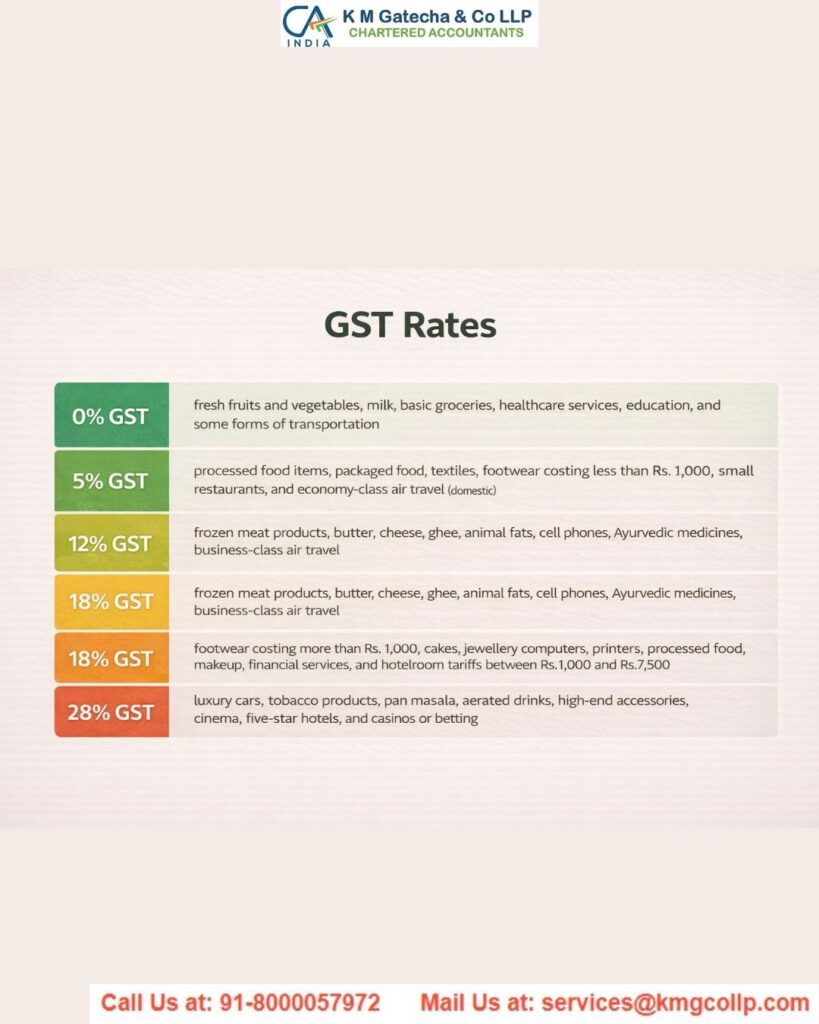
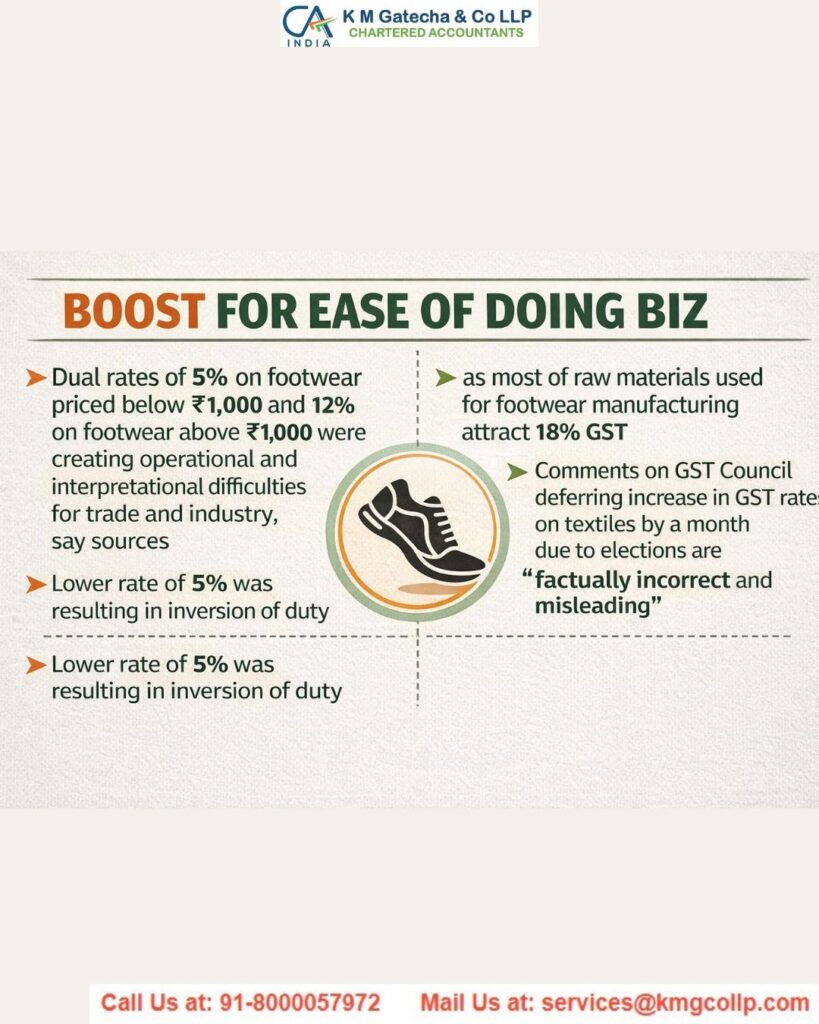
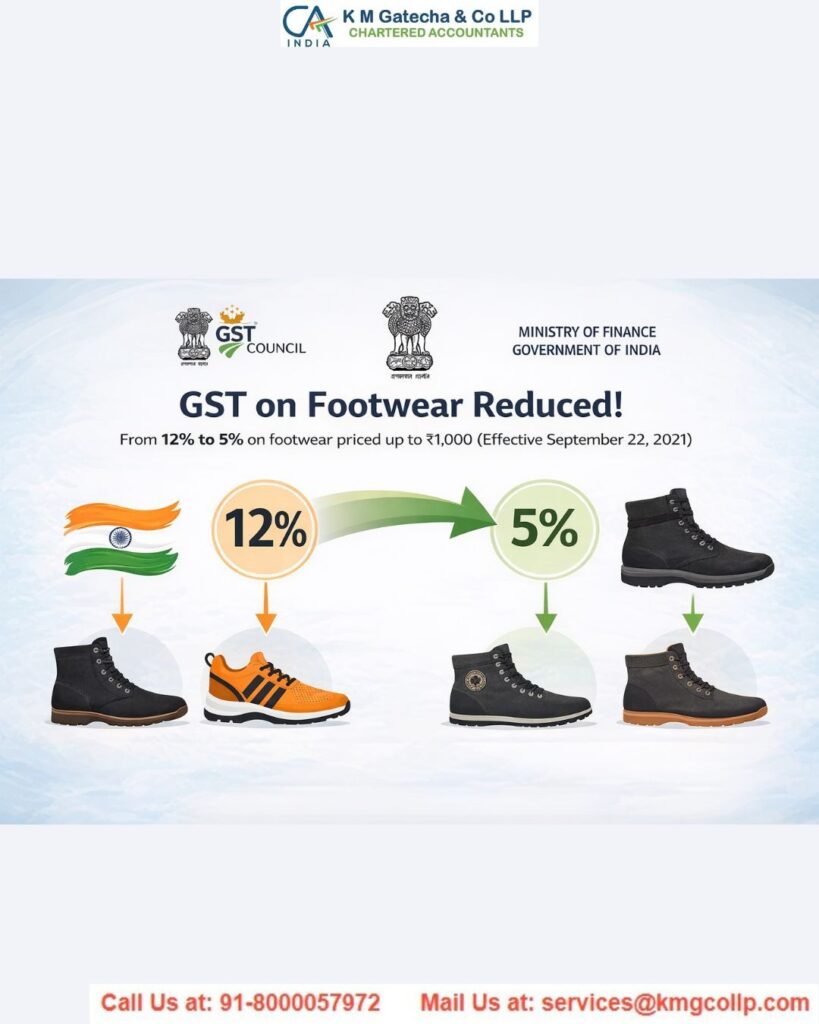
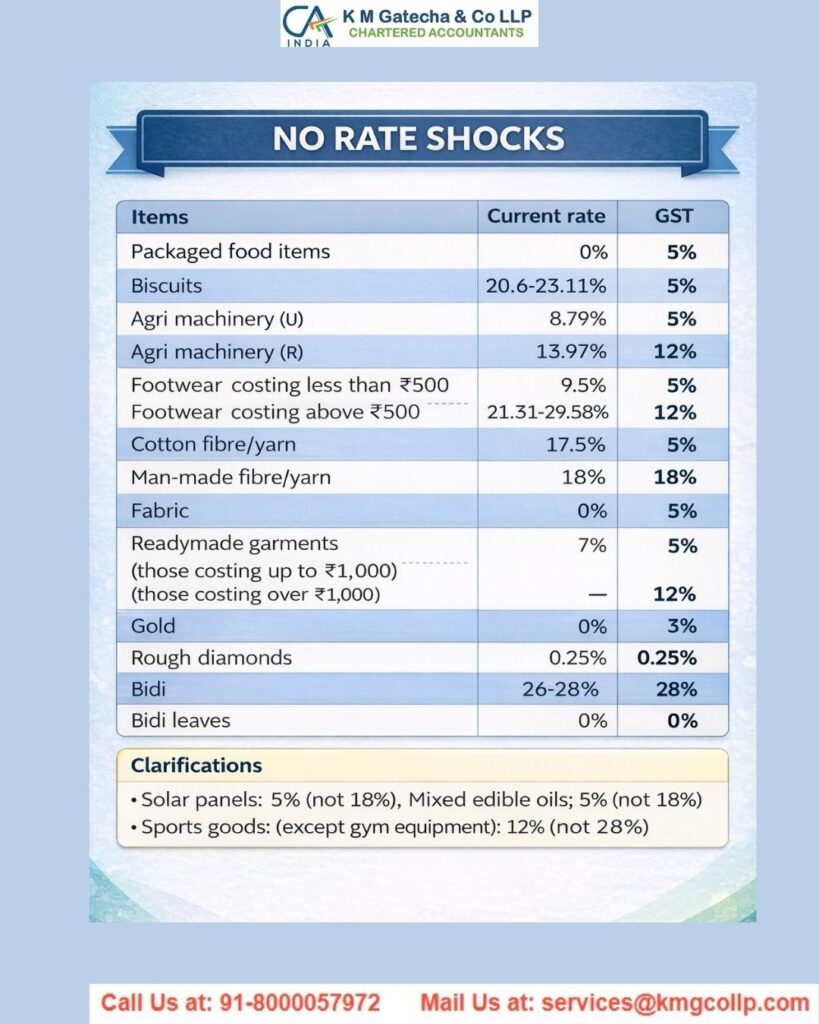
In this industry, there is a gap in GST rates. Finished footwear is taxed at 5%, while raw materials are taxed at 18%. Because of this, extra ITC keeps getting accumulated.
This unused ITC blocks their money and affects cash flow. Due to this, businesses may face difficulty in buying raw materials or managing daily expenses.
So, claiming GST refunds on time is very important for better cash flow and smooth business operations.
Types of GST Refund Available
Under Section 54 of the CGST Act, a registered taxpayer can claim GST refund in the following cases:
- Refund of accumulated ITC (Inverted Duty Structure) – When input tax is higher than output tax
- Refund on exports (zero-rated supplies) – For goods or services exported outside India
- Refund of extra balance in cash ledger – When more tax is paid than required
- Refund on deemed exports – For certain notified supplies treated like exports
- Refund of wrong tax payment – When CGST/SGST is paid instead of IGST or vice versa
When is the GST Refund Applicable?
For footwear manufacturers, GST refund can usually be claimed in the following cases:
1. Inverted Duty Structure (IDS)
This happens when the tax on raw materials is higher than the tax on the final product.
For example, footwear is taxed at 5%, while raw materials are taxed at 18%. Because of this, extra ITC keeps getting accumulated.
You can claim a refund of this unused ITC under Section 54 of the CGST Act.
2. Export of Footwear
Exports are treated as zero-rated supply under GST, so you can claim a refund.
There are two ways to export:
- With payment of tax: You can claim refund of IGST paid
- Without payment of tax (under LUT): You can claim refund of accumulated ITC
This helps exporters recover their tax and improve cash flow.
Documentation Required
Before applying for a GST refund, make sure these things are ready:
- Match GSTR-1 and GSTR-3B properly
- Match ITC with GSTR-2A and GSTR-2B
- Keep export invoices (if exporting)
- Keep shipping bills (if exporting)
- LUT copy (if exporting without paying tax)
- CA certificate (if refund is above the limit)
- Make sure your bank account is verified
Important:
If there is any mismatch in GSTR-1, GSTR-3B, or shipping bill details, your refund may be delayed or you may get a deficiency memo.
Time Limit for Filing Refund
You must apply for a GST refund within 2 years from the relevant date, such as:
- Due date of tax payment, or
- Date of export (as per shipping bill)
(The exact date depends on the type of refund.)
Common Reasons for Refund Delay or Rejection
Most GST refund delays or rejections happen due to mistakes in data or calculation, not because you are not eligible.
- Missing the time limit: Filing after the allowed time will lead to rejection
- ITC mismatch: ITC in GSTR-3B should match with GSTR-2B
- GSTR mismatch: Even a small difference between GSTR-1 and GSTR-3B can delay the refund
- Wrong turnover calculation: Incorrect turnover figures can create issues
- Wrong ITC claimed: Including ineligible ITC like personal expenses, blocked credits, or motor vehicles can lead to rejection
- Errors in export details: Mistakes in shipping bill, invoice values, or LUT can cause delays
- Wrong calculation: Incorrect refund calculation can put your claim on hold
For footwear manufacturers, checking these points carefully can help avoid delays and ensure faster refunds.
Why Footwear Manufacturers Should Avoid Filing GST Refund on Their Own
The footwear industry is closely checked under GST because of the inverted duty structure. Filing a refund without proper knowledge can lead to notices from the department and delay the refund.
Why filing on your own can be risky:
- High scrutiny: Refund claims in this industry are carefully checked. Even small mistakes in calculation can create issues
- High ITC buildup: Raw materials like soles, chemicals, adhesives, and packaging are taxed at 18%, which leads to a large amount of unused ITC
- Risk of deficiency memo (RFD-03): Errors like wrong HSN codes, mismatch in returns, or wrong ITC can result in notices
- Cash flow problems: When ITC is stuck, it affects payments to suppliers, salaries, and overall business operations
Because of these reasons, proper planning and correct filing are very important to avoid delays and get refunds on time.
Why Choose a Professional for GST Refund?
- Find all eligible refunds: Properly check your GST returns and records to make sure no refund is missed
- Accurate calculation: Calculate the refund amount correctly to avoid errors and maximize your claim
- Complete support: Handle the full process, including filing forms, submission, and follow-up
- Proper documentation: Prepare all required documents correctly for smooth approval
- Handling queries: Respond to department notices and questions in the right way to avoid delays
Refund of Stuck Balance in Electronic Credit Ledger
In the footwear industry, businesses invest a lot in machines like EVA moulding machines, injection moulding machines, and conveyor systems. They also use many services to run daily operations.
However, ITC on these machines and services is usually not allowed under the inverted duty structure, which leads to a large amount getting stuck in the Electronic Credit Ledger.
With proper planning, this ITC can be managed better.
- Check and understand your ITC position
- Plan how to use and adjust available credits
- Structure transactions in a better way for tax savings
- Ensure correct classification while filing refund
This helps in better use of ITC, smooth compliance, and faster refund processing.
How to Claim GST Refund for Footwear Manufacturers – Simple Process
Step 1: Initial Review
Before applying for a refund, it is important to check your GST details properly.
- Review GST returns for any errors
- Identify ineligible ITC
- Match ITC with GSTR-2B
- Find all possible refund opportunities
This step ensures everything is correct before filing the refund.
Step 2: Claim Preparation
After filing GSTR-3B, the refund process starts. This step includes:
- Preparing purchase and sales records in the required format
- Classifying purchases into:
- Input goods
- Input services
- Capital goods
- Using correct HSN codes for all purchases and sales
- Matching GST data in books with GST returns
- Reconciling purchase data with GSTR-2B
- Calculating the refund amount correctly
- Double-checking calculations to avoid mistakes
- Preparing required statements, declarations, and certificates
Step 3: Filing & Follow-up
- Upload all documents and file the refund application on the GST portal
- Respond quickly to any questions from the department
- Follow up regularly to avoid delays
Step 4: Refund Credit
- Track the refund status until the money is credited to your bank account
Following these steps properly helps in getting your GST refund faster and without issues.
Disclaimer: The content on this website is for informational purposes only and does not constitute legal, financial, or professional advice. Please consult qualified experts before acting on any information. K M GATECHA & CO LLP accepts no liability for errors, omissions, or outcomes from the use of this content. This site is not an advertisement or solicitation.