What is Advance Tax?
Advance tax is the amount of income tax paid in advance during the financial year, instead of making a single lump-sum payment at the end of the year. It is commonly referred to as the “pay-as-you-earn” system, where taxpayers pay their tax liability in installments based on the income they expect to earn during the year.
The Income-tax Department has prescribed specific due dates for paying advance tax in installments. This system helps taxpayers manage their financial obligations efficiently and enables the government to receive a steady flow of revenue throughout the year.
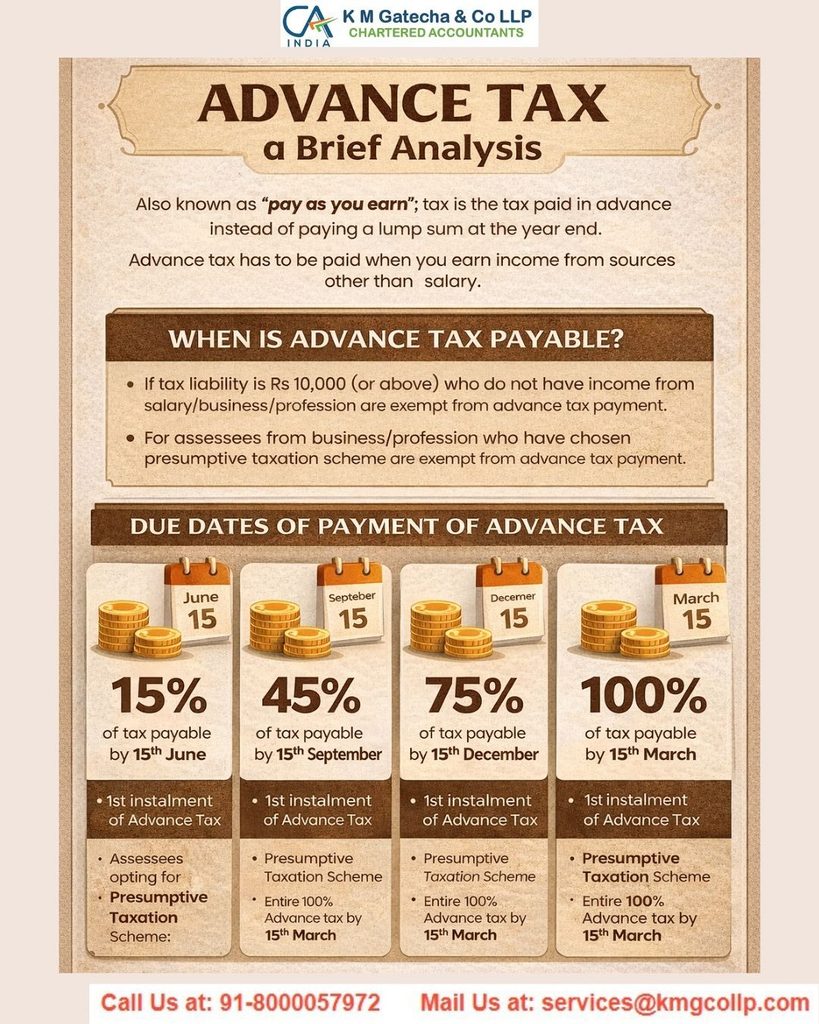
Who Should Pay Advance Tax?
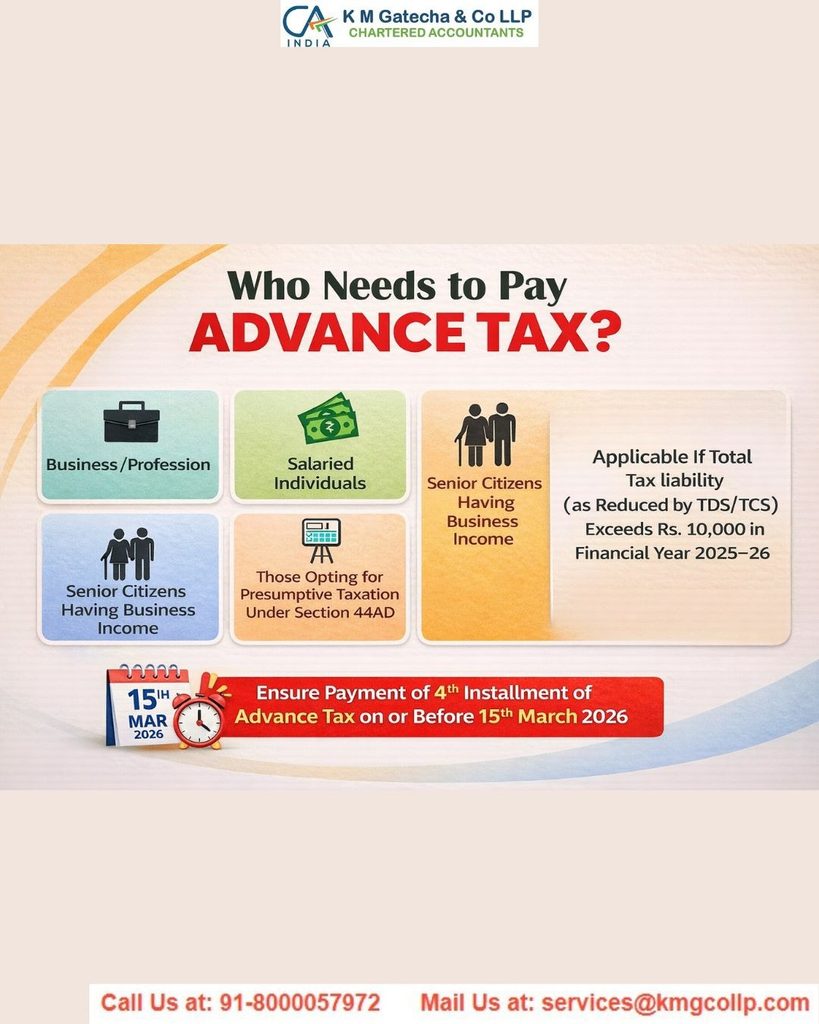
Every taxpayer whose estimated tax liability is ₹10,000 or more in a financial year, after considering TDS and TCS, is required to pay advance tax. This requirement applies to individuals as well as businesses and professionals.
Below are the categories of taxpayers who are generally liable to pay advance tax.
Salaried Individuals
Salaried individuals must pay advance tax if they have additional income apart from salary—such as rental income, interest income, capital gains, or freelance income—and their total tax liability exceeds ₹10,000 in a financial year.
Freelancers
Freelancers earning income from multiple sources during the year are required to pay advance tax if their total tax liability is more than ₹10,000. This includes professionals working independently or providing services on a contract basis.
Businesses
Businesses are required to pay advance tax on the income generated during the financial year. Businesses opting for the presumptive taxation scheme under Section 44AD must also comply with advance tax payment requirements.
Senior Citizens
Senior citizens who earn income from a business or profession during the financial year are required to pay advance tax if their tax liability exceeds the prescribed limit. However, senior citizens without business or professional income are generally exempt from advance tax.
Presumptive Income for Professionals
Self-employed professionals such as lawyers, doctors, architects, consultants, and other professionals covered under the presumptive taxation scheme under Section 44ADA must pay advance tax if their tax liability exceeds ₹10,000.
How is Advance Tax Calculated?
Advance tax is calculated by estimating the total income for the financial year and applying the applicable tax rates and adjustments. The general formula for calculating advance tax liability is as follows:
Income Tax on Estimated Total Income
− Relief under Section 87A
= Income Tax after Relief
- Surcharge (if applicable)
= Tax Liability - Health and Education Cess
= Total Tax Liability
− Other Relief (if applicable)
− TDS/TCS
= Advance Tax Liability
If the final advance tax liability is ₹10,000 or more, the taxpayer must pay advance tax in installments as per the prescribed schedule.
Why is Advance Tax Important?
Advance tax plays a crucial role in ensuring smooth tax compliance and financial planning for taxpayers. Instead of paying a large amount at the end of the financial year, advance tax allows taxpayers to distribute their tax payments across multiple installments.
Key Reasons Why Advance Tax is Important
Avoids Interest and Penalties
Timely payment of advance tax helps taxpayers avoid interest charges under Sections 234B and 234C of the Income-tax Act.
Improves Financial Planning
Paying tax in installments allows individuals and businesses to manage their cash flow effectively throughout the year.
Ensures Legal Compliance
Regular payment of advance tax helps taxpayers remain compliant with tax laws and reduces the risk of receiving notices from the Income Tax Department.
Reduces Year-End Financial Burden
Advance tax prevents the accumulation of a large tax liability at the time of filing the income tax return.
Important Due Dates for Advance Tax Payment
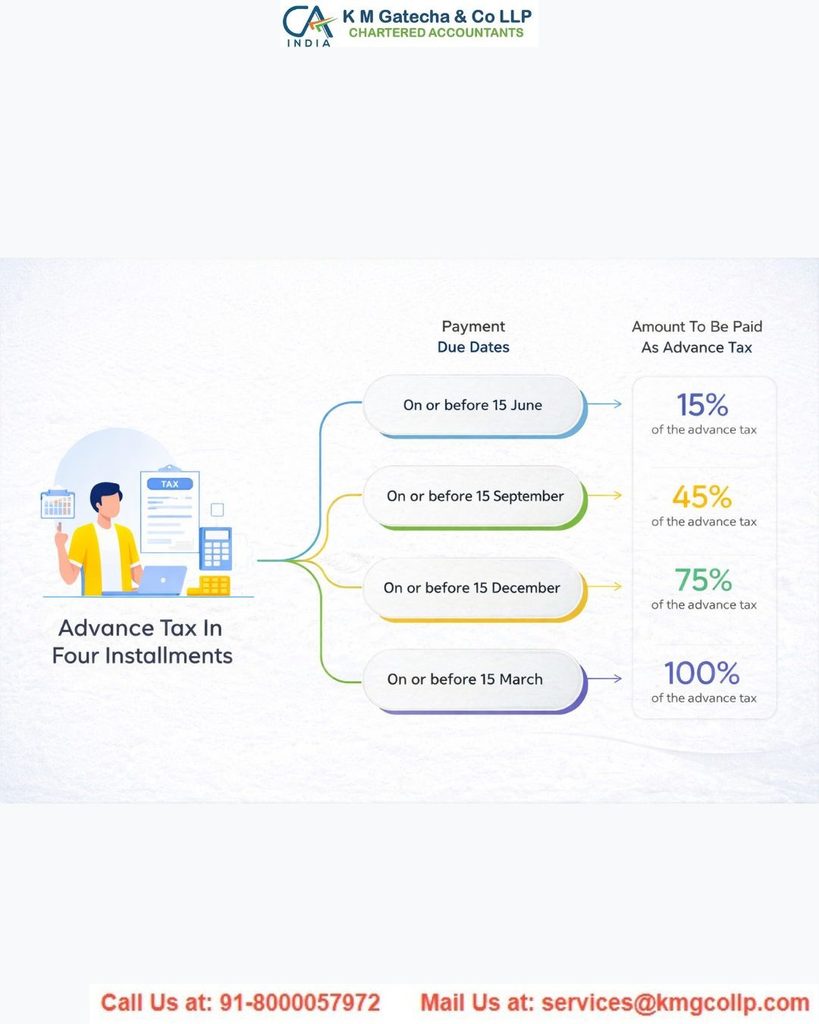
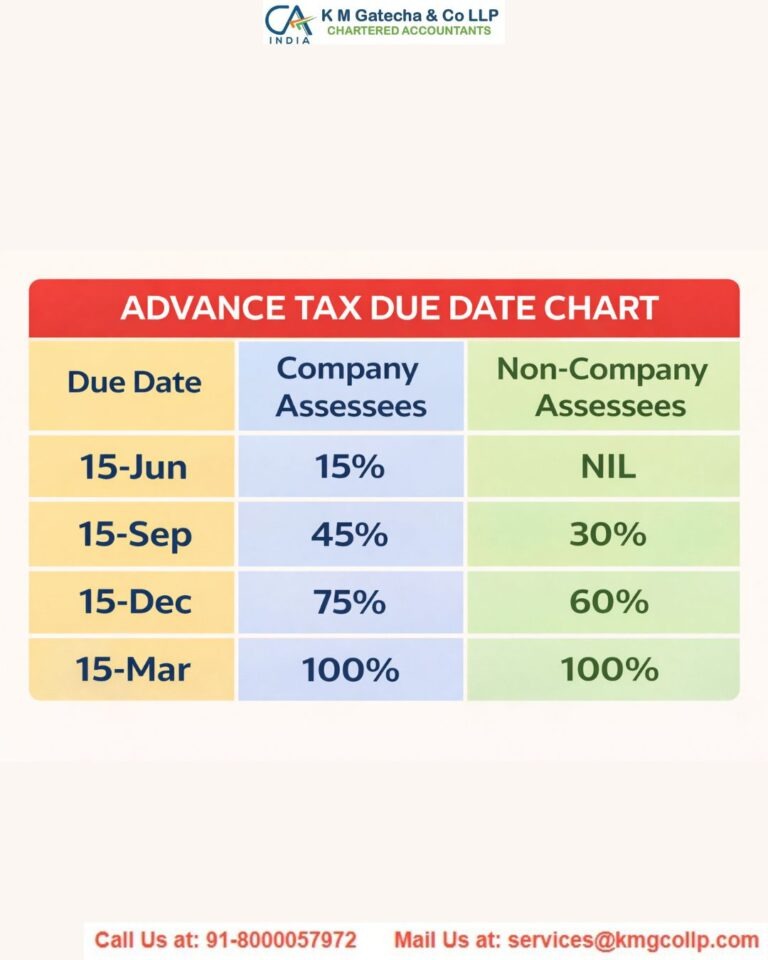
Advance tax must be paid according to the schedule prescribed under the Income-tax Act for both individual and corporate taxpayers.
| Due Date | Advance Tax Payable |
| On or before June 15 | 15% of total tax liability |
| On or before September 15 | 45% of total tax liability |
| On or before December 15 | 75% of total tax liability |
| On or before March 15 | 100% of total tax liability |
Taxpayers who opt for the presumptive taxation scheme are generally required to pay the entire advance tax amount in a single installment on or before March 15.
Which Forms Are Required for Advance Tax?
To pay advance tax in India, taxpayers are required to use Challan No. ITNS 280. This is the official form prescribed by the Income Tax Department for depositing income tax, including advance tax, self-assessment tax, and regular assessment tax.
Challan ITNS 280 can be submitted online through the Income Tax e-Filing portal or physically at authorized bank branches. It is essential to fill in the form carefully to ensure that the tax payment is correctly credited to the taxpayer’s account.
Pre-requisites for Filling Challan No. ITNS 280
Before making an advance tax payment, taxpayers must ensure that the following details are accurate and complete.
PAN Details
You must enter your Permanent Account Number (PAN) correctly while filling the challan. Incorrect PAN details may result in the tax being credited to another taxpayer’s account, which can create complications during income tax return filing.
Assessment Year
Select the correct Assessment Year (AY) for which the tax is being paid.
Advance tax is paid during the current financial year for the income earned in that year, but it is always credited to the corresponding assessment year. Choosing the wrong assessment year may lead to reconciliation issues and delays in processing your tax return.
Selecting the Type of Payment
Taxpayers must select the correct type of payment in Challan ITNS 280. The most common options include:
- Advance Tax – When tax is paid during the financial year based on estimated income
- Self-Assessment Tax – When tax is paid after the financial year ends while filing the income tax return
- Regular Assessment Tax – When tax is paid in response to a demand notice from the Income Tax Department
Selecting the correct payment type ensures proper classification of the tax payment.
Challan Identification Number (CIN)
After successful payment of advance tax using Challan ITNS 280, a Challan Identification Number (CIN) is generated.
The CIN is an important reference number that confirms the payment has been processed by the bank and recorded by the Income Tax Department.
Components of CIN
The Challan Identification Number typically includes:
- BSR Code of the bank branch
- Date of payment
- Challan serial number
Taxpayers should keep the CIN safely and use it while filing their income tax return or verifying tax payments.
Verification of Advance Tax Payment
After making the payment, it is advisable to verify whether the Income Tax Department has successfully received the payment.
You can verify the payment by:
- Checking the payment history on the Income Tax e-Filing portal
- Reviewing Form 26AS
- Checking the Annual Information Statement (AIS)
Verification helps ensure accurate tax records and prevents future discrepancies.
What is the Interest on Late Payment of Advance Tax?
If advance tax is not paid on time or is paid in insufficient amounts, interest may be charged under the provisions of the Income-tax Act, 1961. The two main sections governing interest on delayed or short payment of advance tax are Section 234B and Section 234C.
Interest Under Section 234B
Interest under Section 234B applies when a taxpayer fails to pay advance tax or pays less than the required amount.
When Section 234B Applies
Interest is charged if:
- Less than 90% of the total tax liability is paid by March 31, or
- Advance tax is not paid at all during the financial year
Interest Rate Under Section 234B
- Interest Rate: 1% per month
- Basis: Unpaid tax amount
- Duration: From April 1 of the assessment year until the tax is fully paid
This interest continues to accumulate until the outstanding tax liability is cleared.
Interest Under Section 234C
Interest under Section 234C applies when advance tax installments are paid late or in amounts lower than the prescribed percentage.
Interest Calculation Under Section 234C
| Scenario | Interest Rate | Duration of Interest | Basis for Interest Calculation |
| Advance tax paid by June 15 is less than 15% | 1% per month | 3 months | 15% of total tax minus tax paid before June 15 |
| Advance tax paid by September 15 is less than 45% | 1% per month | 3 months | 45% of total tax minus tax paid before September 15 |
| Advance tax paid by December 15 is less than 75% | 1% per month | 3 months | 75% of total tax minus tax paid before December 15 |
| Advance tax paid by March 15 is less than 100% | 1% per month | 1 month | 100% of total tax minus tax paid before March 15 |
Timely payment of advance tax installments helps taxpayers avoid these additional interest charges.
Disclaimer: The content on this website is for informational purposes only and does not constitute legal, financial, or professional advice. Please consult qualified experts before acting on any information. K M GATECHA & CO LLP accepts no liability for errors, omissions, or outcomes from the use of this content. This site is not an advertisement or solicitation.