How to Close a Registered Company in India: Step-by-Step Procedure
Starting a business brings both excitement and challenges. However, sometimes, due to operational issues, revenue losses, or strategic decisions, a company may need to be closed legally.
Closing a company in India is a formal process, and it is crucial for business owners to follow the legal steps correctly to avoid future liabilities. Many get confused between Strike Off, Winding Up, and Liquidation. This guide clarifies these terms and provides a step-by-step procedure to close a company.
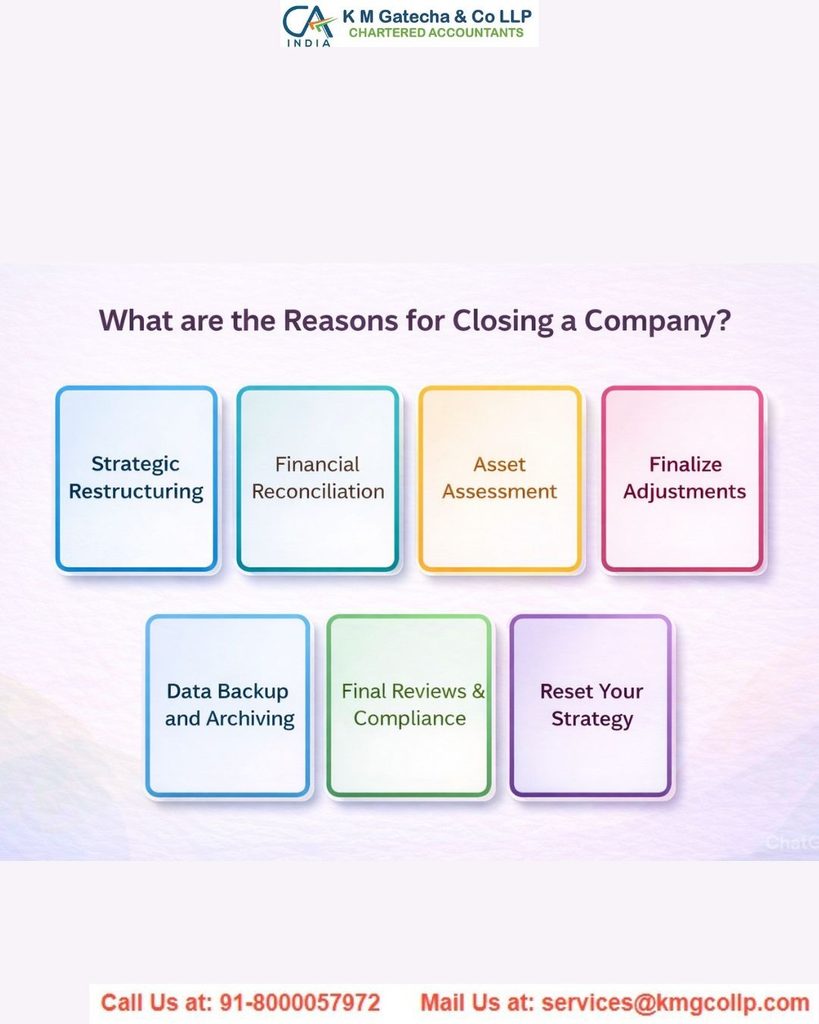
Primary Methods to Close a Company in India
There are two main methods to close a company in India:
| Method | Ideal For | Time Taken | Cost | Governing Law |
| Strike Off | Small companies with no assets and liabilities | 3–6 months | Lower cost | Section 248, Companies Act, 2013 |
| Winding Up / Liquidation | Large companies with assets, liabilities, or disputes | 6–24 months | Higher cost | Insolvency and Bankruptcy Code, 2016 |
Documents Required to Close a Company
1. Strike Off Method
- Copy of Board Resolution approving strike off
- Copy of Special Resolution passed in the Extraordinary General Meeting (EGM)
- Indemnity Bond (STK-3) signed by all directors
- Affidavit (STK-4) signed individually by each director
- Bank Account Closure Letter
- STK-8 Account Statement (not older than 30 days)
- MOA, AOA, and PAN of the company
2. Winding Up / Liquidation
- Form-26 with special resolution approving winding up
- Form 107: Declaration of solvency showing ability to pay debts
- Liquidator’s Consent to initiate winding up
- Notice of Winding Up in the Official Gazette
- Notice of Liquidator Appointment in the Official Gazette
- Winding Up Plan / Report by liquidator
- Documentation of Final Report & Accounts
- MOA, AOA, and PAN of the company
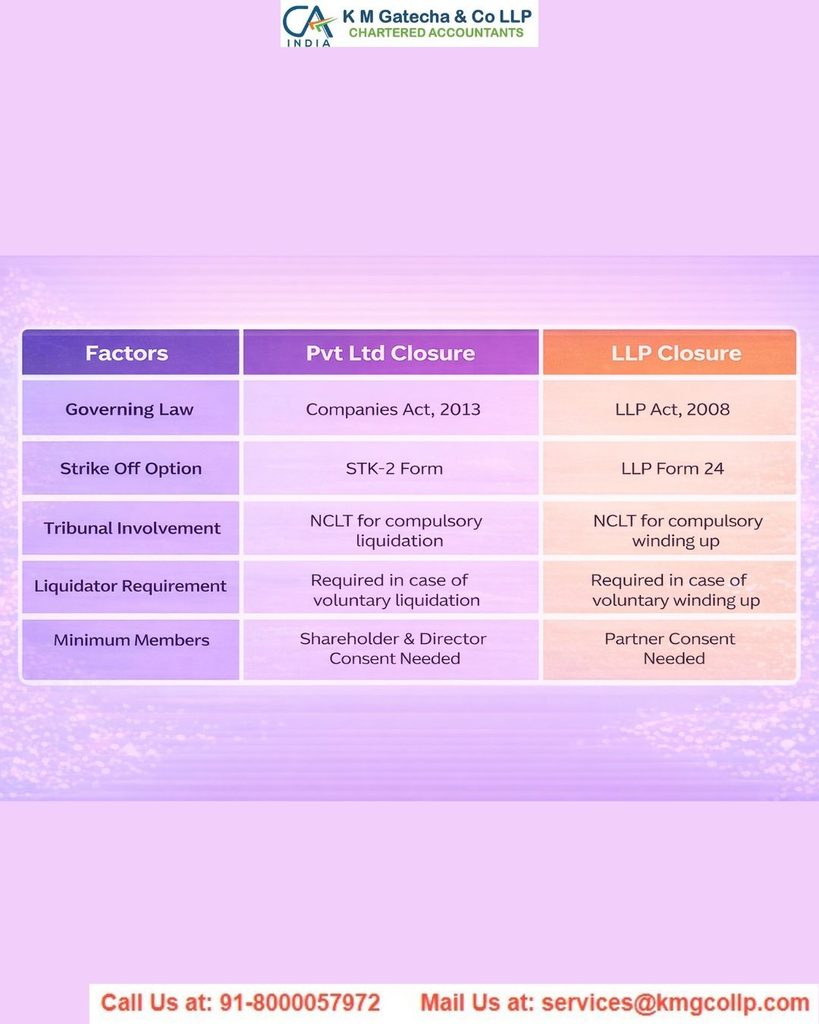
Step-by-Step Procedure to Close a Company
A. Closing a Company by Strike Off
- Board Resolution
Directors pass a board resolution approving the strike off decision. - Clear Debts & Liabilities
Ensure all outstanding debts and liabilities are cleared. - Special Resolution
Pass a special resolution in an Extraordinary General Meeting (EGM). Minimum 75% shareholder approval is required. - Filing MGT-14
Submit MGT-14 within 30 days of passing the resolution along with the special resolution. - Filing STK-2
Submit e-form STK-2, the official form for striking off the company’s name. - Public Notice (STK-5A)
ROC publishes a notice in the Official Gazette and two newspapers. The public has 30 days to raise objections. - Final Notice (STK-7)
If no objections are received, ROC issues the final notice via STK-7. The company officially ceases to exist as of the publication date.
B. Closing a Company by Winding Up / Liquidation
- Special Resolution (Form-26)
Pass a special resolution approving winding up. - Declaration of Solvency (Form-107)
Directors declare the company’s ability to pay its debts. - Liquidator Appointment
Appoint a liquidator who will oversee the winding up process. - Official Gazette Notice
Issue a notice in the Official Gazette about the winding up and liquidator appointment. - Winding Up Plan
Liquidator prepares and submits the winding up plan, including asset realization and debt settlement. - Final Accounts & Closure
Submit final accounts and reports to ROC. Once approved, the company is officially dissolved.
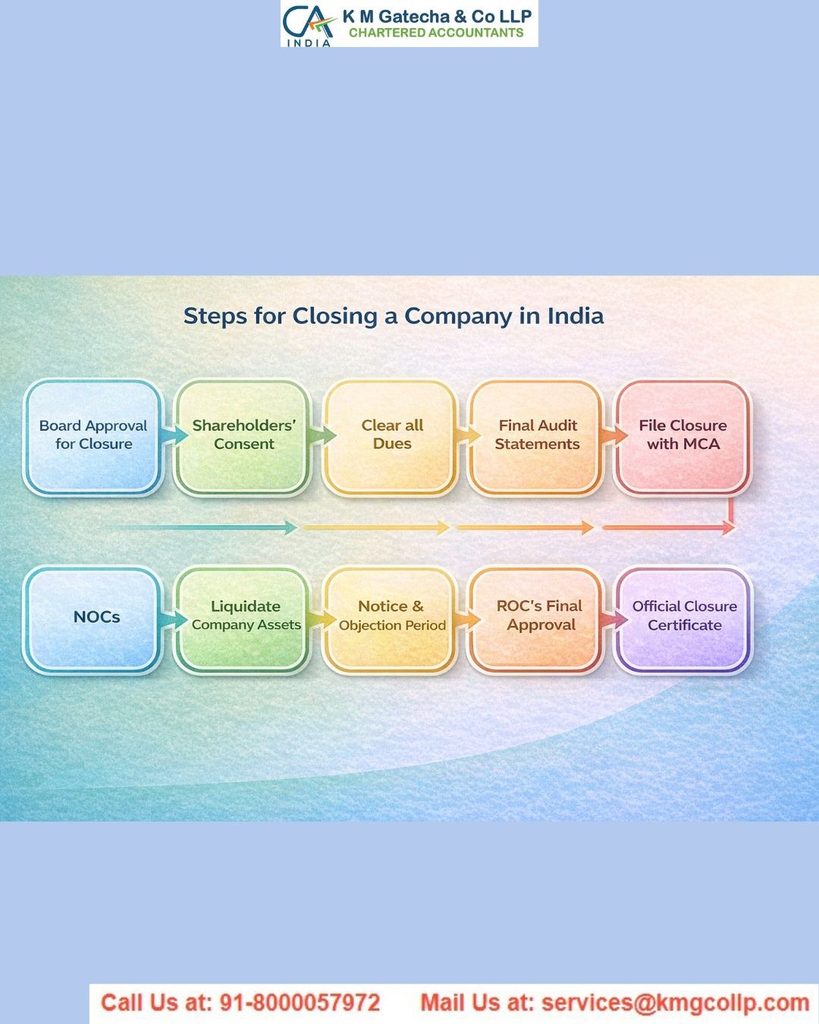
Steps to Close a Company by Winding Up in India
Closing a company via winding up is a formal legal process where all assets and liabilities of the company are settled before dissolution. The process is generally used for larger companies or companies with outstanding debts or complex operations. Below is a step-by-step procedure:
1. Passing a Special Resolution
- The company begins the winding up process by passing a special resolution in a general meeting.
- At least three-fourth of members must approve the proposal to proceed with winding up.
2. Solvency Declaration
- The directors assess the company’s financial health and its ability to pay debts and liabilities.
- If the company is solvent, the director files a solvency declaration under Form 107 with the Registrar of Companies (RoC), as per Rule 269.
3. Liquidator Appointment
- Members appoint a liquidator to manage the winding up process.
- The liquidator’s responsibilities include settling debts, managing assets, and overseeing the liquidation process.
4. Notice of Liquidator Appointment
- The appointment of the liquidator must be published in the Official Gazette and reported to the RoC within 14 days.
5. Settlement of Debts
- The liquidator takes control of the company’s assets and uses them to pay off debts and liabilities.
- If the company cannot pay its debts fully, the liquidator convenes a creditors’ meeting to decide the next steps.
6. Annual General Meeting (if required)
- If the winding up process extends beyond one year, the liquidator may call an Annual General Meeting (AGM) of shareholders.
- Court approval may also be sought to extend the winding up period.
7. Final Report and Meeting
- After all assets are liquidated and debts are settled, the liquidator presents a final report.
- The report outlines asset distribution, debt settlement, and the entire liquidation procedure.
8. Dissolution of the Company
- The company applies to the RoC for dissolution.
- Upon approval, the company is removed from the RoC registry and is considered legally dissolved.
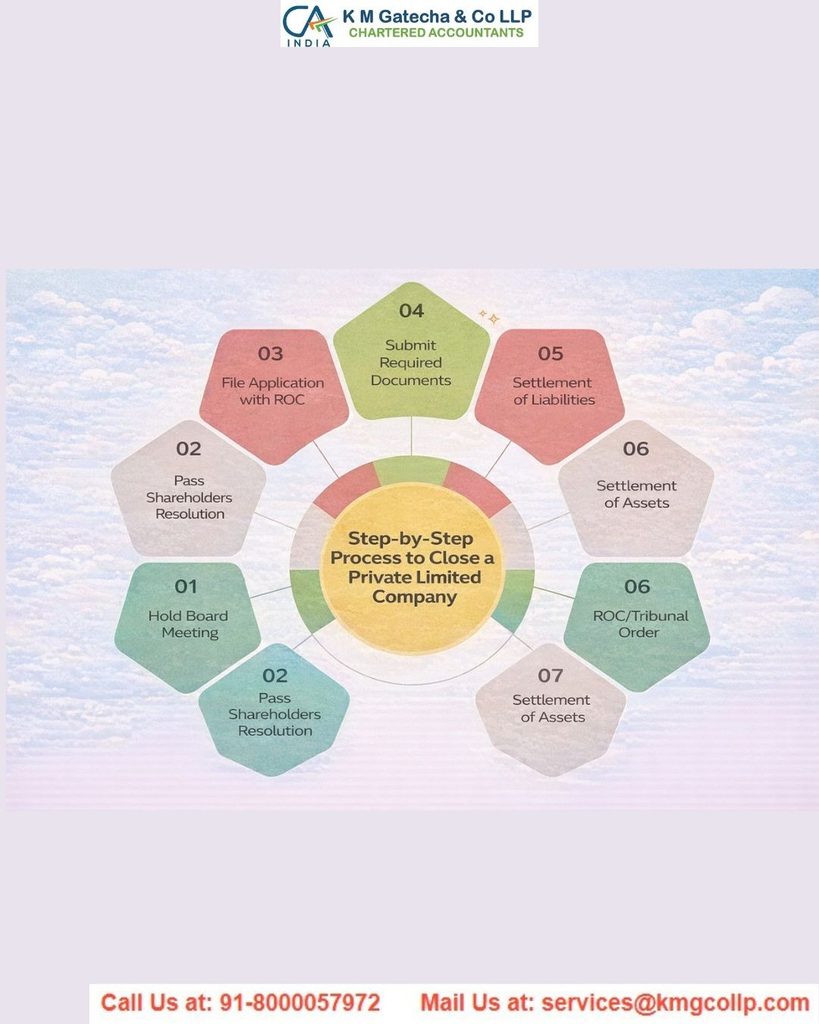
Conclusion
Closing a company in India requires following a legal and structured process, either via Strike Off or Winding Up:
| Method | Key Steps | Purpose |
| Strike Off | Board resolution → Clear debts → Special resolution → MGT-14 → STK-2 → STK-5A → STK-7 | Removes company name from RoC registry; ideal for small, debt-free companies |
| Winding Up | Special resolution → Solvency declaration → Liquidator appointment → Settle debts → Final report & meetings → RoC dissolution | Clears all assets and liabilities; ideal for larger companies or those with complex debts |
Both methods ensure the company ceases operations legally, but winding up provides a comprehensive closure by addressing all financial obligations, while strike off is simpler and faster for smaller companies.
Disclaimer: The content on this website is for informational purposes only and does not constitute legal, financial, or professional advice. Please consult qualified experts before acting on any information. K M GATECHA & CO LLP accepts no liability for errors, omissions, or outcomes from the use of this content. This site is not an advertisement or solicitation.