

A gift can be in the form of cash, movable property, or immovable property. It is important to understand the tax implications, disclose the gift correctly in Income Tax returns, and maintain proper documentation for compliance.

Tax Implications of Gifting Shares
1. In the Hands of the Sender:
The person giving the gift is not liable to pay any tax, as the Gift Tax Act (GTA) has been abolished. Under the Income Tax Act, capital gains can arise from the transfer of a capital asset, but a gift is explicitly excluded from the definition of “transfer” under Section 47. Therefore, no income tax is payable by the sender.
2. In the Hands of the Recipient:
As per Section 56(2) of the Income Tax Act, the recipient is liable to pay tax on gifts of movable property—such as shares, ETFs, mutual funds, jewellery, or artworks—received without consideration if the fair market value exceeds ₹50,000. The income from such gifts should be reported under “Income from Other Sources” in the Income Tax Return and taxed at the applicable slab rates.
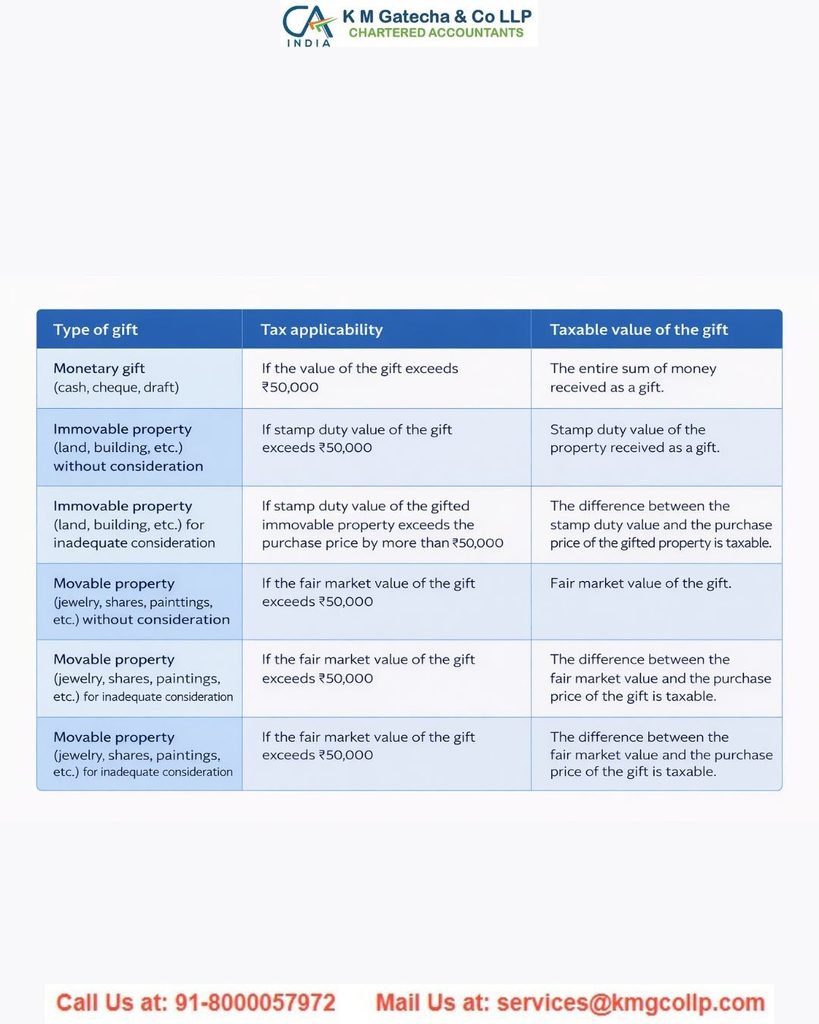
Exemptions from Tax on Gifting of Shares:
- Gifts received from relatives, including siblings, spouse, and lineal ascendants or descendants.
- Gifts received on the occasion of marriage.
- Gifts received by inheritance.
Tax on Sale of Gifted Shares and Securities
If shares, ETFs, mutual funds, or other securities are received as a gift and later sold, the income from the sale is taxable under the heading “Income from Capital Gains”. The recipient must pay tax at the applicable capital gains rates and file ITR-2.
The holding period for determining whether the gain is short-term (STCG) or long-term (LTCG) is calculated from the date the previous owner acquired the asset until the date of sale. The cost of acquisition for computing capital gains is taken as the purchase price paid by the donor.
To ensure the genuineness of the gift transaction, both the sender and recipient should maintain proper documentation, such as a gift deed. Large-value gifts may attract scrutiny from the tax authorities, making documentation crucial for compliance.

Conclusion
Gifting shares, mutual funds, or other securities can be a tax-efficient way to transfer wealth, but it is important to understand the tax implications for both the sender and the recipient. While the donor does not pay tax on the gift, the recipient may be liable under Section 56(2) if the value exceeds ₹50,000, except in cases of gifts from relatives, on marriage, or by inheritance. When the gifted assets are sold, capital gains tax applies, with the donor’s cost and holding period used to calculate the gain. Maintaining proper documentation, such as a gift deed, is essential to substantiate the transaction and ensure compliance with tax laws.

Disclaimer: The content on this website is for informational purposes only and does not constitute legal, financial, or professional advice. Please consult qualified experts before acting on any information. K M GATECHA & CO LLP accepts no liability for errors, omissions, or outcomes from the use of this content. This site is not an advertisement or solicitation.


