
What is ITR-U (Updated Income Tax Return)?
ITR-U, also called an Updated Income Tax Return under Section 139(8A), is a helpful option for taxpayers who either did not file their ITR or made mistakes while reporting income earlier. It allows you to correct errors or add missing income details in your previous returns.
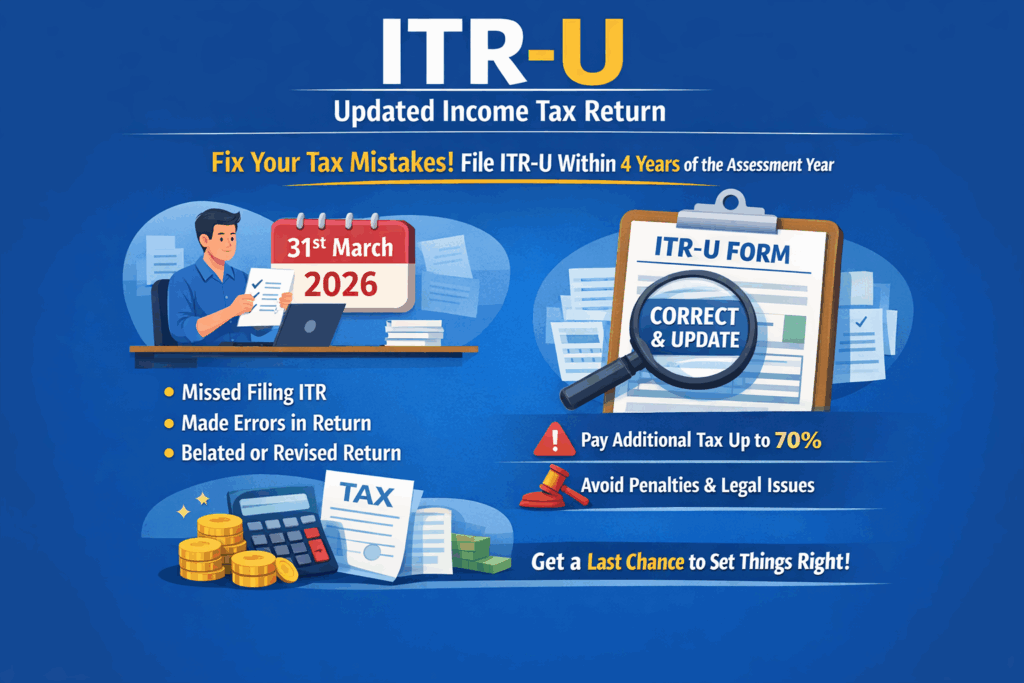
As per Budget 2025, you can file ITR-U within 4 years from the end of the relevant assessment year. This gives taxpayers extra time to fix their tax filings and stay compliant.
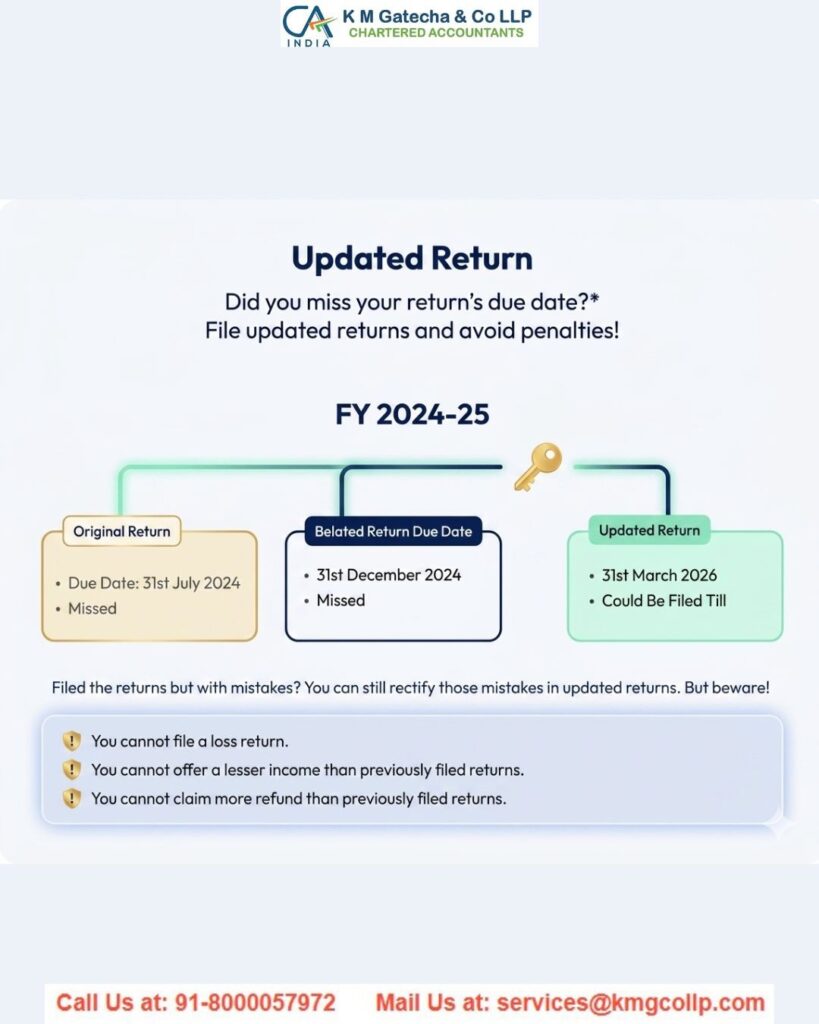
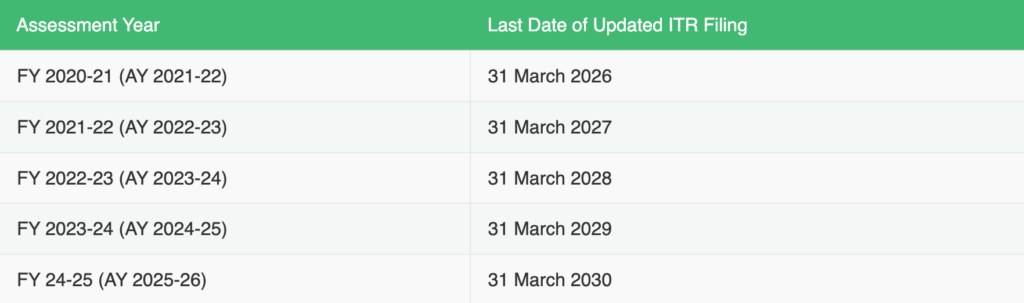
For example, if you missed filing your ITR for AY 2021–22 (FY 2020–21), you can still file an updated return until 31st March 2026. If you miss this final deadline, it may lead to penalties or legal issues.
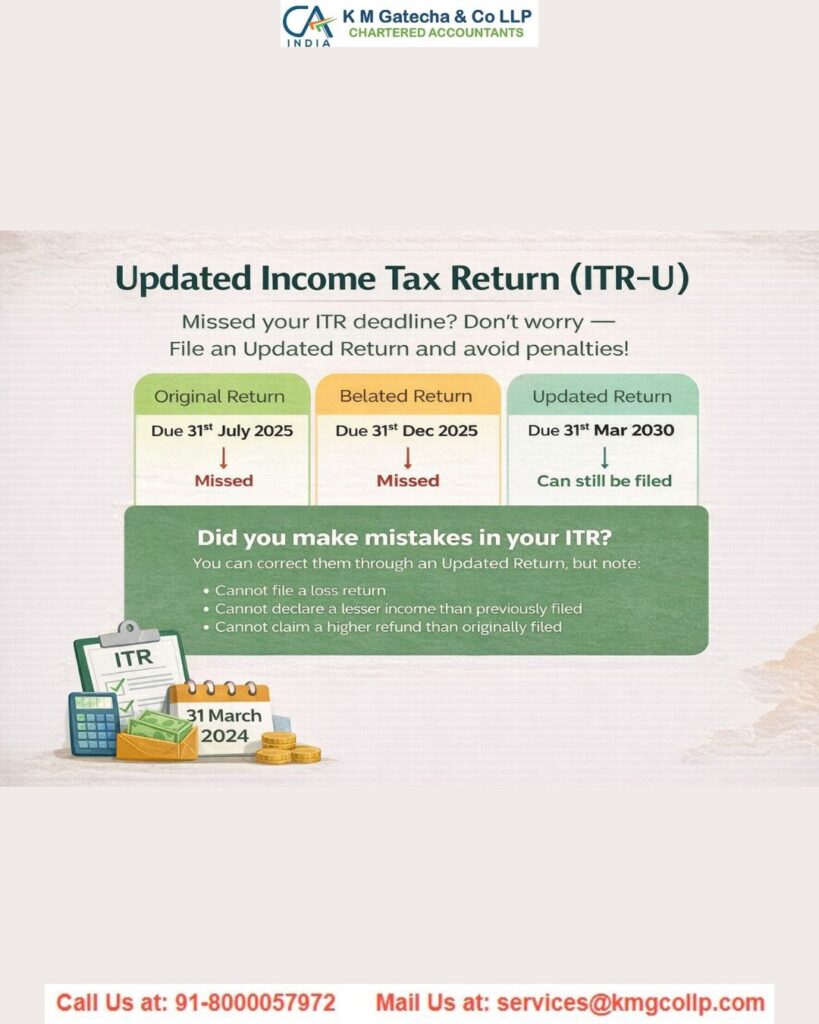
Keep in mind, filing ITR-U involves paying additional tax (up to 70%) along with your due tax amount.
You can file ITR-U whether you:
- Did not file your ITR at all, or
- Filed it but made mistakes, or
- Filed a belated or revised return
Key Features of Updated Return (ITR-U)
Purpose
ITR-U helps taxpayers correct their old income tax returns. You can add missed income, fix mistakes, and stay compliant to avoid penalties.
Time Limit (Eligibility)
From April 2025, you can file ITR-U within 5 years from the end of the relevant assessment year.
For example, for FY 2020–21 (AY 2021–22), the last date is 31st March 2026.
File Only Once
You can file ITR-U only one time for a particular assessment year. After that, no more changes are allowed.
What You Can Correct
You can correct:
- Income details
- Tax credits
- Deduction errors
But you cannot use ITR-U to claim or increase a refund.
Tax Payment Required
Before filing ITR-U, you must pay any extra tax and interest due.
No Refund Allowed
ITR-U is mainly for declaring extra income and correcting mistakes. It cannot be used to claim refunds.
Latest Updates in ITR-U Form
Longer Time Limit
As per the Finance Act, 2025, you can now file ITR-U within 4 years (48 months) from the end of the relevant assessment year.
Extra Tax Charges
If you file late, you need to pay extra tax:
- Filing in the 3rd year → 60% additional tax
- Filing in the 4th year → 70% additional tax
Rule for Notice Cases (Section 139(8A))
If you receive a notice under Section 148A (show-cause notice) after 36 months, you cannot file ITR-U.
However, if later it is decided that the notice is not valid, then you can still file ITR-U within the 4-year limit.
Update in Section 140B
This section now clearly defines how much extra tax you need to pay for delayed filing.
Update in Rule 12AC
This rule has also been updated to match the new changes in ITR-U filing rules.
Who Should File ITR-U?
Any taxpayer can file an Updated Return under Section 139(8A), whether they have already filed their return or not. It is useful if there was any mistake, missing detail, or incorrect information in the earlier return.
You can file ITR-U in the following cases:
- You did not file your return earlier
- You missed reporting some income
- You selected the wrong income category (head of income)
- You need to reduce carried forward losses
- You need to reduce unabsorbed depreciation
- You need to correct tax credit under Sections 115JB/115JC
- You applied the wrong tax rate earlier
In short, ITR-U gives you a chance to fix errors and update your tax return correctly.
Who Cannot File ITR-U?
You cannot file an Updated Return (ITR-U) in the following situations:
- You have already filed an ITR-U for that year (only one time allowed)
- The updated return shows a loss
- It reduces your tax liability compared to the earlier return
- It increases your refund amount
Also, ITR-U is not allowed if:
- A search operation has been conducted under Section 132
- Your books or documents are seized under Section 132A
- A tax survey has been done under Section 133A
- Any assessment, reassessment, or revision is ongoing or already completed for that year
ITR-U Filing Deadline
The time limit to file an Updated Return (ITR-U) under Section 139(8A) has been increased from 2 years to 4 years starting April 2025 (as announced in Budget 2025–26).
This means you can now file ITR-U within 4 years from the end of the relevant assessment year.
For example, for FY 2023–24 (AY 2024–25), you can file an updated return till 31st March 2029.
ITR-U Late Filing Penalty
From April 2025, you can file an Updated Income Tax Return (ITR-U) within 4 years instead of 2 years.
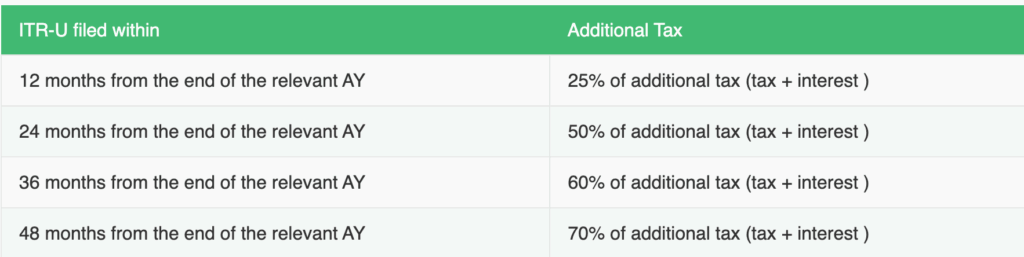
However, if you file late, you will have to pay extra tax along with your normal tax and interest:
- Filed within 12 months → 25% extra tax
- Filed within 24 months → 50% extra tax
- Filed within 36 months → 60% extra tax
- Filed within 48 months → 70% extra tax
So, even though you now have more time, it is better to file early to avoid paying higher penalties.
How to File Form ITR-U?
To file an Updated Return (ITR-U), you must submit it along with the correct ITR form (ITR-1 to ITR-7), depending on your income type.
Part A – Basic Details
In this section, you need to provide general information such as:
- PAN and Aadhaar Number
- Assessment Year (AY)
- Whether you filed a return earlier for that year (Yes/No)
- If yes, details like:
- Type of return filed (original, revised, etc.)
- Acknowledgement number and filing date
- Confirm that you are eligible to file ITR-U
- Select the correct ITR form (ITR-1 to ITR-7)
- Reason for updating the return, such as:
- Return not filed earlier
- Income missed or wrongly reported
- Wrong income category selected
- Choose the time period of filing (within 12 months, 24 months, etc.)
- Mention if you are reducing losses, depreciation, or tax credit
Part B – Income & Tax Calculation
This section covers your updated income and tax details:
- Income under which extra income is being reported
- Total income as per your last filed return (if any)
- Updated total income after corrections
- Tax payable or refund (if applicable)
- Tax paid earlier (if any)
- Any refund already received
Additional Tax & Payment Details
- Late filing fee (if applicable)
- Any regular tax or self-assessment tax paid
- Extra tax on updated income (25%, 50%, 60%, or 70% depending on delay)
- Final amount payable after adding all taxes
- Details of tax payments made under Section 140B
- Advance tax or self-assessment tax not claimed earlier
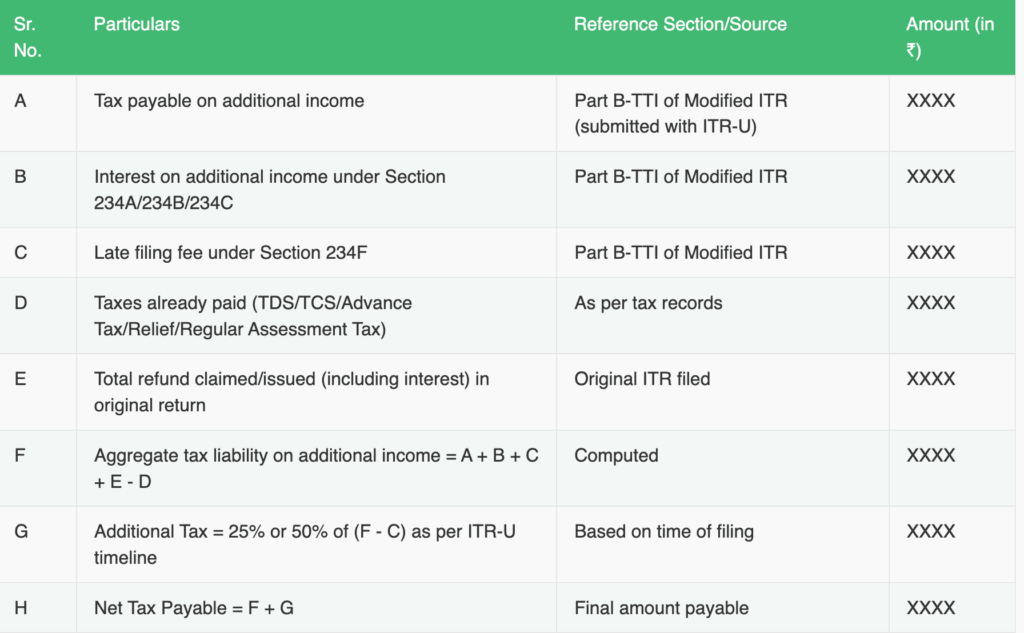
How to Calculate Tax for ITR-U
- Total Tax Liability = Tax + Interest + Late Fee + Additional Tax
- Net Tax Payable = Total Tax Liability – TDS/TCS/Advance Tax/Relief
How to File ITR-U Using KMG CO LLP
KMG CO LLP offers DIY (self-filing), where you can file your ITR easily by entering basic details.
Steps to File ITR-U on KMG CO LLP
- Login / Sign Up
Create an account or log in to KMG CO LLP. - Select Income Sources
Choose your income types (salary, business, capital gains). The system will pick the correct ITR form automatically. - Upload Form 16 (Optional)
Upload Form 16, or skip if you don’t have it. - Enter Basic Details
Select the financial year, enter PAN, DOB, and fetch pre-filled data if available. - Fill Personal & Address Details
Enter your name, contact details, and address. - Add Income Details
Enter salary or business income. If Form 16 is uploaded, details will be auto-filled. - Claim Deductions
Add investments like PPF, LIC, ELSS, and claim deductions (80C, 80D, etc.). - Enter Bank Details
Provide bank account info for refunds. - Add Tax Details
Upload Form 26AS or enter tax details like TDS, advance tax, etc. - Select ITR-U Option
Choose ITR-U and mention if you filed a return earlier or not. - Check Tax Calculation
The system shows tax under old vs new regime—choose the better one. - Pay Tax
Pay any remaining tax online or offline. - Submit ITR-U
Download the file and upload it to the Income Tax portal, or get expert help if needed.
ITR-U for Missed Returns – What If You Don’t File?
The CBDT gives you a last chance to stay compliant by filing an Updated Return (ITR-U).
If you don’t file your ITR, you may face:
- Income tax notices
- Penalties and interest
- Legal action
If your tax due is more than ₹25,000 and you still don’t file, you may face:
- Jail from 6 months to 7 years, plus a fine
If your tax due is less than ₹25,000:
- Jail from 3 months to 2 years, plus a fine
ITR-U vs Belated vs Revised Return
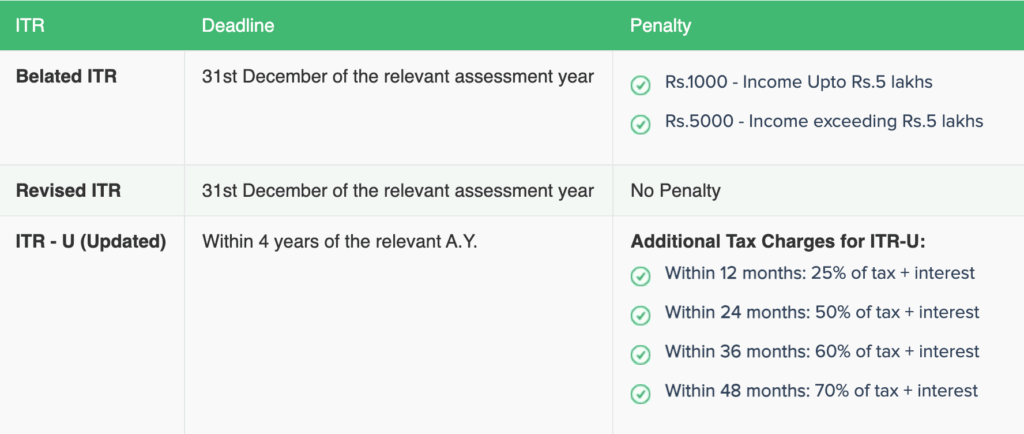
Belated Return
- Filed after the due date (31st July)
- Can be filed till 31st December of the assessment year
- Includes a late fee
Revised Return
- Used to correct mistakes in original or belated return
- Can also be filed till 31st December of the assessment year
ITR-U (Updated Return)
- Used to correct or file returns after deadlines are over
- Can be filed within 4 years from the end of the assessment year
- Cannot be used to claim refunds or carry forward losses
Disclaimer: The content on this website is for informational purposes only and does not constitute legal, financial, or professional advice. Please consult qualified experts before acting on any information. K M GATECHA & CO LLP accepts no liability for errors, omissions, or outcomes from the use of this content. This site is not an advertisement or solicitation.