

Section 147 of the Income Tax Act: A Detailed Overview
Section 147 of the Income Tax Act plays a vital role in maintaining the accuracy and fairness of the tax system. It empowers tax authorities to reassess or recompute income that may have escaped assessment due to non-reporting, underreporting, or errors during the original assessment. Acting as a corrective provision, this section enables the Assessing Officer (AO) to reopen completed assessments when discrepancies are identified, thereby ensuring that all taxable income is duly brought to tax.
This section, along with several connected provisions, lays down the scope, responsibilities, and procedures that govern reassessment proceedings. In this guide, we take an in-depth look at Section 147, its key concepts, amendments, procedures, and taxpayer rights.
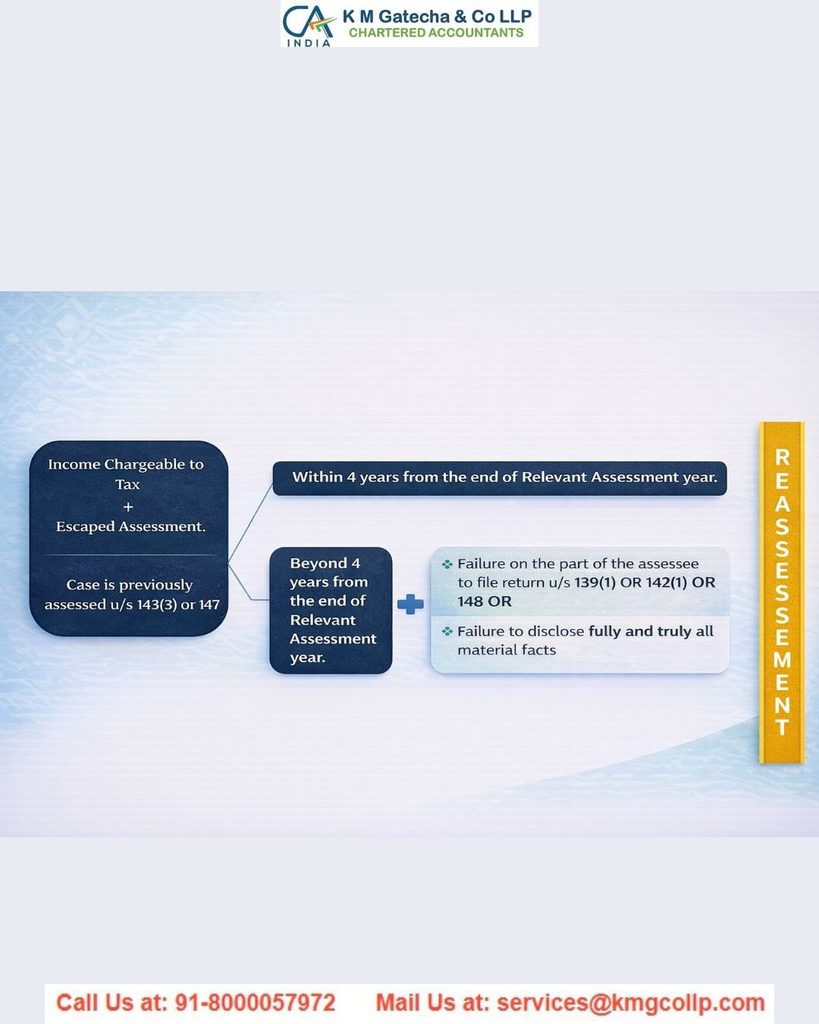
What is Section 147 of the Income Tax Act?
Section 147 authorises the reassessment or recomputation of income that has not been assessed correctly in an earlier assessment year. It serves as a mechanism to correct mistakes or omissions in income reporting—whether due to taxpayer error or oversight by tax authorities.
The provision outlines the powers of the Assessing Officer to initiate reassessment proceedings and specifies the procedural safeguards that must be followed. Section 147 also works in conjunction with related sections such as Sections 148, 148A, and 149, which collectively regulate the reassessment framework.
Important Concepts Under Section 147
To fully understand Section 147, it is essential to grasp the meaning of certain key terms, including “income escaping assessment,” “assessment,” and “reassessment.”
Income Escaping Assessment (IEA)
Income escaping assessment refers to income that was not disclosed in the Income Tax Return (ITR) or was not considered during the original assessment for a particular assessment year. This may occur due to several reasons:
- Undisclosed Income: Income not reported by the taxpayer, either intentionally or due to oversight or misunderstanding of tax laws.
- Misreported Income: Income incorrectly declared or underreported because of computational errors or deliberate misstatements.
- Excessive Claims: Claiming deductions, exemptions, or reliefs beyond permissible limits.
- Assessment Errors: Mistakes made during the assessment process by tax authorities, leading to lower tax liability.
Both taxpayer lapses and administrative errors can result in income escaping assessment, necessitating reassessment under Section 147.
Assessment vs Reassessment
These terms relate to determining and revising a taxpayer’s correct tax liability.
Assessment
Assessment is the process by which the Income Tax Department examines a taxpayer’s ITR to verify income details, deductions, and tax calculations. The objective is to ensure that tax liability is computed accurately in accordance with applicable laws.
Reassessment
Reassessment is initiated when the tax department has reason to believe that certain income was not assessed earlier. Common triggers include:
- Failure to disclose income
- Errors in the original assessment
- Non-filing of returns despite taxable income
Reassessment ensures that all taxable income is properly brought to tax and that no income escapes due to omission or error.
Types of Assessments Referred Under Section 147
Section 147 interacts with multiple types of assessments used under the Income Tax Act:
Self-Assessment
Under self-assessment, taxpayers compute their own tax liability and file returns accordingly for a given financial year.
Preliminary Assessment
This involves basic verification of the return to check for arithmetical errors or incorrect claims without detailed scrutiny.
Regular Assessment
A detailed examination of the return and supporting documents. It includes:
- Scrutiny Assessment: In-depth verification of income and deductions
- Best Judgment Assessment: Conducted when the taxpayer fails to provide necessary details
Special Assessment
Includes:
- Income Escaping Assessment: Conducted under Section 147
- Search-Related Assessment: Triggered after search or seizure operations under relevant provisions
Amendments Introduced by the Finance Act, 2021
The Finance Act, 2021 introduced significant changes to reassessment provisions to enhance transparency and reduce arbitrary actions.
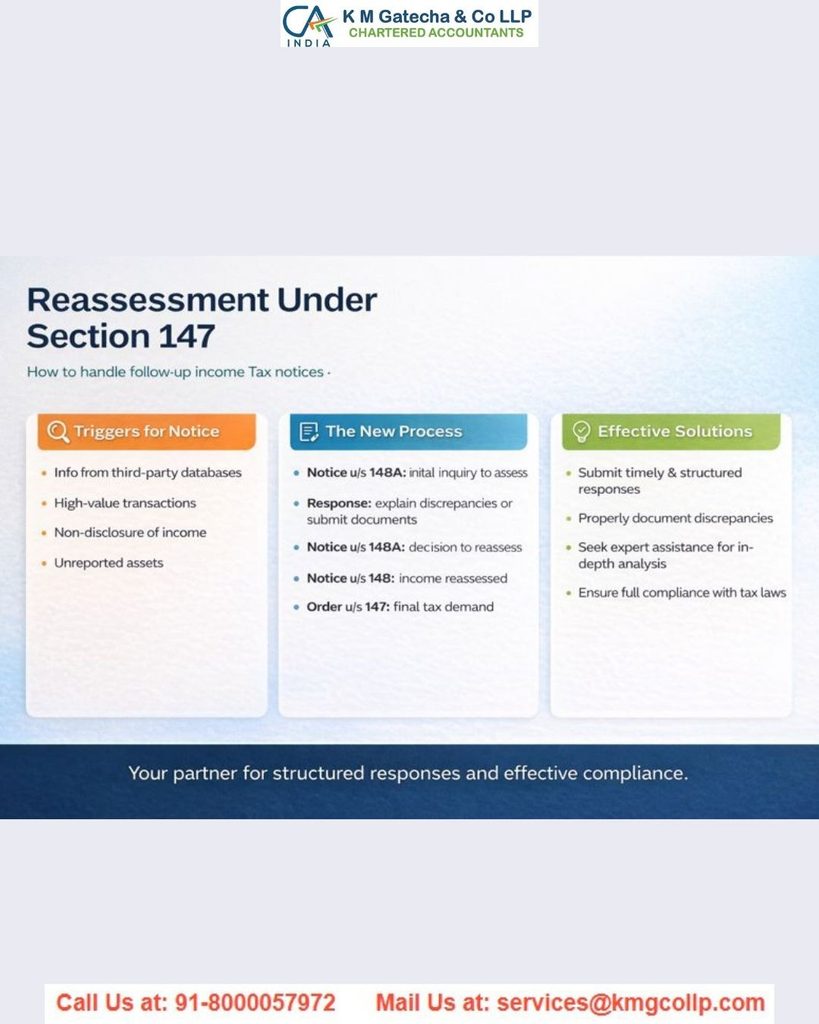
Introduction of Section 148A
Before issuing a reassessment notice, the AO must now conduct an inquiry and provide the taxpayer with an opportunity to be heard. This ensures reassessment is based on concrete material and taxpayer submissions.
Reduced Discretion of the AO
Earlier, reassessment could be initiated based on subjective “reason to believe.” The revised framework requires reliance on factual information, thereby limiting discretionary power and enhancing fairness.
Consolidation of Search-Related Provisions
Sections dealing with search and seizure assessments were merged into the revised reassessment framework to create a streamlined and unified process.
Amendments by the Finance Act, 2022
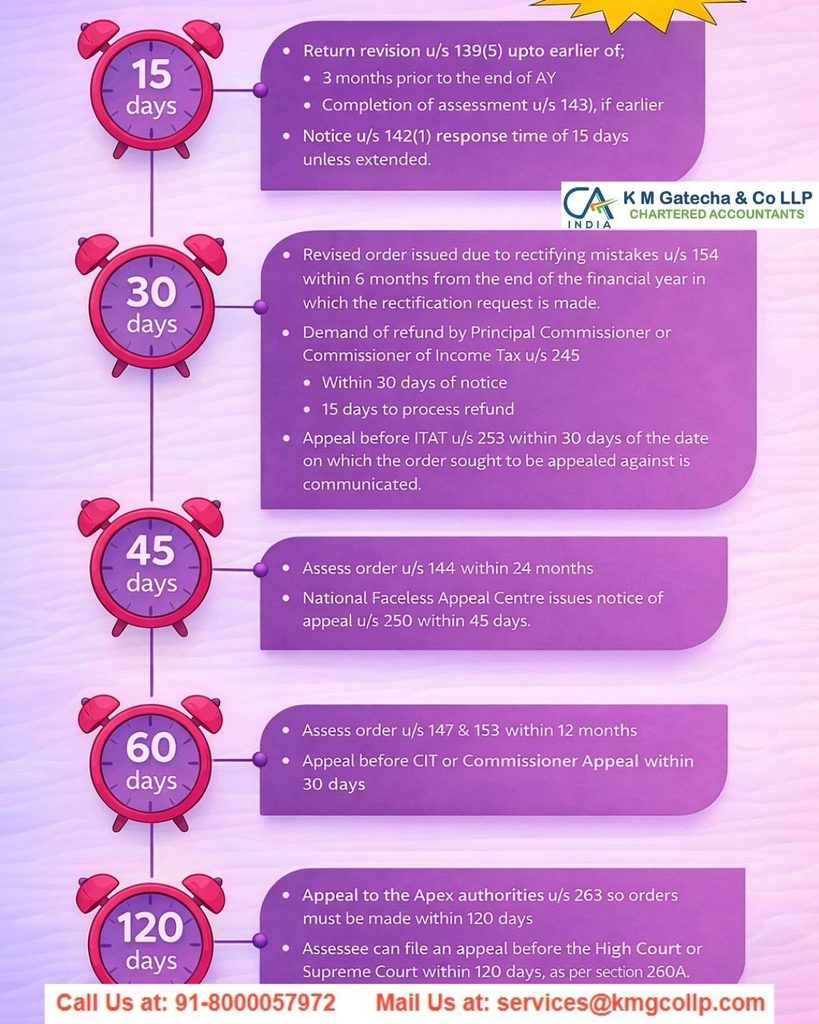
The Finance Act, 2022 revised the timelines for completing assessments and reassessments:
- Up to AY 2017–18: 21 months
- AY 2018–19: 18 months
- AY 2019–20: 12 months
- AY 2020–21: 18 months
- AY 2021–22 onwards: 9 months
These changes reflect the government’s focus on faster and more efficient tax administration.
Reassessment Procedure Under Section 147
The reassessment process follows a structured sequence:
- Identification of Escaped Income
- Recording of Material Evidence
- Approval from Higher Authority
- Issuance of Notice under Section 148
- Filing of Revised Return by Taxpayer
- Detailed Examination by AO
- Draft Assessment Order
- Show Cause Notice
- Opportunity of Hearing
- Final Assessment Order
- Right to Appeal
This procedure ensures due process and protects taxpayer rights at each stage.
Related Provisions Linked to Section 147
- Section 148: Issuance of reassessment notice
- Section 148A: Mandatory pre-notice inquiry and hearing
- Section 149: Time limits for issuing notices
- Section 151: Approval mechanism for reassessment
- Section 151A: Use of technology and faceless proceedings
- Section 152: Computation of revised tax liability
Together, these sections provide a comprehensive legal framework for reassessment proceedings.
Taxpayer Rights and Legal Remedies
Taxpayers have multiple safeguards under the law:
- Right to Object: Against reassessment notices and orders
- Appeal to CIT (Appeals): Within 30 days of final order
- Appeal to ITAT: If dissatisfied with appellate decision
- Judicial Remedies: Based on High Court and Supreme Court rulings
Judicial precedents play a crucial role in interpreting reassessment provisions and preventing misuse.
Conclusion
Section 147 of the Income Tax Act serves as a critical tool to ensure that all taxable income is correctly assessed while safeguarding taxpayer rights through procedural checks. Recent legislative amendments have strengthened transparency, reduced discretionary power, and accelerated assessment timelines. A clear understanding of this provision helps taxpayers stay compliant, respond effectively to reassessment notices, and avoid unnecessary penalties.
Staying informed and proactive in tax compliance is key to managing reassessment risks efficiently.
Disclaimer: The content on this website is for informational purposes only and does not constitute legal, financial, or professional advice. Please consult qualified experts before acting on any information. K M GATECHA & CO LLP accepts no liability for errors, omissions, or outcomes from the use of this content. This site is not an advertisement or solicitation.

