

How to Close a Private Limited Company
Running a business involves various challenges, and sometimes, despite best efforts, continuing operations may no longer be viable. In such situations, closing or winding up a private limited company becomes necessary. There are several legal ways to shut down a company in India. This article explains the key methods of closing a private limited company, including voluntary and compulsory options.
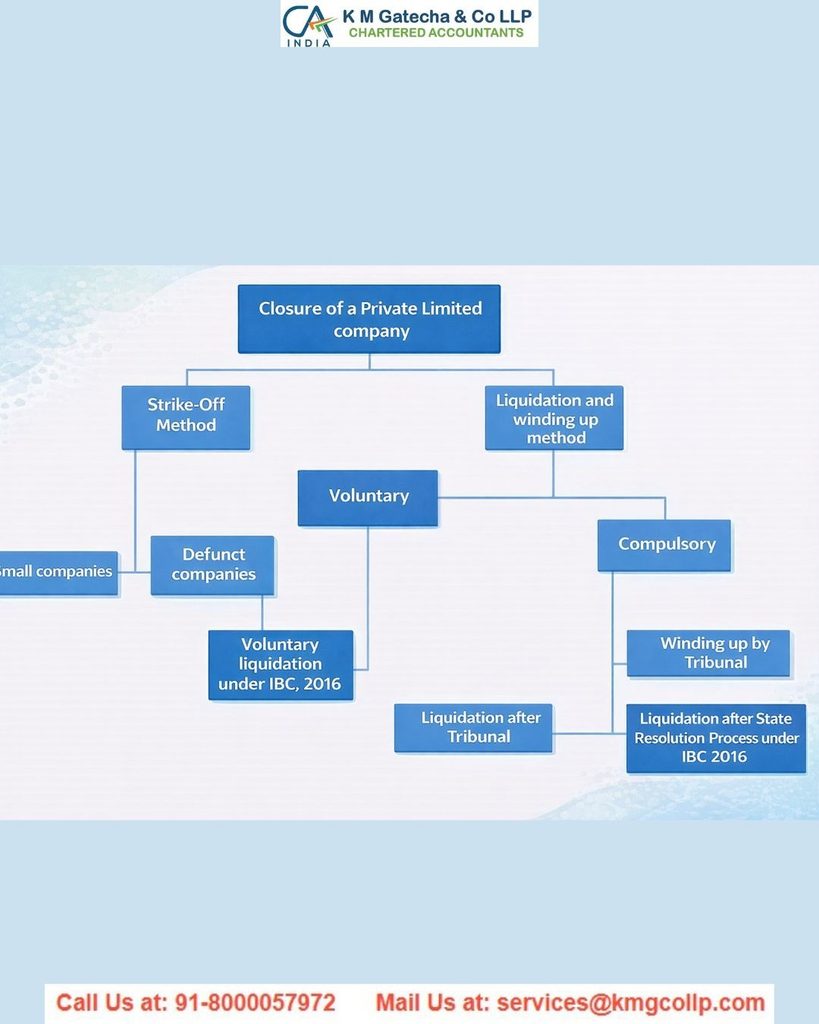
1. Selling the Company
Selling a private limited company is considered a form of voluntary exit. This is done by transferring the company’s shares—usually by selling the majority shareholding—to another individual or entity.
Technically, this is not a formal winding-up process, as the company continues to exist. However, the ownership and control of the company are transferred, and the existing shareholders are relieved of their responsibilities and liabilities associated with ownership.
2. Compulsory Winding Up
A company may be compulsorily wound up by the National Company Law Tribunal (NCLT) if it is found to have engaged in unlawful or fraudulent activities or has committed serious violations under the Companies Act.
Steps Involved in Compulsory Winding Up:
a) Filing of Petition
A petition for compulsory winding up may be filed by:
- The company itself
- Trade creditors
- Any contributory or group of contributories
- The Central or State Government
- The Registrar of Companies (ROC)
The petition must be filed in Form WIN-1 or WIN-2, submitted in triplicate, and supported by an affidavit in Form WIN-3.
b) Statement of Affairs of the Company
All documents submitted with the petition must be audited by a practicing Chartered Accountant. The auditor’s report on the financial statements must be unqualified.
The Statement of Affairs must be prepared in Form WIN-4 (in duplicate) and verified through an affidavit in Form WIN-5.
How to Close a Private Limited Company in India
Running a business involves risks, and sometimes continuing operations may no longer be viable. In such cases, closing or winding up a private limited company becomes necessary. Depending on the situation, a company can be closed through different legal routes. Below is an explanation of key methods of closing a private limited company, with a focus on compulsory winding up.
1. Selling the Company
Selling a private limited company is considered a form of voluntary exit rather than an actual winding-up process. This is done by transferring a majority of the company’s shares to another individual or entity.
- Ownership and control are transferred
- Existing majority shareholders are relieved of responsibilities
- The company continues to exist under new management
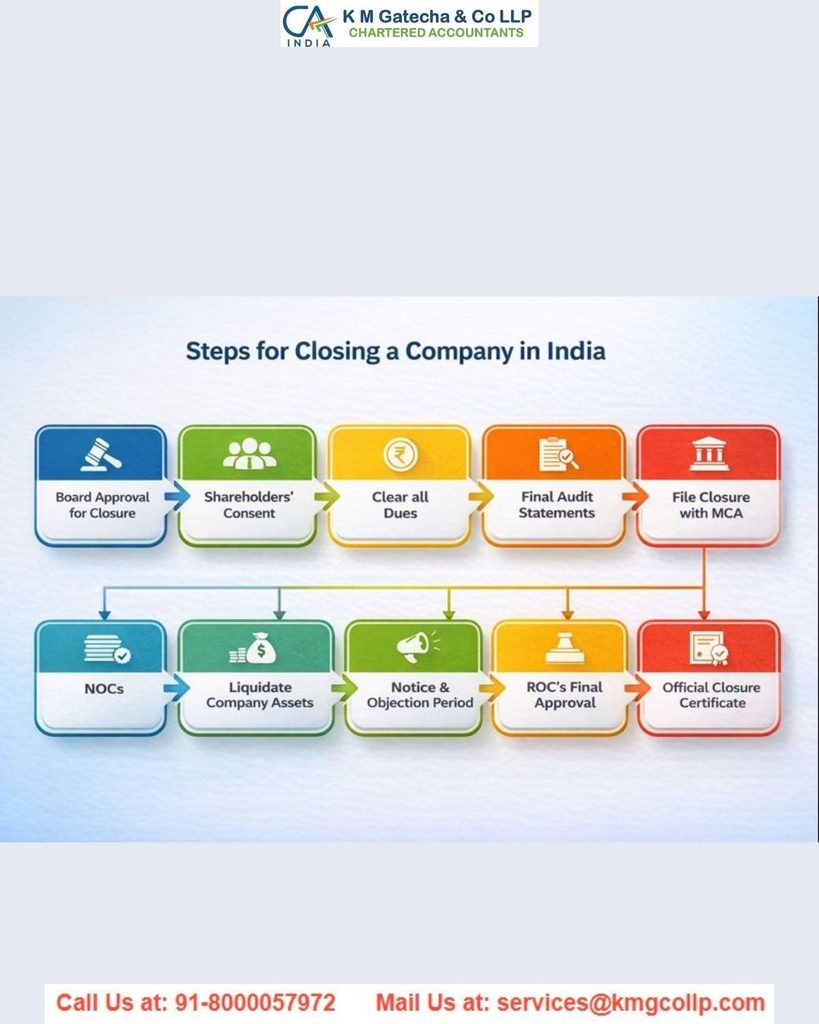
2. Compulsory Winding Up
A company may be compulsorily wound up by the Tribunal if it is involved in unlawful or fraudulent activities or acts against public interest, as per the Companies Act.
Step-by-Step Process of Compulsory Winding Up
a) Filing of Petition
A winding-up petition may be filed by:
- The company itself
- Trade creditors
- Contributories (shareholders)
- Central or State Government
- Registrar of Companies
The petition must be filed in Form WIN 1 or WIN 2, in triplicate, along with an affidavit in Form WIN 3.
b) Statement of Affairs
- The statement of affairs must be prepared in Form WIN 4 (in duplicate)
- Verified through an affidavit in Form WIN 5
- Financial statements must be audited by a practicing Chartered Accountant
- Auditor’s report should be unqualified
c) Advertisement of Petition
- The petition must be advertised for at least 14 days
- Published in one English newspaper and one regional language daily
- Advertisement must be in Form 6
d) Tribunal Proceedings
- The Tribunal hears the petition and considers objections, if any
- A Provisional Liquidator may be appointed (Form WIN 8)
- The winding-up order is issued in Form WIN 11
The winding-up order specifies:
- Submission of audited books of accounts up to the order date
- Date, time, and place for appearance before the Company Liquidator
- Surrender of company assets and documents
e) Role of the Company Liquidator
- Takes custody of all company assets, claims, books, and records
- Submits a report to the Tribunal within 60 days of the winding-up order
- After completion of liquidation, applies for dissolution of the company
f) Dissolution of the Company
- If the Tribunal is satisfied that all compliances are met, it passes a dissolution order
- The Company Liquidator must forward the order to the Registrar within 30 days
- The Registrar publishes a notice in the Official Gazette
- The company stands dissolved from the date of the Tribunal’s order
Voluntary Winding Up of a Company
Voluntary winding up refers to the process of closing a company by the choice of its members, after fulfilling detailed procedural and statutory compliances. This process involves several mandatory requirements and is governed by the Companies Act and the Companies (Winding Up) Rules, 2020.
When Can a Company Be Voluntarily Wound Up?
A company may opt for voluntary winding up in the following situations:
- When the company passes a resolution in its general meeting upon:
- Expiry of the period for which it was incorporated, or
- Occurrence of an event specified in the Articles of Association for dissolution
- Expiry of the period for which it was incorporated, or
- When the company passes a special resolution, approved by at least three-fourths of the shareholders, for voluntary winding up
The voluntary winding-up process commences from the date of passing such resolution. In the same meeting, the company must appoint a Company Liquidator, whose appointment must be confirmed by a majority of creditors (by value).
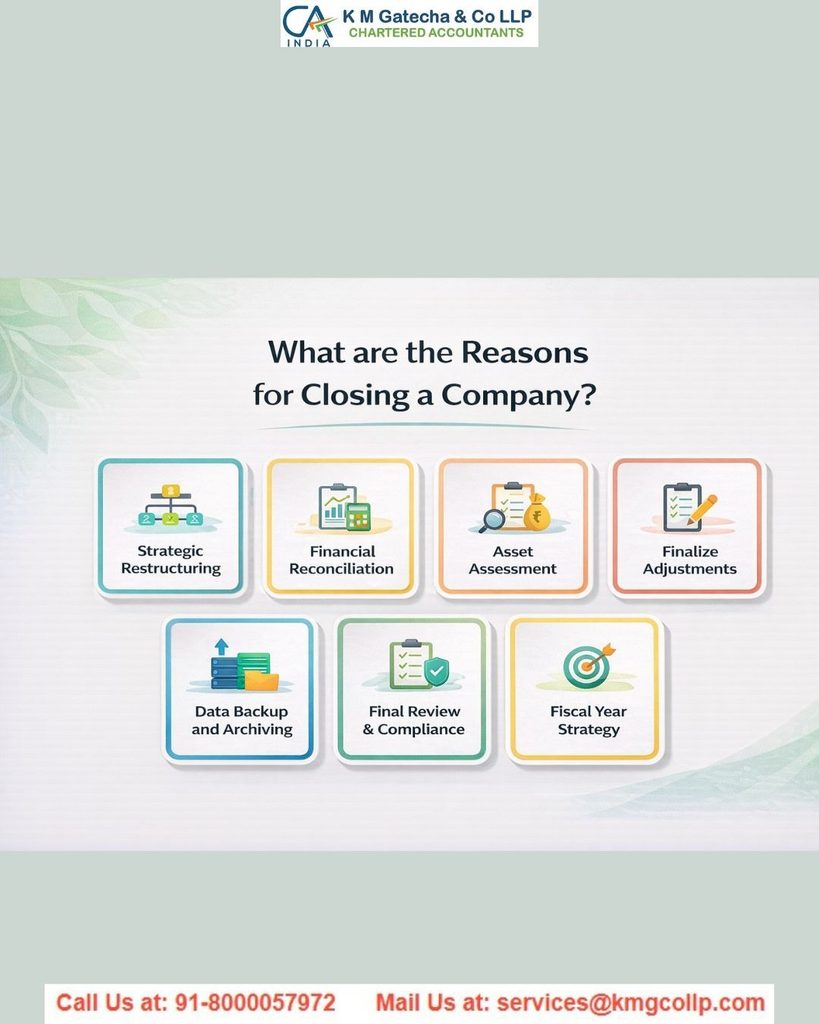
Procedure for Voluntary Winding Up
The voluntary winding-up process involves the following steps:
- Passing of Resolution
The company must pass the required resolution in a general meeting, with the consent of a majority of the directors approving the decision to wind up. - Consent of Trade Creditors
Approval from trade creditors is mandatory, confirming that they have no outstanding claims or objections to the company’s winding up. - Declaration of Solvency
The company must make a Declaration of Solvency, affirming its ability to pay off all debts in full. This declaration must be accepted by the trade creditors and should clearly demonstrate the company’s financial credibility. - Appointment and Duties of the Liquidator
The appointed Company Liquidator conducts the winding-up proceedings, prepares a detailed report on:
- Assets and properties
- Liabilities and debts
- Final accounts of the company
- Assets and properties
- This report is presented before the general meeting for approval, followed by passing a resolution for dissolution.
- Filing with Registrar of Companies (ROC)
The Company Liquidator submits copies of:
- Final accounts
- Resolutions passed
to the Registrar of Companies.
- Final accounts
- Application for Dissolution
The Company Liquidator applies to the Tribunal for an order of dissolution. If satisfied with the process, the Tribunal passes the dissolution order within 60 days of receiving the application.
A copy of the Tribunal’s final order must be filed with the ROC.
Post-Winding Up Restriction
Even after the company is dissolved, the company’s name cannot be reused for a period of two years by any other applicant.
Applicable Rules
The formats of forms and the detailed procedure for voluntary winding up are prescribed under the Companies (Winding Up) Rules, 2020.
Defunct Company Winding Up
Under the Companies Act, 2013, a Defunct Company refers to a company that has obtained the status of a Dormant Company. Since dormant or defunct companies do not carry out any financial or business transactions, the government provides certain compliance relaxations for such entities.
The Companies Act, 2013 prescribes a simplified and fast-track procedure for winding up a defunct company. Such companies can be closed through a Fast Track Exit (FTE) process by filing Form STK-2 with the Registrar of Companies (ROC). No additional winding-up procedure is required beyond this filing.
Form STK-2 must be:
- Filed with the ROC
- Duly signed by a director authorized by the Board of Directors
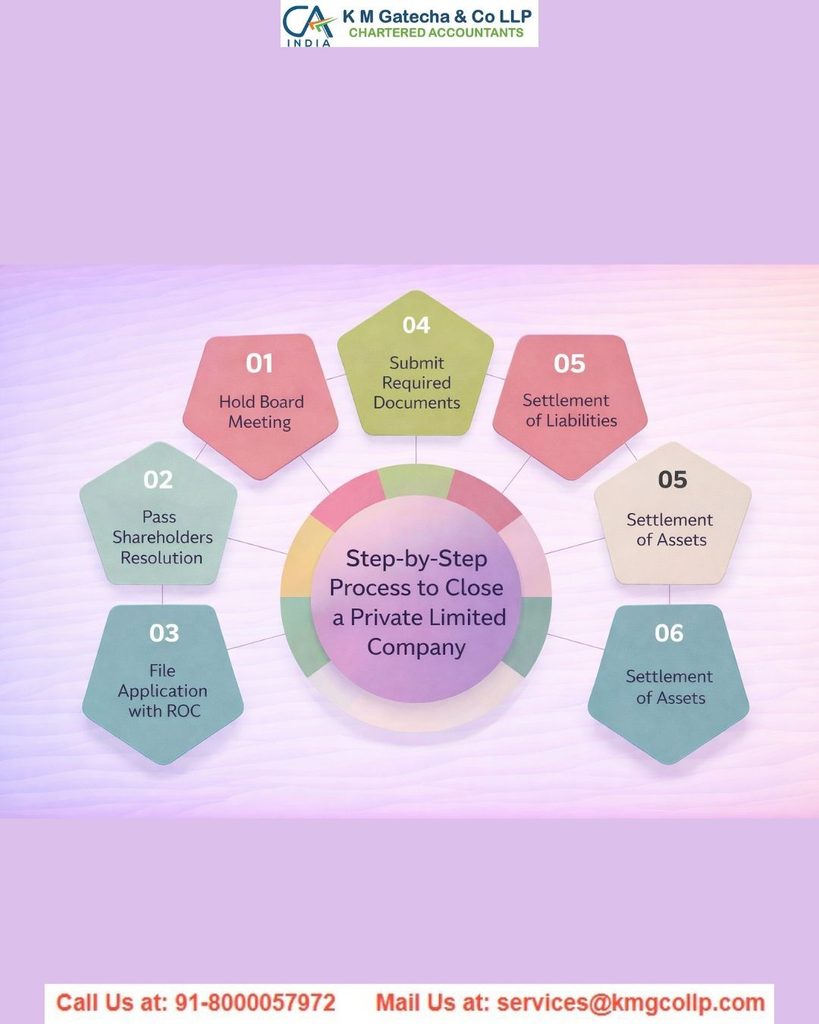
Meaning of a Defunct Company for This Scheme
For the purpose of fast-track winding up, a defunct company is one that:
- Has no assets and no liabilities, and
- Has not commenced any business activity since incorporation, or
- Has not carried on any business operations for at least one year prior to making an application under the Fast Track Exit (FTE) Scheme
Disclaimer: The content on this website is for informational purposes only and does not constitute legal, financial, or professional advice. Please consult qualified experts before acting on any information. K M GATECHA & CO LLP accepts no liability for errors, omissions, or outcomes from the use of this content. This site is not an advertisement or solicitation.

