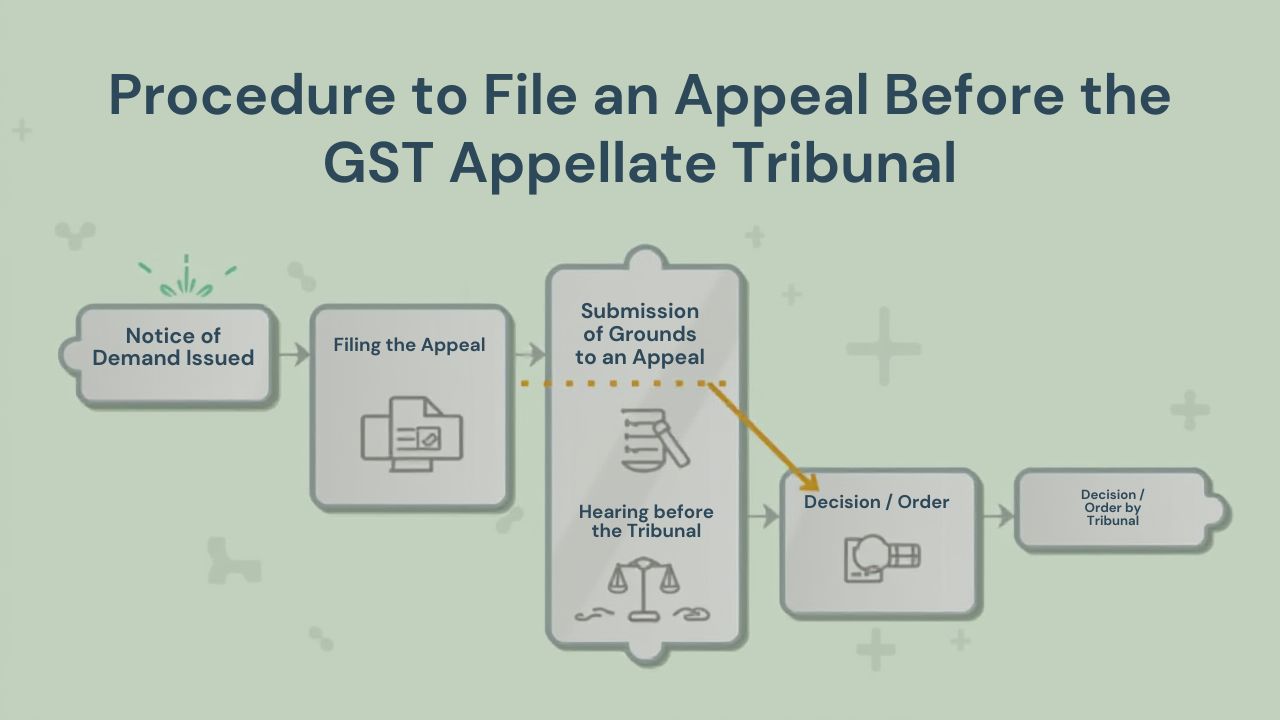
After a prolonged wait, the rules governing the Goods and Services Tax Appellate Tribunal (GSTAT) were finally notified on 24 April 2025. Chapter III of the Goods and Services Tax Appellate Tribunal (Procedure) Rules, 2025 (“GSTAT Rules”) lays down the detailed procedure for filing appeals before the GSTAT. This article provides a clear overview of the appeal filing process as prescribed under these rules.

The provisions contained in Chapter III are designed to ensure a structured and transparent appellate mechanism. They mandate online filing, proper verification of appeals, submission of requisite documents, and timely responses from all parties involved. By establishing a uniform and digital process, the GSTAT seeks to ensure efficient disposal of disputes while giving both taxpayers and tax authorities a fair opportunity to present their case. This framework plays a crucial role in resolving GST-related disputes effectively and strengthening the overall GST administration in India.
1. Procedure for Filing an Appeal before GSTAT (Rule 18 of the GSTAT Rules)
Online filing through the GSTAT Portal
All appeals must be filed electronically on the GSTAT portal at www.gstat.gov.in in the prescribed form. The appeal form must contain the following details:
- A proper title stating “Before the Goods and Services Tax Appellate Tribunal”, along with clear reference to the order or decision against which the appeal is being filed.
- A concise statement of facts, grounds, allegations, or issues involved in the case, set out in clearly numbered paragraphs.
- Complete particulars of all parties to the appeal, including their names, GST Identification Number (GSTIN), and addresses. These details must be mentioned at the beginning of the appeal and should remain consistent throughout the proceedings.
- In the event of the death of any party during the pendency of the appeal, the names and details of the legal heirs or authorised representatives must be added using appropriate sub-numbering.

Single appeal covering multiple issues
Where an order of the Appellate Authority covers multiple show cause notices, refund claims, demands, letters, or declarations, filing one consolidated appeal in the prescribed form against such order shall be sufficient.
Separate appeals in specific cases
- If the impugned order-in-appeal relates to more than one order-in-original, separate appeals must be filed for each such order-in-original.
- Where the impugned order affects more than one person, each aggrieved person is required to file an individual appeal. Common or joint appeals are not permitted and will not be entertained by the Tribunal.
2. Date of Filing of Appeal (Rule 19 of the GSTAT Rules)
Where an appeal is filed manually, the Registrar or any officer authorised for this purpose shall endorse on each appeal form the date on which it is presented or deemed to have been presented. Such endorsement must be duly signed by the Registrar or the authorised officer, and this date shall be treated as the official date of filing of the appeal.
3. Contents of the Appeal Form (Rule 20 of the GSTAT Rules)
Every appeal filed before the GST Appellate Tribunal must include the following:
Grounds of Appeal
- The grounds of appeal must be stated clearly, concisely, and under distinct heads.
- Each ground should be numbered consecutively and typed in double spacing.
Format and Presentation
- The appeal must be prepared on A4-size paper.
- It should be neatly typed, double-spaced, properly paginated, indexed, and securely tagged in a folder.
- These formatting requirements apply not only to appeals but also to cross-objections, stay applications, and other miscellaneous applications filed before the Tribunal.
Verification and Authentication
- The appeal form must be signed and verified by the appellant, applicant, respondent, or their duly authorised representative.
- All documents annexed to the appeal must be certified as true copies by the person signing and verifying the appeal form.

4. Documents to Accompany the Appeal Form
Every appeal filed before the GST Appellate Tribunal must be accompanied by the following documents:
- Certified Copy of the Order Appealed Against
- Where the order is passed by the adjudicating authority, a certified copy of such order must be enclosed.
- Where the appeal is against an appellate or revisional order, a certified copy of the order passed in appeal or revision must be submitted, along with a copy of the original order of the adjudicating authority.
- Supporting and Relied-Upon Documents
- All relevant documents, including those relied upon in support of the appeal, must be annexed.
- Departmental Appeals
- In cases where the appeal is filed by the Department, an attested copy of the original order may be furnished in place of a certified copy.
- Prescribed Fees
- Appeal fees, as specified under Rule 110(5) of the CGST/SGST/UTGST Rules, 2017, must be paid online.
- Upon successful payment, a final acknowledgement will be generated through the GSTAT portal.
- Defective Appeals
- If the appeal form is not accompanied by the prescribed documents, the Registrar or any authorised officer has the authority to return the appeal.
- The appeal will be accepted only after the defects are duly rectified.
- Additional Copies
- The Tribunal may require the appellant or respondent to submit additional copies of documents, at their own cost, if necessary.
- Attestation of Documents
- All documents may be attested by a gazetted officer or any other person authorised by the President of the GST Appellate Tribunal to certify their authenticity.
5. Endorsement and Verification
Every appeal, along with its supporting documents, must clearly mention the name and bear the signature of the appellant or the authorised representative, wherever applicable. All appeals and pleadings are required to be duly signed and verified by the concerned party in accordance with the prescribed rules.

6. Translated Documents
Any document submitted in a language other than English must be accompanied by an English translation. The translated copy should either be mutually agreed upon by both parties or certified as a true translation by the authorised representative. Proceedings before the Tribunal will not be initiated unless all documents are duly translated into English.
7. Endorsement and Scrutiny of Appeal or Documents
- Scrutiny Process:
Upon scrutiny, if any defects are found in the appeal or accompanying documents, the same shall be returned to the appellant for rectification within 7 days. - Extension of Time:
If the defects are not rectified within the stipulated period, the matter shall be placed before the Registrar for appropriate directions. The Registrar may, for valid and reasonable grounds, grant an extension of time up to 30 days for rectification. - Failure to Rectify Defects:
Where the appellant fails to remove the defects within the allowed time, the Registrar may, for reasons recorded in writing, decline to register the appeal, pleading, or document. - Registrar’s Satisfaction:
If the Registrar is not satisfied with the rectification of defects, the matter shall be listed before the appropriate Bench of the Tribunal. After hearing the concerned party, the Bench may either allow the registration of the appeal or reject it, as deemed fit.
8. Registration of Admitted Appeals
Once the appeal is found to be complete in all respects and is duly admitted, it shall be registered by the Tribunal. A unique appeal number will be allotted, and the appeal will be entered in the official register maintained by the Tribunal.
9. Ex-parte Amendments
The Registrar may rectify any arithmetical, grammatical, clerical, or similar errors on an ex-parte basis, without issuing notice to the parties. However, once the respondents have entered appearance, no ex-parte amendments shall be permitted.
10. Calling for Records
After the admission of an appeal, the Registrar may, if so directed by the Tribunal, call for the records of the case from the concerned Appellate Authority, Adjudicating Authority, or the appropriate Bench. Such records shall be returned after the disposal of the appeal.
11. Production of Authorisation
Where an appeal is filed or proceedings are conducted on behalf of an applicant, respondent, or any other party, the person signing or verifying the appeal or documents must submit a true copy of the authorisation letter. This authorisation must expressly empower such person to act, sign, and represent the party before the Tribunal.
12. Filing of Interlocutory Applications
Any interlocutory application—such as for stay, directions, rectification, condonation of delay, early hearing, exemption from submitting copies of orders, or extension of time in pending matters—must be filed in the prescribed GSTAT FORM-01. The application should contain all required details and must be supported by a duly sworn affidavit.
13. Submission of Defaced, Torn, or Damaged Documents
If any document filed with the appeal is torn, defaced, or damaged, the party submitting it must clearly mention its condition in the index of documents. The receiving officer shall verify the condition and place their initials on such documents to acknowledge the same.
14. Grounds of Appeal (Rule 31)
- The appellant shall ordinarily be heard only on the grounds specifically mentioned in the appeal form.
- However, the Appellate Tribunal is not restricted solely to those stated grounds.
- The Tribunal shall not base its decision on any additional ground unless the affected party is given a reasonable opportunity to be heard on that issue.
15. Rejection or Amendment of Appeal Form
- The Registrar may, at their discretion, provisionally accept an appeal even if some documents are incomplete and allow the appellant time to submit the remaining documents, subject to a maximum period of 30 days.
- If the required documents are not furnished within the stipulated time, the Registrar may reject the appeal.
- The President or any authorized officer may:
- Return an appeal, application, or document that does not comply with the GSTAT Rules, and
- Permit refiling after rectification of defects within the prescribed timeframe.
16. Parties to be Joined as Respondents
- Where an appeal is filed by a taxpayer, the concerned Commissioner shall be impleaded as the respondent.
- In the case of an appeal filed by the department, the opposite party to the dispute shall be named as the respondent.
17. Service of Copies to the Respondent
Upon filing of the appeal along with supporting documents, copies of the appeal and related papers shall be forwarded to the respondent and the concerned Commissioner to ensure transparency and proper notice.
18. Filing of Reply and Additional Documents by Respondents
- Each respondent may file a reply to the appeal or application within one month from the date of receipt.
- A copy of the reply and supporting documents must be served on the appellant without delay.
- The appellant may then admit, deny, or rebut the facts stated in the reply and may also submit additional facts if required.
19. Filing of Rejoinder (Rule 37)
Where the respondent introduces additional facts in their reply, the Bench may permit the appellant to file a rejoinder through the GSTAT portal. An advance copy of the rejoinder must be served on the respondent within one month, or within such extended period as may be allowed by the Bench.
Disclaimer: The content on this website is for informational purposes only and does not constitute legal, financial, or professional advice. Please consult qualified experts before acting on any information. K M GATECHA & CO LLP accepts no liability for errors, omissions, or outcomes from the use of this content. This site is not an advertisement or solicitation.