

Register a Business in the USA: Everything You Need to Know (2025 Guide)
The United States remains one of the most attractive destinations for global expansion in 2025. With a strong economy, advanced infrastructure, investor-friendly regulations, and powerful intellectual property protection, the US continues to be a top choice for foreign entrepreneurs and corporations.
Major business hubs such as New York City, San Francisco, Austin, and Miami attract startups, tech innovators, financial institutions, and global investors.
This guide explains your market entry options, entity types, and strategic considerations when registering a business in the USA.
Exploring Your Market Entry Options in the USA
Foreign companies generally enter the US market through one of two routes:
1. Incorporating a Local Business Entity
This option is ideal for companies planning a long-term presence in the US.
Benefits include:
- Hiring US employees directly
- Opening US bank accounts
- Raising venture capital
- Signing contracts under a US legal entity
- Building long-term operational infrastructure
The most common structures are C-Corporations and Limited Liability Companies (LLCs).
2. Hiring Through an Employer of Record (EOR)
If you want to:
- Test the US market
- Run pilot operations
- Hire remote employees quickly
- Avoid immediate incorporation
An Employer of Record (EOR) is a compliant and cost-efficient solution.
The EOR becomes the legal employer for your US workforce, managing:
- Payroll
- Tax withholding
- Benefits administration
- Employment compliance
You retain operational control while avoiding the complexity of establishing a legal entity immediately.
Business Structures Available in the USA
Foreign investors can choose from several legal structures depending on ownership goals, tax planning, and funding strategy.
1. C-Corporation (C-Corp)
- Separate legal entity
- Taxed independently from owners
- Ideal for venture capital funding
- Unlimited shareholders allowed
- Common for tech startups and scalable businesses
C-Corps are especially popular in states like Delaware due to favorable corporate laws.
2. Limited Liability Company (LLC)
- Flexible structure
- Limited liability protection
- Pass-through taxation (profits taxed at owner level)
- Fewer formalities than corporations
LLCs are ideal for small to medium-sized businesses or foreign founders seeking operational simplicity.
3. S-Corporation (S-Corp)
- Provides pass-through taxation
- Limited to US citizens or residents as shareholders
- Ownership restrictions apply
S-Corps are generally not suitable for most foreign investors due to ownership limitations.
4. Branch Office
- Extension of a foreign parent company
- No separate legal entity
- Parent company may be exposed to US liabilities
- Income is taxable in the US
Best suited for established multinational companies expanding operations.
5. Representative Office
- Used for liaison or market research activities
- Cannot generate revenue
- Suitable for preliminary market exploration
Why the USA Remains Attractive for Foreign Businesses
- Transparent and predictable legal system
- Strong IP protection
- Access to capital markets
- Skilled workforce
- Large domestic consumer base
- Global trade access
Whether you choose full incorporation or an Employer of Record model, the US offers flexible pathways for foreign businesses to expand efficiently and compliantly.
If you’d like, I can next cover:
- Step-by-step registration process
- Required documents
- Costs and timelines
- Ongoing compliance requirements
- Tax considerations for foreign founders
Comparing Business Structure Options in the USA
| Structure | Ownership | Liability | Taxation | Best For |
| C-Corporation (C-Corp) | 1 or more shareholders (no nationality restriction) | Limited liability for shareholders | Subject to corporate tax; dividends taxed separately | Startups seeking venture capital and large enterprises |
| Limited Liability Company (LLC) | 1 or more members (individuals or entities) | Limited liability for members | Pass-through taxation (default) or can elect corporate taxation | SMEs, foreign founders, and service businesses |
| S-Corporation (S-Corp) | US citizens or residents only | Limited liability | Pass-through taxation | Small US-owned businesses |
| Branch Office | Owned by foreign parent company | Parent company bears liability | Subject to US corporate income tax | Foreign companies expanding operations |
| Representative Office | Owned by foreign parent company | Parent company bears liability | No US income tax (cannot generate revenue) | Market research or liaison activities |
Key Takeaway
For foreign entrepreneurs:
- A C-Corporation, particularly in Delaware, is ideal if you plan to raise investment.
- An LLC offers flexibility and simpler compliance.
- A Branch Office may expose the foreign parent to liability.
- A Representative Office is limited to non-commercial activities.
How to Choose the Right Business Model for Your US Operations
Selecting the right structure depends on your funding plans, liability exposure, tax goals, and long-term expansion strategy.
✅ C-Corporation (C-Corp)
Best if you plan to:
- Raise venture capital
- Issue shares to investors
- Scale nationally or globally
C-Corps are especially popular in Delaware due to investor-friendly corporate laws.
✅ Limited Liability Company (LLC)
Ideal for:
- Small to medium-sized businesses
- Service-based companies
- Foreign founders seeking flexibility
- Simplified tax treatment
LLCs offer pass-through taxation by default but can elect corporate taxation if needed.
✅ Branch Office
Suitable when:
- A foreign parent company wants to operate in the US
- No separate legal entity is preferred
However, the parent company remains legally liable.
✅ Representative Office
Best for:
- Market research
- Liaison activities
- Early-stage market testing
Note: Cannot generate revenue in the US.
✅ Employer of Record (EOR)
Optimal if you want to:
- Hire US employees quickly
- Test the US market
- Avoid immediate incorporation
- Ensure payroll and tax compliance
An EOR handles employment compliance while you manage daily operations.
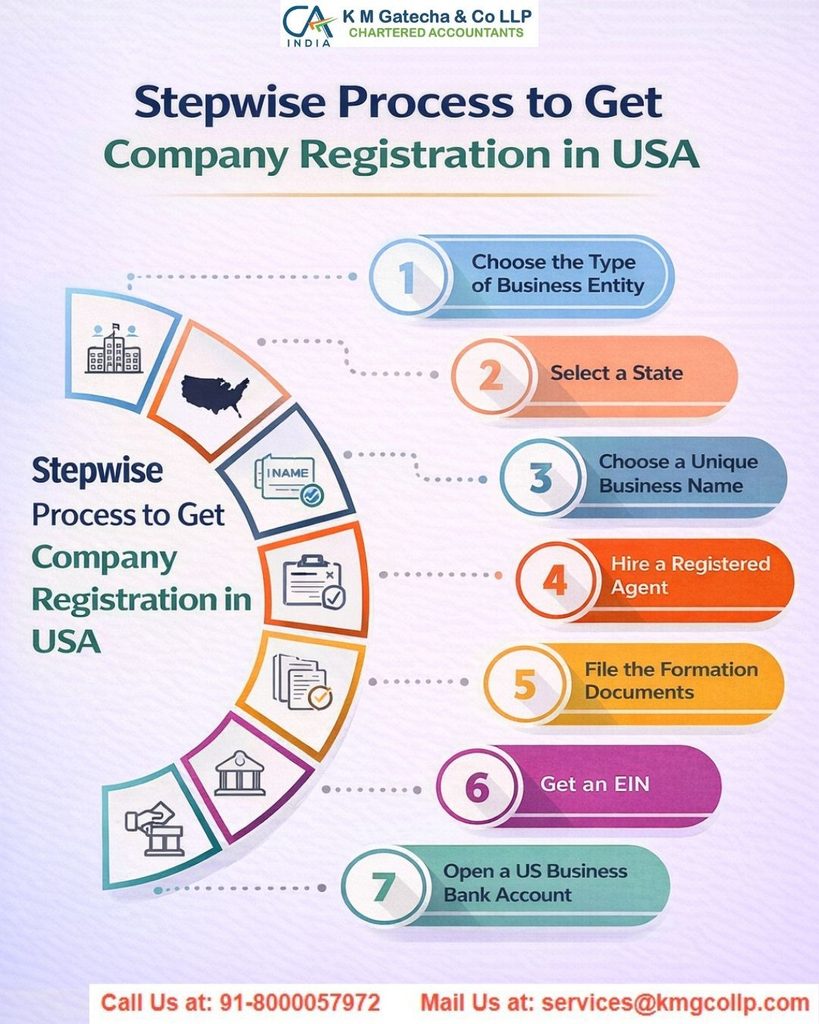
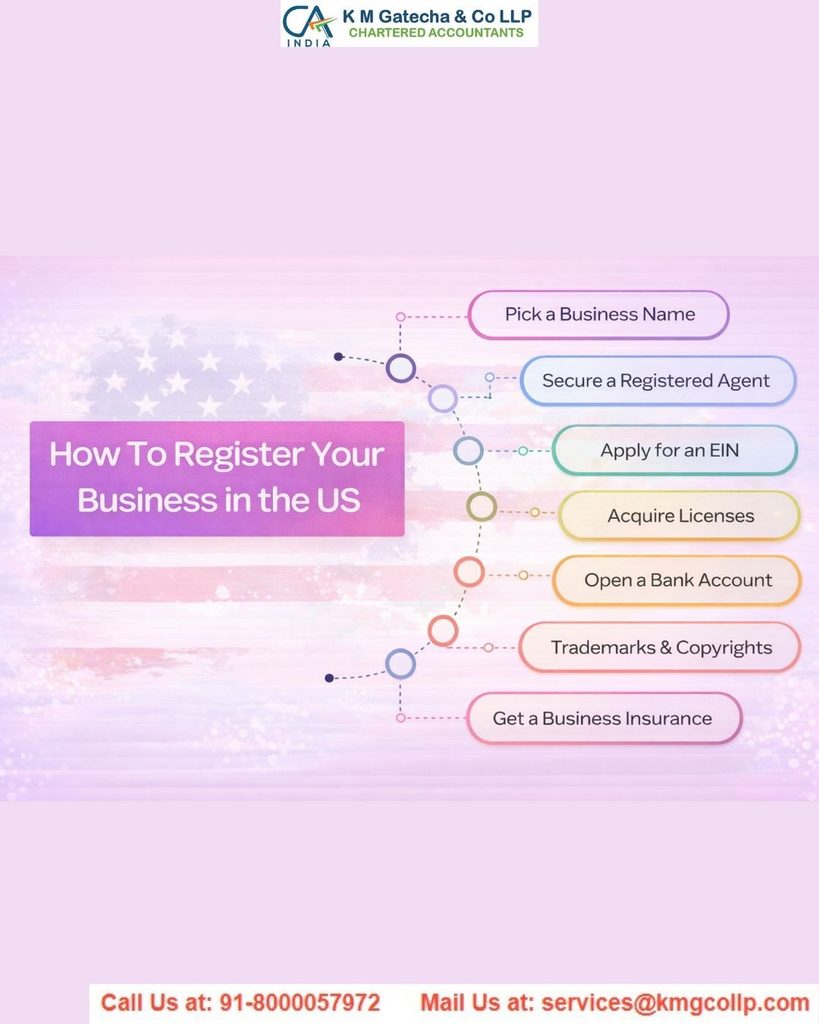
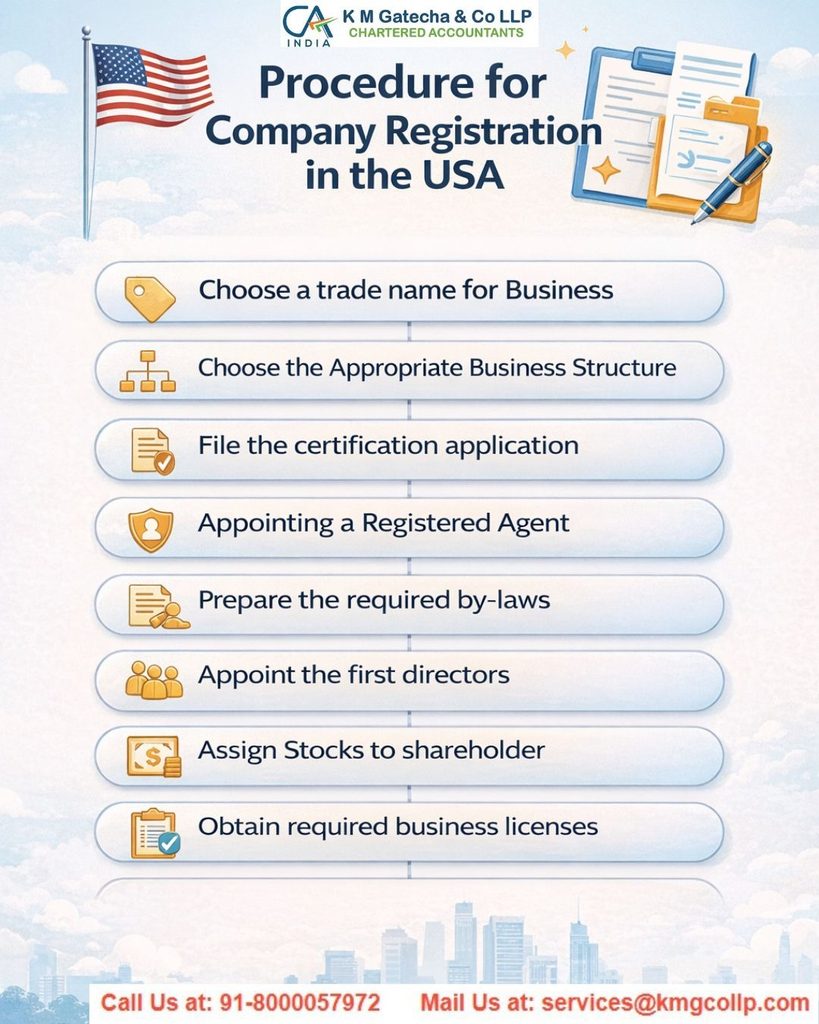
Step-by-Step Guide to Company Registration in the USA
1. Choose Your Business Structure
Select based on liability protection, tax efficiency, and growth plans.
2. Select a State of Incorporation
Popular states for foreign founders include:
- Delaware
- Wyoming
- Nevada
Each state has different tax rules, filing fees, and compliance requirements.
3. Reserve Your Business Name
Register your company name with the Secretary of State in your chosen state.
4. Appoint a Registered Agent
A registered agent must have a physical address in the state of incorporation and will receive official legal and tax documents on your behalf.
5. File Formation Documents
- Articles of Incorporation (for C-Corp)
- Articles of Organization (for LLC)
These are filed with the Secretary of State.
6. Obtain an Employer Identification Number (EIN)
Apply for an EIN from the Internal Revenue Service (IRS).
The EIN is required for:
- Tax filing
- Hiring employees
- Opening a bank account
7. Open a US Corporate Bank Account
A US bank account is essential for capital management, payroll, and operational expenses.
8. Register for Taxes & Licenses
Register for:
- Federal taxes
- State taxes
- Sales tax (if applicable)
- Industry-specific licenses or permits
9. Comply with Employment Laws
If hiring directly, ensure compliance with:
- Federal labor laws
- State labor laws
- Payroll tax obligations
10. Maintain Annual Compliance
To remain in good standing:
- File annual state reports
- Submit federal and state tax returns
- Maintain corporate records and accounting
⏳ Timeline: The process generally takes 2–6 weeks, depending on the state and banking procedures.
Key Documents Required to Register a US Company
- Passports/IDs of shareholders and directors
- Proof of residential address
- Articles of Incorporation/Organization
- Operating Agreement (LLC) or Corporate Bylaws (C-Corp)
- EIN application confirmation
- Bank reference letters (if required)
- Sector-specific licenses (if applicable)
Post-Incorporation Essentials You Shouldn’t Ignore
After formation, ongoing compliance is critical:
- Maintain a corporate bank account
- File federal and state tax returns annually
- Keep proper accounting records
- Submit annual reports to the Secretary of State
- Provide employee benefits (if applicable)
- Comply with federal and state labor regulations
Additional Business Licenses and Registrations You May Need in the USA
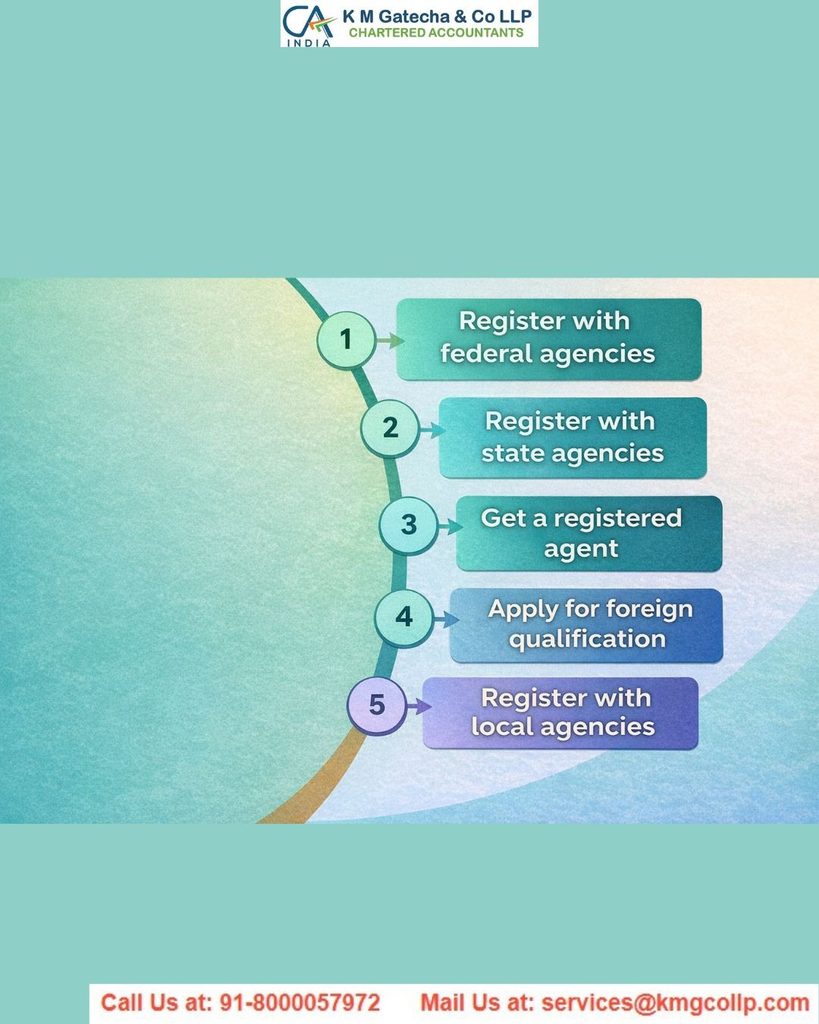
Depending on your industry and state of operation, your business may require additional registrations beyond incorporation:
- Sales Tax Permit – Required for retail, e-commerce, and businesses selling taxable goods or services.
- Professional Licenses – Necessary for consulting, healthcare, legal, engineering, or financial services.
- Import/Export Registration – Required for trading companies dealing in international goods.
- Federal Permits – Mandatory for regulated industries such as transportation, aviation, alcohol, firearms, or energy.
Requirements vary by state and are often regulated at both the federal and state levels.
Timeframe to Set Up a Business in the USA
| Step | Estimated Duration |
| Business name reservation | 1–3 business days |
| Filing incorporation documents | 3–7 business days |
| EIN issuance & bank account setup | 5–10 business days |
| Licensing & post-setup compliance | 5–10 business days |
| Total Estimated Time | 2–6 weeks |
⏳ Timelines vary depending on the state of incorporation and bank processing times.
Cost to Incorporate a Company in the USA
Here’s a breakdown of typical costs:
- State filing fees: $50–$500 (varies by state such as Delaware or Wyoming)
- Registered agent services: $100–$300 annually
- EIN application: Free (issued by the Internal Revenue Service)
- Bank account & compliance setup: $500–$1,000
- Professional services (legal/accounting): $1,000–$5,000
💰 Total typical incorporation cost: $1,500–$6,000
(Excludes optional licenses and special permits.)
Obstacles Global Founders May Face
Foreign entrepreneurs may encounter several challenges:
- Multi-state tax compliance when hiring remote employees
- Complex federal and state labor regulations
- Banking delays for foreign-owned entities
- Requirement for legal and accounting expertise
- Industry-specific licensing and regulatory hurdles
Understanding US compliance early can prevent costly mistakes later.
Incorporating as a Foreign-Owned Company: A Special Path
US law allows 100% foreign ownership of certain entity types, including:
- C-Corporations
- Limited Liability Companies (LLCs)
- Branch offices of foreign companies
- Representative offices for non-commercial purposes
While incorporation itself is straightforward, practical challenges often arise in:
- Opening a US corporate bank account
- Managing federal and multi-state tax compliance
- Handling employment laws across different states
Professional guidance is often recommended to ensure full compliance and smooth operations.
Employer of Record: A Simpler Way to Hire in the USA Without Incorporation
Expanding into the United States does not always require establishing a local legal entity. For global companies testing market potential or running pilot operations, an Employer of Record (EOR) offers a fast, compliant, and cost-effective hiring solution.
What Is an Employer of Record (EOR)?
An Employer of Record is a third-party organization that legally employs your US-based workforce on your behalf.
From a legal standpoint, the EOR:
- Acts as the official employer
- Issues compliant employment contracts
- Manages payroll processing
- Handles federal and state tax filings
- Administers statutory benefits
Your company retains full control over:
- Daily work responsibilities
- Team management
- Performance evaluation
- Business strategy
This model allows you to operate in the US without forming a legal entity.
When Is an EOR the Right Choice?
An EOR is ideal if you plan to:
- Test the US market before committing to incorporation
- Launch short-term or project-based teams
- Hire remote employees across multiple states
- Expand quickly into North America
- Avoid state-by-state registrations and compliance burdens
Compliance Challenges an EOR Solves
US employment regulations can be complex, involving both federal and state laws. An EOR helps foreign companies navigate:
- Drafting US-compliant employment agreements
- Multi-state payroll tax management
- Social Security and Medicare contributions
- Unemployment insurance obligations
- Health insurance requirements under the Affordable Care Act
- Worker classification compliance
By outsourcing employment administration, businesses reduce risks associated with misclassification, tax errors, and regulatory penalties.
Why KMG CO LLP Is the Ideal Partner for US Expansion
Asanify provides comprehensive solutions for global companies entering the US market, offering both full incorporation services and Employer of Record (EOR) support.
For Long-Term Expansion
Asanify assists with:
- Incorporating C-Corporations, LLCs, or branch offices
- Registering federal and state tax IDs
- Payroll setup and compliance
- Multi-state employment registrations
- HR, benefits, and labor law management
- State-specific insurance and reporting requirements
For Immediate Hiring Without Incorporation
If you’re not ready to form a legal entity, Asanify’s EOR solution allows you to:
- Hire US employees within days
- Issue compliant contracts
- Process payroll accurately
- Manage taxes and benefits
- Ensure full legal compliance
Asanify has supported companies across Europe, Asia, the Middle East, and Latin America in building compliant US teams efficiently.
Summary & Final Takeaways
The United States in 2025 presents strong opportunities across technology, finance, healthcare, manufacturing, and services.
Businesses entering the US typically choose between:
1. Incorporation
Best for:
- Long-term presence
- Raising venture capital
- Signing major contracts
- Building permanent infrastructure
2. Employer of Record (EOR)
Best for:
- Rapid market entry
- Hiring remote teams across multiple states
- Testing demand before full commitment
- Reducing administrative complexity
If your goal is sustainable long-term growth, forming a C-Corp or LLC is the preferred route. However, if speed, flexibility, and compliance are your priorities, an EOR provides a streamlined pathway to start operations immediately while staying fully aligned with US labor laws.
Disclaimer: The content on this website is for informational purposes only and does not constitute legal, financial, or professional advice. Please consult qualified experts before acting on any information. K M GATECHA & CO LLP accepts no liability for errors, omissions, or outcomes from the use of this content. This site is not an advertisement or solicitation.

