

HUF (Hindu Undivided Family) – Complete Guide
What is an HUF?
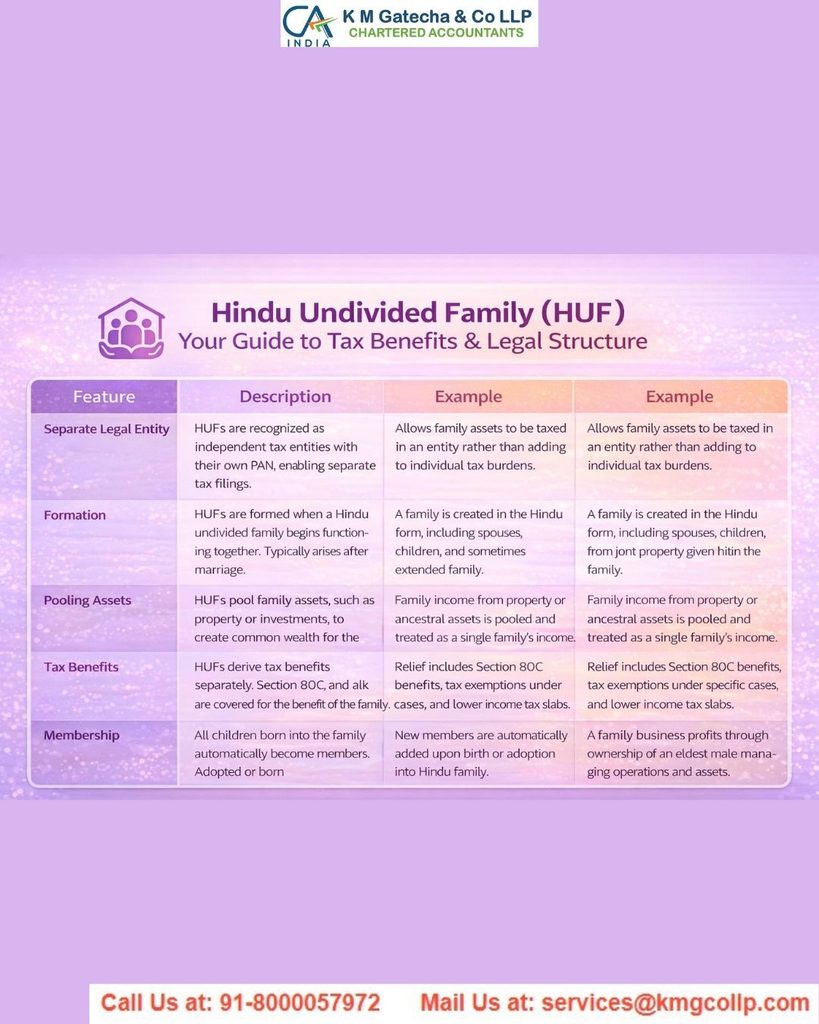
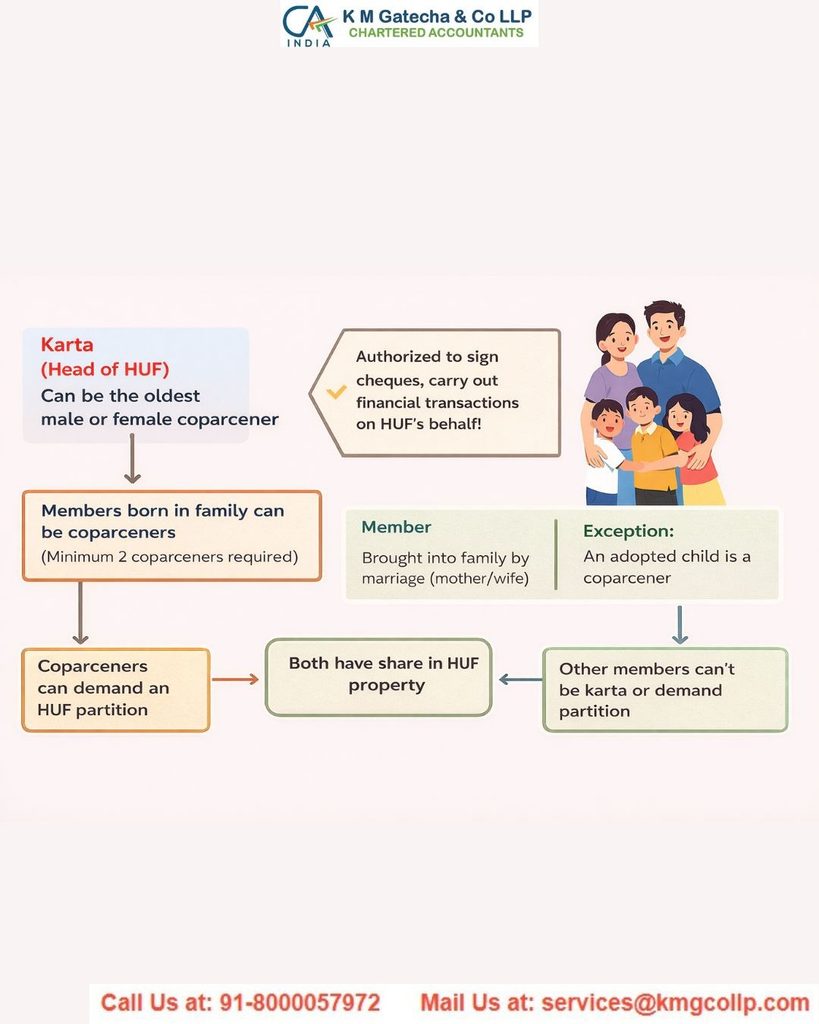
A Hindu Undivided Family (HUF) is a separate legal entity formed by a common ancestor and their descendants, primarily for managing family wealth and availing tax benefits.
Key Features of an HUF:
- Common Ancestor: Formed by a senior member (Karta) and includes all lineal descendants.
- All Lineal Descendants Included: Sons, daughters, and their spouses become part of the HUF.
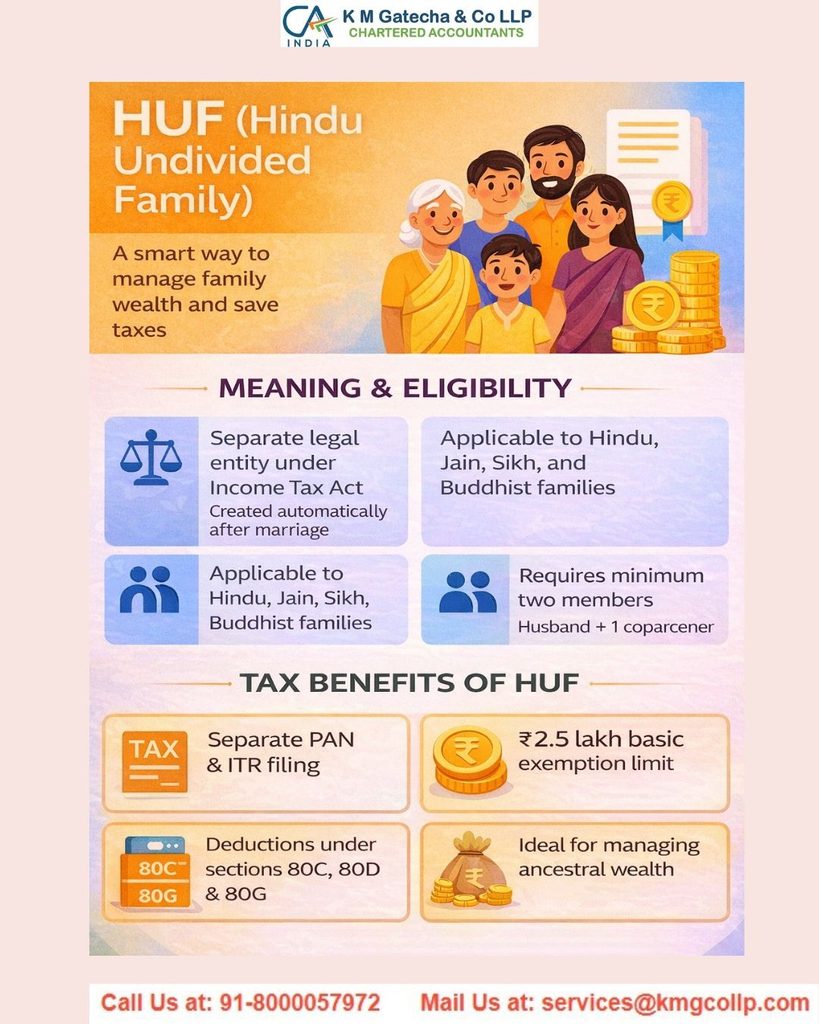
- Eligible Communities: Hindus, Jains, Sikhs, and Buddhists can form an HUF under Indian law.
How to Create an HUF – Step by Step
| Step | Action | Importance |
| 📜 1 | Create a Corpus | Legally establishes the HUF and contributes initial assets. |
| ✍️ 2 | Draft an HUF Deed | Serves as legal proof of HUF formation and outlines rights of coparceners. |
| 🆔 3 | Apply for a PAN | Required for taxation and filing income tax returns separately. |
| 🏦 4 | Open a Bank Account | Allows the HUF to manage its finances, investments, and transactions independently. |
Key Benefits of Forming an HUF
- 💰 Tax Planning: HUF is treated as a separate taxpayer, allowing additional exemptions and deductions.
- 🏦 Wealth Management: Enables centralized management of family wealth, property, and investments.
- 👨👩👧👦 Succession Control: Keeps wealth within the family lineage and ensures smooth transfer across generations.
Important Considerations
- ⚠️ Equal Rights for Coparceners: All members have equal rights to HUF property, requiring consensus for major decisions.
- ⚠️ Clubbing Provisions: Personal assets added to HUF may get clubbed with the contributor’s income for tax purposes.
- ⚠️ Taxable Gifts: Gifts received from non-relatives exceeding ₹50,000 in a financial year are taxable.
- ⚠️ Partition Requires Legal Documentation: Dividing the HUF requires formal legal agreements and documentation among members.
Tax Treatment for HUF (Hindu Undivided Family)
A Hindu Undivided Family (HUF) is treated as a separate taxpayer under Indian Income Tax laws. It enjoys many of the same benefits and obligations as individual taxpayers while providing additional opportunities for tax planning and wealth management.
| Category | Details |
| ✔️ Tax Slabs | Taxed at the same rates as individual taxpayers. |
| ✔️ Deductions | Eligible for deductions under sections 80C, 80D, and other applicable provisions. |
| ✔️ Gift Tax | Gifts received from non-relatives above ₹50,000 in a financial year are taxable. |
| ✔️ Audit | Mandatory if HUF turnover exceeds prescribed limits under Income Tax rules. |
KMG CO LLP Transfer’s HUF Services
We provide end-to-end HUF services to help you form, manage, and optimize your HUF legally and efficiently.
- 📜 HUF Deed Drafting: Professionally drafted, legally compliant HUF deeds tailored to your family structure and requirements.
- 🆔 PAN & Bank Setup: Assistance with applying for a PAN in the name of HUF and opening HUF bank accounts for seamless financial management.
- 🎁 Gift & Partition Deeds: Drafting, registration, and management of gift deeds and partition deeds to ensure smooth transfer of HUF assets.
- 👨💼 Appointing or Changing Karta: Guidance on selecting or changing the Karta, the head of the HUF, in compliance with legal provisions.
- 💰 End-to-End Tax Planning: Comprehensive tax planning solutions to optimize your HUF income, reduce liabilities, and maximize exemptions.

Disclaimer: The content on this website is for informational purposes only and does not constitute legal, financial, or professional advice. Please consult qualified experts before acting on any information. K M GATECHA & CO LLP accepts no liability for errors, omissions, or outcomes from the use of this content. This site is not an advertisement or solicitation.


