Reduce Your Family’s Tax Burden by ₹1.5 Lakh with an HUF PAN Card
Managing family finances and planning taxes efficiently can feel overwhelming. One effective way to simplify this process—especially for Hindu Undivided Families (HUFs)—is through a HUF PAN card. If you’re asking yourself, “What is a HUF PAN and how does it help?”, this detailed guide explains everything, from eligibility and formation to its importance in tax planning and savings.
What is a HUF?
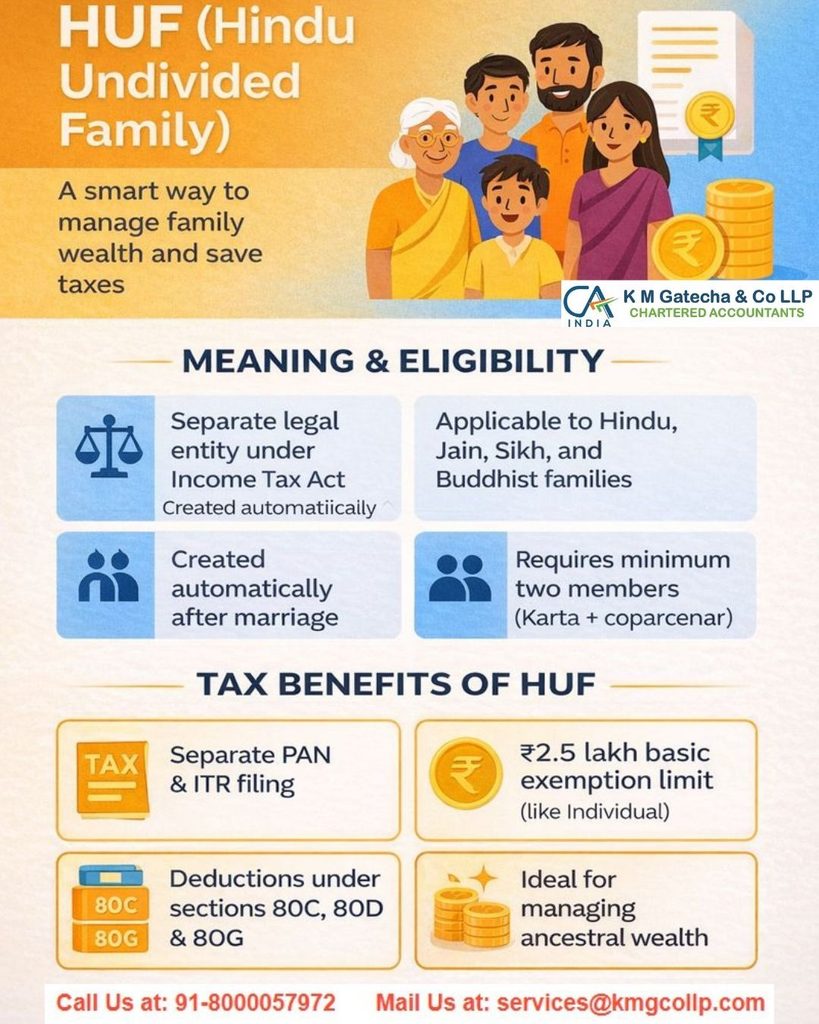
A Hindu Undivided Family (HUF) is a separate legal and tax entity recognised under Section 2(31) of the Income Tax Act, 1961. It includes all lineal descendants of a common ancestor, along with their wives and unmarried daughters. For tax purposes, the HUF is treated independently from its individual members. Notably, families belonging to Sikh, Buddhist, and Jain communities are also eligible to form an HUF, despite not being governed by Hindu law.
What is a HUF PAN Card?
A HUF PAN card is a unique 10-character alphanumeric Permanent Account Number issued by the Income Tax Department to a Hindu Undivided Family. Similar to an individual PAN, it enables the HUF to file income tax returns, carry out financial transactions, and manage income separately. The application and management of the HUF PAN are handled by the head of the family, known as the Karta.
HUF Eligibility: Who Can Form an HUF?
Certain conditions must be met to create an HUF:
- A single individual cannot constitute an HUF.
- An HUF generally comes into existence after marriage and includes the husband, wife, and children.
- It consists of a common ancestor, their lineal descendants, wives, and unmarried daughters.
- Only Hindus, Buddhists, Jains, and Sikhs are eligible.
- HUF property or income usually arises from ancestral assets, gifts, wills, or family contributions.
Creating a HUF: Key Steps Involved
Setting up an HUF requires formal documentation and planning:
- Creating the Corpus: The HUF must have assets, which may come from ancestral property, gifts, inheritances, or joint family property.
- Drafting a HUF Deed: This document specifies the HUF members, source of funds, nature of activities, and management authority. It should be prepared on stamp paper and signed by the Karta and coparceners.
- Applying for a HUF PAN: Essential for taxation and financial compliance.
- Opening a HUF Bank Account: Enables separate financial management distinct from individual members.
PAN and Tax Saving: Benefits of an HUF
One of the biggest advantages of an HUF is tax efficiency. Since it is treated as a separate taxable entity, it offers multiple benefits:
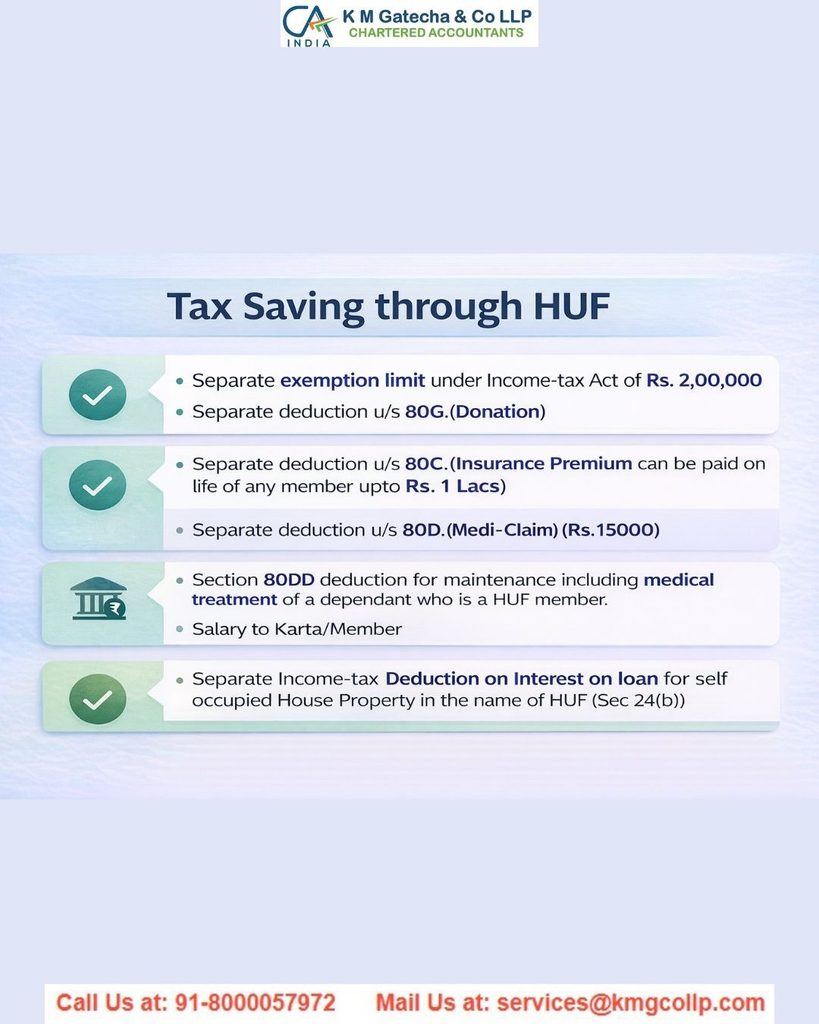
- Independent Deductions: The HUF can claim deductions under Section 80C up to ₹1.5 lakh, over and above the deductions claimed by its members.
- Additional Deductions: Benefits are also available under sections such as 54, 54B, 54D, 54EC, 54F, 54G, and Section 47 related to capital gains.
- Standard Deduction: Similar to individuals, HUFs can avail of the standard deduction.
- Home Loan Advantages: Deductions for principal repayment under Section 80C and interest under Section 24B are available.
- Capital Gains Exemptions: Long-term capital gains can be saved under Section 54F by reinvesting in residential property, subject to conditions.
- Tax-Free Gifts: Gifts received by the HUF up to ₹50,000 are exempt from tax.
It is important to ensure that the same deduction or expense is not claimed by both the HUF and its members.

Who Are Members of a HUF?
A HUF typically includes:
- Sons and daughters (married or unmarried)
- Husbands and wives
- Grandsons and great-grandsons
Both sons and daughters are coparceners, meaning they have equal rights in the HUF property and can also become the Karta. Membership arises by birth or marriage.
How to Apply for a HUF PAN Card
The Karta is responsible for submitting the HUF PAN application.
Documents Required:
- Name of the HUF (or Karta’s name followed by “HUF”)
- Address and address proof of the HUF
- Aadhaar card of the Karta
- Identity proof of the Karta (Voter ID, Passport, Driving Licence, Ration Card, etc.)
- Details of the source of HUF income
- Names, addresses, and fathers’ names of all coparceners, along with an affidavit signed by the Karta
- Duly signed Form 49A

Opening a HUF Bank Account
Once the PAN is allotted, a separate bank account should be opened for the HUF.
Documents Generally Required:
- HUF name
- PAN card of the HUF
- Photograph and identity/address proof of the Karta
- List of HUF members and coparceners
- Declaration from the Karta authorising account operations
- Any additional documents as requested by the bank
Most banks open HUF accounts as current accounts, which may involve specific charges.
Disclaimer: The content on this website is for informational purposes only and does not constitute legal, financial, or professional advice. Please consult qualified experts before acting on any information. K M GATECHA & CO LLP accepts no liability for errors, omissions, or outcomes from the use of this content. This site is not an advertisement or solicitation.