
Many startups think compliance becomes important only after they earn more revenue, raise funding, or hire a finance team. In reality, compliance starts from incorporation and continues throughout the company’s journey.
It covers areas such as company records, share issues, ESOPs, fundraising, audits, taxes, payroll, and related-party transactions. However, founders often delay these tasks while focusing on products, customers, hiring, and growth.
A proper compliance system helps maintain accurate records, avoid unnecessary problems, and stay ready for fundraising and due diligence. For founders, compliance should be treated as a regular part of running and growing the company.
1. Incorporation-Stage Compliance: Set Up the Basics
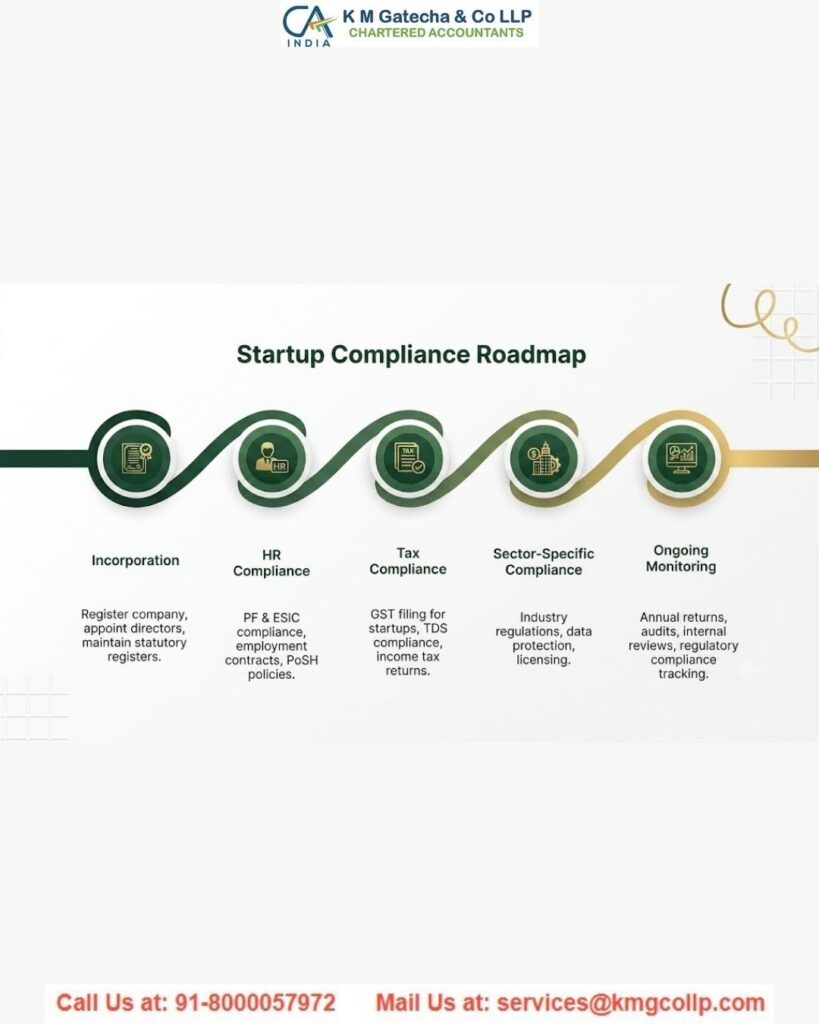
After incorporation, a startup should properly maintain its Certificate of Incorporation, PAN, TAN, bank account, statutory registers, and other company records. Directors should have the required DIN and DSC, where applicable, and registered office documents should be kept updated.
The company should also complete key post-incorporation requirements, such as appointing the first auditor, maintaining books of accounts, issuing share certificates, and recording required board decisions.
A clear person should be responsible for tracking compliance deadlines, maintaining documents, and coordinating with accounting, tax, and legal professionals. This helps prevent missed deadlines and keeps records organized.
2. Board and Shareholder Governance: Maintain Proper Records
Startups should maintain proper records of board meetings, resolutions, minutes, and shareholder approvals. Informal discussions through emails or messages should not replace required corporate records.
These records become especially important when issuing shares, granting ESOPs, taking loans, entering into related-party transactions, or raising funds. Investors may review these documents during due diligence.
Maintaining proper records from the beginning makes future fundraising and corporate transactions easier.
3. Annual MCA Compliance: Stay Up to Date
Companies must complete their annual MCA/ROC compliance, including financial statements and annual returns. Additional filings may be required for changes in directors, registered office, share capital, share allotments, charges, and other corporate events.
Incomplete accounts, missing approvals, or outdated shareholding records can make these filings difficult and create problems during fundraising or due diligence.
A central compliance tracker covering filing deadlines, board meetings, statutory registers, approvals, and other important dates can help the startup stay organized and avoid last-minute issues.
4. Tax Compliance: Income Tax, TDS, GST and Payroll
Startups need to manage income tax, advance tax where applicable, TDS, GST, and payroll-related tax requirements. Founder payments, salaries, consultant fees, reimbursements, ESOPs, and vendor payments should be properly recorded and supported by documents.
GST requirements depend on the startup’s business model, customers, and location of supplies. Therefore, GST compliance should be assessed based on the actual nature of the business and not only on turnover.
5. Startup Recognition and Tax Benefits
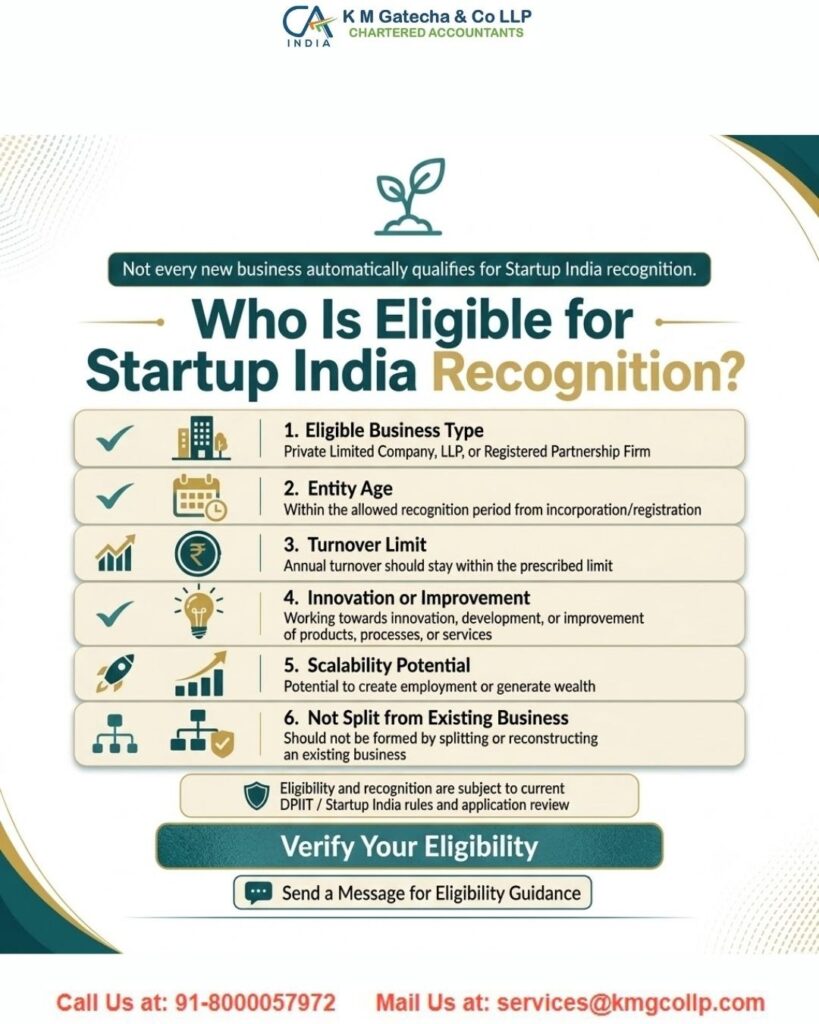
Eligible startups may qualify for government recognition and certain tax benefits. However, recognition does not automatically guarantee every benefit, as each has specific eligibility conditions.
Startups should maintain documents supporting their eligibility, including business details, financial records, ownership information, and relevant approvals. Founders should also verify the applicable rules before claiming or communicating any tax benefit.
6. Cap Table and Securities Compliance: Keep Ownership Records Accurate
A startup should maintain an accurate cap table showing its current ownership. Share certificates, allotments, approvals, ESOPs, investor rights, and statutory filings should all match the ownership records.
Every change in ownership should be properly documented, approved, and recorded. This is especially important when the startup has different types of shares, convertible instruments, or multiple funding rounds.
Keeping share records, valuation documents, agreements, and filings organized makes future fundraising, restructuring, and investor due diligence easier.
7. Related-Party Transactions and Founder Discipline
Startups may have transactions involving founders, directors, family members, or other related parties, such as loans, reimbursements, office expenses, or business services.
These transactions should be properly documented, approved where required, and recorded in the company’s books. Informal or undocumented transactions can create accounting, tax, audit, and investor due diligence issues.
The goal is not to avoid related-party transactions, but to ensure they are transparent, properly supported, and handled according to applicable rules.
8. Example: How Small Compliance Gaps Can Delay Fundraising
Imagine a growing startup preparing for an investment round. During due diligence, investors find missing board minutes, incomplete auditor appointment records, an undocumented founder loan, and an unapproved ESOP plan.
These issues may not stop the investment, but they can cause delays, extra paperwork, and questions from investors. The company may need to recreate documents, obtain approvals, and explain past gaps.
The key lesson is simple: small compliance issues can become bigger problems during fundraising or due diligence. Keeping proper records from the beginning helps avoid last-minute complications.
9. Common Compliance Mistakes Founders Should Avoid
Some common mistakes include:
- Delaying compliance: Waiting until fundraising to organize records.
- Working in silos: Managing tax, payroll, accounting, and company law separately.
- Using informal approvals: Relying only on emails or verbal decisions instead of required resolutions and minutes.
- Poor document storage: Not keeping filings, approvals, and supporting documents properly.
- No compliance owner: Failing to assign someone to track deadlines and records.
- Assuming benefits are automatic: Believing startup recognition automatically provides every tax benefit.
Most compliance problems arise from poor record-keeping and inconsistent processes. A simple system with clear responsibility, timely filings, and proper documentation can help startups stay compliant.
10. Practical Startup Compliance Checklist
A startup should maintain:
- Incorporation records: Certificate of Incorporation, PAN, TAN, bank details, and statutory registers.
- Accounting records: Auditor appointment and proper books of accounts.
- Board records: Meetings, minutes, resolutions, and shareholder approvals.
- MCA/ROC filings: Annual and event-based filings.
- Tax compliance: Income tax, TDS, GST, and payroll requirements.
- Cap table: Updated ownership, share certificates, allotments, valuations, and filings.
- ESOP records: Approvals, grants, and employee documentation.
- Related-party records: Proper approvals and documentation.
- Startup benefits: Documents supporting recognition and applicable tax benefits.
- Document management: A centralized repository and a person responsible for compliance.
Maintaining these records from the beginning helps startups stay organized and better prepared for fundraising, due diligence, and future growth.
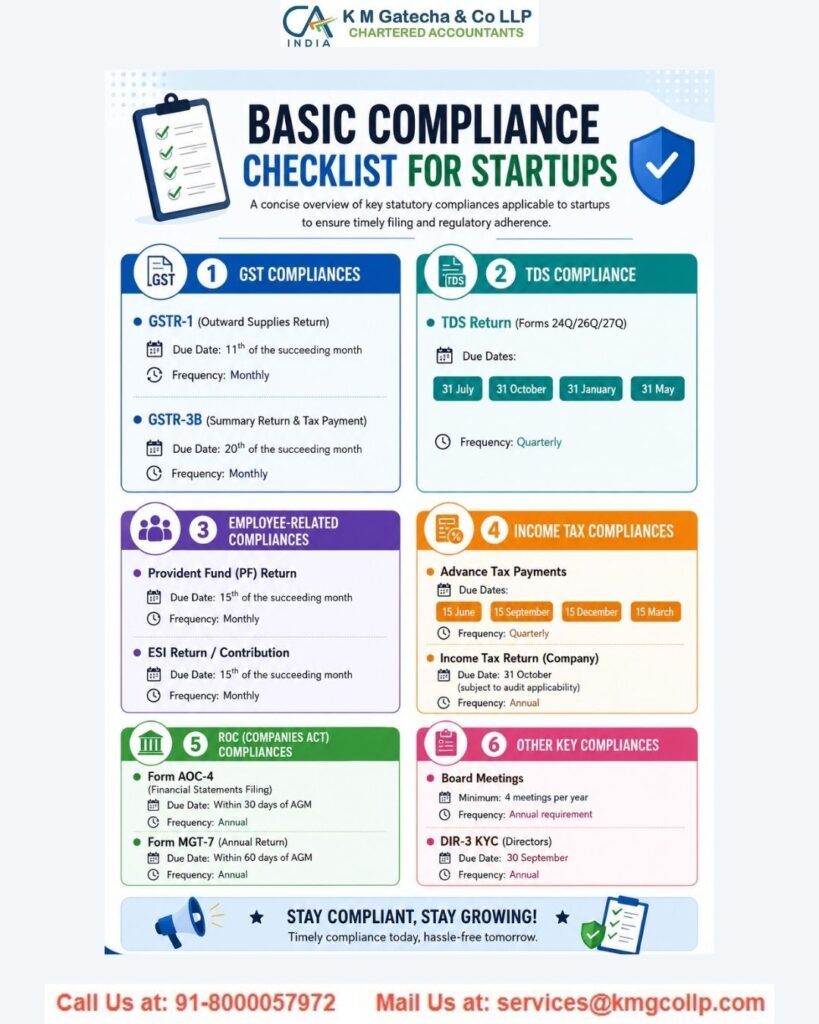
Conclusion: Good Compliance Makes Future Growth Easier
Startup compliance is often easiest to ignore when a company is small. However, fixing years of missing records and delayed filings can become much harder once the company starts growing.
Instead of treating compliance as a burden, founders should consider it an important part of running a business. Proper compliance helps the company raise funds, issue shares, manage ESOPs, respond to investor questions, complete due diligence, and expand with fewer problems.
A well-organized compliance system also builds trust. It gives founders better control over the company, helps investors assess the business more easily, and provides employees with greater confidence in areas such as compensation and company policies.
The best approach is to establish basic compliance processes from the beginning and update them as the company grows. Regular filings, proper approvals, accurate financial and ownership records, clear responsibility, and organized documentation can help create a strong foundation for long-term growth.
Disclaimer: The content on this website is for informational purposes only and does not constitute legal, financial, or professional advice. Please consult qualified experts before acting on any information. K M GATECHA & CO LLP accepts no liability for errors, omissions, or outcomes from the use of this content. This site is not an advertisement or solicitation.


