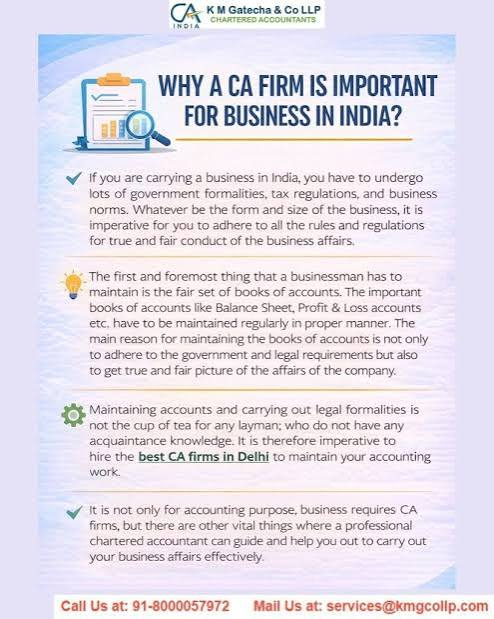
Many founders hire a Chartered Accountant only when a problem comes up, such as a GST notice, an upcoming ROC deadline, or a request for financial records from an investor. Hiring a CA at the last moment can lead to rushed decisions.
It is better to choose a CA early based on your startup’s needs, business stage, and future plans.
What Does a CA Do for a Startup?
A CA can support a startup at different stages of its journey:
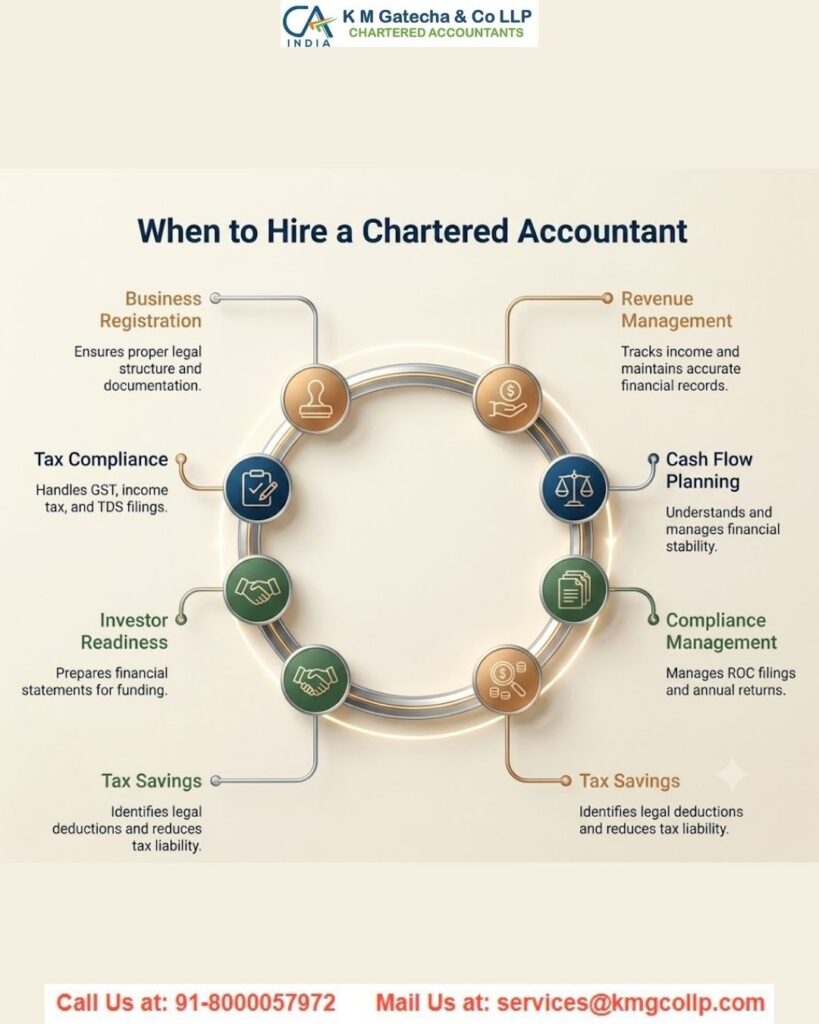
- Before incorporation: Help choose the right business structure and plan the registration process.
- During incorporation: Assist with company or LLP registration, PAN, TAN, GST registration, and initial compliance.
- Regular compliance: Manage bookkeeping, GST returns, TDS, payroll-related compliance, and financial records.
- Annual compliance: Handle ROC filings, income tax returns, financial statements, and tax audits where applicable.
- Important business events: Support fundraising, financial due diligence, ESOPs, valuations, and tax or GST notices.
A startup should not treat its CA as someone who is contacted only once a year. Regular communication can help prevent compliance problems.
Choose a CA Based on Your Startup’s Stage
The right CA depends on your business size and requirements. A new founder may need basic accounting, tax, and registration support, while a growing startup may need help with fundraising, payroll, ESOPs, audits, and complex tax matters.
Before hiring a CA, list your current requirements and consider what services you may need as the business grows.
How to Find and Check a CA
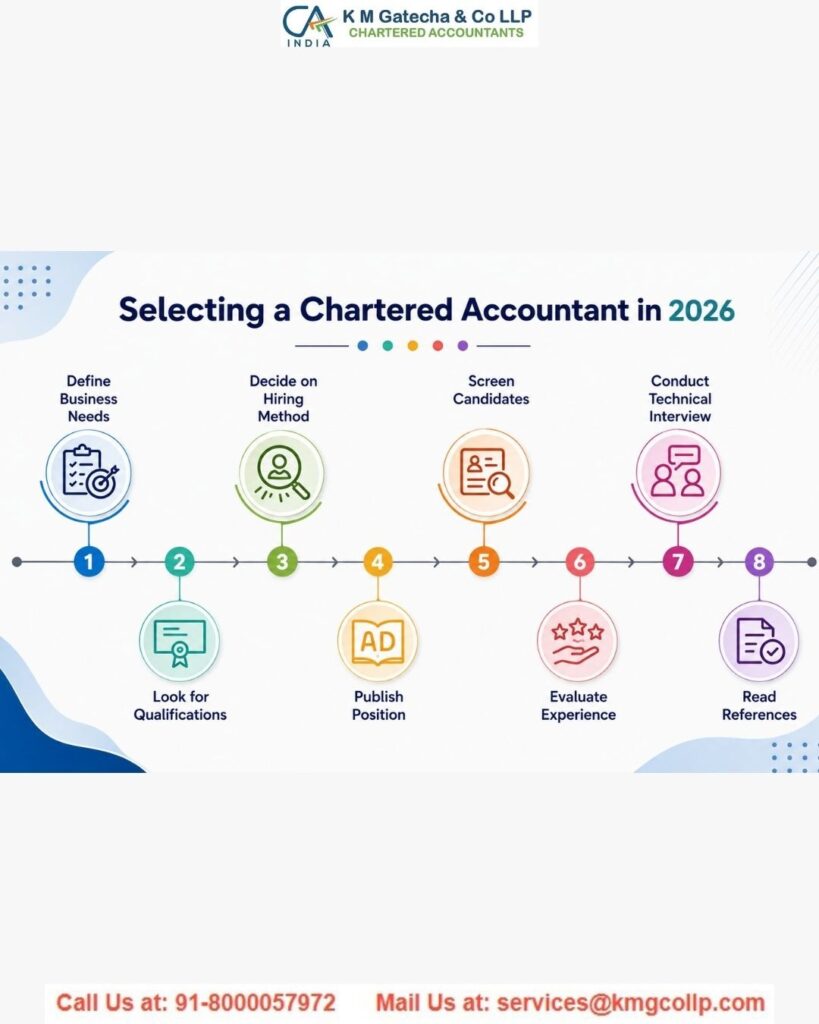
You can find a CA through professional networks, referrals, online searches, or recommendations from other business owners.
Before hiring, check their experience, communication process, services offered, and ability to handle startup-related compliance.
Questions to Ask Before Hiring
- Who will handle my account and filings?
- Who should I contact for urgent issues?
- How quickly do you normally respond to queries?
- What services are included in the engagement?
- Are GST, ROC, TDS, payroll, and income tax handled by the same team?
- Do you have experience working with startups?
- How do you handle tax or GST notices?
- Can you provide references from existing startup clients?
Red Flags to Watch Out For
Be careful if a CA:
- Does not provide a clear written scope of work.
- Is unclear about responsibilities and communication.
- Handles too many clients without proper support.
- Takes too long to respond to important queries.
- Cannot clearly explain what services are included.
- Promises that your business will never receive a tax or compliance notice.
A good CA cannot guarantee that problems will never occur, but they can help maintain proper compliance and deal with issues when they arise.

Why One CA Team Can Be Helpful
Some startups use different people for GST, accounting, ROC filings, payroll, and income tax. This can sometimes create communication gaps.
Using one coordinated team can make compliance easier because the same team can track your accounts, tax filings, company compliance, payroll, and important deadlines.
It also gives founders one clear point of contact and reduces the chances of important information being missed between different service providers.
Conclusion
Choosing the right CA is an important decision for any startup. Instead of waiting for a tax notice, filing deadline, or funding round, founders should establish a proper compliance system early.
The right CA can help with accounting, taxation, company compliance, payroll, fundraising preparation, and other financial requirements as the business grows. A CA who understands your startup and communicates regularly can help you stay organized and focus more on building the business.
Disclaimer: The content on this website is for informational purposes only and does not constitute legal, financial, or professional advice. Please consult qualified experts before acting on any information. K M GATECHA & CO LLP accepts no liability for errors, omissions, or outcomes from the use of this content. This site is not an advertisement or solicitation.