

Tax Rules, Stamp Duty & Capital Gains on Gifted Property: A Complete Guide
When you buy or sell a property, certain taxes are always applicable. But what happens if the property is gifted instead of purchased? Are taxes still payable? In this blog, we explain the taxation of gifted property in India, including when it is taxable and the key rules you need to know.
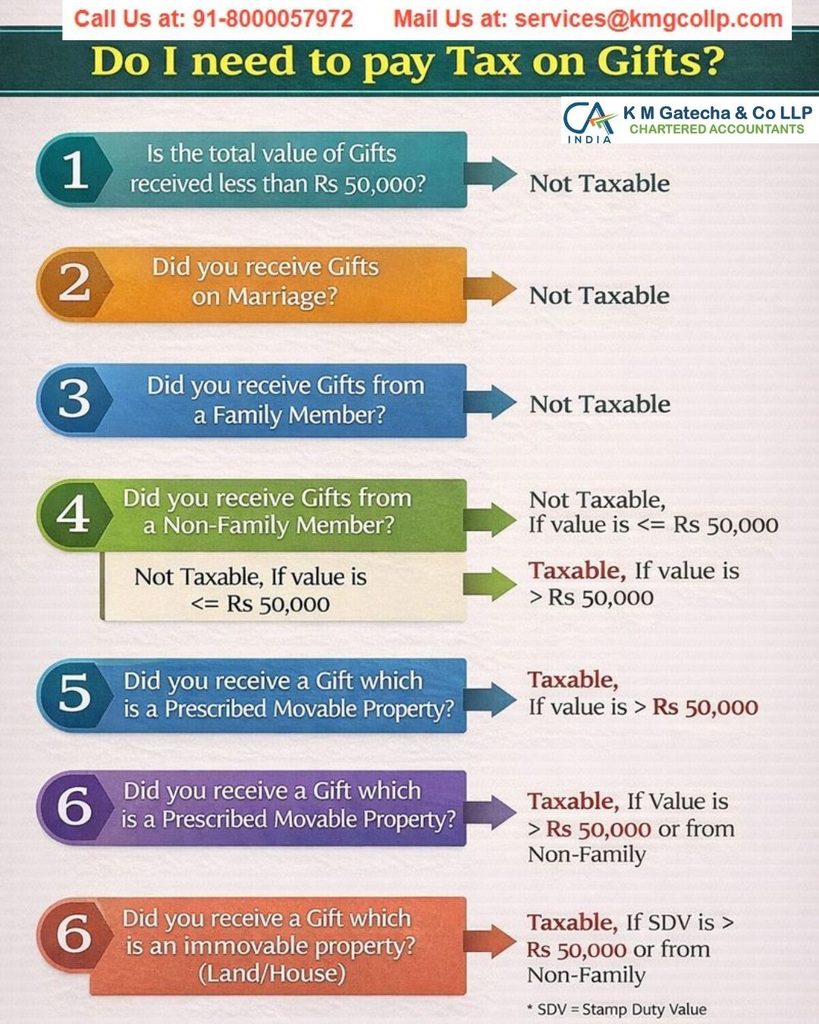
What Is Considered a Gifted Property?
In India, a property is considered gifted when it is transferred without any monetary consideration. The transfer must be voluntary and properly documented through a gift deed, which serves as official proof that the property has been transferred without payment.
Let’s now understand the tax implications with an example scenario.
Taxes on Gifted Properties in India
When You Don’t Have to Pay Income Tax on a Gifted Property
Suppose your father purchased a property in 2010 for ₹20 lakh and gifted it to you in 2025.
In this case, no income tax is payable on receiving the property, except for a nominal stamp duty fee, which varies by state. For example:
- Uttar Pradesh: ₹5,000
- Haryana: Free
After paying the stamp duty, the property must be registered, which usually involves a registrar fee of 1–2% of the total sale value.
Apart from these charges, no tax is levied when the property is received as a gift from a close or blood relative.
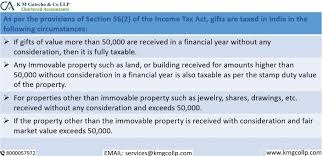
Who qualifies as a “relative” under Section 56(2)(x) of the Income Tax Act?
Gifts from relatives are fully tax-exempt, regardless of the property’s value. Relatives include:
- Spouse
- Siblings
- Lineal ascendants and descendants (parents, grandparents, children, grandchildren)
- Certain in-laws (as defined by law)
Who does NOT qualify as a relative?
- Brother-in-law / Sister-in-law’s spouse (if not directly covered)
- Godparents / Godchildren
- Step-relatives (step-siblings, step-parents)
- Colleagues, employers, employees
- Neighbours
- Distant relatives not listed in the Act
- Anyone unrelated by blood or marriage
Even if the property is valued at ₹1 crore or more, gifts from eligible relatives remain completely tax-free.
When You Have to Pay Tax on Gifted Property
Tax is applicable on a gifted property if it is received from a non-blood relative or someone who does not fall under the definition of a “relative” as per Section 56(2)(x). This includes:
- Friend (even a close family friend)
- Fiancé / Fiancée
- Live-in partner
- Cousin (maternal or paternal side)
- Nephew / Niece (sister’s or brother’s children)
- Uncle / Aunt (not your parent’s real sibling)
- Father’s cousin / Mother’s cousin
- Son-in-law / Daughter-in-law
Note: Gifts from your child’s spouse are considered from a relative and may be exempt, but gifts from your spouse’s relatives are not exempt.
The following individuals are not considered “relatives” under Section 56(2)(x) of the Income Tax Act, so gifts from them may be taxable if the property’s stamp duty value exceeds ₹50,000:
- Brother-in-law / Sister-in-law’s spouse (not directly covered)
- Godparents / Godchildren
- Step-relatives (e.g., step-siblings or step-parents)
- Colleagues, employers, or employees
- Neighbours
- Distant relatives not listed in the Income Tax Act
- Anyone not related by blood or marriage legally
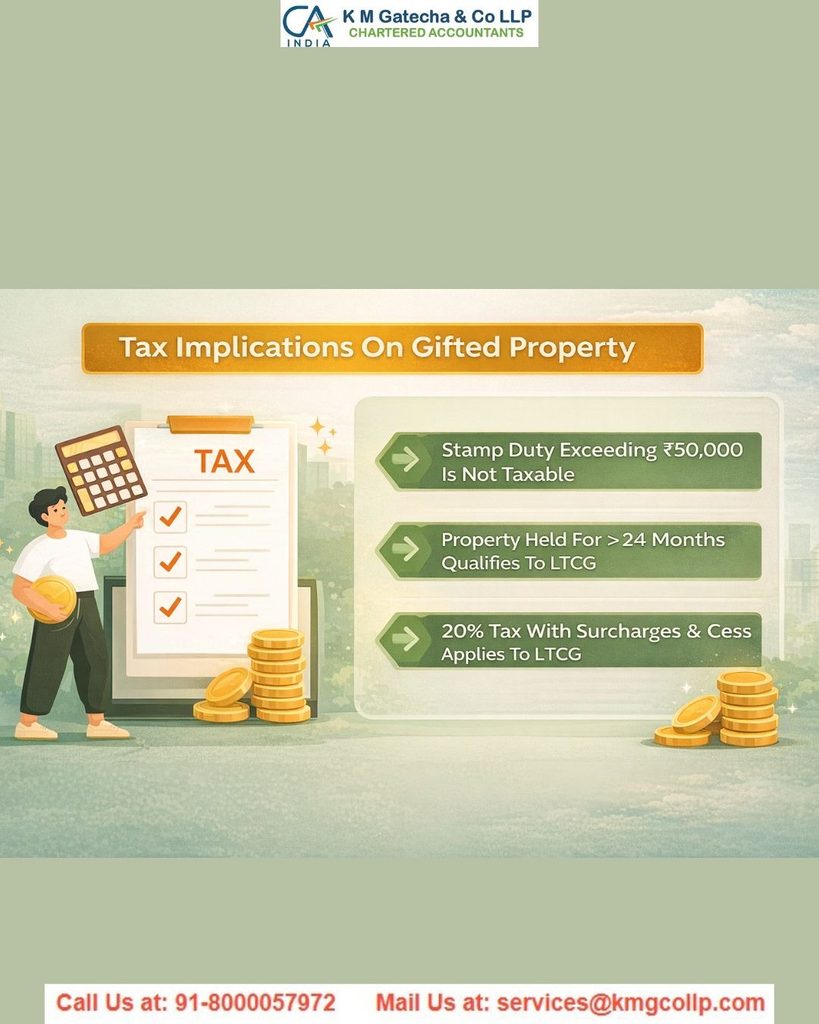
If a property is gifted by someone who is not a close or blood relative, you are liable to pay tax according to your income tax slab rate. In addition, full stamp duty (around 5–7%) and registration charges are also applicable. The stamp duty value of the gifted property is added under Income from Other Sources and taxed accordingly.
Tax Implications When Selling a Gifted Property
Suppose you receive a property from your father, which he bought in 2010 for ₹20 lakh, and you sell it in 2025 for ₹50 lakh. In this case, you will be liable to pay Long-Term Capital Gains (LTCG) tax on the profit.
- If the donee holds the property for more than 24 months, the gain is treated as long-term capital gains, taxed at 12.5%.
- If sold within 24 months, it is short-term capital gains, taxed at 20%.
Indexation Benefit:
If the property was acquired before July 23, 2024, you can opt for indexation, which adjusts the purchase price for inflation. With indexation, the tax rate becomes 20%, but your overall tax liability may be reduced.
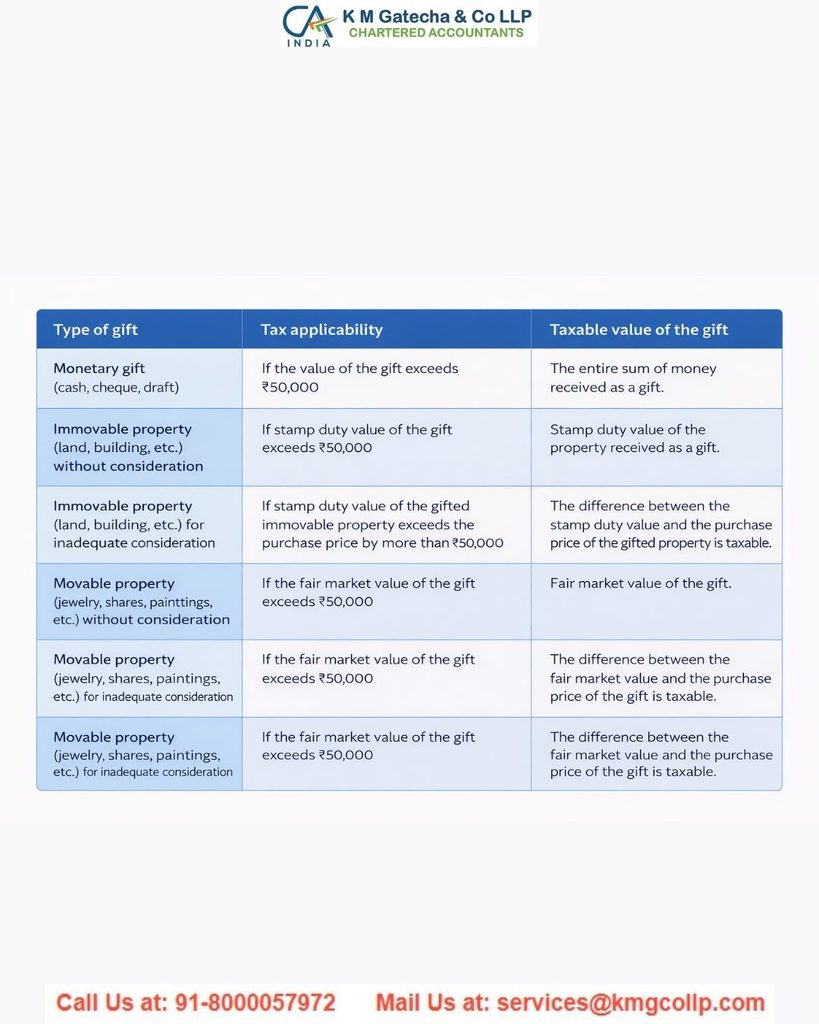
As per Section 49 of the Income-tax Act, 1961, the date of acquisition is considered to be 2010, when your father purchased the property, not 2025 when it was gifted. This ensures the holding period and cost of acquisition are correctly applied for calculating capital gains.
In Short:
Receiving a property as a gift from a close relative in India is generally tax-free, apart from nominal charges like stamp duty and registration fees. However, gifts from non-relatives are taxable as income if the property’s value exceeds the threshold. Later, when you sell the property, capital gains tax applies on the profit, though opting for indexation can help reduce your tax liability. Always review the rules carefully and consult a tax expert to ensure compliance.
Disclaimer: The content on this website is for informational purposes only and does not constitute legal, financial, or professional advice. Please consult qualified experts before acting on any information. K M GATECHA & CO LLP accepts no liability for errors, omissions, or outcomes from the use of this content. This site is not an advertisement or solicitation.

