Starting a business in India involves much more than developing a product, finding customers, and generating revenue. Compliance begins from the time a company is incorporated, even if the business has not earned any income yet.
For startups, staying compliant from the beginning can prevent penalties, unnecessary costs, funding delays, and problems during due diligence. A proper compliance system also makes it easier to manage tax, employee, corporate, and regulatory obligations as the business grows.
Here is a practical overview of the major compliances that startups in India should understand.
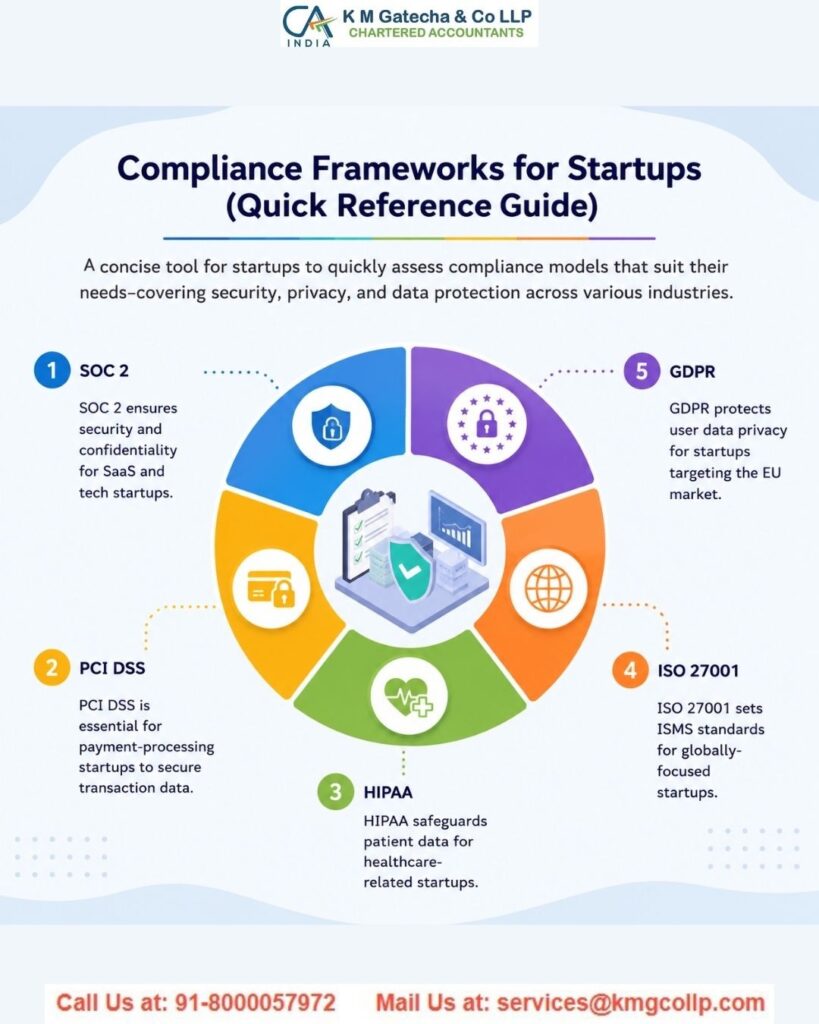
Startup Compliance Checklist
A startup may need to manage compliance requirements across several areas, including:
- Company law and ROC filings
- Income tax
- GST
- Employee and labour laws
- FEMA and foreign investment
- Intellectual property
- MSME registration
- DPIIT Startup India recognition
The exact requirements depend on the company’s structure, turnover, employees, activities, and funding sources.
1. Company Law and ROC Compliance
Private Limited Companies have several mandatory annual compliance requirements, regardless of their turnover or profitability.
Statutory Audit
A Private Limited Company is required to undergo a statutory audit every year. This requirement applies regardless of whether the company has generated a profit or has significant turnover.
Annual ROC Filings
Companies generally need to file their financial statements and annual returns with the Registrar of Companies.
Important filings include:
- AOC-4 for financial statements
- MGT-7 for the annual return
- DIR-3 KYC for directors
Companies must also conduct required board meetings and the Annual General Meeting (AGM), maintain minutes, and keep statutory registers updated.
Event-Based Filings
Certain corporate events trigger additional MCA filings.
For example:
- INC-20A is required for commencement of business within the applicable period after incorporation.
- PAS-3 is filed when shares are allotted.
- DIR-12 is required for applicable changes relating to directors.
Therefore, founders should not look at compliance only as an annual activity. Certain filings become necessary whenever a specific corporate event occurs.
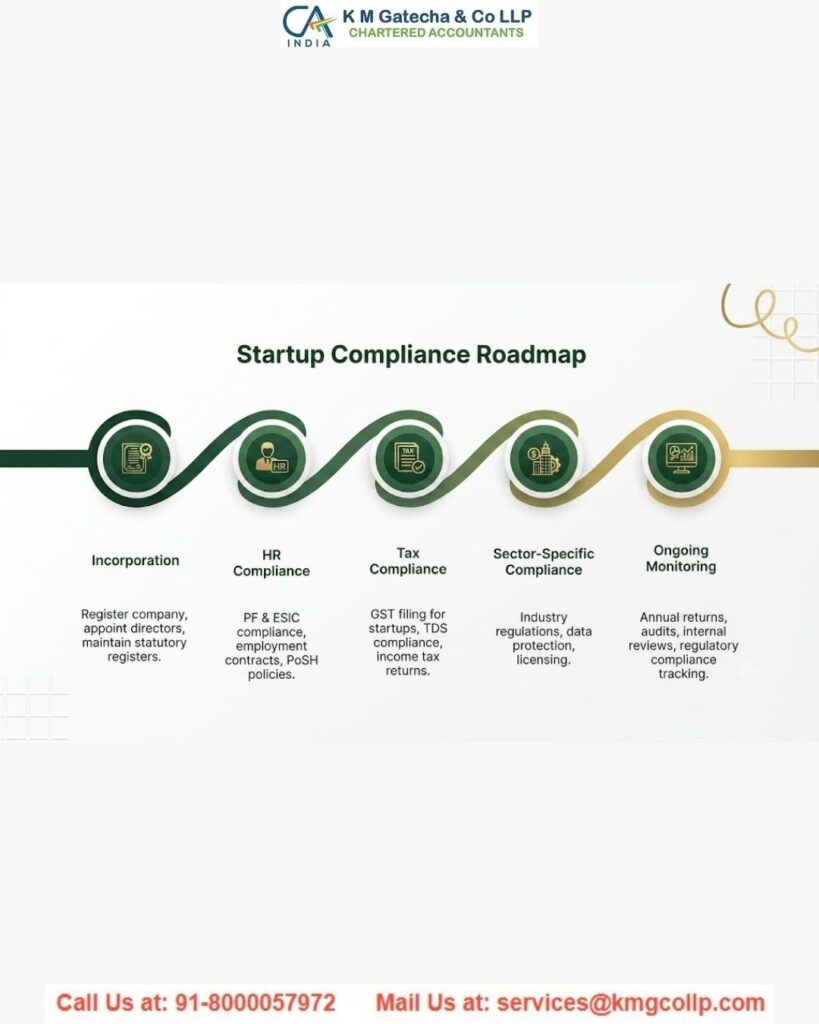
2. Income Tax Compliance
Income tax compliance begins from the early stages of the business.
A company needs appropriate tax registrations, including PAN and TAN. Depending on its activities, the startup may also have TDS obligations.
Important Income Tax Responsibilities
A startup may need to:
- File its income tax return every year
- Deduct and deposit TDS on applicable payments
- File quarterly TDS returns
- Pay advance tax where applicable
- Complete a tax audit when the applicable conditions and thresholds are met
TDS can apply to payments such as salaries, rent, professional fees, and other specified transactions.
Maintaining proper accounting records throughout the year makes income tax compliance significantly easier.
3. GST Compliance
GST registration depends on the startup’s turnover, nature of business, and type of transactions.
The commonly applicable turnover thresholds are:
- ₹40 lakh for goods
- ₹20 lakh for services
However, certain businesses and transactions can have different registration requirements. Interstate supplies and e-commerce activities may also require careful evaluation under the applicable GST provisions.
Once registered, businesses generally need to manage returns such as:
- GSTR-1
- GSTR-3B
- GSTR-9, where applicable
E-invoicing requirements can also apply once the business crosses the prescribed turnover threshold.
Startups should evaluate GST registration requirements before beginning taxable operations rather than waiting until compliance becomes an issue.
4. Labour and Employee Compliance
Employee-related compliance becomes increasingly important as a startup expands its workforce.
Several requirements become applicable when the employee count reaches specific levels.
EPF
EPF generally becomes applicable when an establishment has 20 or more employees, subject to the applicable rules.
ESI
ESI can apply when an establishment reaches 10 or more employees, subject to applicable wage and coverage conditions.
Professional Tax
Professional tax is applicable based on the rules of the relevant state. Where applicable, employers must deduct and deposit it from employee salaries.
Shops and Establishments
Depending on the state and nature of the workplace, registration under the applicable Shops and Establishments legislation may be required.
POSH Compliance
When an organization has 10 or more employees, it is required to establish an Internal Committee under the Prevention of Sexual Harassment framework.
Startups should also consider requirements relating to minimum wages, gratuity, employee records, and applicable labour regulations.
5. FEMA Compliance for Foreign Investment
Startups receiving money from foreign investors or NRIs need to pay close attention to FEMA and RBI requirements.
Foreign investment can involve additional reporting and valuation requirements.
FC-GPR Filing
When shares are issued to a foreign investor, the applicable FC-GPR reporting generally needs to be completed within 30 days of share allotment.
The company must also follow applicable pricing and valuation requirements.
FLA Return
Companies with applicable foreign assets or liabilities may need to submit the annual FLA return to the RBI.
Foreign investment compliance should be handled carefully because missing reporting requirements can result in regulatory issues and penalties.
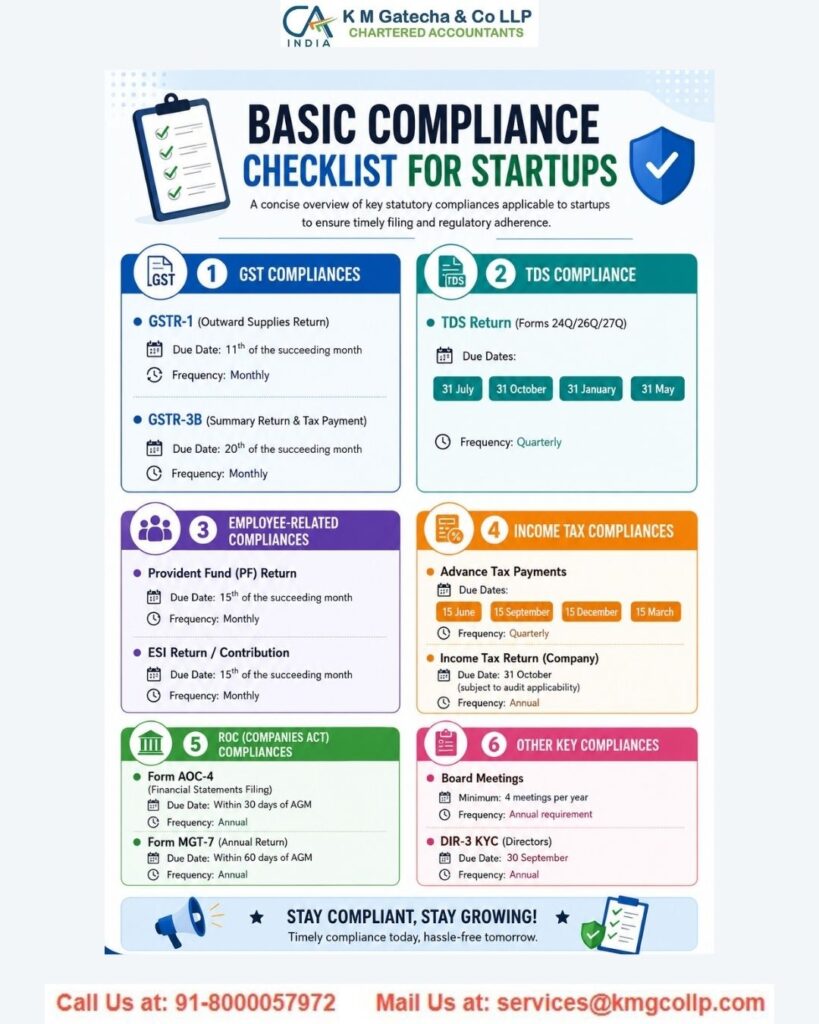
6. Protect Your Intellectual Property
Intellectual property may not be a mandatory compliance requirement in the same way as tax or ROC filings, but it is extremely important for startups.
A startup’s name, logo, product, technology, or other intellectual property can become one of its most valuable assets.
Trademark Registration
Registering the business name and logo as a trademark can help protect the brand from unauthorized use.
Startups should consider protecting their intellectual property early, particularly before significant marketing, fundraising, or expansion.
7. Udyam/MSME Registration
Eligible startups can consider obtaining Udyam registration under the MSME framework.
Registration can provide access to certain government schemes and other benefits available to eligible MSMEs.
One important area is payment protection. Eligible MSMEs can receive protection under applicable provisions relating to delayed payments, including the prescribed 45-day payment period for qualifying transactions.
Udyam registration can therefore be useful for eligible startups dealing with larger businesses.
8. DPIIT Startup Recognition
Eligible startups can apply for recognition under the Startup India initiative through DPIIT.
DPIIT recognition can provide several benefits and regulatory relaxations, subject to eligibility and applicable conditions.
Some of the potential benefits include:
- Self-certification under specified labour and environmental laws
- Eligibility for certain tax benefits
- ESOP-related tax deferral
- Easier exit mechanisms
- Other Startup India benefits
Section 80-IAC Tax Holiday
Eligible startups may qualify for a tax deduction under Section 80-IAC, subject to the applicable conditions and approval requirements.
The benefit can provide a 100% deduction of eligible profits for three consecutive years out of the specified period, subject to the law and eligibility requirements.
DPIIT recognition can therefore be valuable for qualifying startups that want to reduce certain regulatory and compliance burdens.
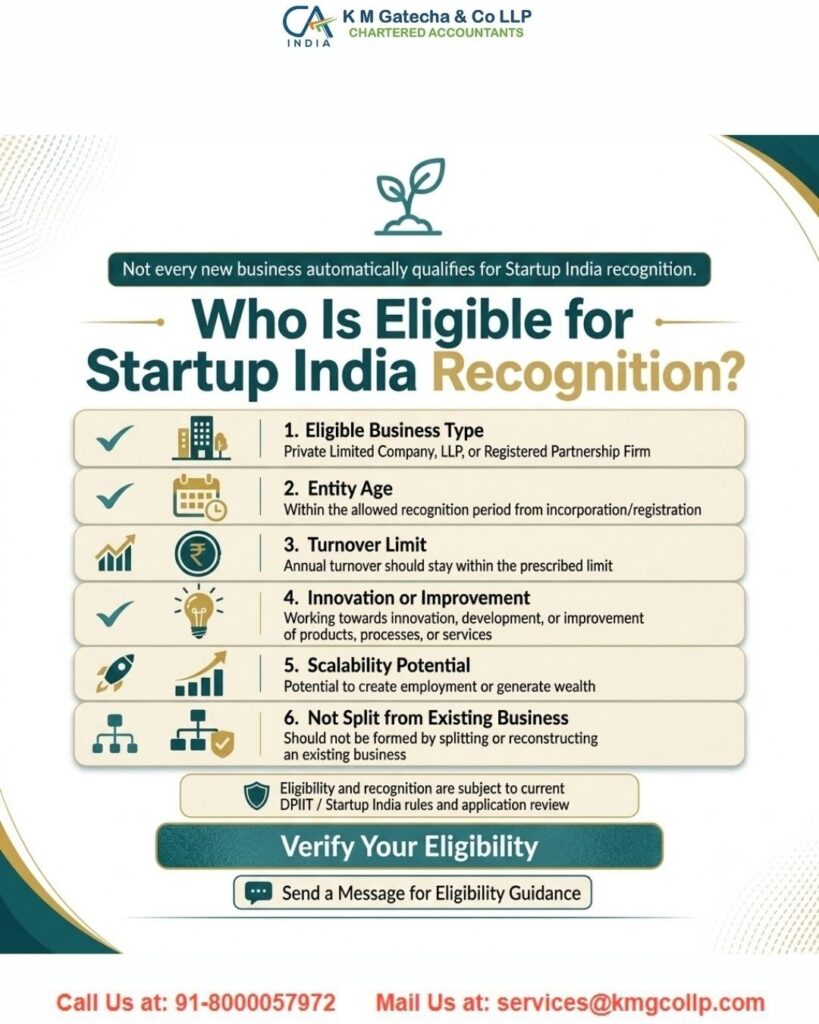
Why Startup Compliance Should Start Early
Many founders assume that compliance becomes important only after the business starts generating substantial revenue. This can be a costly mistake.
Corporate filings, audits, tax registrations, employee compliance, and event-based filings can apply even when a startup is still in its early stages.
Failing to comply can result in:
- Penalties and additional fees
- Tax notices
- Regulatory complications
- Delays during fundraising
- Problems during investor due diligence
- Difficulty maintaining accurate financial records
Building a compliance calendar from the beginning can prevent most of these problems.
Startup Compliance Calendar
A startup can organize its compliance responsibilities into three broad categories.
Regular Compliance
- Accounting and bookkeeping
- GST returns, where applicable
- TDS deposits
- Employee-related payments
- Payroll records
Quarterly Compliance
- TDS returns
- Applicable GST filings
- Financial review and reconciliation
Annual Compliance
- Statutory audit
- Income tax return
- ROC annual filings
- AGM
- Director KYC
- Annual GST return, where applicable
- FLA return, where applicable
The exact deadlines depend on the applicable law, business structure, and circumstances.
Disclaimer: The content on this website is for informational purposes only and does not constitute legal, financial, or professional advice. Please consult qualified experts before acting on any information. K M GATECHA & CO LLP accepts no liability for errors, omissions, or outcomes from the use of this content. This site is not an advertisement or solicitation.