


Starting a business involves many priorities, including developing your product, hiring employees, finding customers, and raising funds. Compliance can easily get pushed aside during the first year. However, ignoring important legal and financial requirements can lead to penalties, notices, missed filings, and problems during investor due diligence.
For an Indian startup, getting compliance right from the beginning is much easier and less expensive than trying to fix years of missed records later.
This startup compliance checklist in India covers 10 important compliance steps that founders should consider during their first year of business.
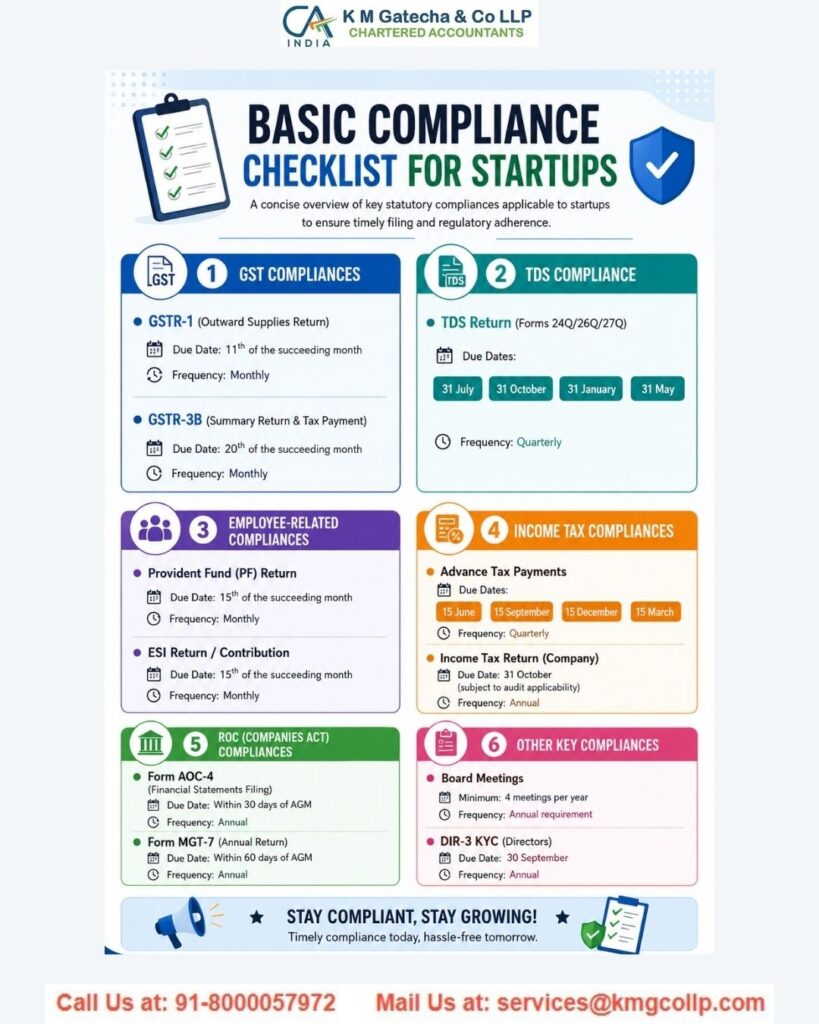
Startup Compliance Checklist: 10 Essential Requirements
| No. | Compliance Requirement | When to Do It | What Happens If You Miss It? |
| 1 | Choose the right business structure | Before the first invoice | Tax and liability complications |
| 2 | Apply for PAN and TAN | Immediately after incorporation | Problems with banking and TDS |
| 3 | Register for GST when applicable | Before liability arises | Penalties and interest |
| 4 | Open a dedicated business bank account | Shortly after incorporation | Mixing of personal and business finances |
| 5 | Set up accounting and bookkeeping | From the first transaction | GST, tax, and reporting errors |
| 6 | Register for EPF and ESIC | When employee thresholds apply | Retrospective liabilities |
| 7 | Obtain Udyam/MSME registration | Anytime | Missed MSME-related benefits |
| 8 | File TDS returns | Every quarter | Late fees and possible default |
| 9 | Complete ROC annual filings | As per MCA deadlines | Additional fees and possible disqualification |
| 10 | Complete FEMA/FDI compliance | When foreign investment is received | FEMA penalties and compounding |
1. Choose the Right Business Structure
Selecting the appropriate business structure is one of the first decisions a founder needs to make. The structure affects taxation, legal liability, investment opportunities, and ongoing compliance requirements.
Common options include:
Private Limited Company
A Private Limited Company is generally suitable for startups planning to raise funds from angel investors or venture capital firms.
LLP
An LLP can be suitable for professional services, consulting businesses, and businesses where limited liability is important.
One Person Company
An OPC can be considered by a solo founder who wants a corporate structure while operating independently.
Proprietorship
A proprietorship is relatively simple and may work for individual freelancers, traders, and small operators. However, it is generally not suitable for startups planning to raise external equity investment.
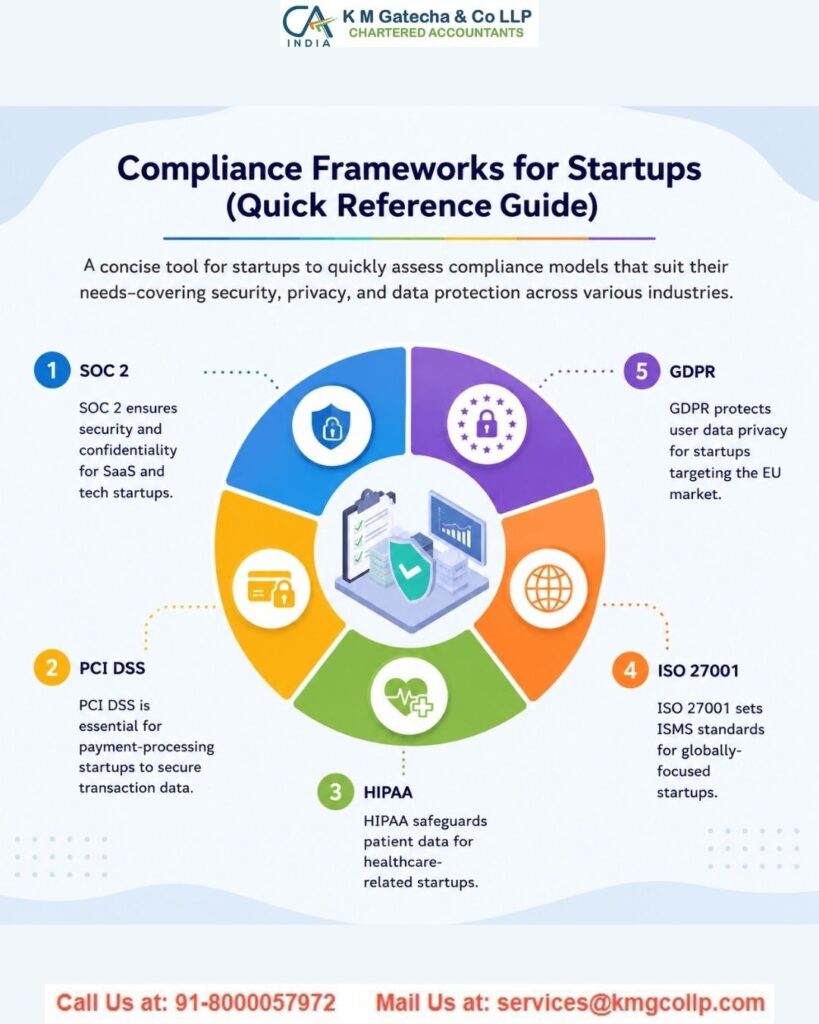
For companies, the MCA’s SPICe+ process integrates several incorporation-related registrations, including company incorporation, DIN, PAN, TAN, and other applicable registrations.
Tip: Complete the appropriate business registration before raising your first invoice to avoid complications with business income and taxation.
2. Apply for PAN and TAN
A Permanent Account Number (PAN) is essential for tax-related activities and banking requirements.
For companies and LLPs, PAN is generally allotted as part of the incorporation process. In the case of a proprietorship, the proprietor’s PAN is used.
A Tax Deduction and Collection Account Number (TAN) is required when a business is responsible for deducting tax at source.
For example, TDS obligations may arise when a startup makes certain payments such as:
- Salaries
- Rent
- Contractor payments
- Professional fees
Businesses that are required to deduct TDS should arrange their TAN and compliance process before making applicable payments.
3. Register for GST When Required
GST registration is an important part of startup compliance in India.
The applicable registration threshold depends on the nature of the business and the type of supply. The source article identifies the commonly applicable thresholds as ₹40 lakh for goods and ₹20 lakh for services, subject to the relevant GST rules and exceptions.
Certain situations can require registration regardless of the normal turnover threshold. These may include specific e-commerce activities, interstate supplies, and certain export-related situations.
After GST registration, businesses may need to file returns such as:
- GSTR-1
- GSTR-3B
- GSTR-9, where applicable
Startups should determine their GST liability early rather than waiting until turnover becomes substantial.
4. Open a Dedicated Business Bank Account
Maintaining a separate bank account for business transactions is an important financial practice.
Although a dedicated current account is not necessarily a standalone compliance requirement in every situation, separating personal and business finances makes accounting and tax reporting much easier.
Mixing funds can create problems with:
- Income tax records
- Expense tracking
- GST reconciliation
- Financial reporting
- Investor due diligence
A dedicated business account also provides a clearer financial picture of the startup and makes bookkeeping more straightforward.
5. Set Up Accounting and Bookkeeping From Day One
Accounting should begin with the first business transaction, rather than at the end of the financial year.
Proper bookkeeping provides the foundation for several other compliance activities. GST returns, TDS filings, financial statements, income tax calculations, and other reports all depend on accurate accounting records.
Startups can use accounting software such as:
- Tally Prime
- Zoho Books
- QuickBooks
The important thing is not simply choosing software but ensuring that transactions are recorded consistently and accurately.
Maintain records of:
- Sales
- Purchases
- Expenses
- Bank transactions
- Vendor payments
- Employee payments
- Tax payments
- Invoices
Keeping records updated throughout the year is much easier than reconstructing an entire year’s transactions later.
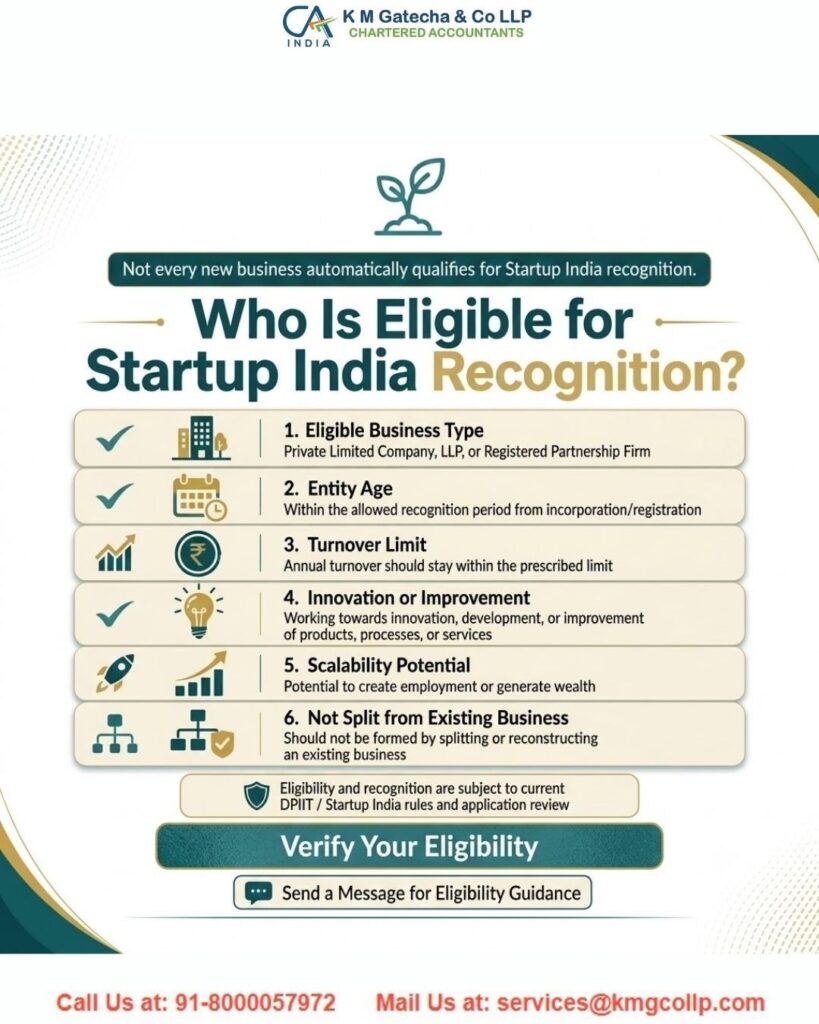
6. Register for EPF and ESIC When Applicable
Employee-related compliance becomes increasingly important as a startup expands its team.
EPF
EPF registration generally becomes mandatory when the applicable employee threshold of 20 or more employees is reached.
The source article states that both employer and employee contributions are generally 12% of basic wages plus dearness allowance, subject to the applicable rules.
ESIC
ESIC generally becomes applicable at 10 or more employees, subject to the applicable coverage requirements. The source identifies coverage for employees earning gross wages up to ₹21,000 per month.
The contribution rates mentioned are:
- Employer: 3.25%
- Employee: 0.75%
Startups should monitor employee numbers carefully because delaying registration can result in retrospective liabilities and additional charges.
7. Consider Udyam Registration for MSME Benefits
Udyam Registration is voluntary for eligible businesses but can provide several practical advantages.
Potential benefits include:
- Access to priority-sector lending
- Government procurement opportunities
- Credit guarantee support
- Benefits associated with MSME classification
- Protection related to specified payment timelines
For businesses selling to larger companies, MSME status can also be relevant to payment-related provisions under Section 43B(h), subject to applicable conditions.
Udyam registration is generally free and requires information such as PAN and Aadhaar.
8. File TDS Returns on Time
If a startup makes payments that are subject to TDS, it must deduct tax at the applicable rate, deposit it within the prescribed timeline, and file the relevant quarterly TDS returns.
Common TDS categories include:
| Payment | Section | Rate/Threshold Mentioned in Source |
| Salary | Section 192 | Applicable slab rate |
| Rent | Section 194-I | 10%, subject to threshold |
| Contractor payments | Section 194C | 1%/2%, depending on payee |
| Professional fees | Section 194J | 10% |
| Commission/brokerage | Section 194H | 5% |
| Dividend | Section 194 | 10% |
The source lists quarterly TDS return deadlines as:
- 31 July
- 31 October
- 31 January
- 31 May
Late filing can attract a fee of ₹200 per day under Section 234E, subject to the applicable provisions.
9. Complete ROC Annual Compliance
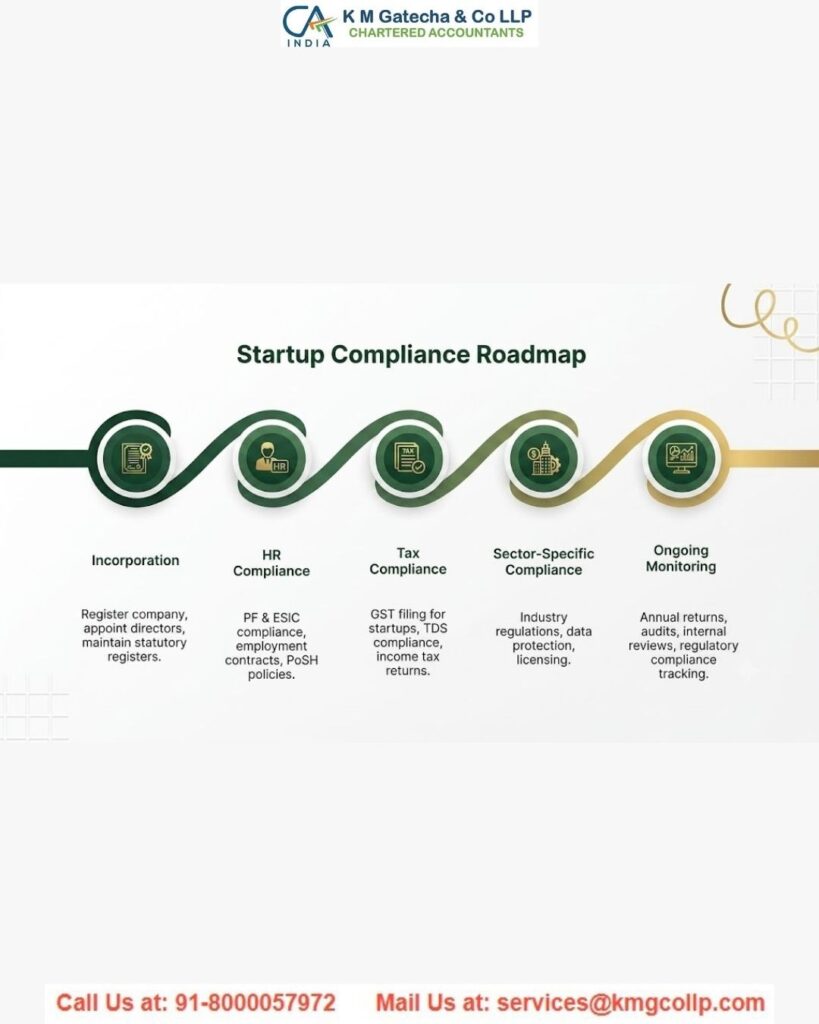
Private Limited Companies and LLPs have ongoing filing obligations with the Registrar of Companies through the MCA system.
For a Private Limited Company following a March 31 financial year-end, important annual compliance requirements can include:
- Holding the AGM by September 30
- Filing AOC-4 within 30 days of the AGM
- Filing MGT-7A within 60 days of the AGM for applicable small companies
- Filing ADT-1 within 15 days of the AGM
- Filing DPT-3 by June 30, where applicable
- Completing DIR-3 KYC by September 30
Missing ROC filings can result in additional fees and other regulatory consequences.
Therefore, startups should maintain a compliance calendar rather than waiting until the deadline approaches.
10. Complete FEMA and FDI Compliance for Foreign Investment
Startups receiving investment from foreign investors have additional compliance responsibilities under FEMA and RBI regulations.
Foreign investment may come from:
- Foreign individuals
- NRIs
- Overseas companies
- Foreign venture capital investors
- Foreign parent companies
FC-GPR Filing
When shares are allotted to a foreign investor, the applicable FC-GPR reporting must generally be completed through the RBI’s FIRMS system within 30 days of share allotment.
The filing includes information relating to the investment, shares issued, valuation, and other required details.
Annual FLA Return
Companies having outstanding foreign liabilities or assets may also need to file the annual FLA return with the RBI.
The source lists July 15 as the annual filing deadline.
Transfer Pricing
Startups that are part of multinational groups may also have transfer pricing obligations when they undertake qualifying international related-party transactions.
Where applicable, Form 3CEB may need to be filed along with the income tax return.
Disclaimer: The content on this website is for informational purposes only and does not constitute legal, financial, or professional advice. Please consult qualified experts before acting on any information. K M GATECHA & CO LLP accepts no liability for errors, omissions, or outcomes from the use of this content. This site is not an advertisement or solicitation.


