How to Register a Pvt Ltd Company in India: A Comprehensive Guide for MSMEs
Starting a business is a major milestone, and for many entrepreneurs in India, forming a Private Limited (Pvt Ltd) company is the first step toward building a structured and scalable organisation. This form of incorporation offers strong credibility, legal protection, and growth opportunities, making it a preferred choice for startups and MSMEs.
However, the registration process involves multiple legal and procedural steps. This guide simplifies the entire process into clear and practical steps, along with key requirements and post-registration compliances.
Why Choose a Private Limited Company Structure?
A Private Limited company provides a strong legal and operational foundation for business growth:
Limited Liability Protection
Shareholders are only liable up to their investment. Personal assets remain protected from business debts or losses.
Separate Legal Entity
The company has a distinct legal identity, allowing it to own assets, enter contracts, and operate independently of its owners.
Easier Access to Funding
Investors, banks, and venture capital firms prefer Private Limited companies due to their structured compliance and transparency.
Perpetual Succession
The business continues to exist regardless of changes in ownership or management, ensuring long-term continuity.
Pre-Requisites for Registering a Pvt Ltd Company
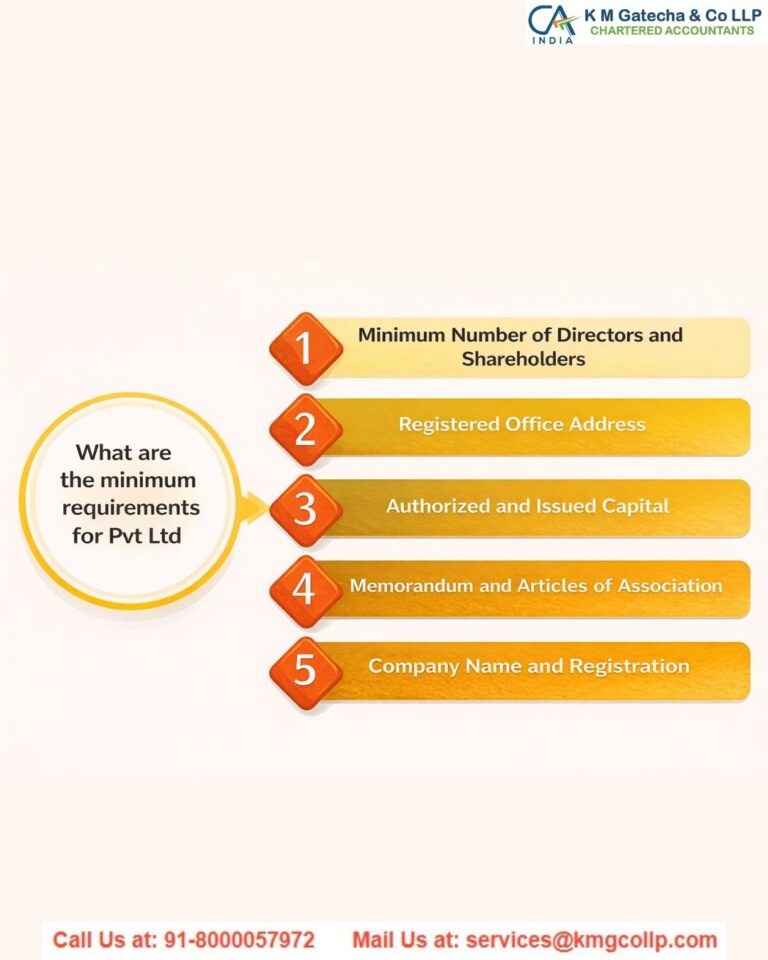
Before starting the registration process, ensure the following requirements are met as per the Ministry of Corporate Affairs (MCA):
Directors
A minimum of two individuals are required as directors of the company.
Shareholders
At least two shareholders are required. The same individuals can act as both directors and shareholders. A maximum of 200 shareholders is allowed.
Unique Company Name
The proposed name must be unique and not similar to any existing company name or registered trademark.
Registered Office Address
A valid physical address in India is required to serve as the company’s registered office.
Step-by-Step Registration Process
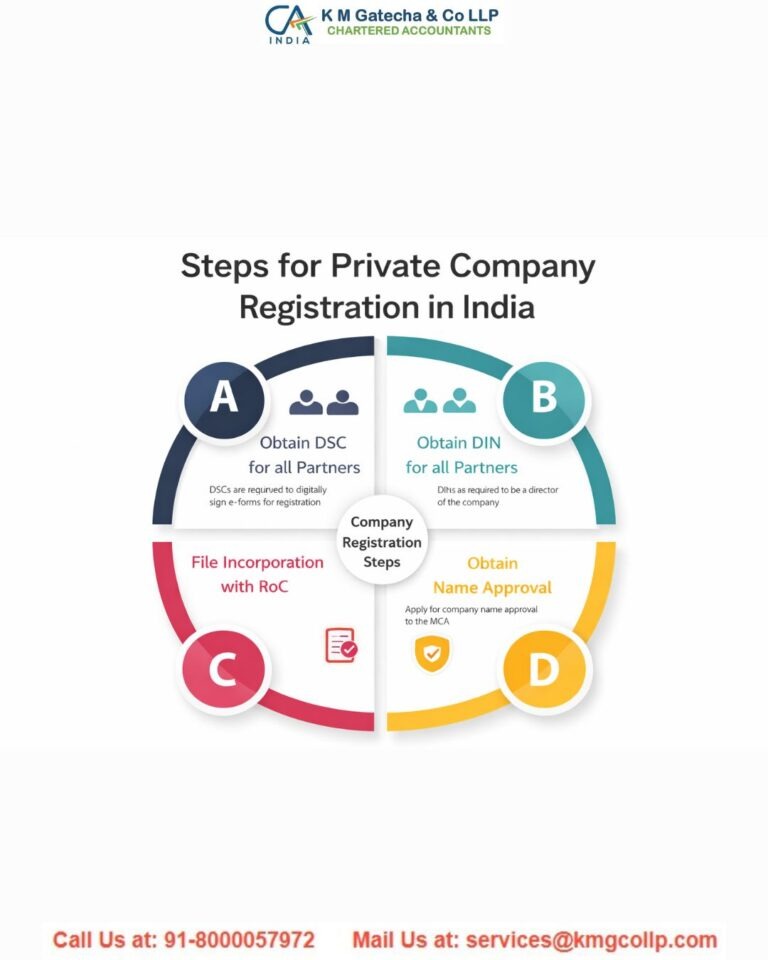
The company incorporation process in India has been simplified through the MCA portal using a single integrated form known as SPICe+ (Simplified Proforma for Incorporating Company electronically).
Step 1: Obtain DSC and DIN
Before filing any application online, all proposed directors must obtain a Digital Signature Certificate (DSC), which serves as an electronic signature. Along with this, a Director Identification Number (DIN) must be applied for, which is a unique ID assigned to each director.
Step 2: Apply for Name Approval
The next step is to reserve a unique name for the company by filing Part A of the SPICe+ form on the MCA portal. You may submit up to two name options. Once approved, the name remains reserved for 20 days, during which the incorporation process must be completed.
Step 3: File Incorporation Documents
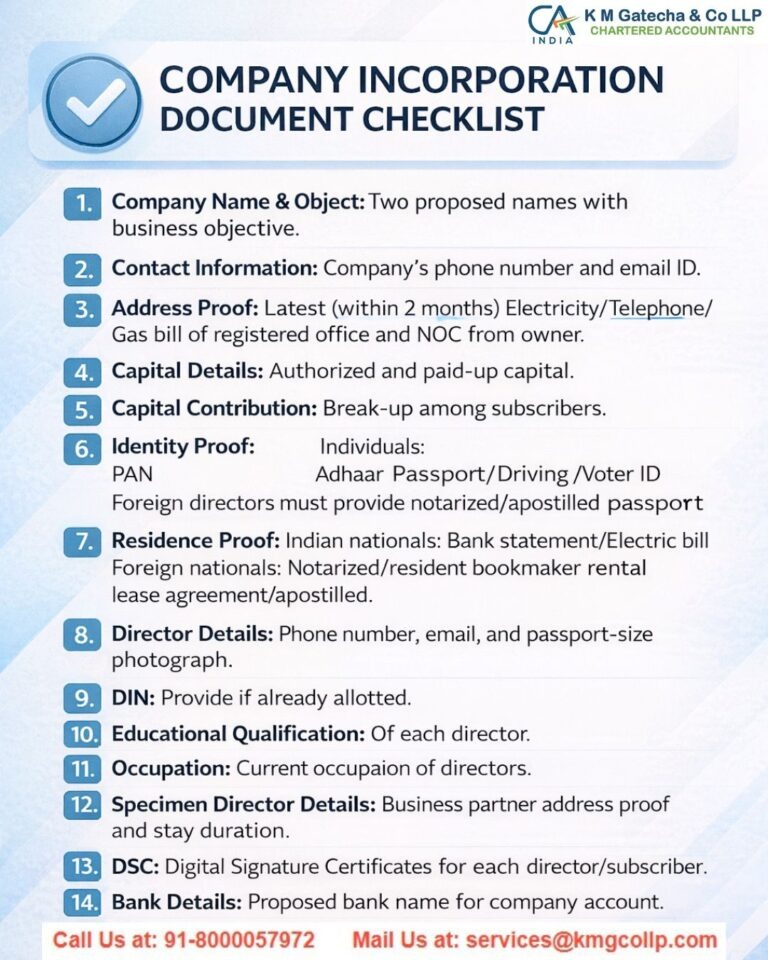
After name approval, Part B of SPICe+ must be completed and submitted. This consolidated form covers incorporation along with PAN, TAN, GSTIN, and bank account opening. Key documents required include:
- Memorandum of Association (MoA): Defines the company’s objectives and scope of work
- Articles of Association (AoA): Contains rules for internal management
- Proof of registered office: Such as utility bills or rent agreement
- Declarations: From directors and shareholders confirming consent
Step 4: Receive Certificate of Incorporation (COI)
Once the Registrar of Companies (RoC) verifies the documents, the Certificate of Incorporation is issued. This serves as the legal identity of the company and includes the Corporate Identity Number (CIN). PAN and TAN are also generally allotted at this stage.
Post-Incorporation Compliance and Udyam Registration
After incorporation, companies must follow ongoing compliance requirements such as appointing an auditor, conducting board meetings, and filing annual returns with the RoC.
For MSMEs, Udyam registration is also important as it provides official MSME recognition. It helps businesses access government schemes, subsidies, collateral-free loans, and benefits in public tenders.
Importance of Proper Business Systems
A newly formed company needs a reliable system to manage accounts and compliance. Proper financial tools help in invoicing, GST filing, reporting, and maintaining accurate records for audits and filings.
Final Note
Registering a Private Limited company is a crucial step toward building a structured and scalable business. Following the correct process and maintaining compliance ensures long-term stability, credibility, and growth opportunities.
Disclaimer: The content on this website is for informational purposes only and does not constitute legal, financial, or professional advice. Please consult qualified experts before acting on any information. K M GATECHA & CO LLP accepts no liability for errors, omissions, or outcomes from the use of this content. This site is not an advertisement or solicitation.