What Is a 1120 Tax Form? Facts and Filing Tips for Small Businesses
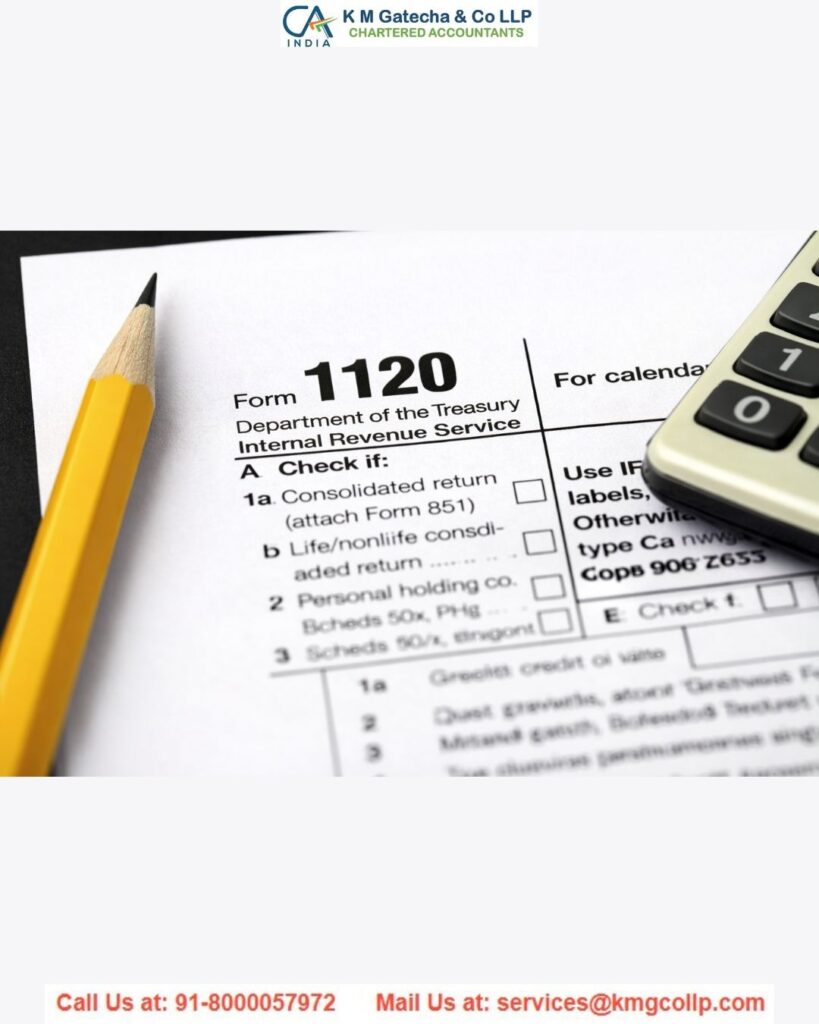
Form 1120 is the U.S. Corporation Income Tax Return used by American corporations to report income, deductions, credits, gains, and losses to the Internal Revenue Service (IRS). It also helps determine the total corporate income tax payable by the business.
What Is a 1120 Tax Form?
Form 1120 is an IRS document that corporations use to calculate and report their tax liability. It is officially known as the U.S. Corporation Income Tax Return. Through this form, corporations disclose:
- Income earned during the year
- Business expenses and deductions
- Gains and losses
- Applicable tax credits
Types of Related 1120 Forms
Different organizations may be required to file specific versions of Form 1120:
- 1120-C: Cooperative associations like farmers’ cooperatives
- 1120-F: Foreign corporations
- 1120-H: Homeowners’ associations and certain real estate management entities
- 1120-L: Life insurance companies
- 1120-POL: Political organizations
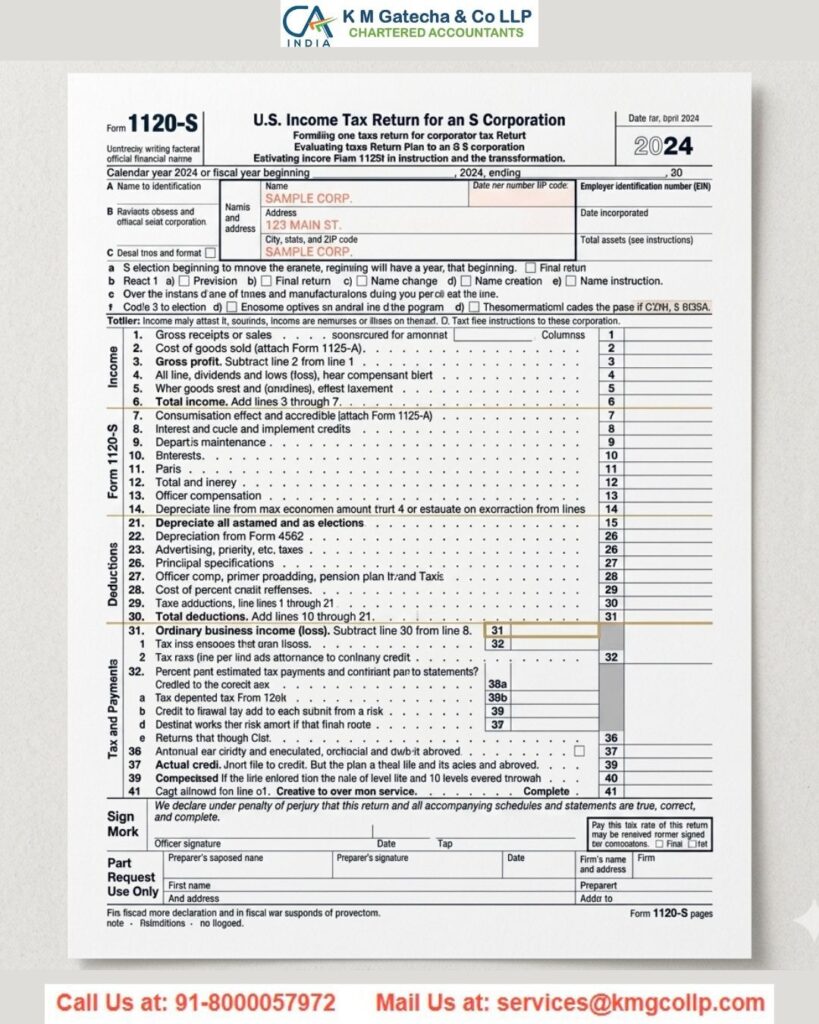
- 1120-S: S corporations
Additional schedules such as Schedule D and Schedule N may also apply depending on the business structure and operations.
Who Files Form 1120?
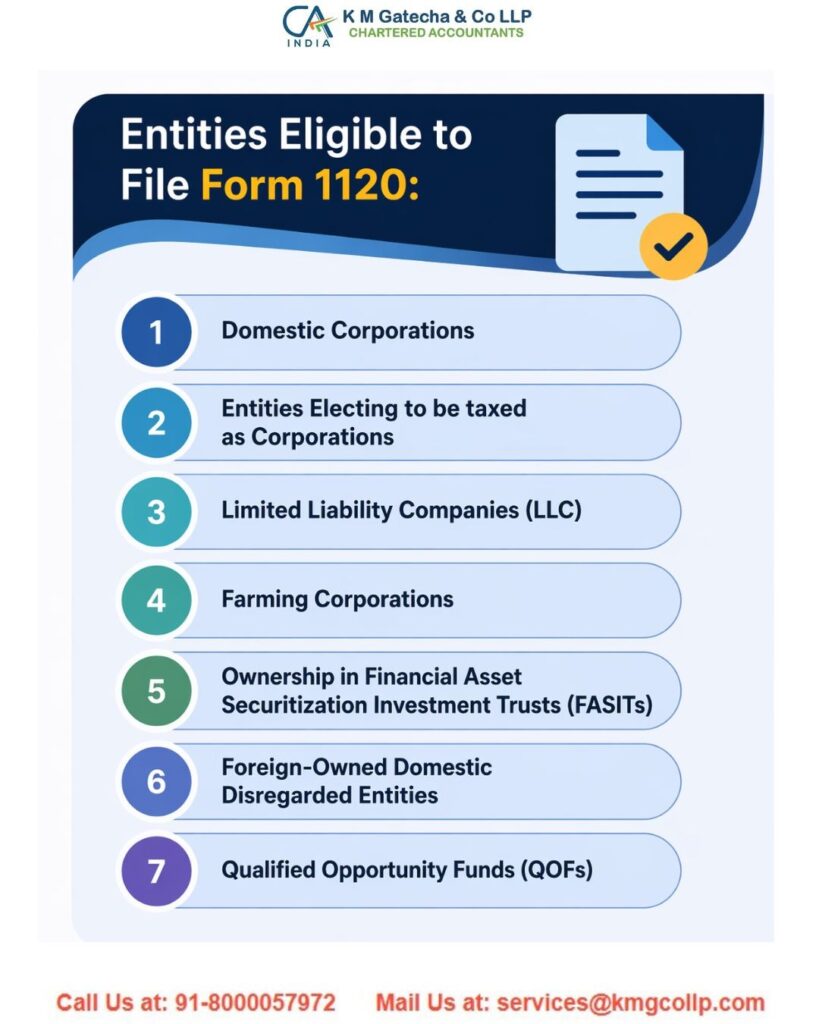
Form 1120 must be filed by all domestic corporations, even if they have no taxable income. It is also required for:
- Businesses taxed as corporations (including those filing Form 8832)
- LLCs electing corporate taxation
- Farming corporations
- Corporations with FASIT ownership interests
- Foreign-owned U.S. disregarded entities (along with Form 5472)
When Do You File Form 1120?
The general deadline is:
- 15th day of the 4th month after the end of the tax year
Key exceptions:
- New corporations follow the same rule regardless of short tax periods
- Fiscal year ending June 30 must file by the 15th day of the 3rd month after year-end
- If the due date falls on a weekend or holiday, it moves to the next business day
Extensions can be requested using Form 7004, but it must be filed by the original deadline.
Where Do You File Form 1120?
Form 1120 can be:
- Filed electronically through the IRS e-file system
- Submitted with attachments like Form 7004, Form 941, or Form 940
If filing by mail, IRS-approved private delivery services may be used for proof of submission.
Who Uses Form 1120?
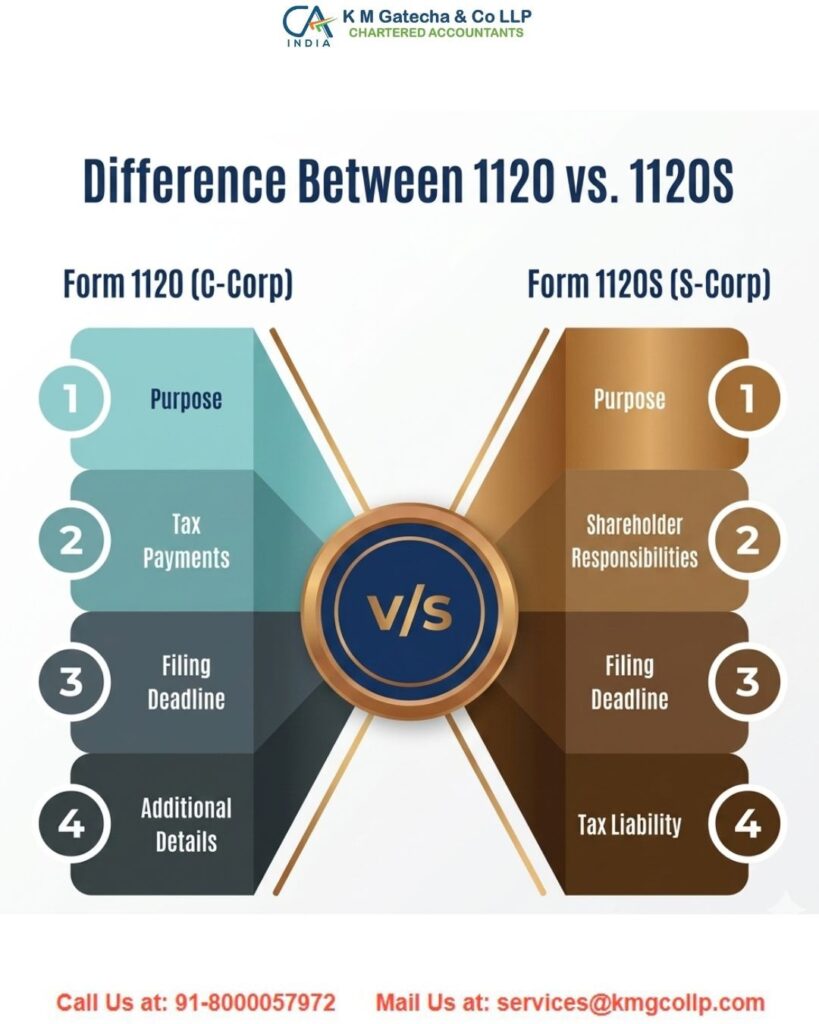
Form 1120 is primarily used by C corporations. However:
- S corporations file Form 1120-S instead
- Certain tax-exempt organizations file informational returns such as Form 990 series
Do You Have to File Form 1120?
Yes, if you are a U.S. corporation, filing Form 1120 is mandatory—even if there is no income.
However, certain organizations may be tax-exempt, including:
- Charitable organizations
- Social welfare organizations
- Labor unions
- Trade associations
- Political organizations
- Veterans’ organizations
These entities generally file informational returns instead of Form 1120.
Disclaimer: The content on this website is for informational purposes only and does not constitute legal, financial, or professional advice. Please consult qualified experts before acting on any information. K M GATECHA & CO LLP accepts no liability for errors, omissions, or outcomes from the use of this content. This site is not an advertisement or solicitation.