Form 1120 vs. 1120-S: What They Are & How They Differ
When starting a business, choosing the right legal structure is essential because it determines which tax form must be filed. In the U.S., corporations are mainly classified as either C-Corporations or S-Corporations, and each uses a different tax return form.
Overview of C-Corp and S-Corp
Although both S-Corps and C-Corps operate as corporate entities, their tax treatment is different. Before selecting a structure, business owners must consider the tax implications and compliance requirements.
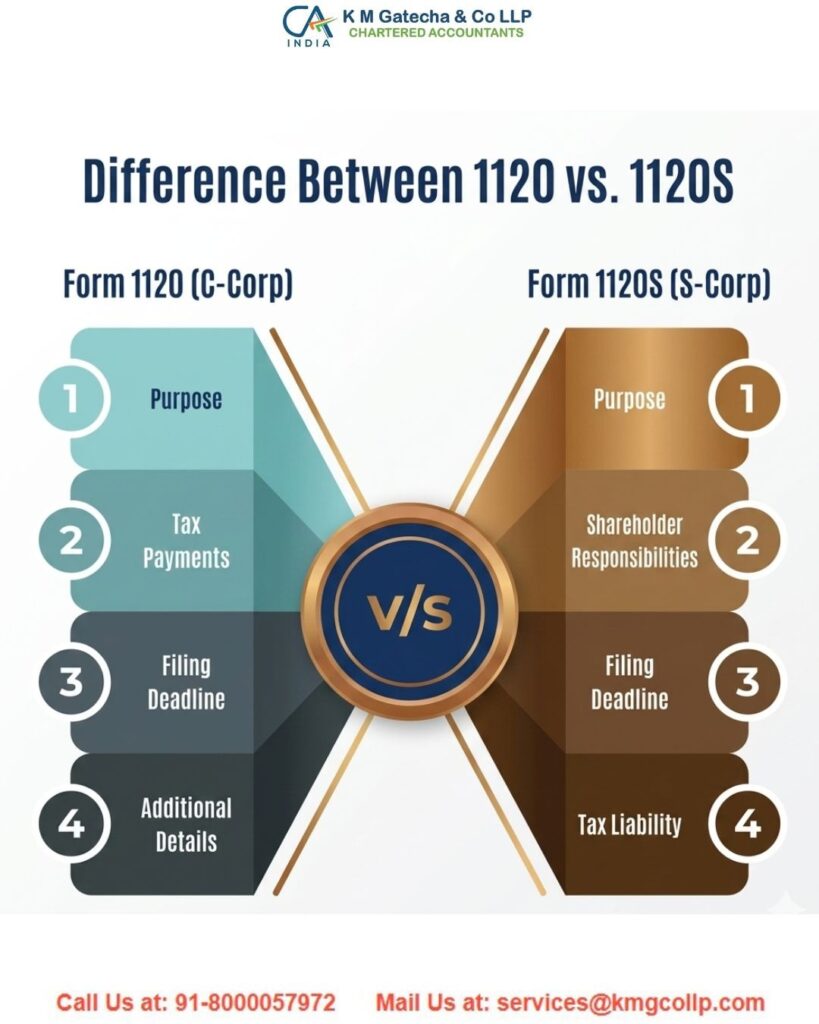
The key difference lies in how income is taxed:
- S-Corporations follow a pass-through taxation system
- C-Corporations are taxed at the corporate level before distributions
Form 1120 (C-Corporations)
Form 1120 is used by C-Corporations to report income, expenses, deductions, and tax liability.
In this structure:
- The corporation pays tax on its profits first
- Remaining profits are distributed to shareholders as dividends
- Shareholders also pay tax on dividends received
This creates a “double taxation” effect—once at the corporate level and again at the individual level.
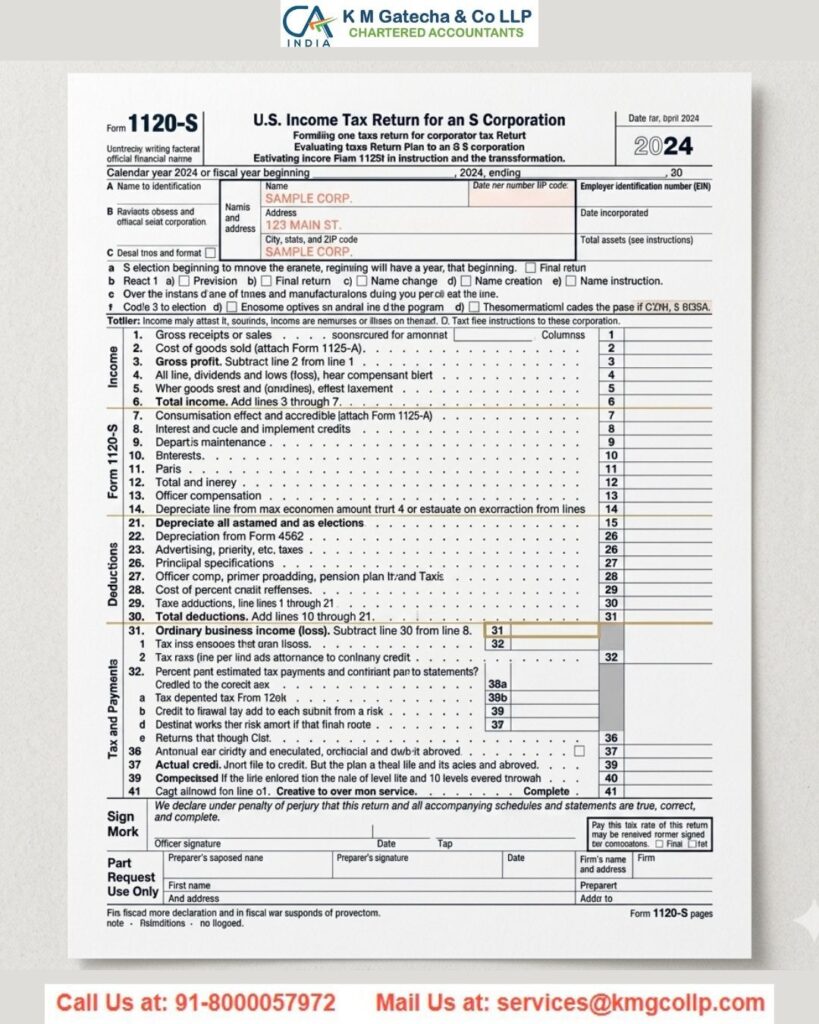
Form 1120-S (S-Corporations)
Form 1120-S is used by S-Corporations to report income, losses, deductions, and credits.
To qualify as an S-Corp, a business must first file Form 2553 with the IRS confirming eligibility.
Key features of S-Corps:
- Income is passed directly to shareholders
- No corporate-level income tax is paid
- Shareholders receive a Schedule K-1 showing their share of income
- Limited to 100 shareholders, all of whom must be U.S. citizens or residents
How to Fill Form 1120-S
Filing is usually done with the help of an accountant or tax professional after collecting financial records for the year.
Key requirements include:
- Company details: Name, address, EIN, and business code
- Fiscal year: Reporting period of the company
- Accounting method: Cash or accrual method
- Profit & loss statement: Revenue and expenses
- Balance sheet (Schedule L): Required if assets or receipts exceed $250,000
- Tax credits documentation: Proof of eligibility for credits
- Shareholder details: Ownership information for K-1 reporting
Key Difference in Summary
- Form 1120 (C-Corp): Corporate tax is paid first, then dividends are taxed again at shareholder level
- Form 1120-S (S-Corp): Income passes through to shareholders and is taxed only once on personal returns
Both forms serve different business structures and have distinct compliance and taxation rules.
Where to File Form 1120-S
Form 1120-S can be filed either electronically or by mailing it to the IRS. If filing by post, the correct mailing address must be checked in the latest IRS instructions for that tax year.
Since S-Corporations are pass-through entities, no tax payment is submitted with Form 1120-S. Instead, each shareholder receives a Schedule K-1, which reports their share of income to be included in their personal tax return.
Due Date for Form 1120-S
Form 1120-S is generally due two and a half months after the end of the tax year. For companies following a calendar year, the usual deadline is March 15. However, taxpayers should always confirm the exact deadline for each year, as dates may change due to weekends or holidays.
What Is Form 1120?
Form 1120 is the corporate income tax return used by C-Corporations. It is filed by companies that are structured as C-Corps, including those with more than 100 shareholders or non-U.S. shareholders.
This form is used to calculate the corporation’s annual tax liability, and many C-Corps are also required to pay estimated taxes on a quarterly basis.
How to File Form 1120
To complete Form 1120, a business must maintain detailed accounting records for the entire tax year. This includes both operating and non-operating income and expenses.
Other required details include:
- Employer Identification Number (EIN)
- Company address and incorporation details
- Financial statements
- Documentation for tax credits
Where to File Form 1120
Form 1120 can be filed electronically or by mail depending on business requirements.
- Electronic filing is faster and provides confirmation of receipt
- Companies with assets above $10 million may be required to file electronically
- If not filing electronically, the form can be sent via IRS-approved mailing or private delivery services
Due Date for Form 1120
Generally, Form 1120 must be filed by the 15th day of the fourth month after the end of the tax year. For calendar-year companies, this is usually April 15. If the due date falls on a weekend or holiday, it is shifted to the next working day.
Form 1120 vs Form 1120-S
Both forms are used for corporate tax reporting but apply to different business structures:
- Form 1120 (C-Corp):
- Corporate-level tax is applicable
- Company pays tax on profits
- Shareholders are taxed again on dividends
- Form 1120-S (S-Corp):
- Income is passed through to shareholders
- No corporate-level tax
- Shareholders report income through Schedule K-1
Summary
- Form 1120 is for C-Corporations with corporate tax liability
- Form 1120-S is for S-Corporations with pass-through taxation
- Filing deadlines, tax treatment, and reporting structures are different for both forms
Disclaimer: The content on this website is for informational purposes only and does not constitute legal, financial, or professional advice. Please consult qualified experts before acting on any information. K M GATECHA & CO LLP accepts no liability for errors, omissions, or outcomes from the use of this content. This site is not an advertisement or solicitation.