Form 1120 for Expat Business Owners: U.S. Corporate Tax Return Explained
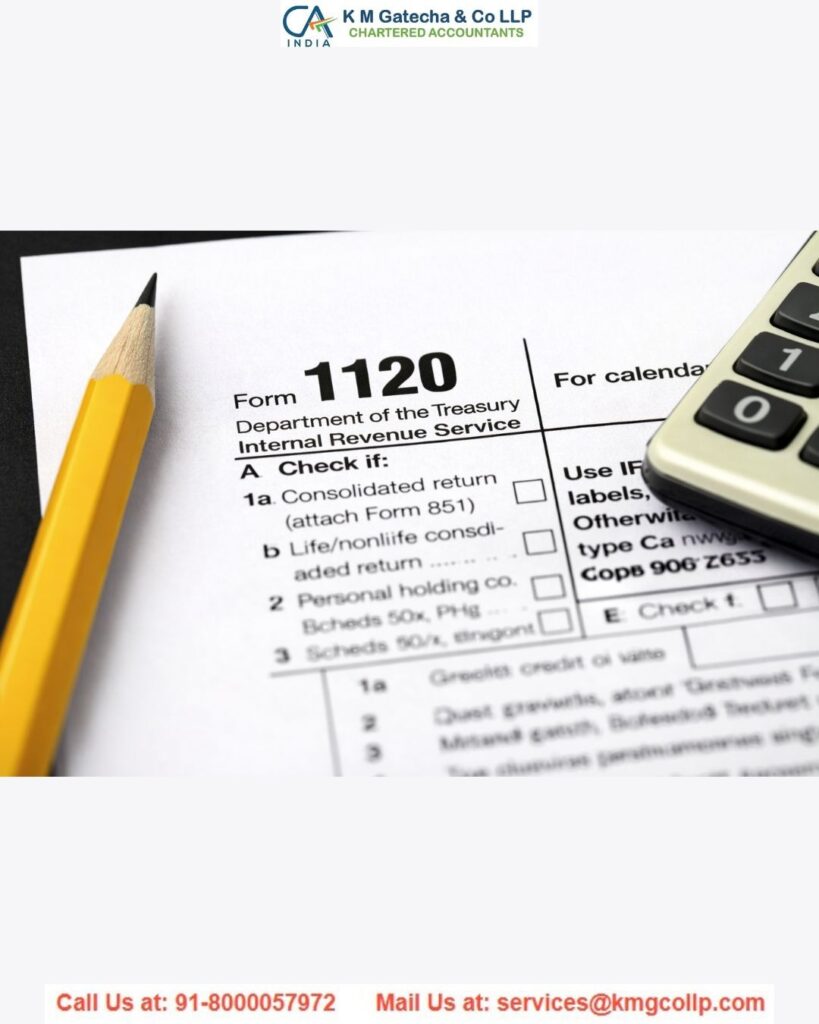
Most U.S. C corporations are required to file Form 1120, also known as the U.S. Corporation Income Tax Return, to report income, deductions, and tax credits to the IRS each year. This requirement applies even if the company has no taxable income or does not owe any tax. The current corporate tax rate is a flat 21%.
As per IRS rules, domestic corporations use Form 1120 to report income, gains, losses, deductions, and credits, and to calculate total tax liability. Common cases where Form 1120 is required include:
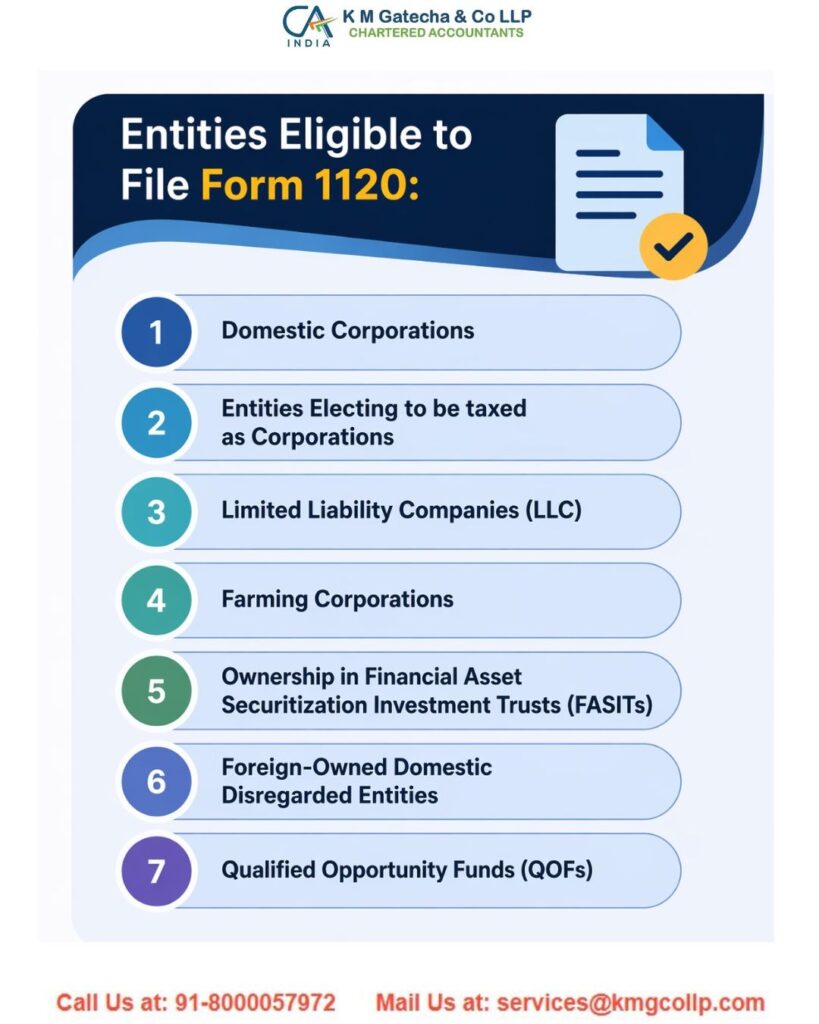
- Regular C corporations (default structure for incorporated businesses)
- LLCs that have elected corporate taxation using Form 8832
- Single-member LLCs owned by foreign individuals (filed with Form 5472 along with pro forma 1120)
- Corporations with international operations requiring additional reporting schedules
Who Must File Form 1120?
All domestic C corporations must file Form 1120 unless specifically exempt or required to file a different return. This includes:
- Corporations with no income
- Newly formed companies
- Companies operating at a loss
Even if a U.S. citizen resides abroad, a domestic corporation they own must still file Form 1120. Relocating outside the U.S. does not remove filing obligations.
Some entities use related forms instead:
| Entity Type | Form Used | Key Feature |
| C Corporation | Form 1120 | Taxed at 21% corporate rate |
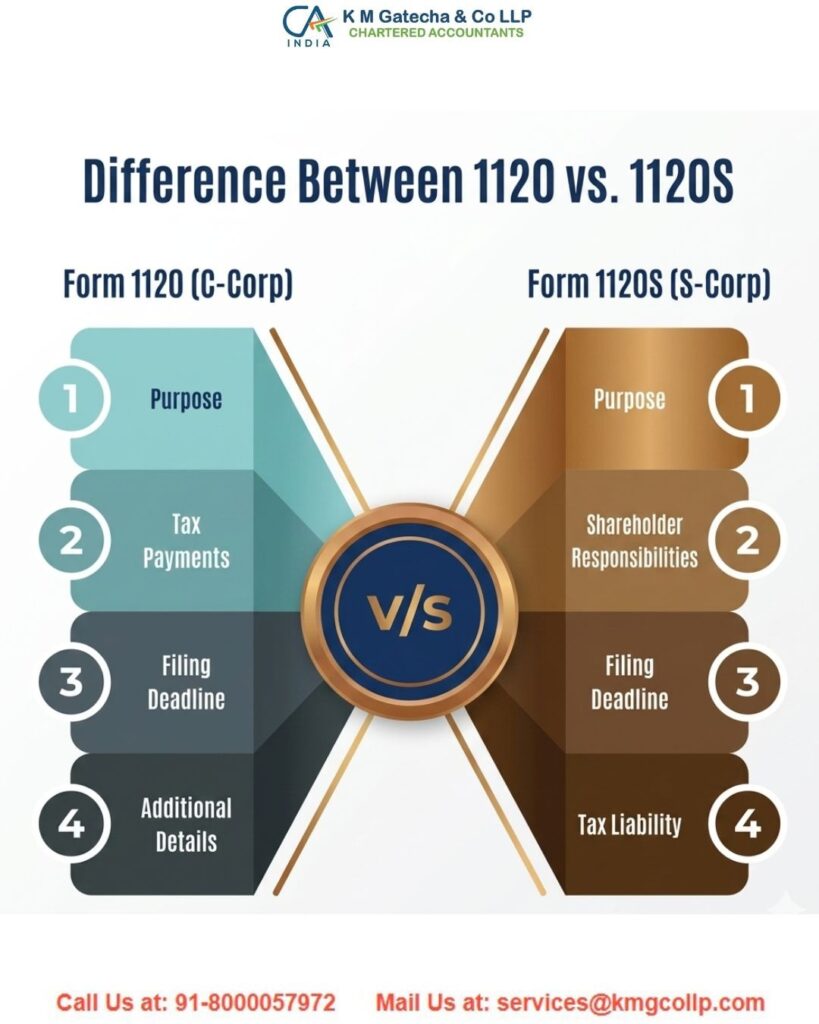
| S Corporation | Form 1120-S | Pass-through taxation to shareholders |
| Foreign Corporation | Form 1120-F | Reports U.S.-source income only |
| Life Insurance Company | Form 1120-L | Industry-specific reporting |
| REIT | Form 1120-REIT | Real estate investment trust taxation |
Important Note
LLCs and sole proprietorships that elect C corporation status must file Form 1120. If no such election is made, taxation generally occurs through:
- Schedule C (individual return), or
- Form 1065 (partnership return)
What Does Form 1120 Report?
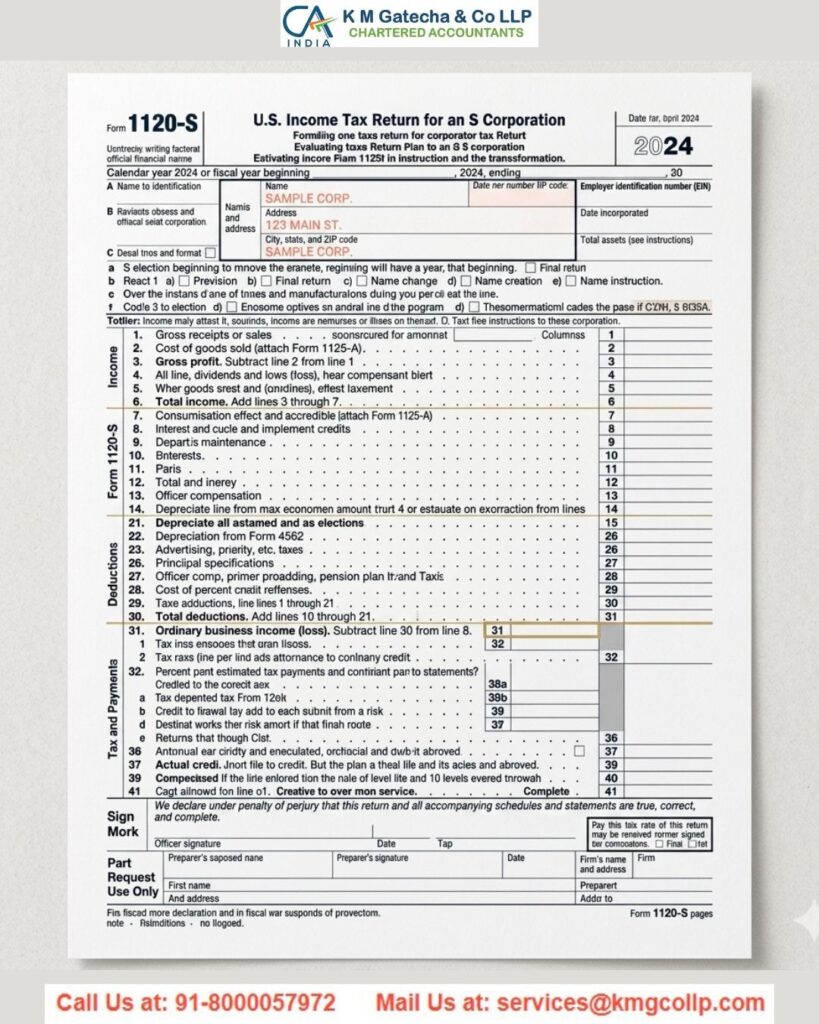
Form 1120 is a detailed corporate tax return that provides a complete financial overview of the business. It includes:
Income:
- Sales and gross receipts
- Dividends, interest, rents, royalties
- Capital gains and other income sources
- Worldwide income for corporations with foreign operations
Deductions:
- Salaries and wages
- Officer compensation
- Rent, repairs, and taxes
- Interest expenses
- Depreciation and amortisation
- Employee benefits and pension contributions
- Charitable contributions and other business expenses
Tax Calculation:
- Computes taxable income after deductions
- Applies the 21% corporate tax rate
- Adjusts credits such as Foreign Tax Credit (Form 1118), general business credits, and prior tax credits
Financial Schedules:
- Balance sheet details
- Reconciliation of book income vs taxable income
- Retained earnings analysis
When Is Form 1120 Due?
For calendar-year C corporations filing for the 2025 tax year, the key deadlines are as follows:
| Deadline | What Is Due | Notes |
| April 15, 2026 | Form 1120 or extension request | File Form 7004 to get an automatic 6-month extension |
| October 15, 2026 | Extended filing deadline | Valid only if Form 7004 was filed by April 15 |
If a corporation follows a fiscal year, Form 1120 is due on the 15th day of the fourth month after the end of the tax year. However, if the fiscal year ends on June 30, the filing deadline is the 15th day of the third month after year-end, along with an automatic 7-month extension instead of six.
Important Pro Tip
An extension only provides extra time to file the return, not to pay taxes. Any tax due must still be paid by the original deadline. Corporations expecting to owe $500 or more must also make quarterly estimated tax payments during the year.
For S corporations, Form 1120-S is due earlier, generally by March 16, 2026 for calendar-year filers, allowing time for shareholders to receive Schedule K-1s before filing their personal returns.
Why Form 1120 Is More Complex for Foreign Corporations
For companies operating internationally, Form 1120 becomes more complex due to additional reporting rules:
- Foreign Tax Credit (Form 1118): Helps avoid double taxation on foreign income by allowing credits for taxes paid overseas
- Controlled Foreign Corporation (CFC) Rules: May require reporting of foreign income under Subpart F and GILTI provisions, even if earnings are not distributed
- Additional Reporting Forms: Such as Form 5471, Form 8865, and FBAR for foreign accounts over $10,000
- Transfer Pricing Rules: Intercompany transactions must follow arm’s length pricing with proper documentation
Errors in these areas can lead to penalties and extended scrutiny from tax authorities.
What Happens If Form 1120 Is Filed Late?
The IRS may impose penalties such as:
- Late filing penalty: 5% of unpaid tax per month, up to 25%
- Late payment penalty: 0.5% per month, up to 25%
- Estimated tax penalty: Applies if required quarterly payments are missed
Filing proactively is always recommended, as voluntary compliance generally leads to better outcomes.
Who Signs Form 1120?
Since a corporation is a separate legal entity, Form 1120 must be signed by an authorised officer such as the president, vice president, treasurer, or chief accounting officer. If a tax professional prepares the return, they must also sign it.
Professional Support for Corporate Tax Filing
Form 1120 involves detailed financial reporting and compliance requirements, especially for businesses with international operations. At KMG CO LLP, corporate tax professionals assist businesses in preparing Form 1120 along with related international tax filings, ensuring accuracy, compliance, and timely submission while minimising tax risks.
Disclaimer: The content on this website is for informational purposes only and does not constitute legal, financial, or professional advice. Please consult qualified experts before acting on any information. K M GATECHA & CO LLP accepts no liability for errors, omissions, or outcomes from the use of this content. This site is not an advertisement or solicitation.