
IRS Form 1120 Filing Made Simple
IRS Form 1120 is the annual tax return filed by U.S. C Corporations to report income, expenses, and taxes to the IRS. Filing it correctly and on time ensures full compliance and helps avoid penalties and notices.
What’s Included in Form 1120 Filing Service
Our Form 1120 filing service ensures your U.S. C Corporation remains compliant with IRS rules while reducing the risk of errors and penalties. We manage the complete preparation and review process for accurate and stress-free filing.
Complete Income & Expense Reporting
We properly record your company’s revenue, expenses, and eligible deductions as per IRS guidelines. This ensures accurate financial reporting and full compliance with tax laws.
Tax Calculation & Optimization
We calculate your corporate tax liability with precision while applying all eligible deductions and credits. This helps in reducing tax burden while maintaining full compliance.
Timely & Compliant Filing
We prepare and submit your Form 1120 within the IRS deadlines to avoid late fees and penalties. Our review process helps minimise errors and compliance issues.
Why Choose us for Form 1120 Filing?
Dedicated U.S. Tax Experts
Your Form 1120 is handled by experienced professionals familiar with C-Corporation taxation, compliance rules, and cross-border business structures.
Support for Global & Indian Founders
We assist international founders in managing U.S. tax compliance smoothly, including EIN-related requirements and IRS coordination.
End-to-End Compliance Assistance
From Form 1120 preparation to extensions using Form 7004 and related state or franchise tax filings, everything is managed in one streamlined process.
IRS Form 1120: Complete Guide for US C-Corporations
Every year, C-Corporations in the United States must file IRS Form 1120 as part of their federal tax compliance. Failure to file this return can lead to penalties, interest charges, and difficulties in maintaining banking relationships or raising funds in the future.
This guide explains what Form 1120 is, who must file it, important deadlines, penalties, and how Indian founders can stay compliant with ease.
What is IRS Form 1120?
IRS Form 1120 is the U.S. Corporation Income Tax Return used by C-Corporations to report:
- Income earned during the financial year
- Business expenses and deductions
- Corporate tax liability
- Taxes already paid
This form allows the Internal Revenue Service (IRS) to determine the company’s federal tax obligation.
Who Needs to File Form 1120?
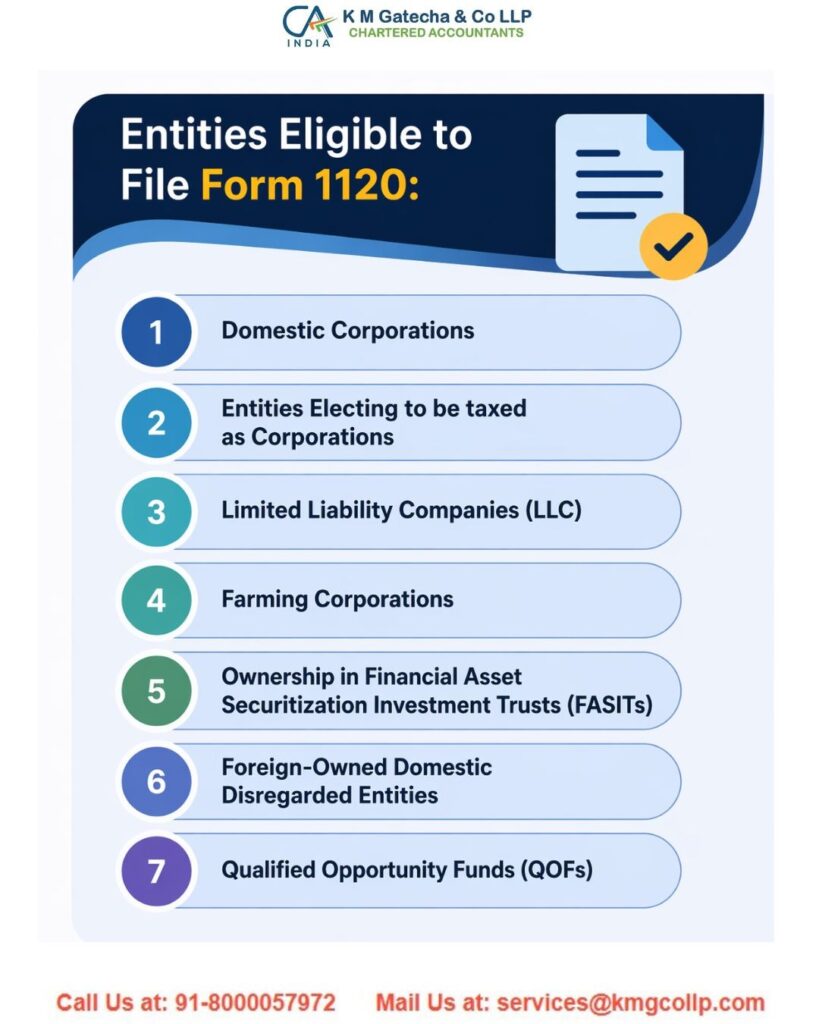
Form 1120 must be filed by:
- U.S. C-Corporations
- Delaware and other state-registered C-Corporations
- U.S. companies owned by Indian or foreign founders
- Startups with no revenue (nil filing is still mandatory)
Note: LLCs electing corporate taxation are also required to file Form 1120.
Form 1120 Filing Due Date
- Standard Due Date: April 15, 2025
- If the date falls on a weekend or holiday, it shifts to the next working day
Extension Option:
- File Form 7004 for an automatic 6-month extension
- Tax liability, if any, must still be estimated and paid on time
Information Required to File Form 1120
To prepare the return, the following details are needed:
- Company incorporation details
- Employer Identification Number (EIN)
- Income and expense records
- Bank statements
- Payroll details (if applicable)
- Shareholder information
- Prior-year tax filings
Common Mistakes to Avoid
- Missing filing deadlines
- Assuming zero revenue means no filing requirement
- Misclassifying expenses
- Not reporting foreign transactions
- Ignoring state and franchise tax obligations
Penalties for Late or Non-Filing
Non-compliance may result in:
- Monetary penalties
- Interest on unpaid taxes
- IRS notices or audits
- Banking and compliance complications
- Difficulty in fundraising or account closures
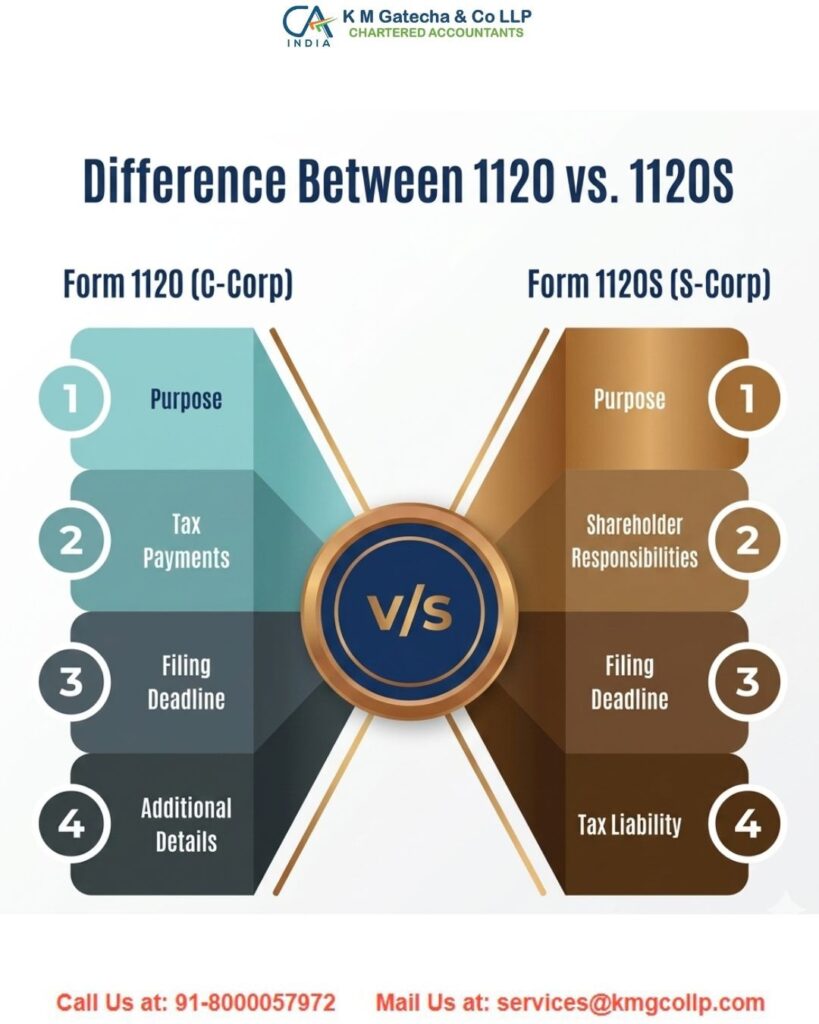
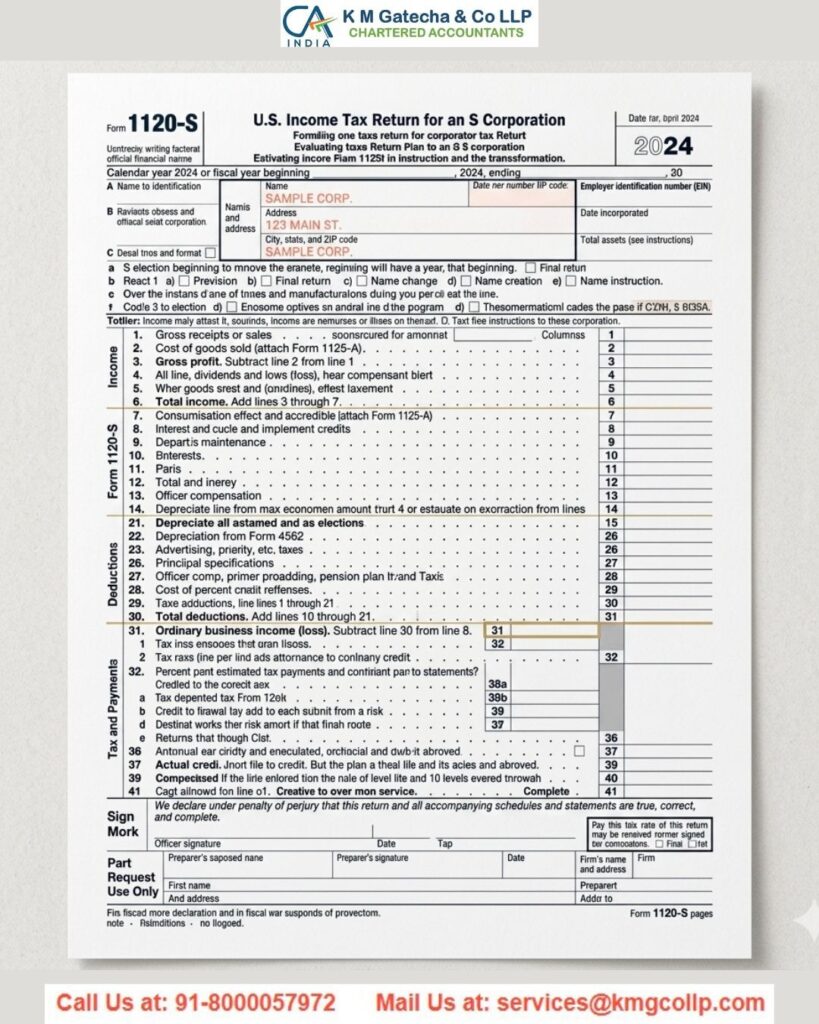
Form 1120 vs Form 1120S
| Particulars | Form 1120 | Form 1120S |
| Entity Type | C-Corporation | S-Corporation |
| Taxation | Corporate tax | Pass-through taxation |
| Shareholders | Unlimited | Up to 100 |
| Foreign Ownership | Allowed | Not allowed |
Do Indian Founders Need to File Form 1120?
Yes. If an Indian founder owns a U.S. C-Corporation, filing Form 1120 is mandatory regardless of residence or business location.
State & Franchise Tax Compliance
Apart from federal filing, C-Corporations may also need to comply with:
- State income tax returns
- Franchise tax filings (e.g., Delaware Franchise Tax)
Requirements vary depending on the state of incorporation.
How We Help with Form 1120 Filing
We provide complete U.S. compliance support for Indian founders, including:
- Form 1120 preparation and filing
- Form 7004 extension filing
- State and franchise tax compliance
- Zero-revenue startup filings
- Dedicated U.S. tax expert support
Disclaimer: The content on this website is for informational purposes only and does not constitute legal, financial, or professional advice. Please consult qualified experts before acting on any information. K M GATECHA & CO LLP accepts no liability for errors, omissions, or outcomes from the use of this content. This site is not an advertisement or solicitation.


