

Trademark Registration
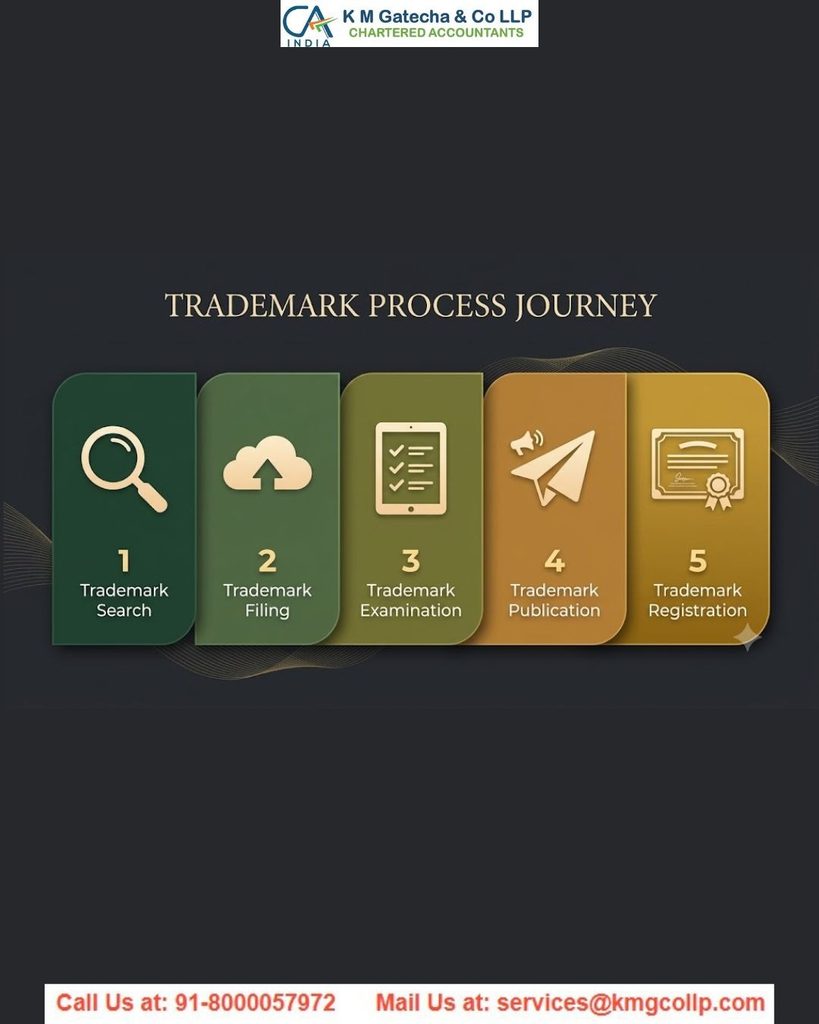
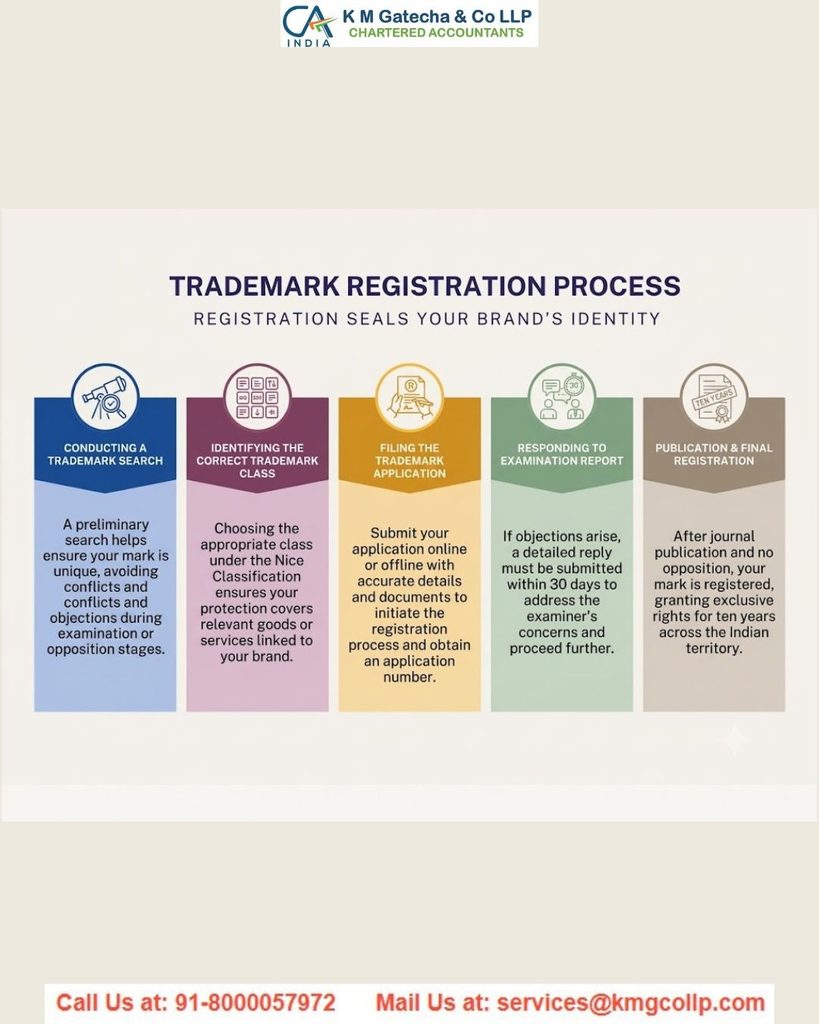
Search for existing registered and pending trademarks to confirm that your brand name, logo, or tagline is unique and eligible for registration. Almost anything that helps distinguish your goods or services from those of others can be trademarked, including company names, domain names, and logos.
Product
A product mark is used to identify a particular product. It helps prevent duplication and protects a specific product category.
Service
A service mark is used to distinguish an organisation’s services rather than its products. It applies to intangible offerings.
Shape
Shape marks fall under Trade Dress, where a product can be identified not only through its logo, label, or other symbols but also through its packaging.
Shape
A pattern generally refers to a repeated design. It can function as a trademark when the pattern helps distinguish the products or services of one brand from those of another.
Collective
Collective marks are associated with a group of people rather than a single product or service. These trademarks are generally owned by firms, institutions, or associations representing multiple members.
Certification
A certification mark indicates that the goods or services of a trader meet specific standards established by a company or organisation.
Sound
Sound trademarks consist of sounds or sound graphics that distinguish the products or services of one brand from another. Sounds that can be represented graphically may be registered as trademarks.
Colour
Certain colour combinations can become closely associated with a brand or product. The public may identify a particular product through its distinctive colour scheme.
Word
A word mark consists of distinctive text representing a company or product name for branding purposes. Unlike a logo, it is specifically text-based.
Numbers
A number must be used as a brand for a particular product or service. For example, the number 5 must be specifically associated with a particular product or service category and identified with it to qualify for trademark registration.
Device
A device mark is a printed or painted figure, design, or character. It does not consist of letters, words, numerals, or similar textual elements.
Packaging
The elements displayed on product packaging, such as names and slogans, can be trademarked. This can help prevent competitors from using packaging that is deceptively similar to the original product.
Who Can Register a Trademark?
Any individual (proprietor), company, or foreign entity can apply for a trademark in India.
The individual or entity listed as the applicant will become the owner of the trademark once the registration is successfully completed.
Individual / Proprietor
Any individual or proprietorship firm can submit a trademark application.
Partnership / Company
Any partnership firm or company registered with the MCA, including Pvt Ltd, LLP, or Public companies, can apply for a trademark.
Foreign Entity
A foreign entity can also file a trademark application in India.
How to Register a Trademark in India (2026)
Trademark applications are filed with the Registrar Office of Trade Marks (IPIndia), while the application status can be checked through IPIndia Estatus.
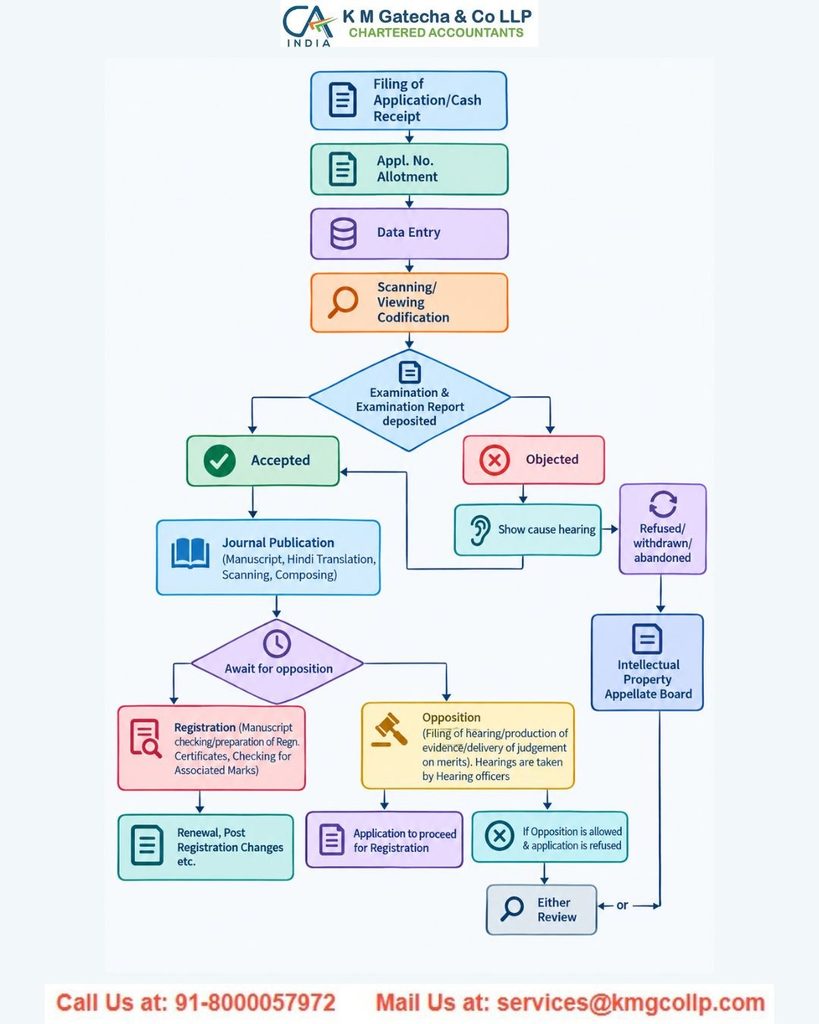
The trademark filing process consists of 6 steps, although not every step applies to every application.
1. Trademark Search
1 Hour / Mandatory
Trademark search involves checking the Trademark Registry or database to determine whether the name or logo you want to register is already taken.
It is important to select a unique and distinctive mark that represents your company.
Class Search
You need to determine the appropriate class for your trademark. There are currently 45 classes of goods and services under which a trademark can be registered. Classes 1–34 cover goods, while Classes 35–45 cover services.
For example, “Paints” can fall into different classes depending on the type of paint:
- Class 2: Ceramic / Aluminium Paints
- Class 3: Body Paints
- Class 41: Face Paints
Brand / Mark Search
You must check whether your brand name is available and does not conflict with existing trademarks.
If a name is already taken, adding a suffix or prefix may help create a distinct mark. For example, if “Crunch” is taken, the following names may be available:
- Tasty Crunch
- Crunch & Munch
You can conduct the search through our Trademark Search.
2. TM-A Filing
1–3 Days / Mandatory
A Trademark Agent or Attorney prepares the TM-A Form based on the trademark search. The draft is shared with you, and once approved, the form is filed.
You can use the ™ symbol with your brand after filing the application.
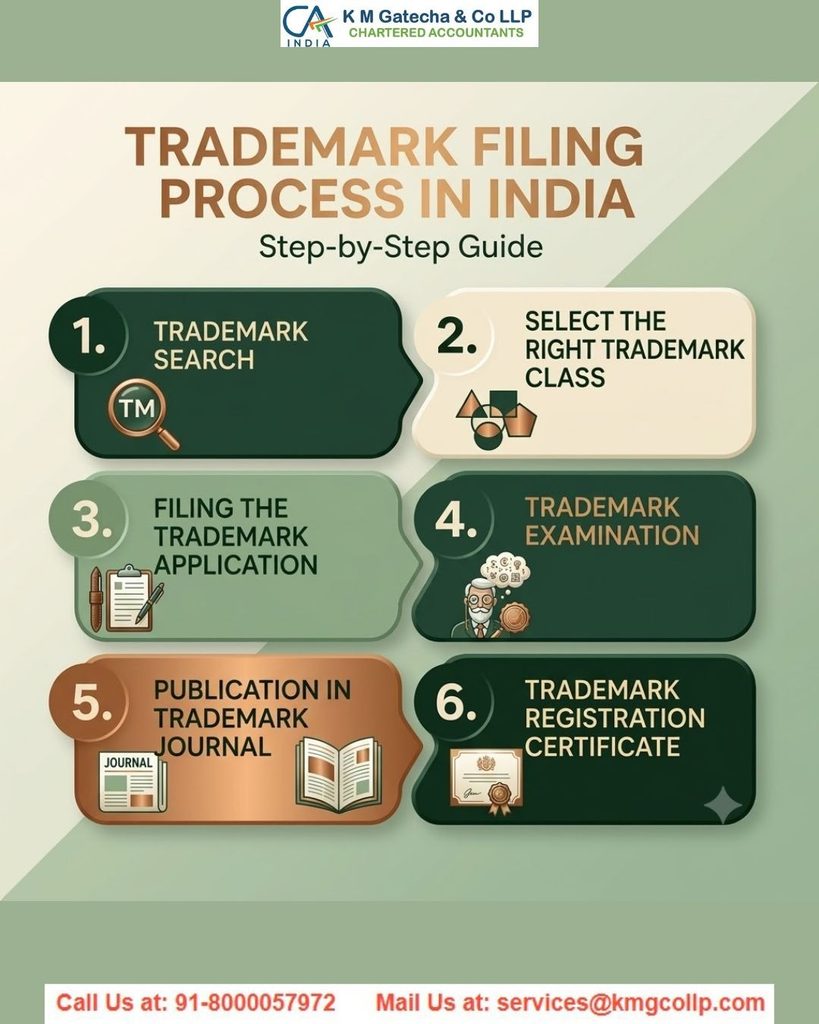
3. Examination Report Objection
1–6 Months
The Government examiner reviews the trademark application. You can track its status using the TM application number. If the examiner finds the mark identical or similar to an existing trademark or identifies another concern, an objection is raised along with the reasons.
If there is no objection, the mark is published in the Trademark Journal for third-party opposition. If no opposition is filed within the prescribed period, the trademark is approved and registered within the following six months.
4. Show Cause Hearing
1–6 Months
If the examiner is not satisfied with the response to the examination report, a Show Cause Hearing may be scheduled and a hearing notice will be issued. The hearing details can be accessed through the IP India website.
During the hearing, the applicant or their authorised trademark attorney must present arguments supporting registration of the mark.
Based on the submissions, the hearing officer may accept the mark for publication in the Trademark Journal or reject the application with reasons.
5. Trademark Opposition
1–6 Months
If a third party believes that the published trademark conflicts with their rights, they may file an opposition after the mark is advertised in the Trademark Journal.
After receiving the opposition, the applicant must submit a counterstatement within the prescribed period. Both parties are then provided an opportunity to present evidence and arguments. After reviewing the submissions, the Registrar decides whether the trademark should be registered or refused.
6. Trademark Registration Certificate
1–6 Months
The Registrar will accept the trademark application if no opposition is filed within the stipulated period of four months. A Trademark Registration Certificate is then issued.
Once registered, you can use the ® symbol alongside your brand name.
How Much Does It Cost?
The total cost of trademark filing, including all charges, generally ranges from ₹7,000 to ₹30,000. The following table provides a breakdown of the TM-A filing cost. Attorney or Agent fees may vary based on the professional you choose.
| TRADEMARK FILING | |
| 1. Government Fees(Individual / Company) | ₹4,500 / ₹9,000 |
| 2. Attorney Cost | ₹2,500 – ₹20,000 |
| * GST Extra |
1. Government Fees
If you have a registered company in India, you can obtain an MSME Certificate for approximately ₹3,000 and receive a 50% reduction in Government Fees.
2. Attorney Fees
Attorney fees depend on the experience of the Attorney. Choosing a reasonably experienced attorney is important because they may be better equipped to handle matters such as a Hearing or Opposition.
Documents Required to Register a Trademark
Only scanned copies of the required documents are needed.
Brand
A digital copy of the trademark that you want to register.
ID Proof
Aadhaar Card / Voter Card / Passport / Driving Licence.
Power Of Attorney
A duly signed document from the applicant authorising us to file the trademark application on their behalf.
What Do You Get After Filing a Trademark?
After filing, you receive the IPIndia Application Number along with a digital copy (PDF) of the TM-A Form filed with the Government. The Application Number can be used to track the status of your trademark application at any time.
The application status can be checked through IPIndia Estatus using your Application Number.
Acknowledgement
A TM registration acknowledgement slip containing the payment details.
Trademark A Form
A stamped copy of Form TM-A containing the application number.
How to List on Amazon / Flipkart Brand Registry
Amazon and Flipkart require trademark ownership or a pending trademark application to establish brand authenticity and help prevent counterfeit sales.
1. Register or Apply for a Trademark
1 Hour / Mandatory
Make sure your brand name is registered or that a TM-A application has already been filed.
2. Create a Seller Account
1 Hour / Mandatory
Amazon: Create an account through Amazon Seller Central as either an Individual or Professional seller.
Flipkart: Register through Flipkart Seller Hub and complete GST, bank, and identity verification.
3. Brand Registry / Brand Approval
1 Hour / Mandatory
Ensure that your brand name is either registered or that a TM-A application has been filed.
Disclaimer: The content on this website is for informational purposes only and does not constitute legal, financial, or professional advice. Please consult qualified experts before acting on any information. K M GATECHA & CO LLP accepts no liability for errors, omissions, or outcomes from the use of this content. This site is not an advertisement or solicitation.
