Income Tax Form 144 (Earlier 27Q): Quarterly TDS Statement for Non-Residents
Form No. 144 – Statement of TDS on Non-Salary Payments to Non-Residents
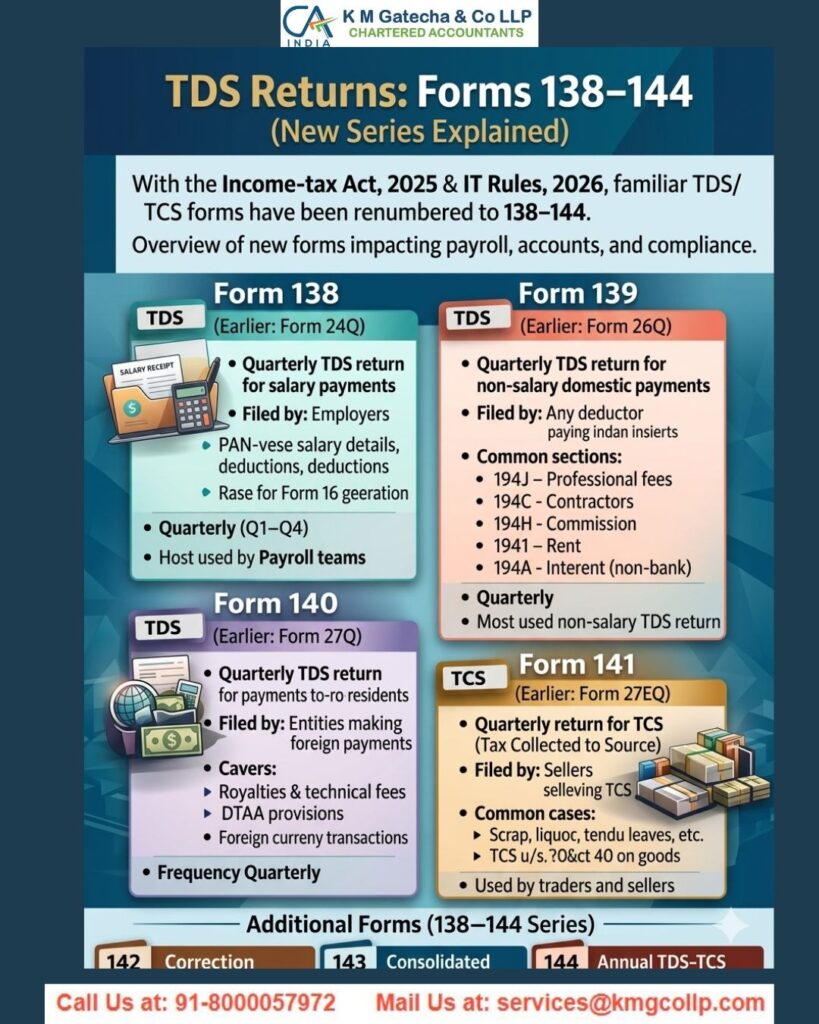
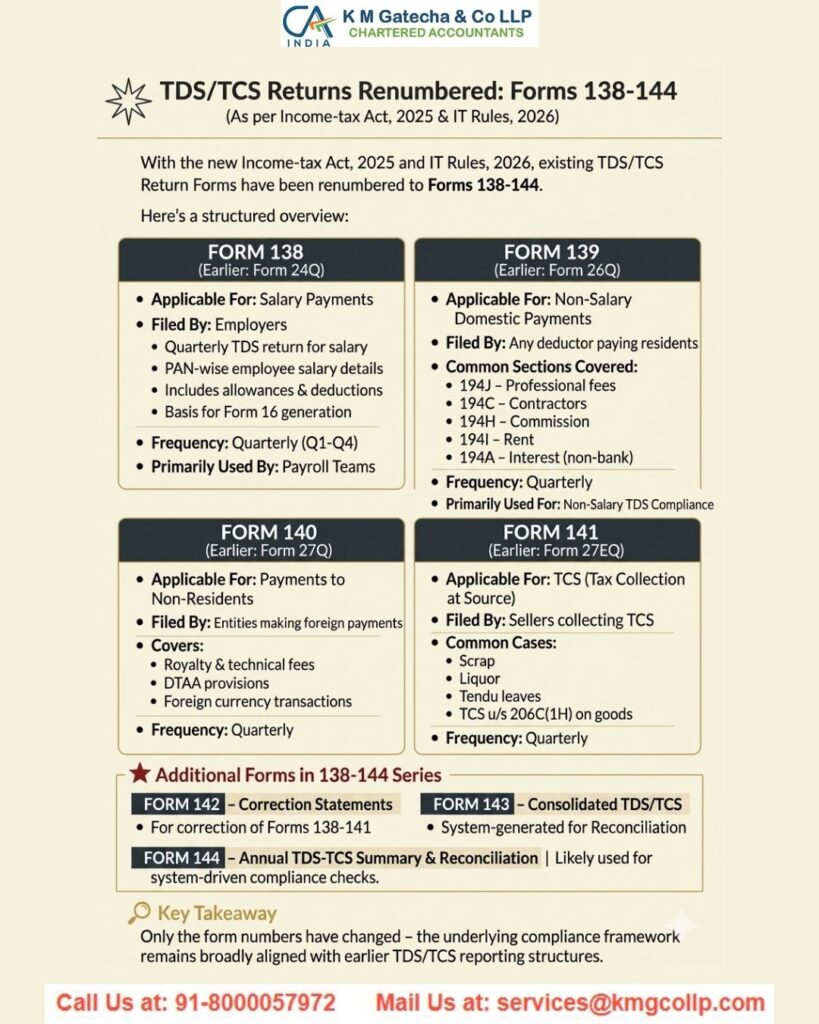
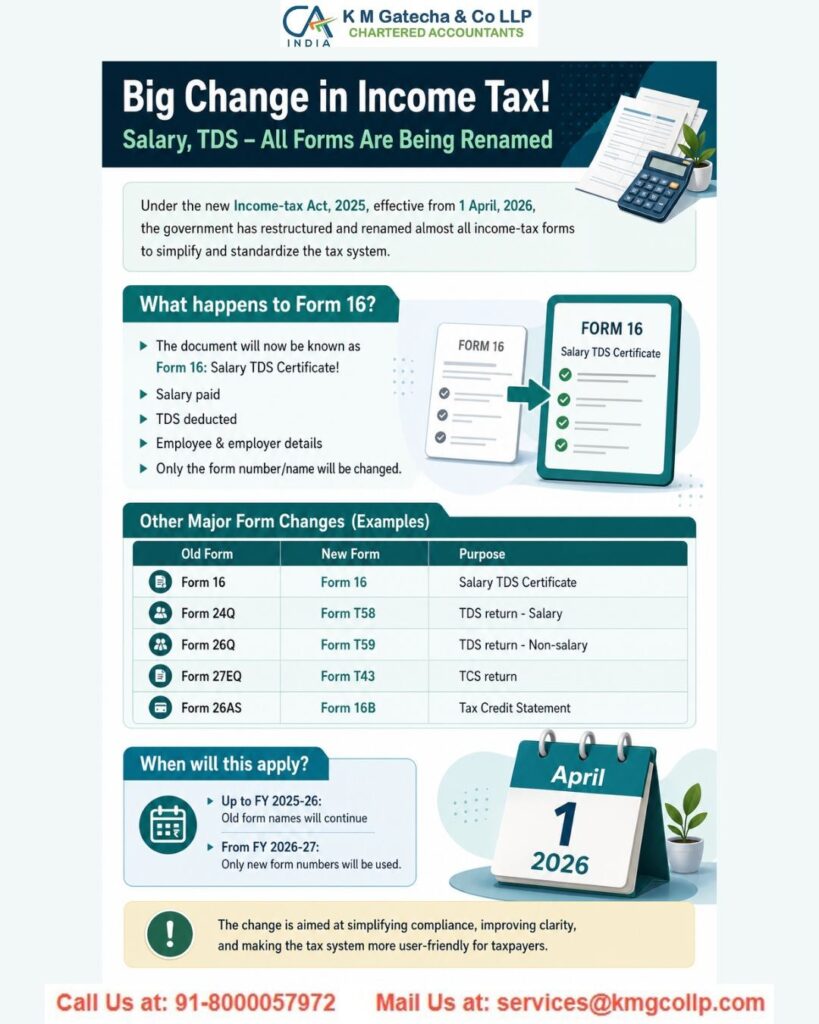
Form No. 144, introduced under Section 397(3)(b) of the Income-tax Act, 2025, is a quarterly statement used to report Tax Deducted at Source (TDS) on non-salary payments made to non-residents, including foreign companies and other non-resident individuals. It replaces the earlier Form 27Q and is governed by Rule 219 of the Income-tax Rules, 2026.
Applicability of Form No. 144
This form is required to be filed by all deductors such as companies, firms, individuals, and government bodies who deduct TDS on specified non-salary payments. These include:
- Interest payments
- Royalties
- Technical or professional fees
- Dividends
- Any other applicable payments to non-residents
Due Dates for Filing Form No. 144
Form No. 144 must be filed electronically for each quarter within the following timelines:
- Q1: 31st July
- Q2: 31st October
- Q3: 31st January
- Q4: 31st May (of the following financial year)
Once submitted, the form cannot be modified. However, correction statements can be filed within two years from the end of the relevant tax year after processing by CPC-TDS.
Structure of Form No. 144
Form No. 144 is divided into three main components:
Part A – Deductor Details
This section includes basic information of the deductor such as name, address, and tax identification details.
Part B – Tax Deducted and Deposited
This part captures details of tax deducted at source and the amount deposited with the government.
Annexure – Deductee-wise Details
This annexure provides detailed information for each deductee, including:
- PAN details
- Country of remittance
- Payment amount
- Tax deducted
- Applicable tax rates under the Income-tax Act or DTAA provisions
Supporting documents such as challans, PAN details, and tax residency certificates (where applicable) are also required.
Filing Process of Form No. 144
The filing process includes the following steps:
- Deduction and deposit of tax
- Preparation of the statement using prescribed utilities
- Validation of data
- Submission through the e-filing portal or TIN facilitation centres
After submission, the system processes the return and reflects either compliance status or reported defaults.
TDS Certificates and Reporting
Deductors must issue TDS certificates (Form 131) within 15 days from the due date of filing. The deducted TDS details are also reflected in the deductee’s AIS/Form 168 to enable proper tax credit claims.
Compliance and System Features
Timely and accurate filing of Form No. 144 ensures correct tax credit for non-residents and helps avoid penalties, including late filing fees and other consequences under the Act.
The revised form includes several enhancements such as:
- Pre-filled data fields
- Real-time validations
- Standardised reporting structure
- Simplified compliance process
These improvements make the filing system more efficient, accurate, and user-friendly.
Income Tax Department – Ministry of Finance, Government of India
FAQs on Income Tax Form 144 (Earlier Form No. 27Q)
Form No. 144 is a quarterly statement of Tax Deducted at Source (TDS) under Section 397(3)(b) of the Income-tax Act, 2025. It applies to non-salary payments made to non-residents. This form replaces the earlier Form No. 27Q.
Form Reference Mapping
Under Income-tax Rules, 1962 (Old System)
- Form Name: 27Q
- Section: 200(3)
- Rule: 31A
Under Income-tax Rules, 2026 (New System)
- Form Name: 144
- Section: 397(3)(b)
- Rule: 219
Purpose of Form 144
Form 144 is used for reporting TDS on payments made to non-residents, excluding salary payments. It ensures proper tax deduction reporting and compliance under the updated tax framework.
Disclaimer: The content on this website is for informational purposes only and does not constitute legal, financial, or professional advice. Please consult qualified experts before acting on any information. K M GATECHA & CO LLP accepts no liability for errors, omissions, or outcomes from the use of this content. This site is not an advertisement or solicitation.