Business Tax Filing: Types & Taxes Explained
If you own a business, understanding tax filing requirements is essential. Every business is required to file tax returns, but the taxation system can be complex and requires proper knowledge. This article will help you understand business tax return filing, the concept of business taxation, and how company tax returns work.
What is a Business Tax Return?
A business tax return is similar to an income tax return, as it reports the financial performance of a business for a specific period. It provides a detailed summary of income earned and expenses incurred, helping determine the taxable profit.
In addition, it includes information about taxes payable on those profits and presents key financial details such as assets, liabilities, loans, and outstanding obligations, giving a complete picture of the business’s financial position.
Who Needs to File a Business Tax Return?
The requirement to file a business tax return depends on the type of business structure and the income earned. Here’s a simplified overview:
- Sole Proprietors: Business income is combined with personal income such as salary, house property income, and interest, and reported in a single tax return. Filing is required if total income exceeds the basic exemption limit, even if the business has made a loss.
- Companies, Firms, and LLPs: These entities are required to file a business tax return every year, regardless of whether they have earned a profit, incurred a loss, or had no business activity during the year.
- Tax Liability: Certain business entities are subject to fixed tax rates as per applicable laws.
In short, the obligation to file a return is based on the type of business entity and the applicable income thresholds.
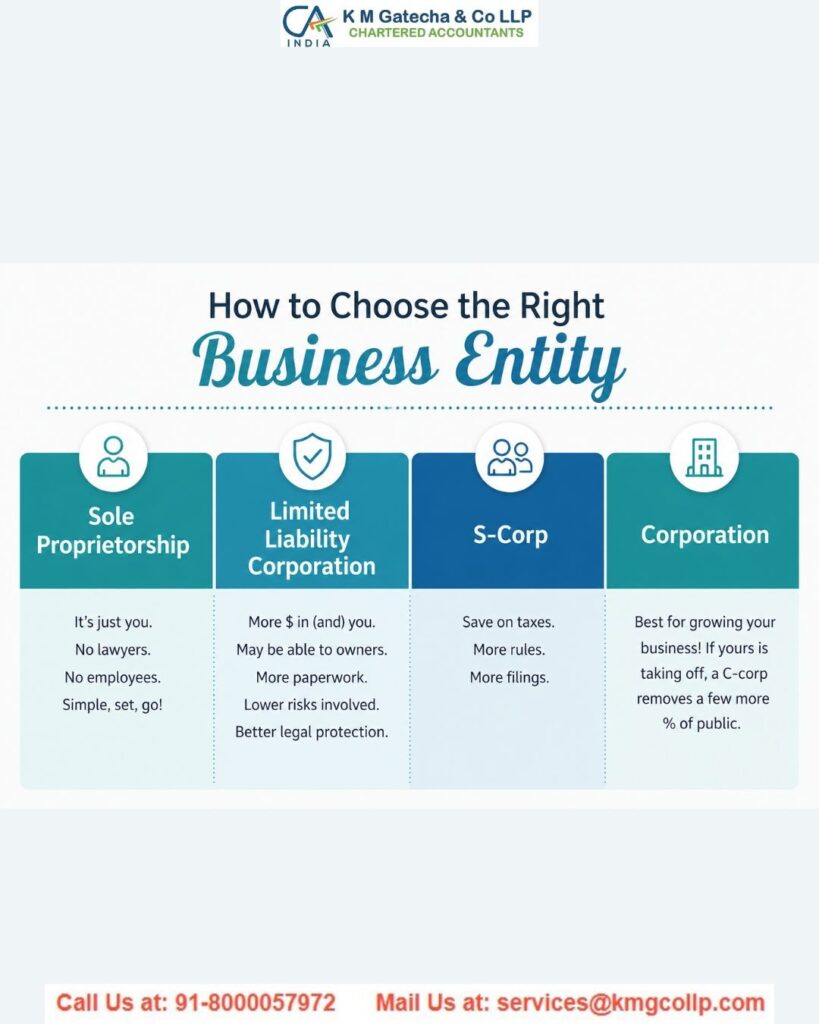
Types of Business Tax Return Filing
Business tax return filing varies based on the type of business entity. Here are the main categories:
- Sole Proprietorship:
In this structure, the business and the owner are considered the same. The owner reports business income along with personal income in a single tax return, similar to individual filing. - Partnership Firm:
A partnership involves two or more individuals managing a business together. The firm is treated as a separate entity for tax purposes and must file a tax return, regardless of profit or loss. - Limited Liability Partnership (LLP):
An LLP combines the benefits of limited liability with the flexibility of a partnership. It is required to file a separate tax return, and taxation is handled as per applicable rules for such entities. - Company (Domestic or Foreign):
Companies are required to file tax returns every year. This includes both domestic entities (registered within the country) and foreign entities operating or earning income within the country.
Overall, the type of return and filing process depends on the structure of the business entity.
When is an Income Tax Audit Required?
An income tax audit is required when a taxpayer’s turnover or receipts cross the prescribed limits under tax laws. For businesses, this applies when turnover exceeds the specified threshold, and for professionals, when gross receipts go beyond the applicable limit. In such cases, the accounts must be audited by a qualified professional.
A tax audit may also be necessary if a business reports losses and intends to carry them forward to future years. Additionally, under presumptive taxation schemes, if the declared profit is lower than the prescribed percentage of turnover or receipts, an audit requirement may arise.
Presumptive Taxation Scheme
The presumptive taxation scheme is a simplified method of taxation available to eligible taxpayers such as individuals, HUFs, and certain firms. It is designed to reduce the burden of maintaining detailed books of accounts.
Small businesses with turnover within the prescribed limit can opt for this scheme, while professionals with income up to the specified threshold are also eligible. Under this system, income is calculated on a presumed basis rather than actual profits.
Businesses are required to declare a fixed percentage of their turnover as taxable income, while professionals must declare a specified portion of their receipts. This makes tax calculation easier and reduces compliance requirements.
Due Dates for Filing Business Tax Returns
The due date for filing business tax returns depends on the type of taxpayer and whether a tax audit is required.
- Individuals not subject to audit: Returns are generally due after the end of the financial year within the prescribed timeline. If missed, a belated return can still be filed within the allowed period, along with applicable penalties.
- Businesses and entities subject to audit: For those requiring a tax audit, including companies, LLPs, and partnership firms, the due date is extended compared to non-audit cases.
Filing returns after the due date may lead to certain consequences, such as the inability to carry forward losses to future years. Additionally, penalties may be levied for delayed or non-filing of returns.
Timely filing of tax returns is essential for maintaining compliance and avoiding unnecessary penalties or complications.
Disclaimer: The content on this website is for informational purposes only and does not constitute legal, financial, or professional advice. Please consult qualified experts before acting on any information. K M GATECHA & CO LLP accepts no liability for errors, omissions, or outcomes from the use of this content. This site is not an advertisement or solicitation.