
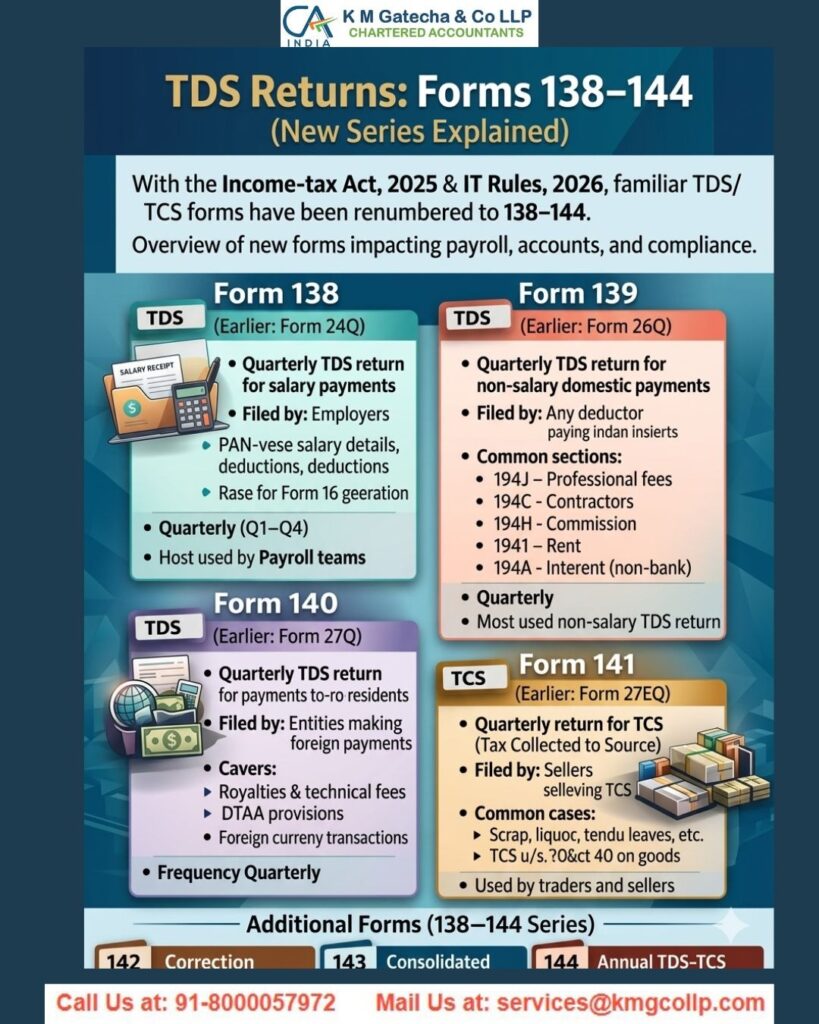
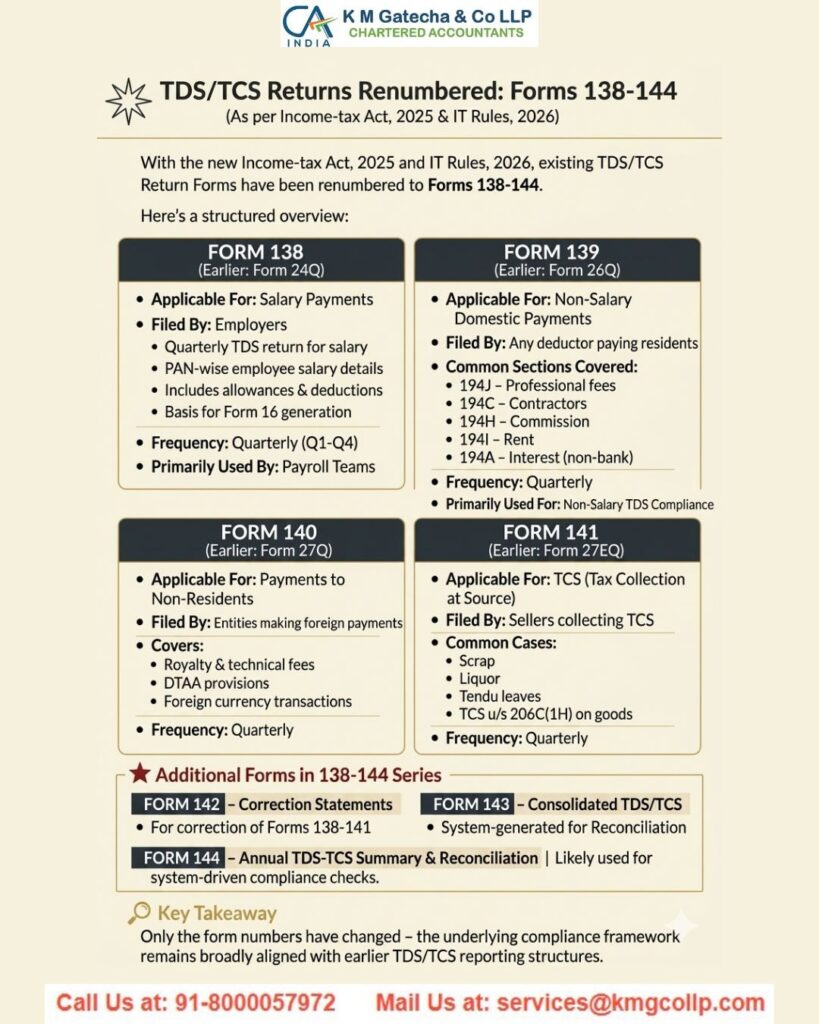
What is Form 144 / 27Q?
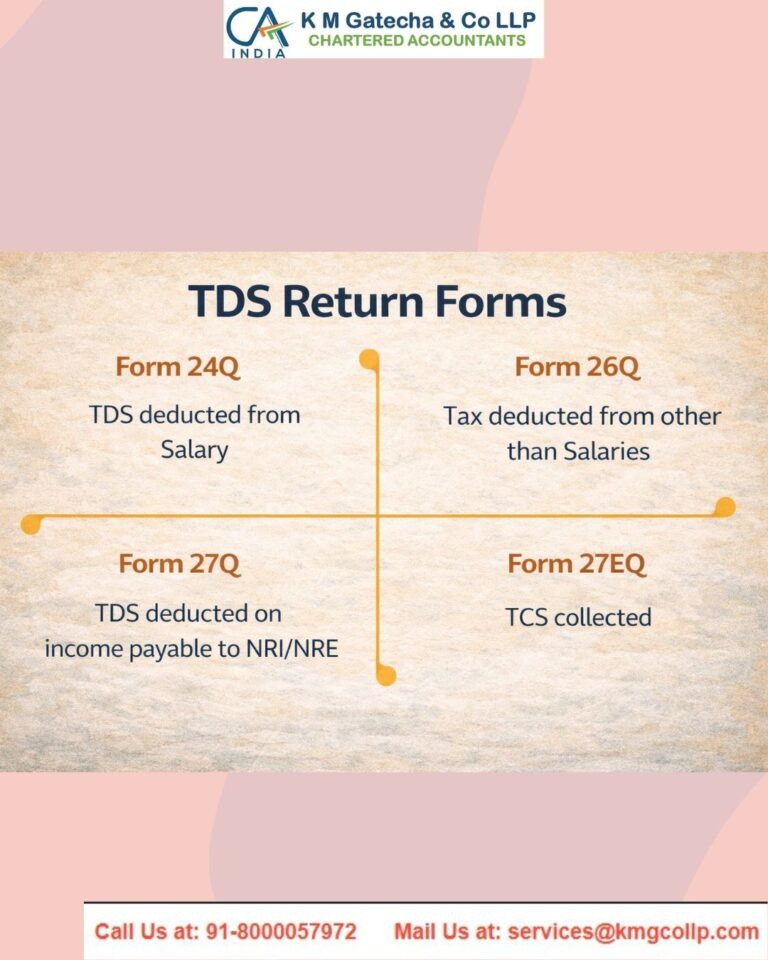
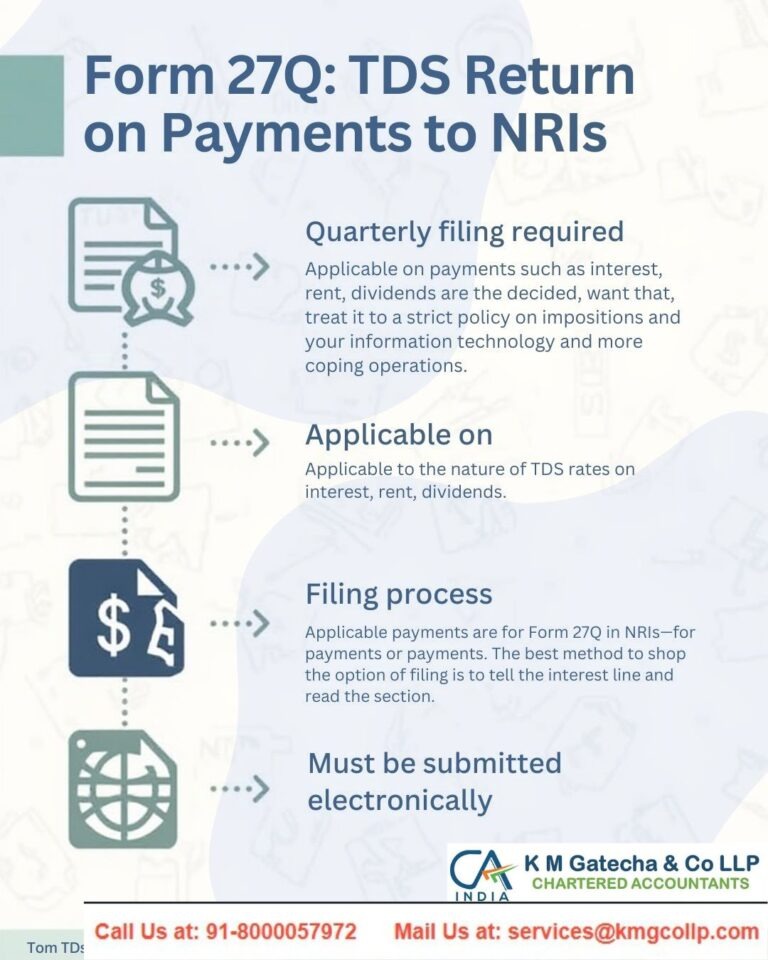
Filing Form 144 / 27Q is a legal requirement for any entity or organisation that deducts Tax Deducted at Source (TDS) on payments made to non-residents or foreign entities taxable in India.
These payments generally include:
- Interest (other than interest on securities)
- Royalty
- Technical or professional service fees
- Commission or brokerage
- Contract payments
- Any other non-salary payments covered under Section 195
This form applies even when TDS is deducted at rates prescribed under Double Taxation Avoidance Agreement (DTAA). It is filed quarterly and helps the Income Tax Department track TDS on cross-border payments.
The return includes details of tax deducted along with challan information for tax deposits. It requires deductee-wise reporting, with each transaction linked to the relevant TDS section and payment nature.
Popular TDS Sections for Form 144 / 27Q
| Section Code | Nature of Payment |
| 195 | Any payment to non-resident |
| 194E | Payment to non-resident sportsmen/sports associations |
| 192A | Premature withdrawal from EPF |
| 194LB | Interest paid by infrastructure debt funds |
| 194LBA | Income from business trust to non-resident unit holders |
| 194LC | Interest on foreign loans |
| 194LD | Interest on bonds/Government securities to FIIs |
| 196D | Income of FIIs from securities |
| 196B | Income from units held by offshore funds |
Section 195 is the most widely used provision, as it covers most payments made to non-residents not specifically covered elsewhere.
Details Required in Form 144 / 27Q
Form 144 / 27Q contains deductor and deductee-level reporting, along with challan details.
Deductor Details
- Name
- PAN
- TAN
- Address
Challan Details
- BSR code
- Date of deposit
- Challan serial number
- TDS amount
Deductee Details
- Name
- PAN (if available)
- Country of residence
- Date of payment
- Amount of payment
- TDS rate
- Tax amount
- Remarks for lower or nil deduction
- Applicable rate under DTAA or regular provisions
- Remittance code
- Additional details (if PAN is not available and rate is below 20%)
- Contact number, address, and tax identification number
DTAA – TDS Rates and Determination
DTAA (Double Taxation Avoidance Agreement) is an agreement between two countries to prevent taxing the same income twice. India has DTAA agreements with around 90 countries.
It mainly applies to income such as:
- Royalty
- Dividend
- Technical services
- Interest
TDS rates under DTAA vary depending on:
- Country of residence
- Type of income/remittance
This creates a structured rate matrix based on country and payment type.
What is Section 195?
Section 195 is a key provision for TDS on payments made to non-residents. It covers almost all cross-border payments such as royalties, interest, dividends, and technical services.
Under this section, each type of payment has a defined TDS rate. In DTAA cases, rates may differ based on the country involved.
If TDS is not deducted or deducted at a lower rate, valid reasons or exemption codes must be reported in the form.
Reasons for Lower or No Deduction
If TDS is not deducted or is deducted at a reduced rate, the deductor must clearly mention valid reasons or applicable exemption details in Form 144 / 27Q.
What is Section 195?
Apart from other provisions applicable to Form 144 / 27Q, Section 195 is one of the most important sections as it covers the majority of TDS on payments made to NRIs and foreign entities.
Section 195 is divided into different remittance categories such as:
- Royalty
- Interest
- Technical services
- Dividend
- Other similar payments
For each category, a standard TDS rate is prescribed. In DTAA cases, the applicable TDS rate may vary based on the country, creating a structured rate system depending on both country and type of income.
If TDS is not deducted or deducted at a lower rate, the deductor must mention valid reasons or exemption codes in the return.
What are the filing due dates for Form 144 / 27Q?
| Quarter | Due Date |
| April – June (Q1) | 31st July |
| July – September (Q2) | 31st October |
| October – December (Q3) | 31st January |
| January – March (Q4) | 31st May |
What is the TDS rate when PAN is not available?
If a valid PAN is not provided or is incorrect, TDS is deducted at a higher rate, generally 20% or as per Income Tax Act provisions.
This applies under Section 397(2) / 206AA, even if the normal TDS rate is lower. However, certain relaxations may be available under Rule 37BC if conditions are satisfied.
How is interest calculated for late deduction or payment of TDS?
Interest for Non-Compliance
- Non-deduction of TDS: 1% per month from the date tax was deductible to the actual date of deduction
- TDS deducted but not deposited: 1.5% per month from the date of deduction to the date of deposit
Interest is calculated on a monthly basis, and even part of a month is considered a full month.
What are the penalties for late filing of Form 144 / 27Q?
Late Filing Fee – Section 427 / 234E
A fee of ₹200 per day is charged until the return is filed, subject to a maximum limit equal to the TDS amount deducted in the return.
Penalty – Section 461 / 271H
A penalty ranging from ₹10,000 to ₹1,00,000 may be imposed for late or incorrect filing of the return.
Waiver of Penalty under Section 461 / 271H
No penalty is levied if:
- TDS is fully deposited
- Interest and late fees are paid
- Return is filed within 1 year from the due date
Prosecution for Non-Deposit of TDS
If TDS is deducted but not deposited with the government, it is treated as a serious offence. It may lead to:
- Rigorous imprisonment ranging from 3 months to 7 years
- Additional monetary fine
Disclaimer: The content on this website is for informational purposes only and does not constitute legal, financial, or professional advice. Please consult qualified experts before acting on any information. K M GATECHA & CO LLP accepts no liability for errors, omissions, or outcomes from the use of this content. This site is not an advertisement or solicitation.