Unified Form 141 for PAN-Based TDS Payments
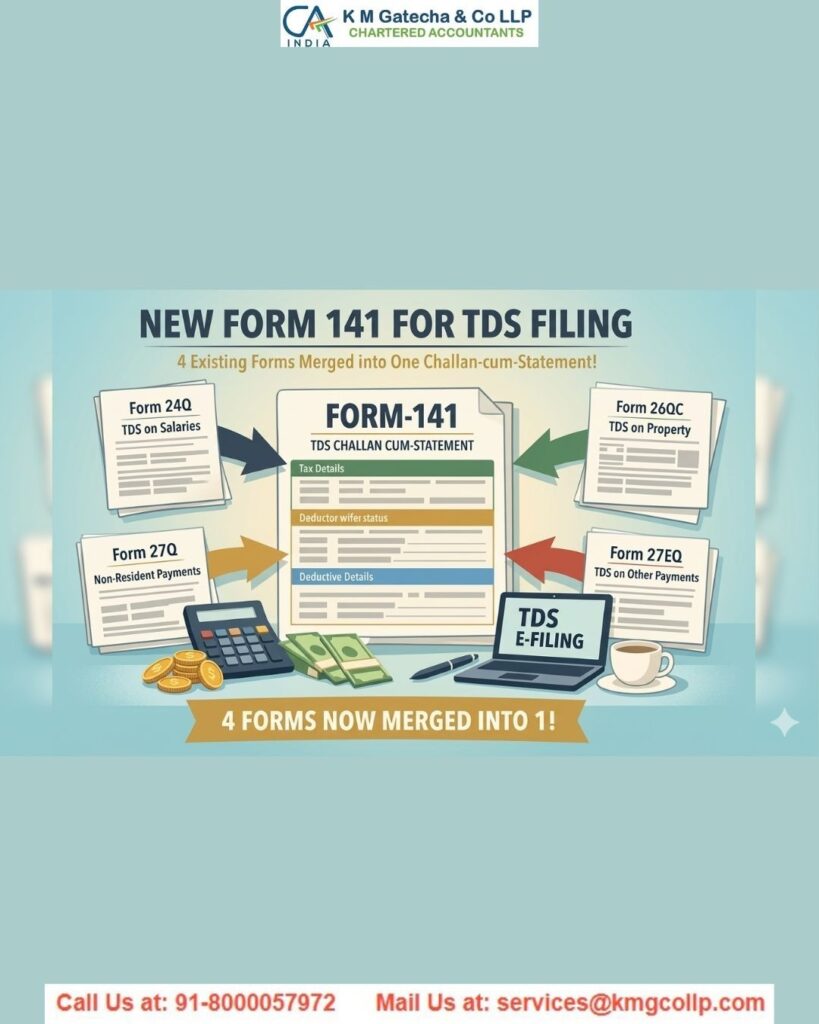
In a significant move to simplify tax compliance, the Income Tax Department has introduced a unified system for PAN-based TDS payments through Form No. 141 under the Income Tax Act, 2025. This initiative is designed to reduce complexity, enhance efficiency, and make the TDS payment process more convenient for taxpayers across India.
Effective from 1st April 2026, taxpayers will no longer need to use multiple forms for different types of TDS payments. A single consolidated form will now cover various transactions, bringing a major change to the existing compliance system.
Background: Challenges with the Earlier Multi-Form System
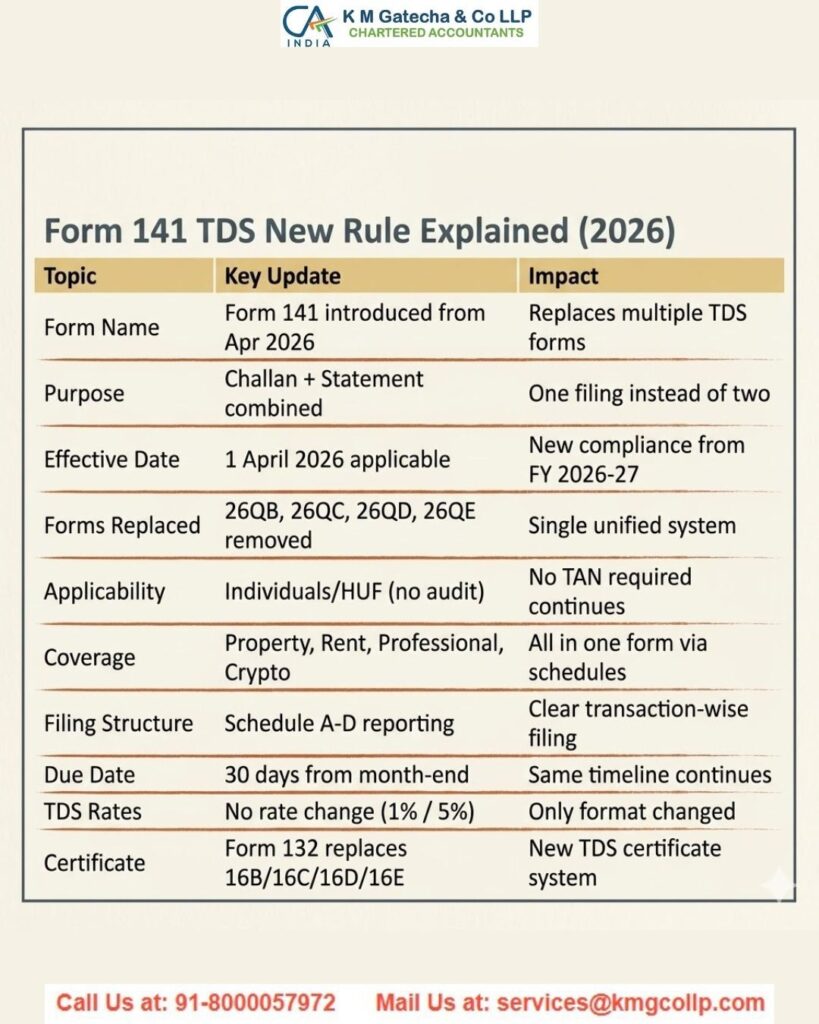
Before the introduction of the new system, taxpayers had to rely on multiple forms depending on the type of transaction. Some of the commonly used forms were:
- Form 26QB – used for TDS on property purchases
- Form 26QC – used for TDS on rent in non-business cases
- Form 26QD – used for certain payments made to residents
- Form 26QE – used for specified types of transactions
This multi-form approach often made compliance more complicated. It increased the chances of mistakes and added extra effort for taxpayers, especially individuals and small taxpayers who may not be very familiar with tax rules and procedures.
What is Form 141?
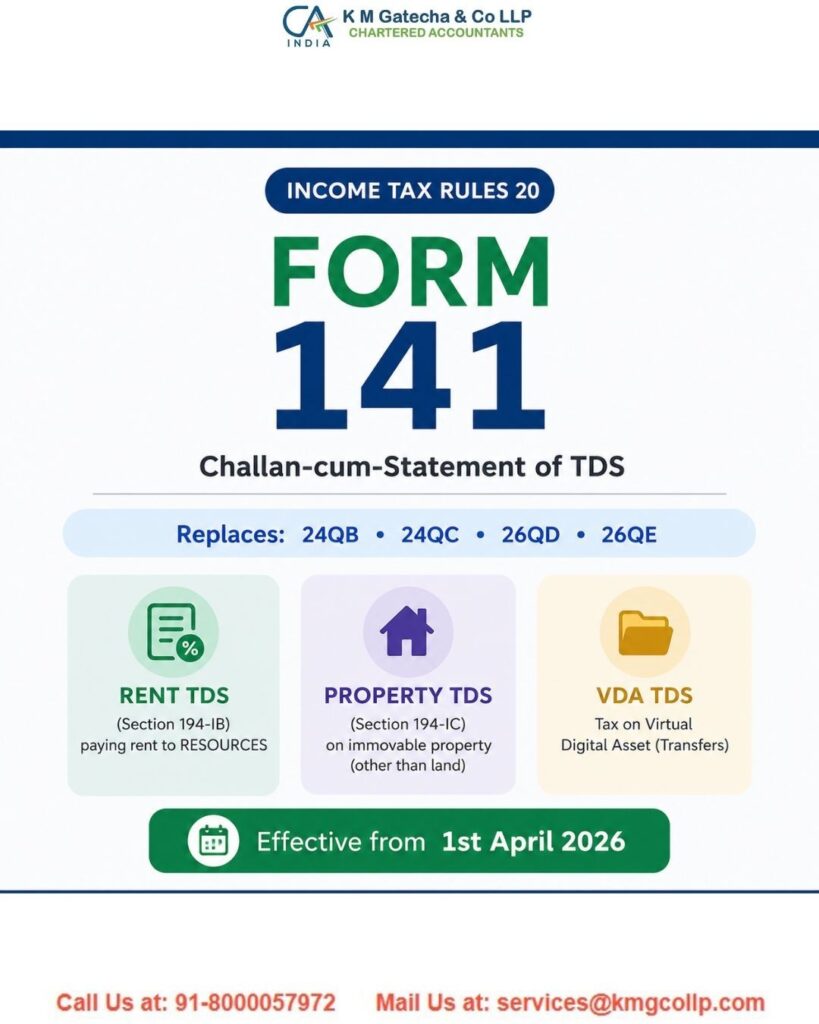
Form No. 141 is a challan-cum-statement introduced under the Income Tax Act, 2025 to simplify TDS compliance. It enables taxpayers to:
- Report TDS details
- Make tax payments
- Complete compliance in a single process
This unified form allows different types of PAN-based TDS transactions to be managed in one place, removing the need to use multiple forms.
Key Changes Introduced
1. One Form for Multiple Transactions
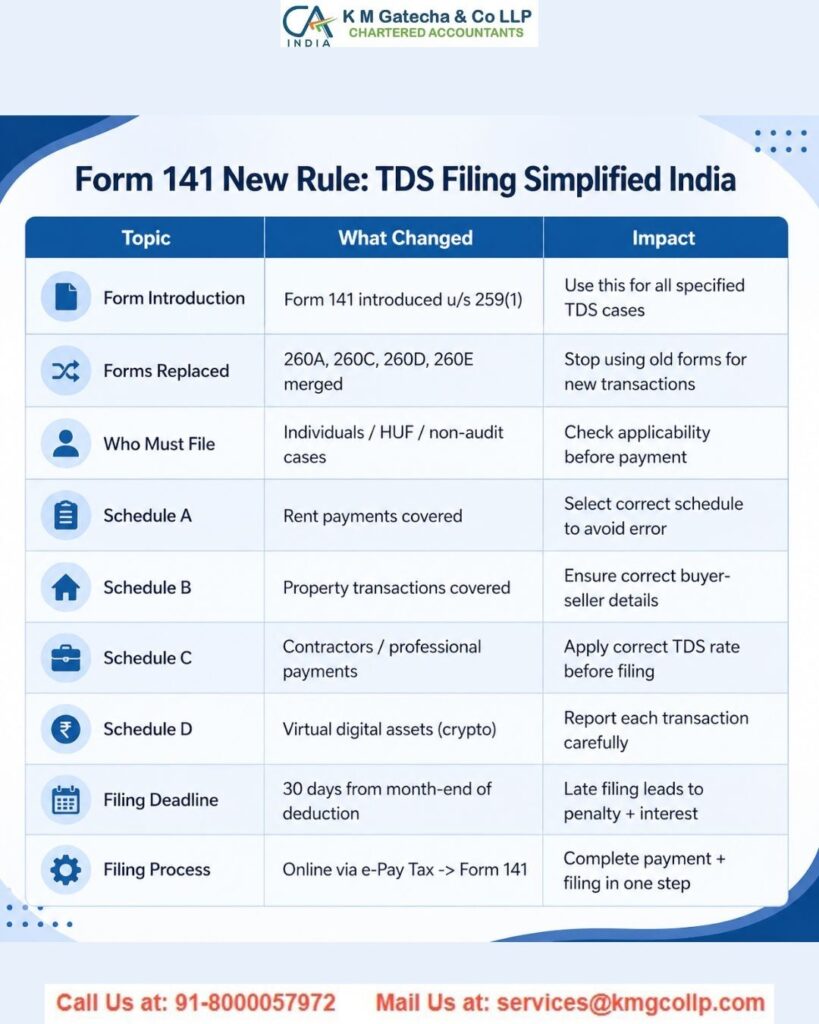
Different PAN-based TDS payments, such as property, rent, and other specified transactions, can now be handled through a single form.
2. Lower Compliance Burden
Taxpayers no longer need to deal with multiple forms, making the process simpler and easier to manage.
3. Better User Experience
The streamlined system makes it more convenient for taxpayers to complete TDS-related tasks, even with limited technical knowledge.
4. Simplified Digital Process
This update supports the goal of creating a more efficient and user-friendly digital tax system.
Applicability of Form 141
- Applicable from Tax Year 2026–27 onwards
- For TDS deducted in FY 2025–26, existing forms will continue to be used
- For TDS deducted in FY 2026–27 and later, Form 141 will be mandatory
This distinction helps ensure a smooth transition from the old system to the new unified process.
Step-by-Step Process to Use Form 141
Taxpayers can follow these simple steps to make TDS payments:
- Log in to the income tax portal
- Go to the section related to the Income Tax Act, 2025
- Click on “New Payment”
- Select Form No. 141
- Enter the required transaction and PAN details
- Make the payment and submit the form
Impact on Taxpayers and Businesses
For Individuals
- Simplifies TDS compliance for property buyers and tenants
- Reduces the need for professional assistance in basic filings
For Businesses
- Streamlines internal processes and lowers administrative effort
- Minimizes the risk of errors and related penalties
For Tax Professionals
- Improves efficiency in managing client compliance
- Saves time by eliminating the need to handle multiple forms
Why This Move Matters
This change is part of a larger effort to simplify the tax system in India. By replacing multiple forms with a single one, it helps:
- Improve ease of doing business
- Reduce compliance burden and costs
- Encourage timely and voluntary tax compliance
It also supports the move toward a more digital and efficient tax administration system.
Conclusion
The introduction of Form 141 marks an important step in simplifying the TDS payment system in India. By replacing multiple forms with a single, unified solution, the process of tax compliance becomes more streamlined, efficient, and easier to manage.
For taxpayers, particularly individuals and small businesses, this change reduces confusion and saves time, making TDS compliance much more straightforward under the updated tax framework.
Disclaimer: The content on this website is for informational purposes only and does not constitute legal, financial, or professional advice. Please consult qualified experts before acting on any information. K M GATECHA & CO LLP accepts no liability for errors, omissions, or outcomes from the use of this content. This site is not an advertisement or solicitation.