
Capital Gains Tax for NRIs in India: Complete Guide
Non-Resident Indians (NRIs) have to pay tax in India only on the income they earn from Indian sources. This can include income from bank deposits, shares, property, jewellery, or business in India.
One of the most common transactions for NRIs is selling property in India. However, many people don’t realize that this sale is subject to capital gains tax.
In this article, we will explain in simple terms how capital gains are taxed for NRIs in India and what you should know.
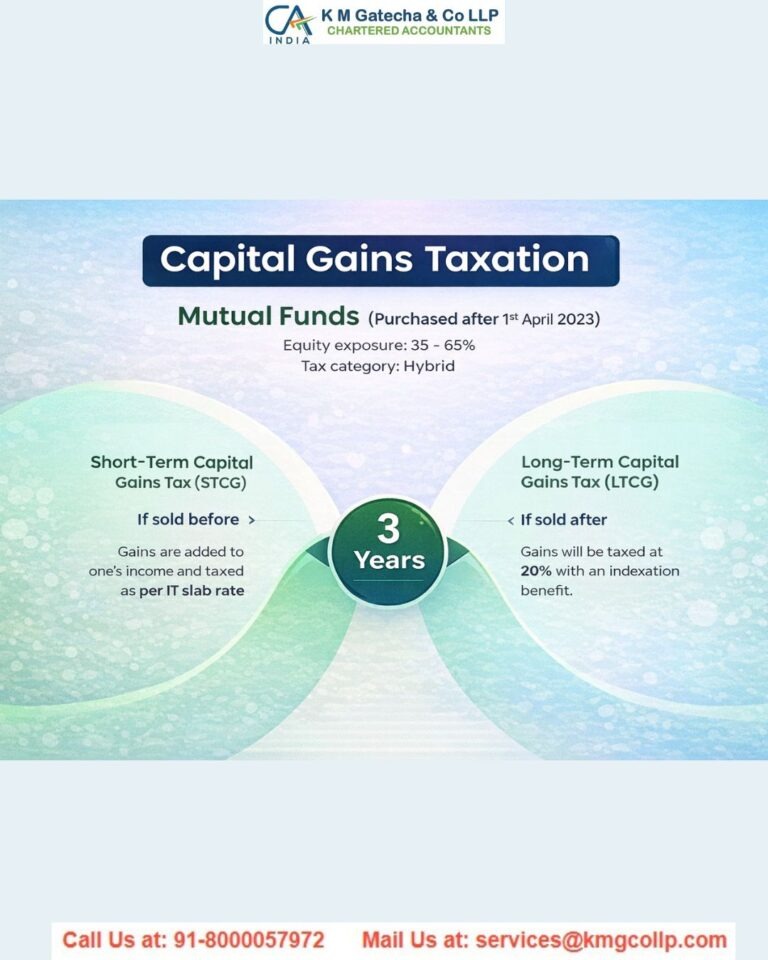
Capital Gains Tax for NRIs in India
NRIs are taxed only on income earned in India. Capital gains depend on how long the asset is held before selling.
Short-Term Gains (STCG):
- Shares & equity funds: less than 12 months
- Property: less than 24 months
- Some assets like debt funds are always short-term
Long-Term Gains (LTCG):
- Shares & equity funds: 12 months or more
- Property: 24 months or more
This helps NRIs understand how their investment profits are taxed.
Types of Investments and Their Tax Impact
Tax on Debt Funds and Other Assets
For investments like unlisted securities, bonds, and other assets, tax depends on how long you hold them:
- Short-Term (less than 24 months):
Profit is added to your total income and taxed as per your income tax slab. - Long-Term (more than 24 months):
Profit is taxed at a fixed rate without indexation benefits. - An extra cess is also charged on both short-term and long-term gains.
NRI Capital Gains Tax on Shares
Short-Term Gains (less than 12 months):
- Tax is charged at a fixed rate
- TDS is also deducted at the same rate
Long-Term Gains (more than 12 months):
- Tax applies only if gains cross a certain limit
- A lower tax rate is applied compared to short-term gains
- TDS is deducted on these gains
Tax on Fixed Deposits for NRIs
NRO Account Fixed Deposits:
- Interest earned is fully taxable in India
- A high TDS is deducted on the entire interest amount
- No minimum exemption limit like residents
- Applies to income earned in India (rent, pension, etc.)
NRE Account Fixed Deposits:
- Interest earned is completely tax-free in India
- No TDS is deducted
- Preferred option for better tax savings
NRIs can file an income tax return to claim a refund or benefit from tax treaties, if applicable.
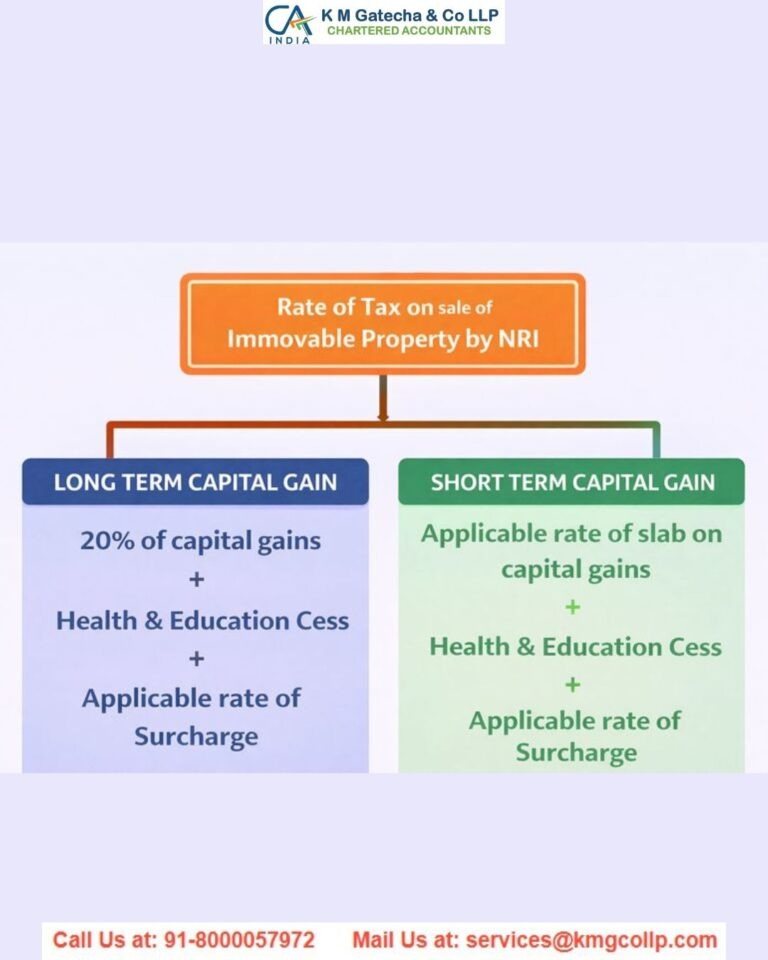
Tax on Sale of Property by NRIs
Long-Term Capital Gains (LTCG):
- Applies if property is held for a longer period
- Tax is charged at a fixed rate
- For older properties, there may be an option to choose a different method of taxation
Short-Term Capital Gains (STCG):
- Applies if property is sold within a short period
- Tax is charged as per normal income tax slab
Tax on Unlisted Shares
- Sold within 2 years: Treated as short-term → taxed as per slab
- Sold after 2 years: Treated as long-term → taxed at a fixed rate
TDS on Property Transactions
- If property value crosses a specified limit, TDS must be deducted while making payment
- The tax rate depends on how long the property was held
In simple terms, taxes for NRIs depend on the type of investment and how long it is held.

Tax Savings on Capital Gains for NRIs
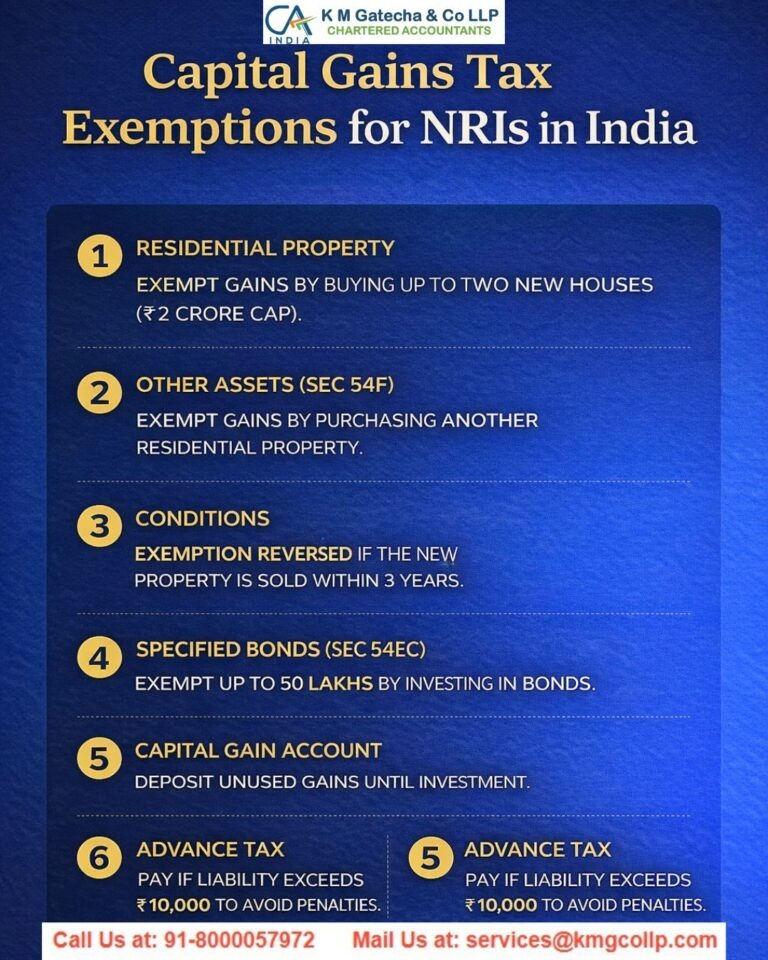
NRIs can reduce tax on long-term capital gains by using certain exemption options available under Indian tax laws. These benefits apply when profits are reinvested in specific ways.
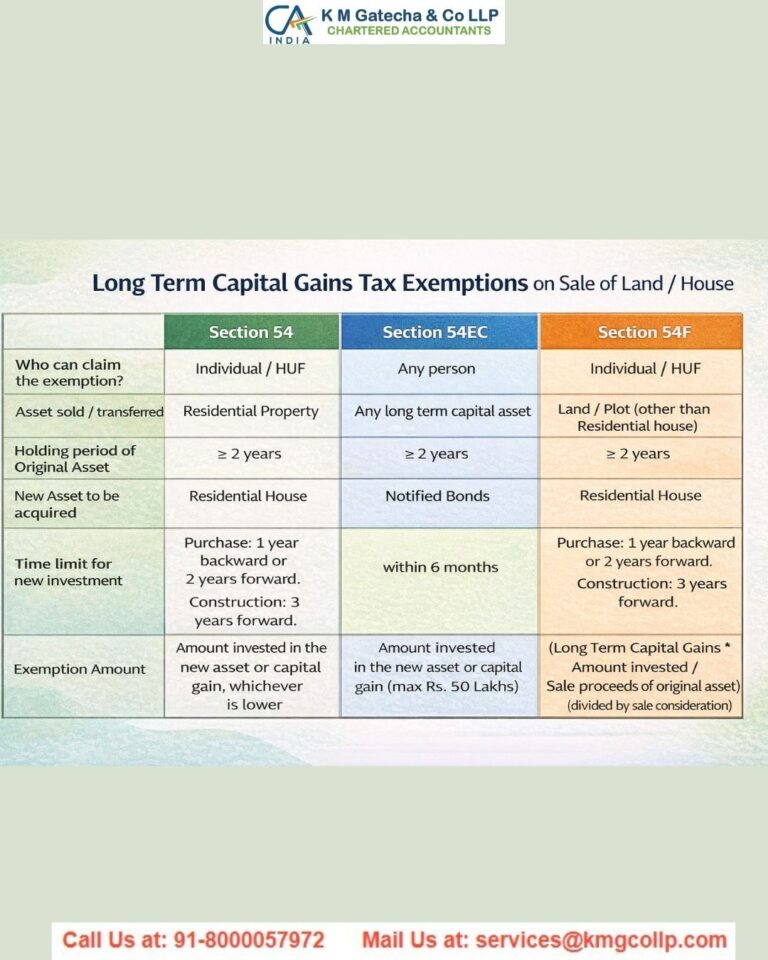
Section 54
- Applies to gains from selling a residential property
- Tax exemption is available if the amount is reinvested in another residential property
- New property must be purchased within 2 years or constructed within 3 years
- NRIs can also use this benefit for property investments in India
Section 54EC
- Applies to gains from selling land or buildings
- Exemption is available if gains are invested in specified government-approved bonds within 6 months
- These bonds have a fixed lock-in period
- NRIs can also invest in these bonds to save tax
Section 54F
- Applies when selling any asset other than a residential property
- Exemption is available if the amount is invested in a residential house
- Investment must be made within 1 year before or 2 years after sale, or construction within 3 years
- NRIs can use this benefit for property investment in India
Special Tax Rule for Certain NRI Investments
In some cases, NRIs investing in specific Indian assets and earning only investment income during the year may not be required to file an income tax return if tax is already deducted at source.
These investments may include:
- Shares of Indian companies
- Certain debentures
- Bank deposits
- Government securities
- Other notified investments
However, no additional deductions are allowed while calculating such income.
Special Rules for Long-Term Capital Gains
For certain long-term capital gains, NRIs do not get benefits like indexation or some tax deductions under Chapter 80.
However, tax exemption is available under a special rule if the profit is reinvested in eligible assets such as:
- Shares of Indian companies
- Debentures of public companies in India
- Bank deposits or deposits in Indian companies
- Government securities
- Certain National Savings Certificates
If the new investment is lower than the capital gain, the exemption is given only proportionately.
Important Conditions
- If the new asset is sold within 24 months, the exempted gain becomes taxable again
- These benefits may also continue until the NRI becomes a resident, under certain conditions
- If this special option is not chosen, normal tax rules will apply
Points to Consider
- No extra deductions: Some tax deductions and indexation benefits are not available under this option
- Simpler compliance: If income is only from specified investments and tax is already deducted, filing a return may not be required
In simple terms, this system offers tax relief on reinvestment but comes with certain conditions and trade-offs.
Disclaimer: The content on this website is for informational purposes only and does not constitute legal, financial, or professional advice. Please consult qualified experts before acting on any information. K M GATECHA & CO LLP accepts no liability for errors, omissions, or outcomes from the use of this content. This site is not an advertisement or solicitation.