
Section 69: Tax on Unexplained Investments
Section 69 of the Income Tax Act applies to investments made by an assessee where the source of funds cannot be satisfactorily explained to the Assessing Officer. This provision is aimed at preventing tax evasion. If the explanation provided is found inadequate, the Assessing Officer has the authority to treat such unexplained investments as part of the assessee’s total income and tax them accordingly. This article explains the key provisions and implications of Section 69.
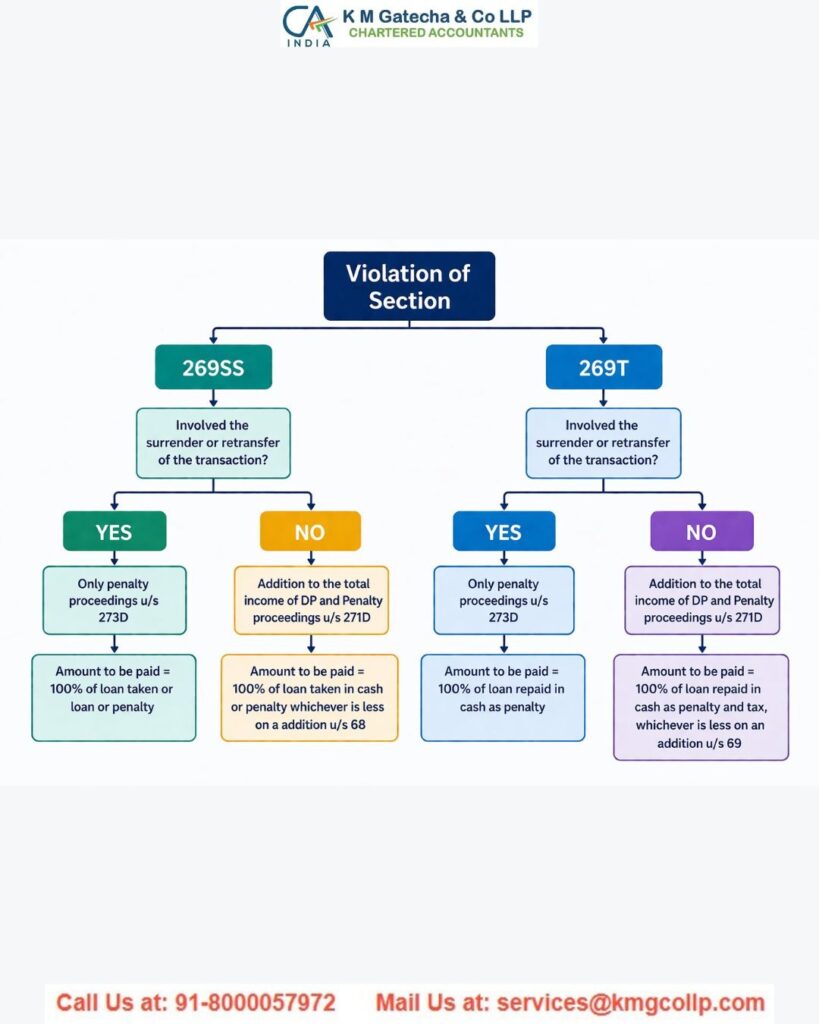
What are Unexplained Investments?
Under Section 69 of the Income Tax Act, 1961, unexplained investments refer to investments that are not recorded in the assessee’s books of account and for which no satisfactory explanation of the source of funds is provided. In such cases, the Assessing Officer may treat the value of these investments as the assessee’s income for the relevant financial year and tax it accordingly.
Essential Conditions Under Section 69
For an income to be treated as unexplained investment under Section 69, the following conditions must be satisfied:
- The assessee has made an investment during the financial year immediately preceding the relevant assessment year.
- Such investment is not recorded in the books of account, if maintained for any source of income.
- The assessee either fails to explain the nature and source of the investment or the explanation provided is not considered satisfactory by the Assessing Officer.
Situations Where Books of Accounts Are Not Produced Before the AO
This situation occurs when an assessee records investments in the books of account and files financial statements with the income tax return but does not produce the books during assessment proceedings.
In such cases, the Assessing Officer (AO) may invoke Section 69 and treat the investment as unexplained due to lack of proper verification. However, it can be contended that the Balance Sheet and Profit & Loss Account are summaries of the books of account. In cases subject to tax audit, the Tax Audit Report can act as strong evidence that the books were duly maintained, examined, and verified by the auditor.
Difference Between Section 68 and Section 69
The table below highlights the key differences between Section 68 and Section 69 of the Income Tax Act:

Burden of Proof Under Section 69
Under Section 69, the primary responsibility lies with the assessee to explain the nature and source of the investment with proper supporting evidence. The assessee must provide a reasonable and credible explanation along with relevant proof.
If the Assessing Officer is not satisfied with the explanation, they may reject it. In such cases, the burden may shift to the department to establish, with supporting evidence, that the explanation is incorrect or inadequate. Ultimately, it is at the discretion of the Assessing Officer to decide whether the explanation and evidence provided are satisfactory.
Opportunity of Being Heard Under Section 69
Section 69 ensures that the assessee is given a fair opportunity to explain the nature and source of undisclosed investments before the Assessing Officer. This opportunity must be provided before such income is added to the total taxable income.
Year of Taxability Under Section 69
The term “such financial year” is crucial under Section 69. Any unexplained investment is treated as income of the financial year in which the investment is made and taxed accordingly.
Splitting of Investment Under Section 69
In some cases, an assessee may claim that an investment originates from earlier years. For instance, a fixed deposit created in one year may be explained as being sourced from a previous deposit. Such claims must be supported with proper evidence to be accepted.

Related Provisions
Section 69A: Unexplained Money
If an assessee is found to own money, bullion, jewellery, or other valuable assets not recorded in the books of account and cannot satisfactorily explain their source, the value may be treated as income for that financial year.
Section 69B: Understated Investments
Where the actual value of an investment or asset exceeds the amount recorded in the books, the difference may be treated as deemed income of the assessee.
Section 69C: Unexplained Expenditure
If an assessee incurs expenditure and fails to explain its source, or the explanation is not accepted, the amount may be treated as income for that year.

Taxation Under Section 115BBE
Unexplained income covered under Sections 68 to 69C is taxed at a special rate. It attracts a high tax rate along with applicable surcharge and cess. No deductions or set-off of losses are allowed against such income.
Penalty Under Section 271AAC
A penalty may be levied on income taxed under Section 115BBE. This increases the overall tax liability significantly in cases of unexplained income.
Disclaimer: The content on this website is for informational purposes only and does not constitute legal, financial, or professional advice. Please consult qualified experts before acting on any information. K M GATECHA & CO LLP accepts no liability for errors, omissions, or outcomes from the use of this content. This site is not an advertisement or solicitation.