

Taxation of YouTubers and Social Media Influencers
With the rapid growth of social media and digital marketing, influencers have become a key part of the online ecosystem. From brand promotions to content monetization, YouTubers and social media influencers earn income from multiple sources. Naturally, this raises an important question—Is this income taxable? The answer is yes. This guide explains how taxation applies to influencers in India.
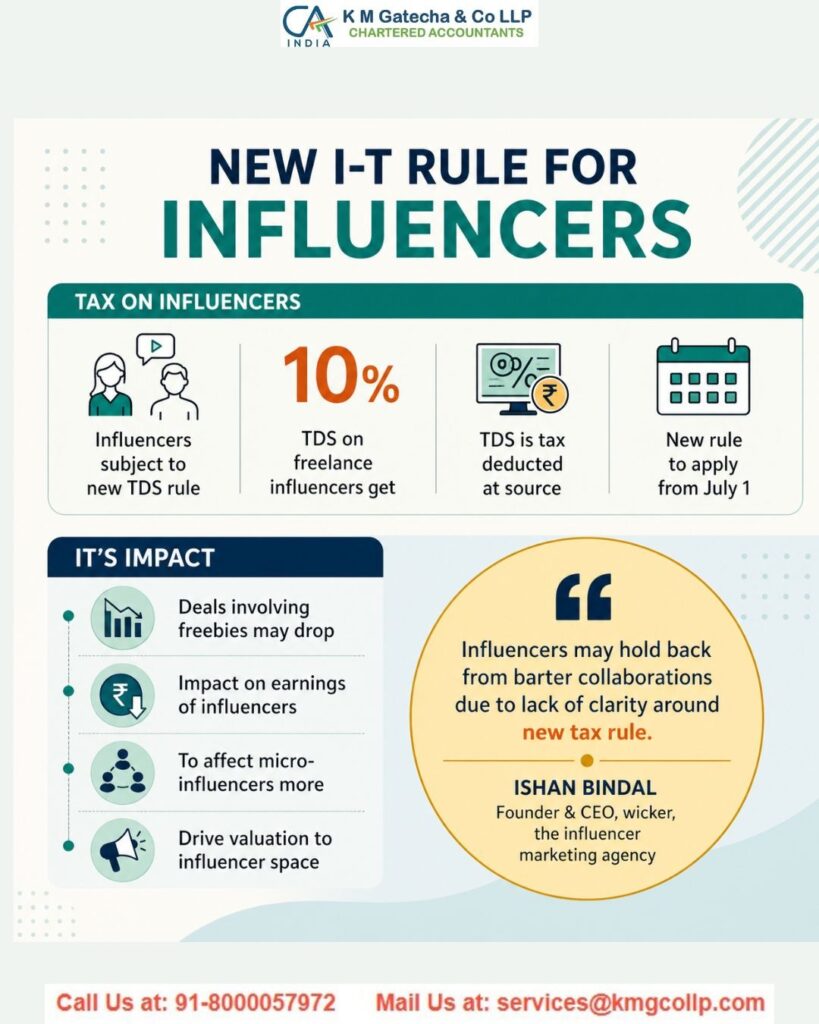
What are the Sources of Income for YouTubers and Social Media Influencers?
Influencers generate income through various channels, including:
Advertising Revenue
Earnings from ads displayed on platforms like YouTube and Instagram form a major income source.
Sponsorships and Brand Collaborations
Payments received for promoting brands, products, or services on digital platforms.
Affiliate Marketing
Income earned through affiliate links by recommending products or services.
Content Creation
Revenue from creating content such as videos, blogs, or photos for brands.
Chats and Donations
Earnings from features like super chats, fan funding, and viewer donations.
Merchandise Sales
Income generated by selling branded products directly to followers.
Taxable Income and Applicable Provisions
All income earned by influencers is taxable under the Income Tax Act. It is generally treated as business income or professional income under Section 28.
- Taxed as per applicable individual slab rates
- Additional surcharge or cess may apply if income exceeds ₹50 lakh

Deductions and Expenses Allowed
Influencers can reduce their taxable income by claiming eligible business expenses such as:
- Equipment costs (camera, laptop, microphone)
- Internet and electricity bills
- Editing tools and software
- Studio or workspace rent
- Travel expenses for content creation
- Marketing and promotion costs
- Depreciation on assets
GST Provisions for Influencers
- GST registration is mandatory if turnover exceeds ₹20 lakh (₹10 lakh in special states)
- Services like brand promotions are taxed at 18% GST
- Input Tax Credit (ITC) can be claimed on business-related purchases
Tax Deducted at Source (TDS)
Section 194J
10% TDS on professional service payments
Section 194C
1% TDS on contractual payments
Section 194R
10% TDS on gifts, perks, or benefits exceeding ₹20,000 annually
International Income
Foreign Earnings
Income from international collaborations or ads is taxable in India
DTAA Relief
Tax relief can be claimed under Double Taxation Avoidance Agreements, if applicable
Reporting Requirement
Foreign income must be disclosed while filing ITR
Filing of Income Tax Return (ITR)
Applicable ITR Forms
- ITR-3: For income from business or profession
- ITR-4: If opting for presumptive taxation
Presumptive Taxation Scheme
- Available for turnover up to ₹2 crore
- 50% of gross receipts considered as income
- No need to maintain detailed books
Compliance and Record Keeping
Maintaining proper financial records is essential:
- Books of accounts required if income exceeds ₹2.5 lakh (and not under presumptive scheme)
- Timely ITR filing is necessary to avoid penalties
- Non-compliance may result in interest, penalties, or scrutiny
Things to Consider Before Filing Returns
Verify AIS and Form 26AS
Ensure all income details match official records
Choose the Correct ITR Form
Selecting the wrong form may lead to notices or delays
Declare All Income
Include every income source to avoid tax issues
Claim Valid Deductions
Keep supporting documents for all claimed expenses
Verify ITR Within 30 Days
Complete e-verification using Aadhaar OTP, net banking, or by sending ITR-V

Conclusion
Income earned by YouTubers and social media influencers is fully taxable in India and is usually treated as business or professional income. Proper reporting, claiming valid deductions, and timely compliance are essential to avoid penalties. Understanding these tax rules helps influencers manage their finances efficiently while staying compliant with tax regulations.
Disclaimer: The content on this website is for informational purposes only and does not constitute legal, financial, or professional advice. Please consult qualified experts before acting on any information. K M GATECHA & CO LLP accepts no liability for errors, omissions, or outcomes from the use of this content. This site is not an advertisement or solicitation.


