
The Foreign Liabilities and Assets (FLA) Annual Return is a mandatory compliance requirement for companies, LLPs, and specified entities that have received foreign investment in India or made investments outside the country. The return must be filed annually with the Reserve Bank of India (RBI) before 15th July through the FLAIR portal. Even if there are no fresh foreign investments during the year, entities with outstanding foreign liabilities or assets from previous years are still required to file the return.
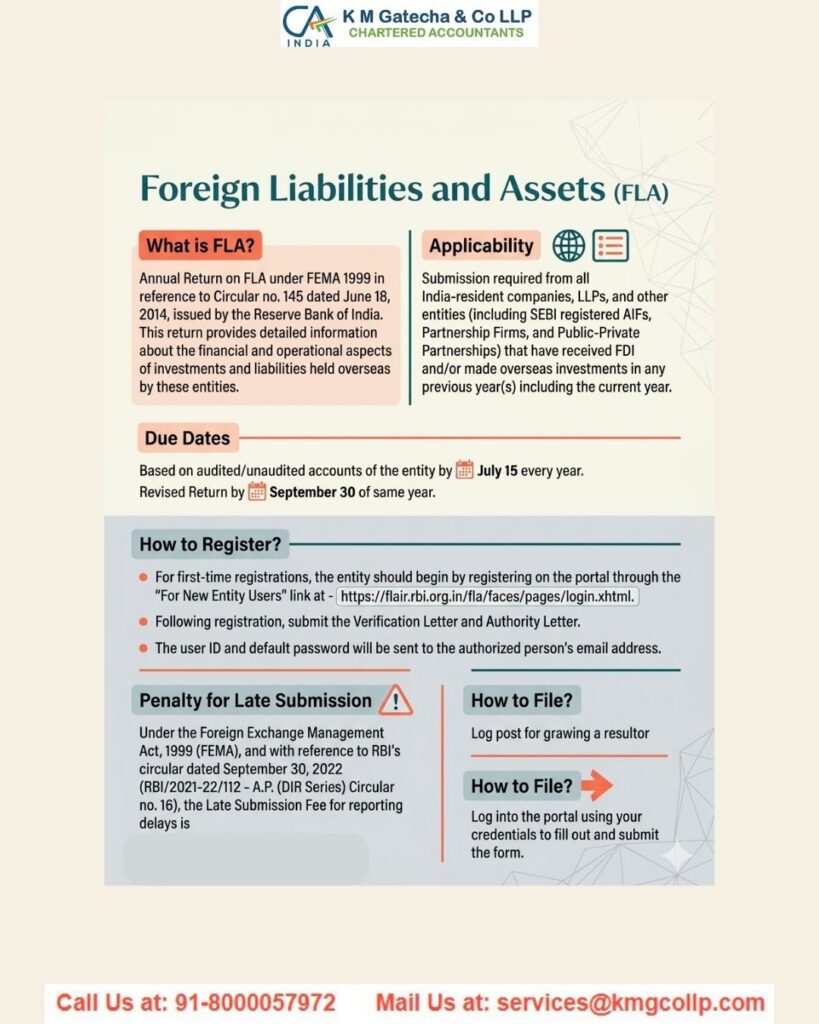
What is the Foreign Liabilities and Assets (FLA) Return?
The Foreign Liabilities and Assets Annual Return is governed under the Foreign Exchange Management Act (FEMA). It is a mandatory filing for businesses that have either:
- Received Foreign Direct Investment (FDI) in India, or
- Made Overseas Direct Investment (ODI) outside India
The return captures information related to foreign assets and liabilities as of 31st March of the reporting financial year.
The due date for filing the FLA Return is 15th July every year. Failure to file the return on time may result in penalties under FEMA.If the financial statements are not audited before the due date, businesses can file the FLA Return using provisional or unaudited financials. Once the accounts are audited, a revised FLA Return must be submitted before 30th September.
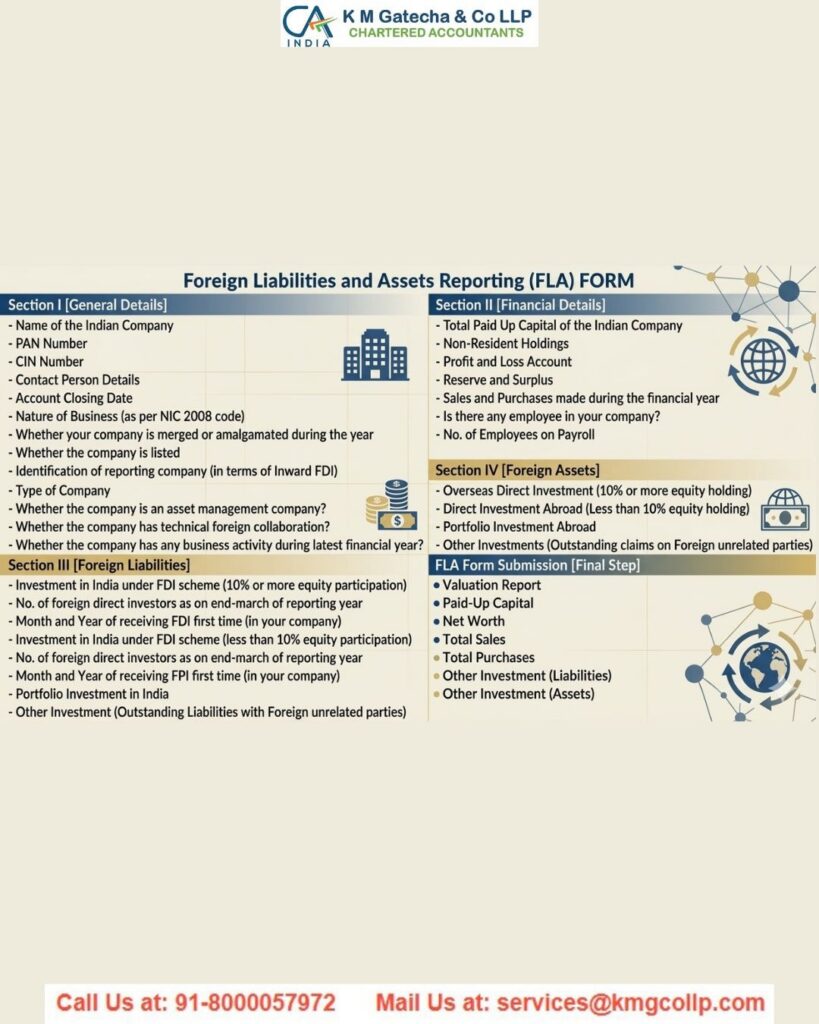
Applicability of FLA Return
The FLA Return applies to the following entities involved in foreign investment activities:
Companies
All companies that have received FDI or invested abroad are required to file the FLA Return.
Limited Liability Partnerships (LLPs)
LLPs with foreign investment transactions or overseas investments must comply with FLA filing requirements.
Other Eligible Entities
The following entities may also need to file the FLA Return:
- SEBI-registered Alternative Investment Funds (AIFs)
- Partnership firms (subject to conditions)
- Public-Private Partnerships (PPPs)
Partnership firms are required to file the FLA Return only if they have outstanding foreign investment as of 31st March of the reporting year. Such firms must obtain a dummy CIN number from RBI solely for FLA filing purposes. If already allotted in previous years, the same dummy CIN can be reused.
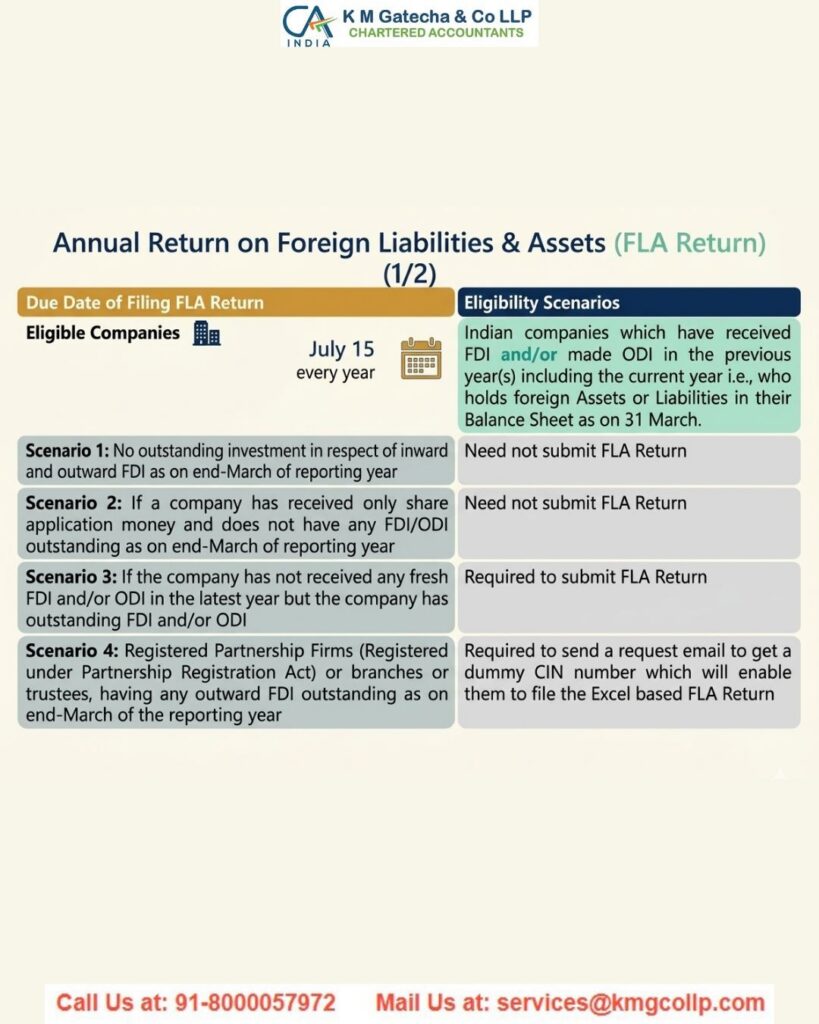
Who Is Exempt from Filing FLA Return?
An entity is generally not required to file the FLA Return under the following situations:
No Foreign Investment
If the business has neither received FDI nor made overseas investments in the current or previous years and has no outstanding foreign assets or liabilities, filing is not required.
Share Application Money Only
Where only share application money has been received from foreign investors and shares have not yet been allotted, FLA filing is not mandatory because such funds are not treated as FDI until allotment.
Transfer of Foreign Shareholding
If all shares held by non-resident investors have been transferred to resident shareholders during the reporting year and no foreign liabilities remain, filing may not be necessary.
Important Note: Even if no fresh FDI or ODI occurred during the year, businesses must still file the FLA Return if there are outstanding foreign investments from earlier years.
Penalty for Missing the FLA Return Deadline
Non-filing of the FLA Return after 15th July is treated as a FEMA violation and may attract penalties imposed by RBI.
Monetary Penalty
The penalty may include:
- Up to three times the amount involved in the violation, where quantifiable, or
- A fixed penalty of ₹2 lakh if the amount cannot be determined.
Daily Fine
In case of continued non-compliance, an additional penalty of ₹5,000 per day may be imposed until the default is corrected.
Compounding Option
The RBI regional office may allow compounding of the offence, which can reduce the overall penalty amount.

How to File FLA Return Online?
Businesses can submit the FLA Return online through the RBI’s FLAIR portal.
Step 1: Register on FLAIR Portal
- Visit the RBI FLAIR portal
- Click on “Registration for New Entity Users”
- Complete the registration form with company details
- Upload required documents such as verification and authorization letters
- Submit the application
Once approved, login credentials including user ID and password will be sent to the registered email.
Step 2: Login and Prepare Return
- Log in to the FLAIR portal using the credentials received
- Download the draft FLA Return form
- Verify and update the financial and investment details carefully
Step 3: Submit FLA Return
- Review the completed return thoroughly
- Submit the final FLA Return online
After successful submission, an acknowledgment will be generated within the portal confirming receipt of the return by RBI.
Disclaimer: The content on this website is for informational purposes only and does not constitute legal, financial, or professional advice. Please consult qualified experts before acting on any information. K M GATECHA & CO LLP accepts no liability for errors, omissions, or outcomes from the use of this content. This site is not an advertisement or solicitation.