Is F&O Income Business Income? Here’s What You Need to Know
Futures and Options (F&O) trading is gaining popularity in India, but many traders are unsure about its tax treatment or mistakenly believe it need not be reported in their Income Tax Return (ITR).
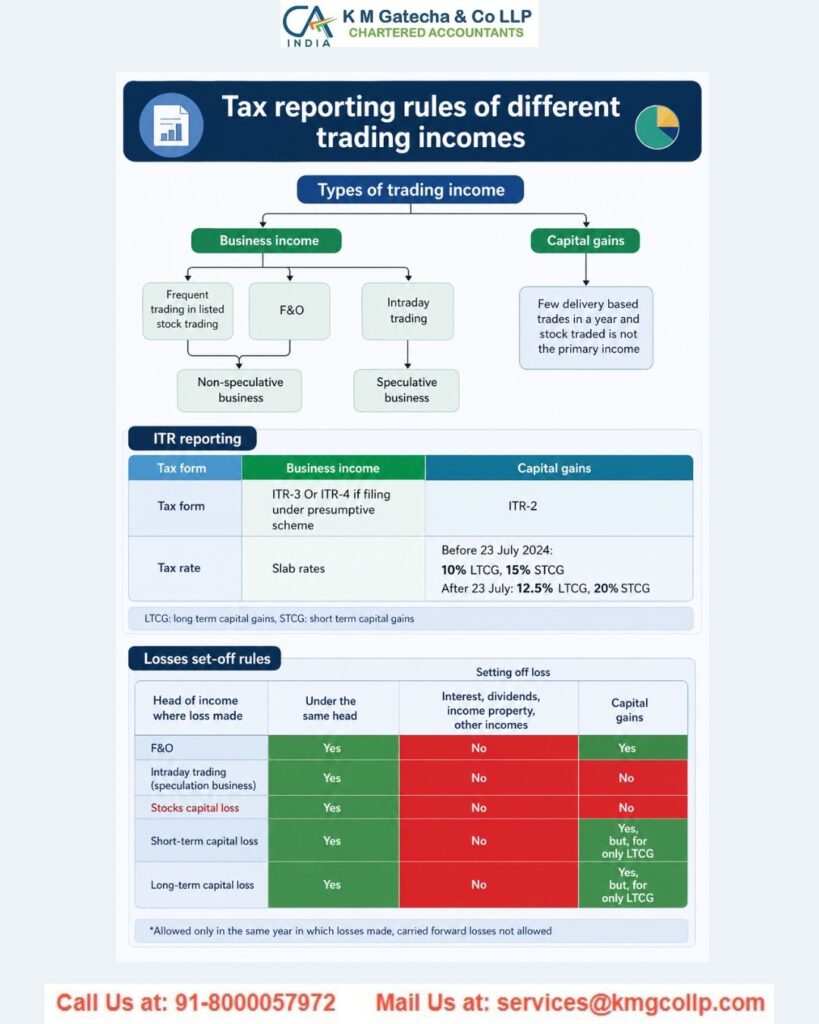
A common question is whether F&O income is treated as capital gains or business income. As per the Income Tax Act, F&O trading is classified as non-speculative business income, meaning all profits and losses must be reported under “Income from Business & Profession.”
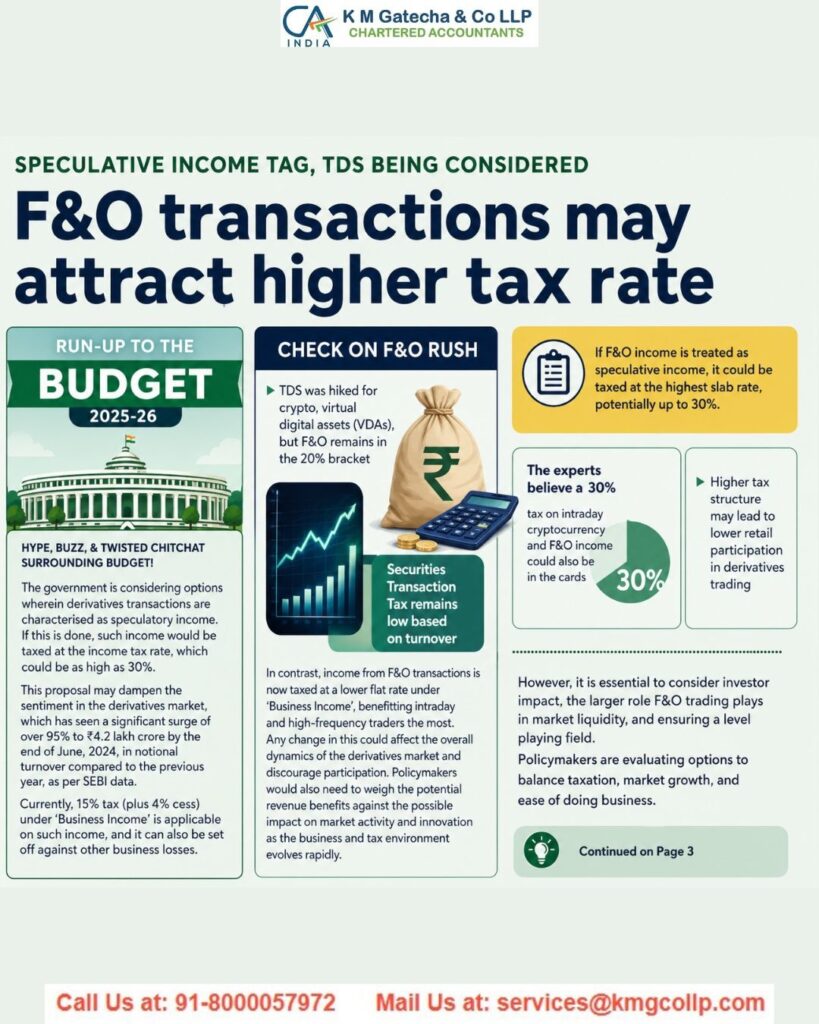
Budget 2026 Updates
- Share buybacks will be taxed as capital gains for all shareholders
- Promoters will be liable for additional buyback tax
These changes will apply from FY 2026-27.
Income Tax Act 2025 Update
The terms “Previous Year” and “Assessment Year” have been replaced with “Tax Year.” For instance, income earned in 2025-26 will be referred to as Tax Year 2025-26. However, FY and AY are still commonly used for clarity.
Is F&O Income Capital Gain or Business Income?
Under Section 43(5), F&O trading is treated as business income. Even if you incur losses, you are still required to file an ITR and report such transactions. Not reporting them may lead to notices from the tax department.
How to Calculate F&O Income
Income is calculated by adding the absolute value of all profits and losses.
For example:
Loss ₹10,000 + Profit ₹20,000 = Turnover ₹30,000
Expenses Allowed as Deductions
You can claim business-related expenses such as:
- Brokerage charges
- Internet and phone bills
- Advisory or consultancy fees
- Software subscriptions
- Employee or support costs
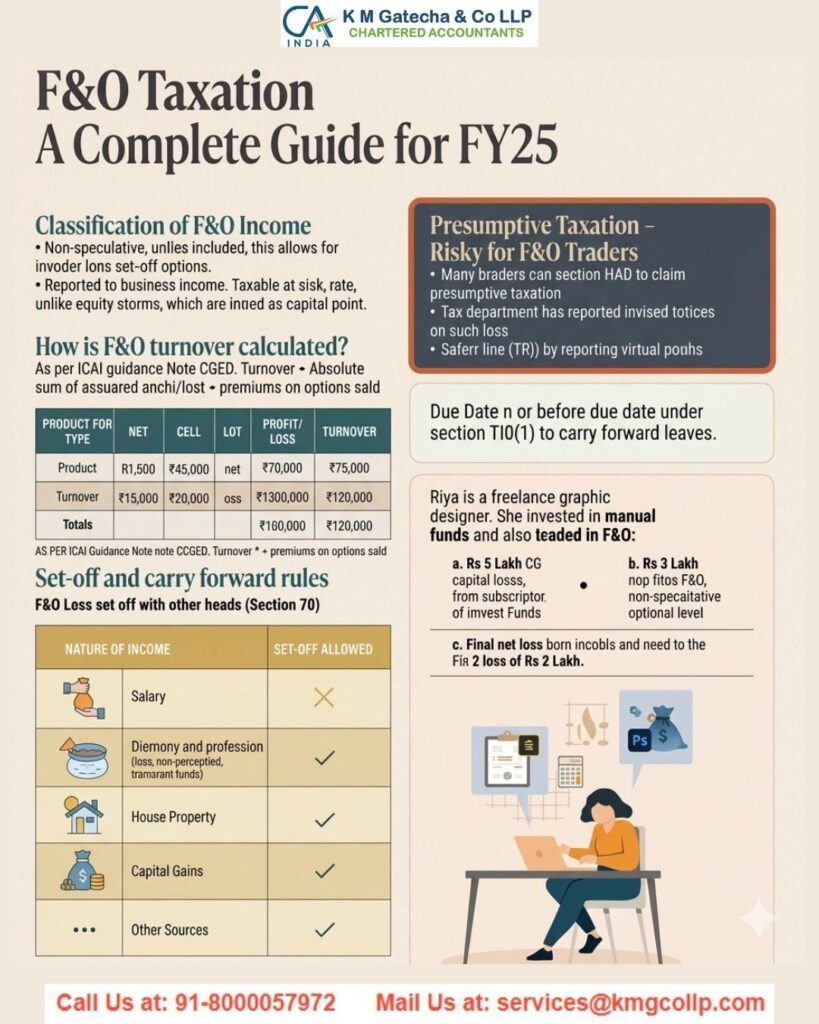
Set-Off and Carry Forward of Losses
F&O losses can be adjusted against any income except salary.
Unadjusted losses can be carried forward for up to 8 years.
Where to Report F&O Income
- ITR-3: For regular business income
- ITR-4: If opting for presumptive taxation
Profits are taxed as per slab rates, while losses can be set off or carried forward.
Books of Accounts Requirement
Maintaining books is mandatory if:
- Income exceeds ₹2.5 lakh, or
- Turnover exceeds ₹25 lakh in any of the last 3 years
Proper records like trading statements, bank statements, and expense proofs must be maintained.
Tax Audit Applicability (Section 44AB)
- Up to ₹3 crore turnover: Audit required if profit is below 6% and presumptive scheme not opted
- ₹3 crore to ₹10 crore: No audit if 95% transactions are digital
- Above ₹10 crore: Audit is compulsory
Final Note
F&O trading is treated as a business activity, so both profits and losses must be reported in your ITR. Understanding these rules is important to avoid penalties and ensure proper compliance.
Disclaimer: The content on this website is for informational purposes only and does not constitute legal, financial, or professional advice. Please consult qualified experts before acting on any information. K M GATECHA & CO LLP accepts no liability for errors, omissions, or outcomes from the use of this content. This site is not an advertisement or solicitation.