
Although Non-Resident Indians (NRIs) live abroad, many continue to maintain strong financial ties with India. These connections often involve family responsibilities, inherited properties, rental income, investments, or long-term financial planning. In many situations, NRIs may need to transfer money either to India or from India to their overseas accounts.
For example, an NRI may send money to India for family maintenance, property expenses, or investments. Similarly, they may want to transfer income earned in India back to their foreign bank account for overseas investments, property purchases, or personal financial needs. Understanding the rules governing fund transfers is essential to avoid compliance issues and delays.
This guide explains the key financial provisions related to NRI fund repatriation and how NRIs can efficiently manage cross-border fund transfers.
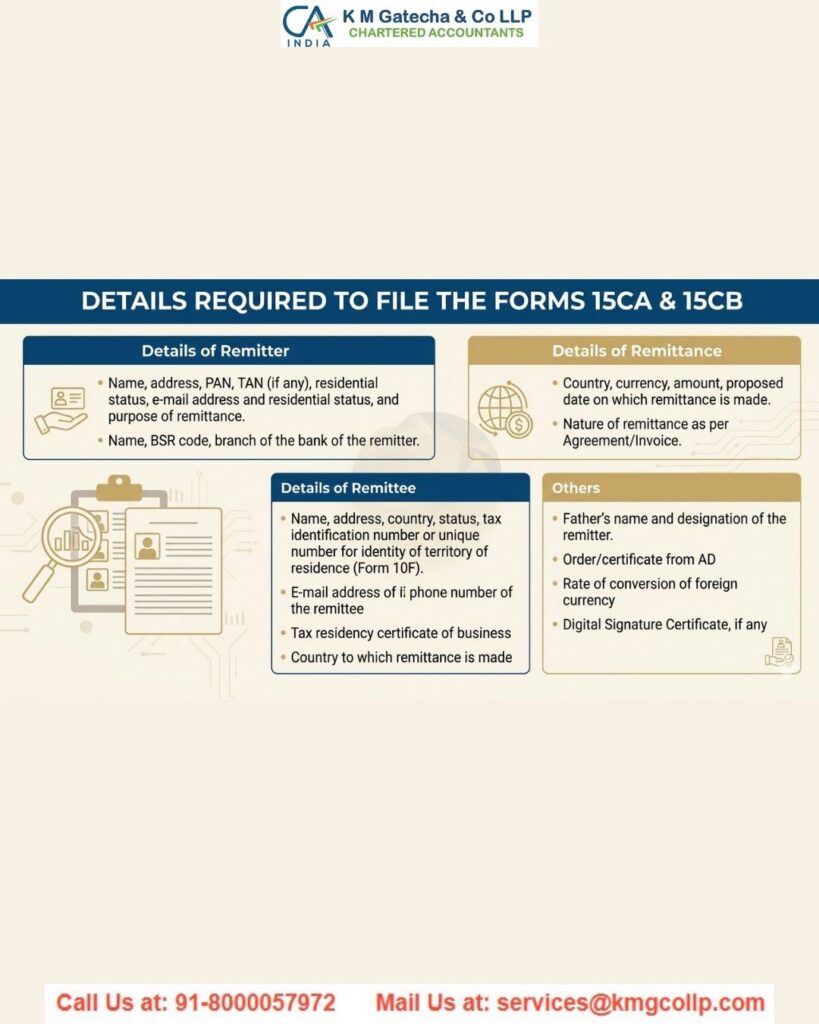
What is NRI Fund Repatriation?
NRI fund repatriation refers to the transfer of money between an NRI’s Indian bank account and their overseas bank account. It generally includes two types of fund movement:
Inward Remittance
This refers to transferring money from a foreign country to an NRI bank account in India. NRIs commonly use inward remittances to support family members, invest in Indian assets, maintain property, or manage local expenses.
Outward Remittance
Outward remittance refers to transferring funds held in India to an overseas bank account. NRIs often repatriate money earned in India, such as rental income, dividends, pensions, or proceeds from investments.
This two-way transfer mechanism allows NRIs to manage finances across different countries and maintain liquidity wherever needed.
Why is NRI Fund Repatriation Important?
Fund repatriation plays a vital role in helping NRIs manage their global financial commitments efficiently.
Easy Access to Funds
NRIs can access funds held in India whenever required for personal, business, retirement, or emergency purposes abroad.
Better Financial Planning
Repatriation allows NRIs to integrate their Indian earnings and investments into their global financial planning strategy.
Greater Investment Flexibility
Funds earned or held in India can be repatriated and invested in international markets or business opportunities that align with long-term financial goals.
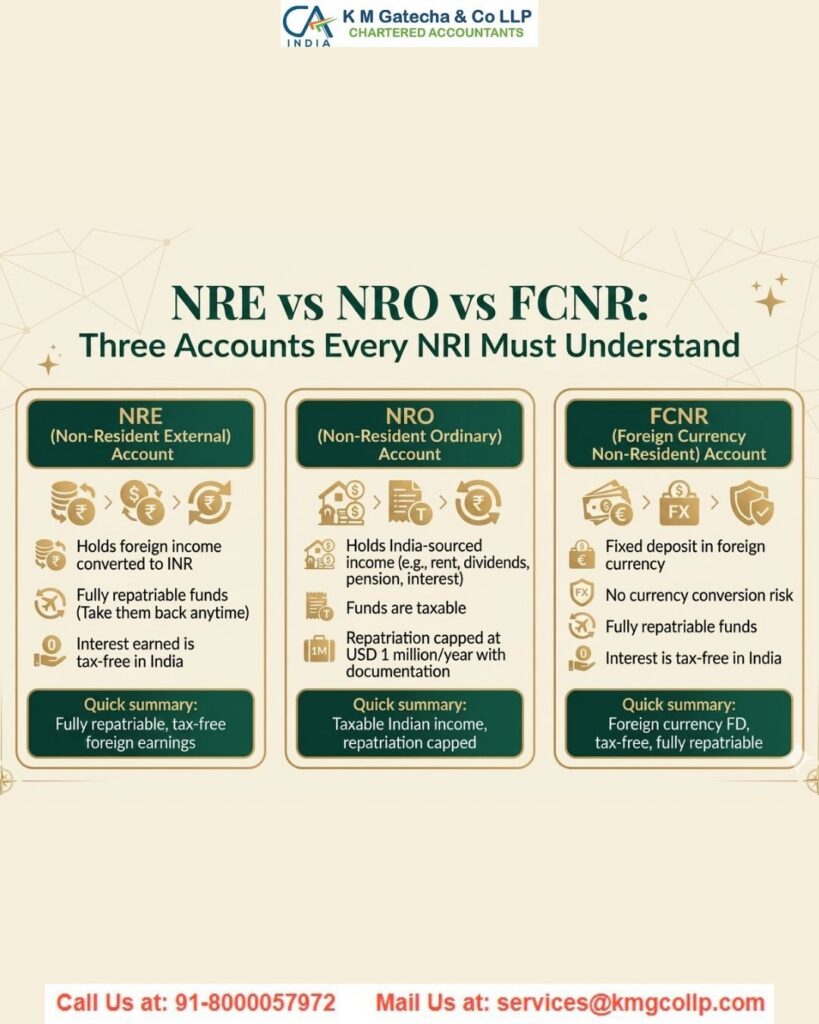
Types of Bank Accounts for NRIs
Selecting the right bank account is crucial for smooth fund transfers and regulatory compliance. NRIs generally operate through two major account types: NRE Account and NRO Account.
Non-Resident External (NRE) Account
An NRE account is designed primarily for managing foreign income earned outside India.
Key Features of NRE Account
- Used for depositing overseas earnings in foreign currency
- Deposits are maintained in Indian Rupees after conversion
- Full repatriation of both principal and interest is allowed
- No restrictions on transferring money back abroad
- Interest earned is exempt from Indian income tax
An NRE account is ideal for NRIs who want complete flexibility in moving overseas earnings between India and their country of residence.

Non-Resident Ordinary (NRO) Account
An NRO account is mainly used for managing income generated in India.
This may include:
- Rental income from property
- Pension income
- Interest from fixed deposits
- Dividends from Indian investments
- Other local earnings in India
Key Features of NRO Account
- Deposits can be made in Indian Rupees and foreign currency
- Funds can be repatriated up to USD 1 million per financial year
- Repatriation is subject to applicable taxes and documentation
- Tax Deducted at Source (TDS) may apply on income earned in India
Unlike an NRE account, outward remittance from an NRO account requires compliance with RBI guidelines and tax regulations.
Difference Between NRE and NRO Account for Repatriation
| Particulars | NRE Account | NRO Account |
| Source of Income | Foreign earnings | Income earned in India |
| Repatriation Limit | Fully repatriable | Up to USD 1 million per financial year |
| Tax on Interest | Tax-free in India | Taxable in India |
| Currency | Maintained in INR | INR and foreign deposits |
Important Points NRIs Should Remember
- Choose an NRE account for overseas earnings and unrestricted fund transfer.
- Use an NRO account to manage income earned in India.
- Tax compliance is important before repatriating funds from an NRO account.
- Maintain proper documentation to avoid delays in remittance approval.
- Understand RBI and FEMA guidelines applicable to foreign fund transfers.

Key Financial Rules for NRI Fund Repatriation
The Foreign Exchange Management Act (FEMA) governs how NRIs can transfer money between India and their country of residence. It lays down specific guidelines to ensure that funds being repatriated are legitimate and comply with applicable tax rules. Below is a clear overview of the major provisions related to NRI fund repatriation.
Key Financial Rules for NRI Fund Repatriation
The Foreign Exchange Management Act (FEMA) governs how NRIs can transfer money between India and their country of residence. It lays down specific guidelines to ensure that funds being repatriated are legitimate and comply with applicable tax rules. Below is a clear overview of the major provisions related to NRI fund repatriation.
FEMA Rules and Repatriation Limits
NRO Account Repatriation Limit
Under FEMA regulations, NRIs can repatriate up to USD 1 million per financial year from an NRO account when the funds are held in Indian Rupees. This limit applies to the principal amount and covers eligible income such as rent, dividends, pension, or proceeds from asset sales.
Tax Liability on Repatriated Funds
Money transferred from an NRO account is generally taxable in India at the applicable rates. In many cases, TDS may apply before repatriation. However, NRIs can claim relief through Double Taxation Avoidance Agreements (DTAA) if India has a tax treaty with their country of residence, helping reduce the chances of paying tax twice on the same income.
Repatriation Benefits for Other NRI Accounts
NRE Account
Funds in an NRE account, including interest earned, are fully repatriable without restrictions. Since these accounts are maintained using overseas earnings, both principal and interest are usually exempt from Indian income tax.
FCNR (B) Account
Foreign Currency Non-Resident (Bank) accounts allow NRIs to hold deposits in foreign currencies. These deposits, along with interest earned, can be repatriated freely. Since the money remains in foreign currency, NRIs also avoid currency conversion risks to a large extent.
Investment Options Offering Repatriation Benefits
NRIs interested in investing in India can explore several avenues that offer repatriation flexibility:
Equity Investments Through PIS
NRIs can invest in shares listed on Indian stock exchanges through the Portfolio Investment Scheme (PIS). Investments made under this route generally allow full repatriation of both invested capital and capital gains, subject to regulatory compliance.
Mutual Funds
Many mutual fund schemes are available for NRIs and may provide repatriation benefits. Depending on the investment route chosen, both returns and redemption proceeds can be transferred overseas.
Government Securities
Investment in government bonds and treasury instruments provides a relatively secure option for NRIs. On maturity, both principal and interest are generally repatriable.
Real Estate Investments
NRIs can invest in residential and commercial properties in India, except agricultural land, plantations, and farmhouses. Rental income earned can be repatriated after payment of taxes, while sale proceeds may also be transferred abroad after complying with applicable tax provisions.
Specialized Investment Products
NRIs may also consider products such as Masala Bonds and select overseas investment structures that are designed with repatriation flexibility and global investment needs in mind.
Before making investment or repatriation decisions, NRIs should evaluate FEMA provisions, tax implications, and documentation requirements carefully to ensure smooth fund transfers and compliance with Indian regulations.
Disclaimer: The content on this website is for informational purposes only and does not constitute legal, financial, or professional advice. Please consult qualified experts before acting on any information. K M GATECHA & CO LLP accepts no liability for errors, omissions, or outcomes from the use of this content. This site is not an advertisement or solicitation.