
NRO Account Taxation in India: Interest, TDS & ITR Filing Rules
Non-Resident Indians (NRIs) can continue to maintain bank accounts in India even after moving abroad. Among the available options, the Non-Resident Ordinary (NRO) Account is commonly used to manage income earned in India such as rent, pension, dividends, and interest income.
One of the most common questions NRIs have is whether interest earned from an NRO account is taxable in India and whether filing an Income Tax Return (ITR) is mandatory. The answer depends on the amount and type of income earned in India.
Types of NRI Accounts in India
NRIs can open the following types of bank accounts in India:
- Foreign Currency Non-Resident (FCNR) Account
- Non-Resident External (NRE) Account
- Non-Resident Ordinary (NRO) Account
The tax treatment of these accounts differs based on the account type and the interest earned.
FCNR and NRE Accounts
Interest earned on FCNR and NRE accounts is tax-free in India as long as the account holder qualifies as a Non-Resident under FEMA guidelines.
However, once the account holder becomes a resident in India, interest earned on these accounts becomes taxable.
What is an NRO Account?
An NRO (Non-Resident Ordinary) Account is a rupee-denominated bank account designed for NRIs, Persons of Indian Origin (PIOs), and Overseas Citizens of India (OCIs) to manage income earned in India.
This account helps NRIs receive and manage:
- Rental income
- Pension
- Dividends
- Interest income
- Other Indian earnings
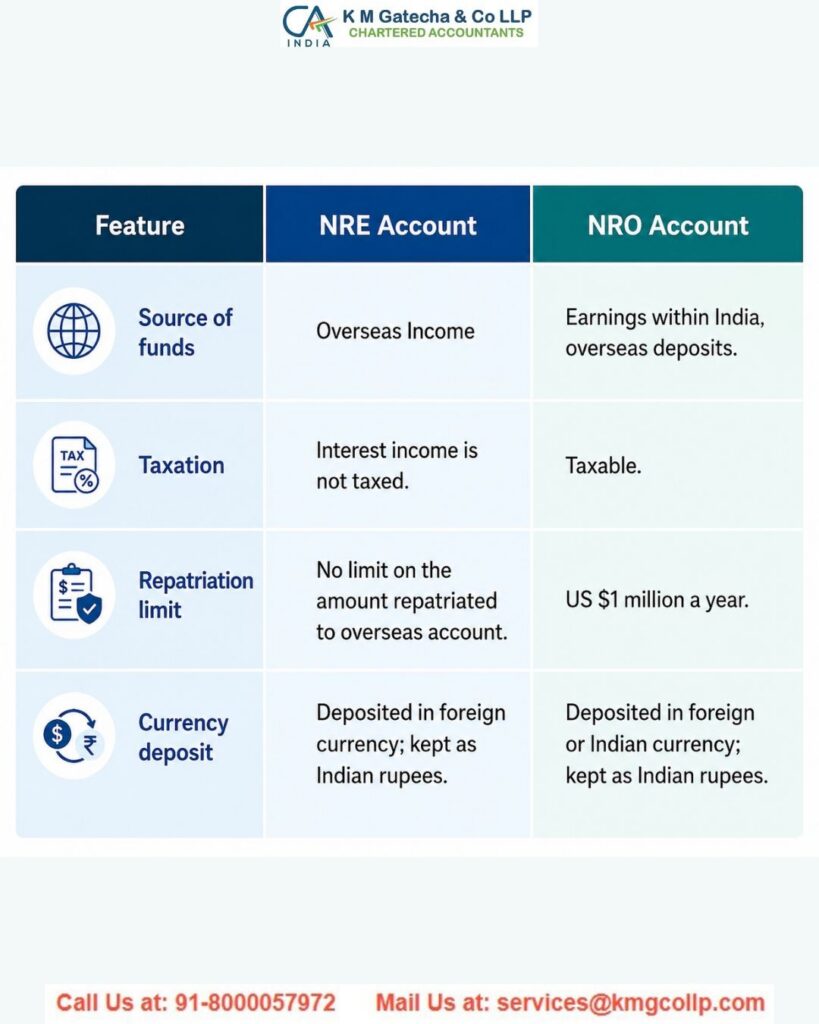
Funds can be deposited in Indian Rupees or foreign currency, which is converted into INR.
Eligibility for Opening an NRO Account
Any individual who qualifies as an NRI under FEMA (Foreign Exchange Management Act) guidelines can open an NRO account in India.
Key Features of an NRO Account
- Deposits can be made in INR or foreign currency.
- Withdrawals are permitted in INR.
- Interest earned is taxable in India.
- Suitable for managing Indian income and expenses.
- Can be opened individually or jointly.
Benefits of an NRO Account
Manage Indian Income
An NRO account allows NRIs to conveniently manage income generated in India.
Earn Interest
Deposits in the account earn interest, although the interest is taxable in India.
Investment Opportunities
NRIs can invest through the NRO account in:
- Fixed Deposits
- Mutual Funds
- Other investment instruments
Flexible Banking
NRO accounts can be opened jointly with another NRI or a resident Indian family member.
Easy Transactions
The account enables:
- Bill payments
- Fund transfers
- Banking transactions in India
Repatriation Facility
NRIs can repatriate funds abroad subject to FEMA rules and limits.
Tax Compliance
Banks deduct TDS automatically on taxable interest income, helping NRIs comply with Indian tax laws.
Documents Required for Opening an NRO Account
The following documents are generally required:
- Valid Passport
- Valid VISA / Resident ID / OCI Card
- Overseas address proof
- Overseas bank statement or NRE account statement
- PAN Card
- Passport-sized photographs
- Proof of Indian address (if applicable)
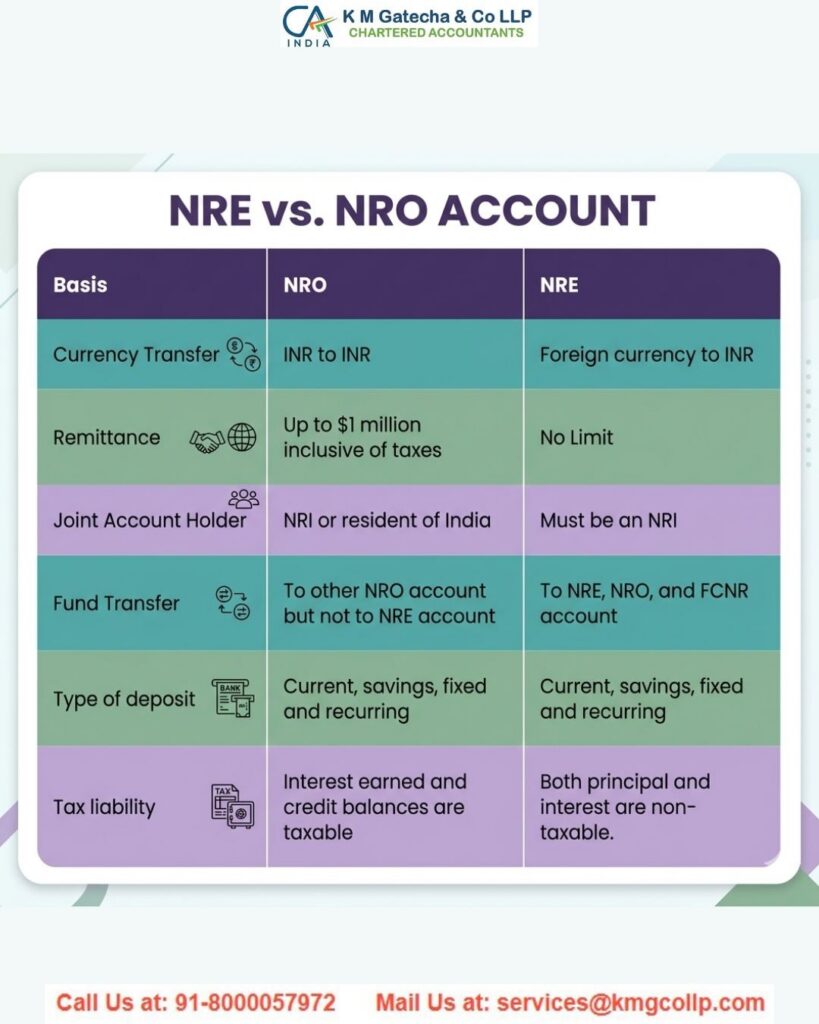
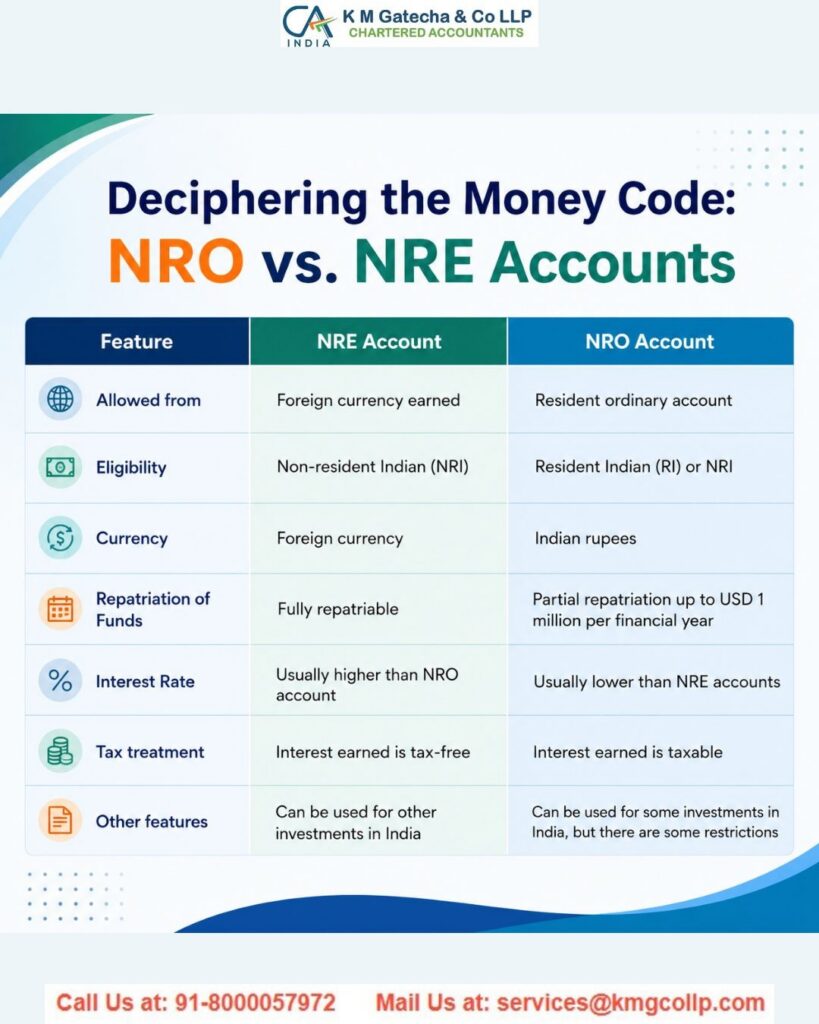
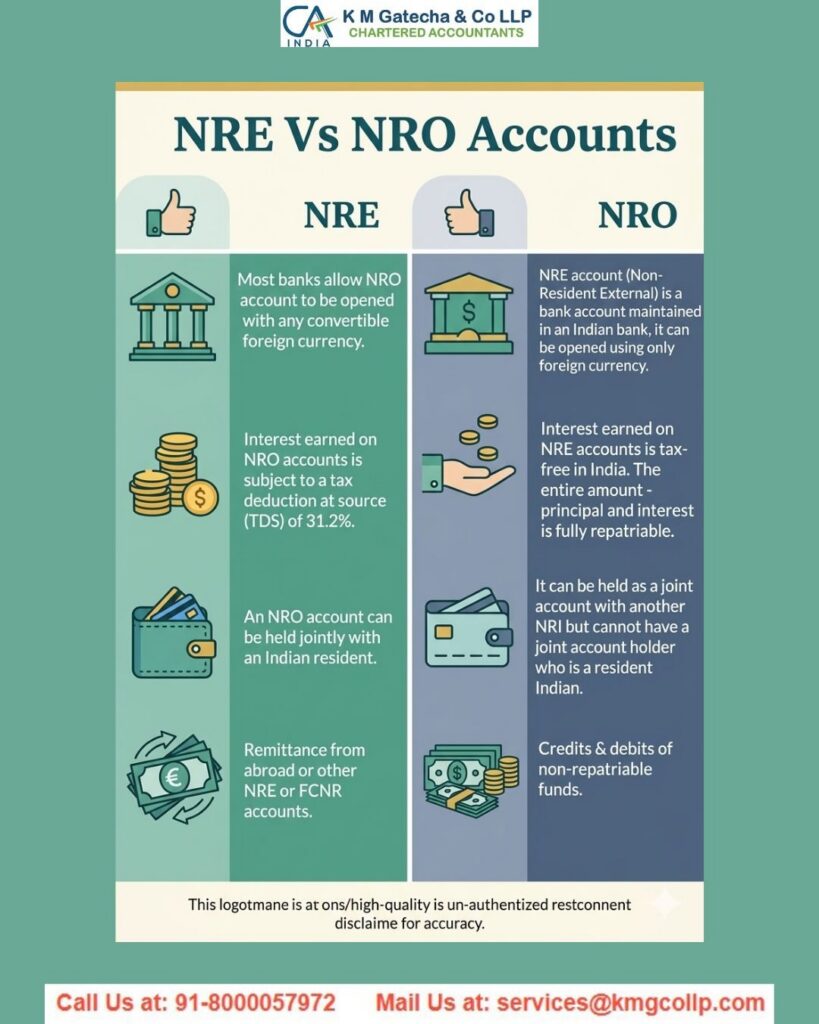
NRO vs NRE Account
| Feature | NRO Account | NRE Account |
| Purpose | Manage income earned in India | Park foreign earnings in India |
| Taxation | Interest is taxable | Interest is tax-free |
| Repatriation | Limited | Fully repatriable |
| Currency | INR | INR |
Restrictions of an NRO Account
Limited Repatriation
NRIs can repatriate up to USD 1 million per financial year from an NRO account, subject to documentation and tax compliance.
Tax on Interest
Interest earned on NRO accounts is taxable in India and subject to TDS.
Compliance Requirements
NRIs may need to file income tax returns and maintain proper records for tax purposes.
Is Interest Earned on NRO Account Taxable in India?
Yes, interest earned on an NRO account is fully taxable in India.
Banks deduct Tax Deducted at Source (TDS) at:
- 30% plus surcharge and cess
This makes India the source country for taxation of such income.
Deductions Available to NRIs
NRIs opting for the old tax regime can claim deductions under various sections of the Income Tax Act.
Deductions Allowed
Section 80C
- LIC Premium
- Tuition Fees
- Principal repayment of home loan
- ULIP
- ELSS
Section 80D
- Health insurance premium
Section 80E
- Interest on education loan
Section 80G
- Eligible donations
Section 80TTA
- Savings bank account interest
Deductions Not Allowed
NRIs cannot claim deductions for:
- New PPF accounts
- NSC investments
- Senior Citizen Savings Scheme
- Rajiv Gandhi Equity Saving Scheme
- Certain disability-related deductions
Do NRIs Need to File Income Tax Returns for NRO Interest?
Yes, NRIs earning interest income from an NRO account may need to file an Income Tax Return (ITR) in India.
Even though banks deduct TDS, filing an ITR becomes necessary if:
- Total income in India exceeds the basic exemption limit
- Refund of excess TDS is to be claimed
- The NRI has additional Indian income such as:
- Rental income
- Capital gains
- Pension
- Other taxable income
Basic Exemption Limit
Under the:
- Old tax regime: ₹2.5 lakh for individuals below 60 years
- New tax regime: ₹4 lakh
If the total taxable income exceeds these limits, filing an ITR is mandatory.
Which ITR Form Should NRIs Use?
Generally, NRIs earning interest income from NRO accounts should file:
- ITR-2
This form is suitable for individuals having:
- Income from salary
- House property
- Capital gains
- Income from other sources
Income Tax Deductions Available to NRIs in India
Yes, Non-Resident Indians (NRIs) can claim several income tax deductions in India if they opt for the old tax regime. These deductions help reduce taxable income and lower overall tax liability.
Below are the deductions that NRIs can and cannot claim under the Income Tax Act.
| Deductions Allowed | Deductions Not Allowed |
| Section 80C | Section 80C |
| LIC Premium | Investment in Public Provident Fund (PPF)* |
| Tuition Fees | Investment in National Savings Certificate (NSC) |
| Principal repayment of Home Loan | Post Office 5-Year Deposit Scheme |
| Unit Linked Insurance Plan (ULIP) | Senior Citizen Savings Scheme |
| Equity Linked Saving Scheme (ELSS) | |
| Section 80D | Section 80CCG |
| Medical Insurance Premium | Investment in Rajiv Gandhi Equity Saving Scheme (RGESS) |
| Section 80E | Section 80DD |
| Interest paid on Education Loan | Deduction for maintenance and medical treatment of a dependent with disability |
| Section 80G | Section 80DDB |
| Eligible Donations | Deduction for medical treatment of specified diseases |
| Section 80TTA | Section 80U |
| Interest on Savings Bank Account | Deduction for taxpayers suffering from disability |
*NRIs cannot open a new PPF account. However, an existing PPF account opened while being a resident can be continued till maturity.
NRIs should carefully evaluate eligible deductions before filing their Income Tax Return (ITR) to maximize tax savings while ensuring compliance with Indian tax laws.
Important Points NRIs Should Remember
- Interest on NRO accounts is taxable in India.
- TDS is deducted at a high rate of 30% plus cess and surcharge.
- Filing ITR helps claim refunds if excess TDS is deducted.
- NRE and FCNR account interest remains tax-free for NRIs.
- Proper tax planning can help reduce tax liability under DTAA provisions.
Disclaimer: The content on this website is for informational purposes only and does not constitute legal, financial, or professional advice. Please consult qualified experts before acting on any information. K M GATECHA & CO LLP accepts no liability for errors, omissions, or outcomes from the use of this content. This site is not an advertisement or solicitation.