

182 Days Tax Rule in India for NRIs
NRIs are individuals of Indian origin who live outside India for more than half of the financial year for purposes such as employment, education, business, or professional activities and intend to stay abroad for an uncertain duration. To qualify as an NRI, certain conditions must be fulfilled. One of the most commonly discussed conditions is the 182-day rule. This article explains the meaning of the 182-day rule and how it is calculated for NRIs in India.
Who is an NRI?
A Non-Resident Indian (NRI) is an Indian citizen who resides outside India. NRIs are also referred to as Overseas Indians because they stay abroad for employment, business, studies, or other long-term reasons. The Foreign Exchange Management Act (FEMA) and the Income Tax Act define NRI status differently for legal and taxation purposes.
Under FEMA, an individual is treated as an NRI if they leave India or stay outside India for employment, business, vocation, or any purpose indicating an indefinite stay abroad. This status affects their banking options, investments, and taxation in India, including eligibility for NRE, NRO, and FCNR accounts.
The Income Tax Act, however, determines NRI status based on the number of days an individual stays in India during a financial year. Therefore, a person’s residential status under FEMA may differ from their status under the Income Tax Act.
As per the Income Tax Act, residential status is determined according to the physical presence of an individual in India during a financial year and preceding years.
What is the 182 Days Tax Rule in India?
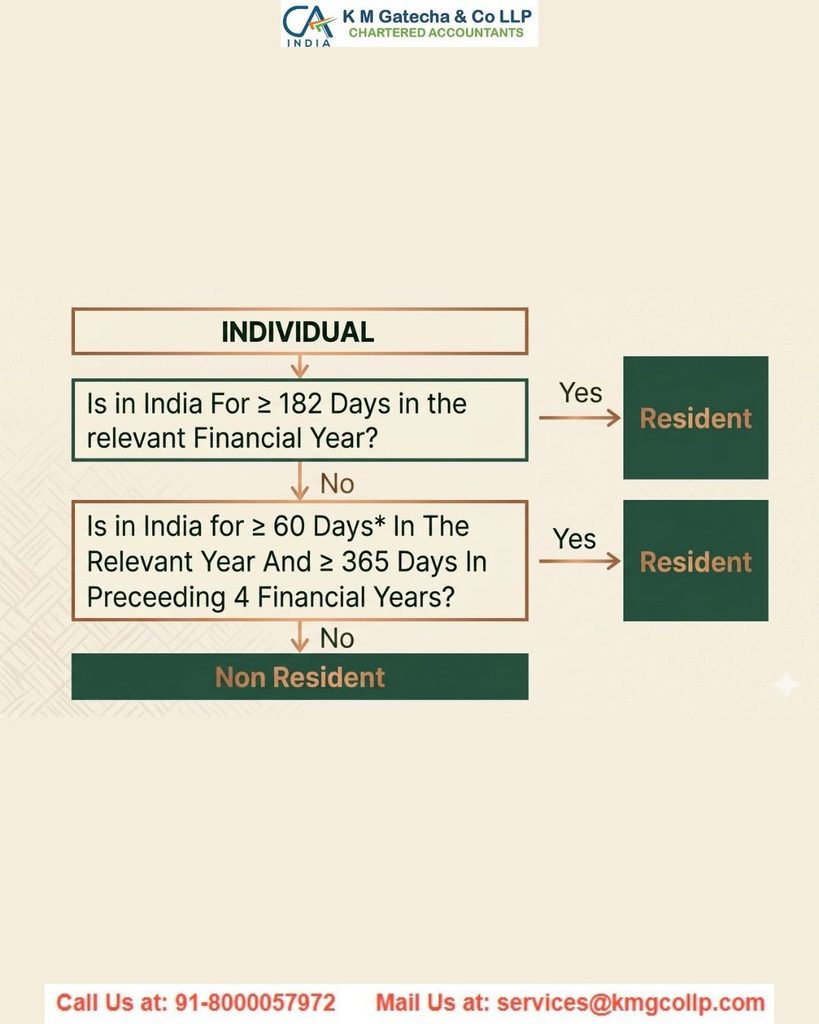
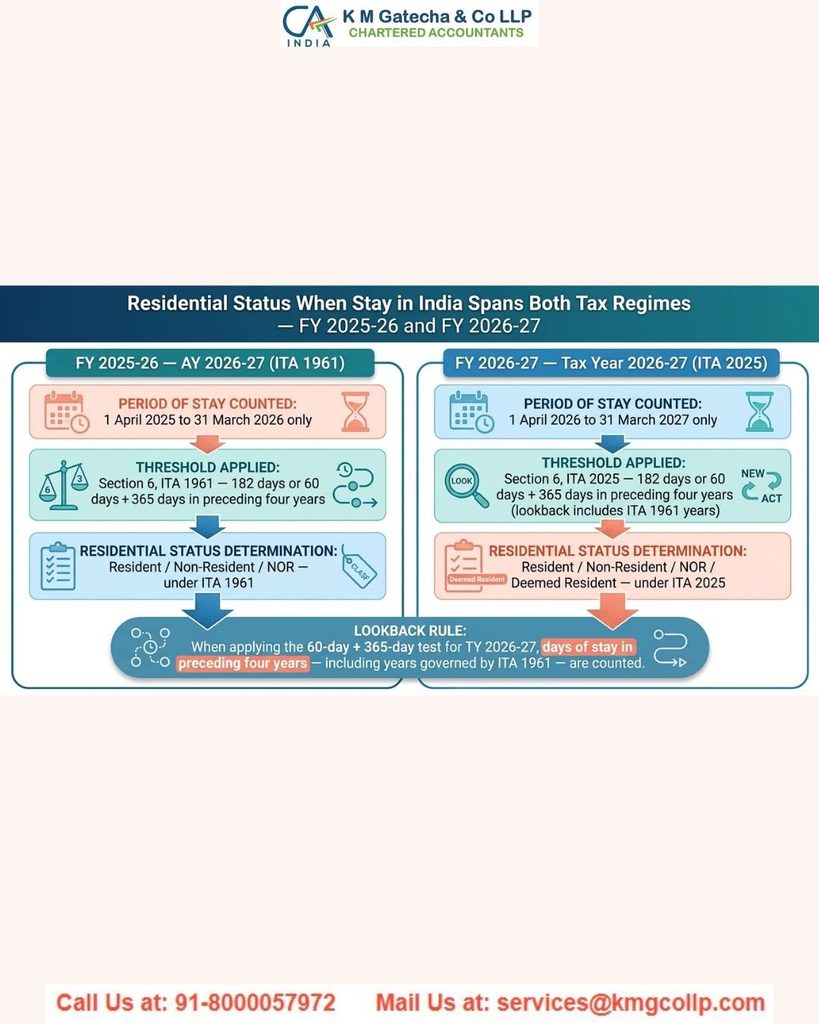
The residential status of an individual is determined based on the number of days spent in India during the current financial year and previous years. The following conditions are used to determine whether an individual qualifies as an NRI:
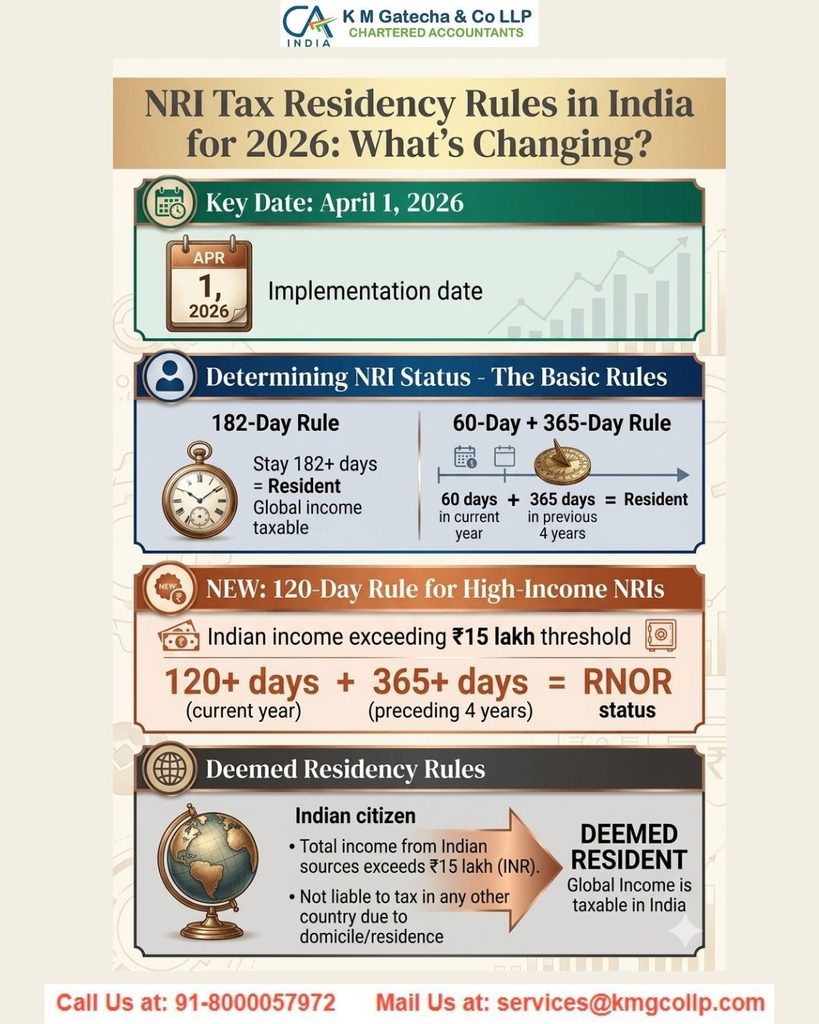
- An individual who stays in India for 182 days or more during the relevant financial year is considered a resident.
- A person is also treated as a resident if they stay in India for 60 days or more during the current financial year and 365 days or more during the previous four financial years.
- The deemed residency rule applies to Indian citizens earning more than ₹15 lakh from Indian sources, excluding foreign income, if they are not liable to tax in any other country due to domicile or residence.
- The 60-day condition is extended to 182 days for Indian citizens leaving India for employment abroad.
- For Indian citizens or Persons of Indian Origin (PIOs) visiting India, if their Indian income exceeds ₹15 lakh, the 60-day limit becomes 120 days. If the income is up to ₹15 lakh, the limit extends to 182 days.
- The deemed residency rule and 120-day provision became applicable from FY 2020-21 onward.
Note: The New Income Tax Bill replaced the phrase “for the purpose of employment outside India” with “for employment outside India.” Because of this change, freelancers, self-employed professionals, and job seekers may no longer qualify for the relaxed residency conditions.
Benefits Available to NRIs in India
NRI Quota
Educational institutions in India reserve specific seats for NRIs, OCIs, and PIOs in courses such as engineering, law, medicine, and management.
Government Reservations
Certain government-related opportunities and reserved seats are available for NRIs.
Real Estate Investment
NRIs are allowed to purchase property in India while complying with FEMA regulations.
Voting Rights
NRIs can vote in local, state, and national elections in India.
Tax Benefits
NRIs can claim deductions available to residents, including deductions for life insurance premiums, ULIPs, children’s tuition fees, ELSS investments up to ₹1.5 lakh, and deductions under Sections 80D, 80G, 80TTA, 54EC, and 54.
Why is Determining Residential Status Important?
A Non-Resident is taxed only on income earned or received in India or income deemed to accrue in India. Different taxation rules apply to various income sources such as dividends and capital gains.
Determining residential status correctly is important for complying with Indian tax laws. Residents are taxed on their global income, whereas NRIs are taxed only on India-sourced income. Incorrect classification may result in tax complications and additional liabilities.
Tax treaties between India and other countries may override provisions of the Income Tax Act in certain cases to prevent double taxation. Therefore, understanding tax treaty implications and residential status is important.
The Income Tax Act also contains provisions for determining the residential status of companies and firms. A company’s status depends on its place of incorporation and management control, while a firm’s status depends on the residential status of its partners.
Residential status is mainly based on physical presence in India during the financial year and the previous ten years. Since NRIs are taxed differently from residents, understanding these rules is essential for tax compliance.
How to Calculate 182 Days for NRI?
To calculate the number of days spent in India, every day of physical presence in India during the relevant financial year must be counted, including the date of arrival and departure.
For example, if an individual arrives in India on July 1, 2023, and leaves on December 31, 2023, the total stay in India will be 184 days, including both dates. In such a case, the individual will be considered a Resident Indian for tax purposes.
Determining NRI status can sometimes be complex because it depends on multiple factors. Individuals who find it difficult to determine their residential status for Income Tax Return filing may consider seeking professional assistance for proper tax compliance.
ITR filing for FY 2023-24 is currently ongoing. Taxpayers who have not yet filed their returns should complete the process before the deadline to avoid penalties and compliance issues.
Disclaimer: The content on this website is for informational purposes only and does not constitute legal, financial, or professional advice. Please consult qualified experts before acting on any information. K M GATECHA & CO LLP accepts no liability for errors, omissions, or outcomes from the use of this content. This site is not an advertisement or solicitation.
