

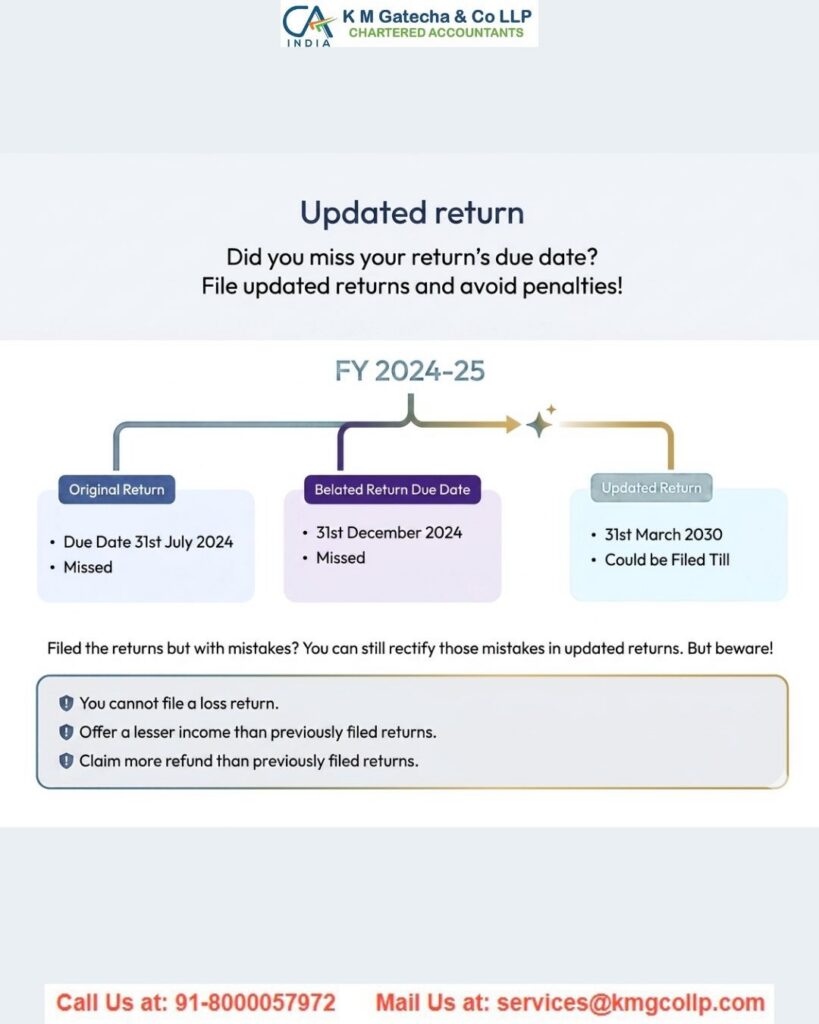
The concept of ITR-U, also known as the Updated Return, was introduced in the Union Budget 2022 to help taxpayers correct mistakes made while filing their Income Tax Return or to provide another opportunity to those who missed the belated return deadline.
The ITR-U form acts as a relief for taxpayers who either failed to file their ITR or submitted incorrect or incomplete information in their earlier returns. Under Section 139(8A) of the Income Tax Act, taxpayers are allowed to update their ITR within four years from the end of the relevant assessment year. While filing an updated return, taxpayers must provide valid reasons such as non-filing of the original return, incorrect income reporting, selection of the wrong income head, or incorrect reduction of carried forward losses.
What is ITR-U or Updated Return?
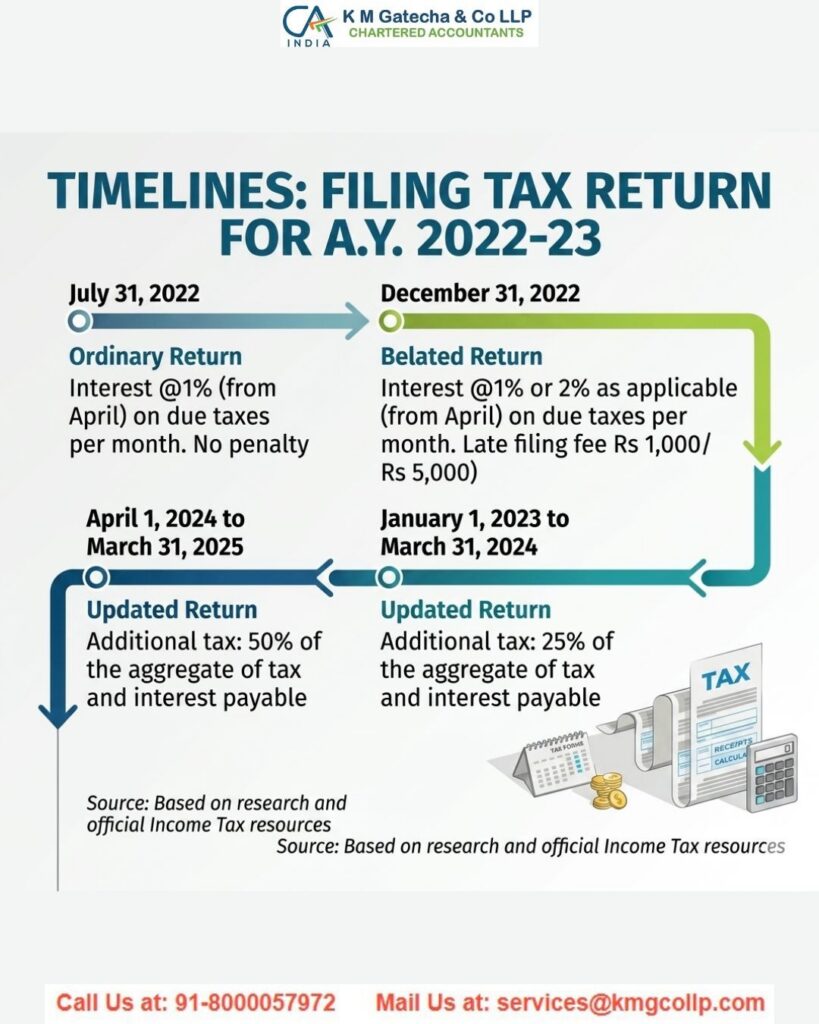
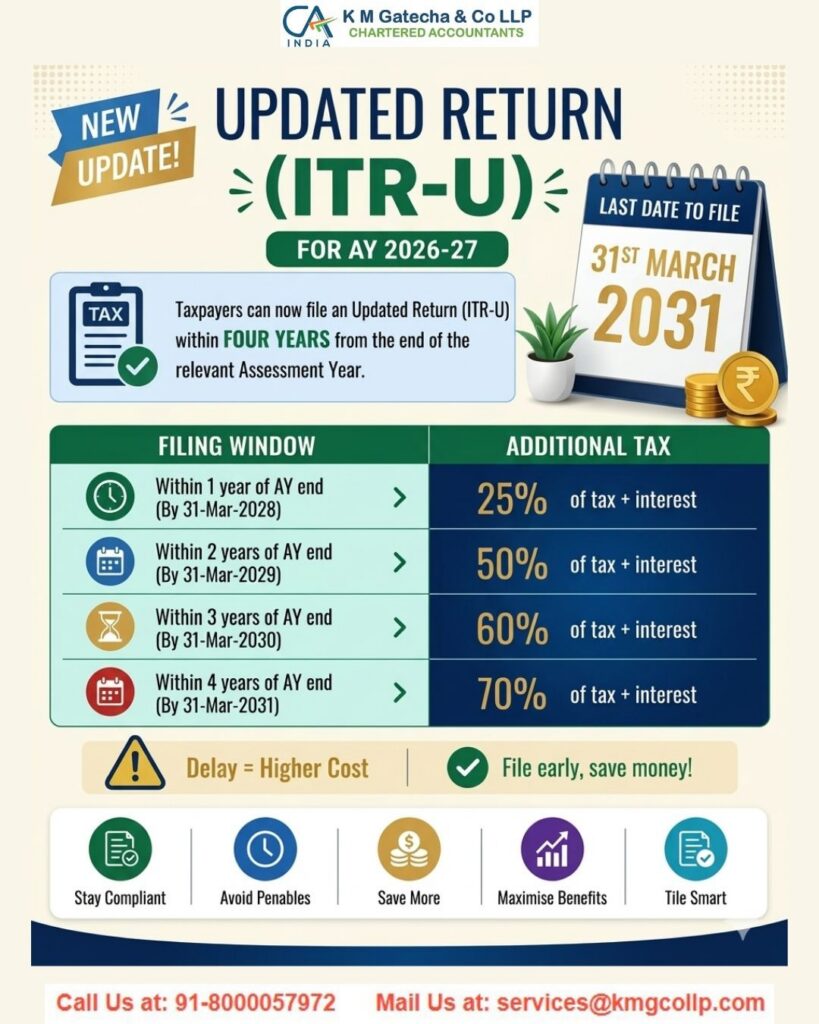
ITR-U, or Updated Income Tax Return, is a facility provided to taxpayers who did not file their return earlier or reported incorrect or omitted income in previous returns. This form enables taxpayers to rectify errors or omissions within four years, as announced in Budget 2025, from the end of the applicable assessment year.
For example, if you missed filing your ITR for AY 2022-23 (FY 2021-22), the final date to submit an updated return is 31st March 2027. Missing this opportunity may lead to legal consequences.
A taxpayer can file ITR-U whether they have already filed an original, revised, or belated return, or have not filed any return at all for that financial year. Filing of ITR-U for AY 2024-25 started from 1st January 2025.
Please note that an updated return cannot be filed if a notice under Section 148A has been issued after 36 months from the end of the relevant assessment year. However, if an order under Section 148A(3) states that no notice under Section 148 is required, the taxpayer may still file an updated return within 48 months from the end of the relevant assessment year.
Who Can File Form ITR-U?
Any taxpayer can file an updated return under Section 139(8A), irrespective of whether they have already filed an original, revised, or belated return, or not filed any return at all.
An Updated Return can be filed in the following cases:
- Return was not filed earlier
- Income was not reported correctly
- Incorrect head of income was selected
- Carried forward loss was reduced incorrectly
- Unabsorbed depreciation was reduced incorrectly
- Tax credit under Sections 115JB/115JC was reduced
- Incorrect tax rate was applied
How to File ITR-U Online Using JSON
To file an updated return through the Income Tax portal, taxpayers must upload a JSON file. JSON is a file format used for submitting structured return data online.
Step 1:
Visit the Income Tax e-filing portal and log in to your account.
Step 2:
After logging in, click on the “e-File” option from the dashboard.
Step 3:
Select the relevant Assessment Year. For example, for FY 2020-21, choose AY 2021-22.
Step 4:
Choose “Updated Return” as the filing type.
Step 5:
Select the appropriate ITR Form such as ITR-1 for salary income and click on “Continue”.
Step 6:
Accept and confirm the disclaimer displayed on the screen.
Step 7:
Click on “Attach File” and upload the JSON file.
Step 8:
The portal will validate the uploaded file. After successful validation, click on “Proceed to Verification”.
Step 9:
Complete e-verification using available methods. ITR-U can only be filed after successful verification.
Tax professionals can help prepare the JSON file accurately to ensure smooth filing and compliance.
How to Use a JSON File?
A JSON file can be opened using any standard text editor. It is commonly used for storing and transferring structured data between applications and websites.
What is JSON and Why is it Required for ITR-U Filing?
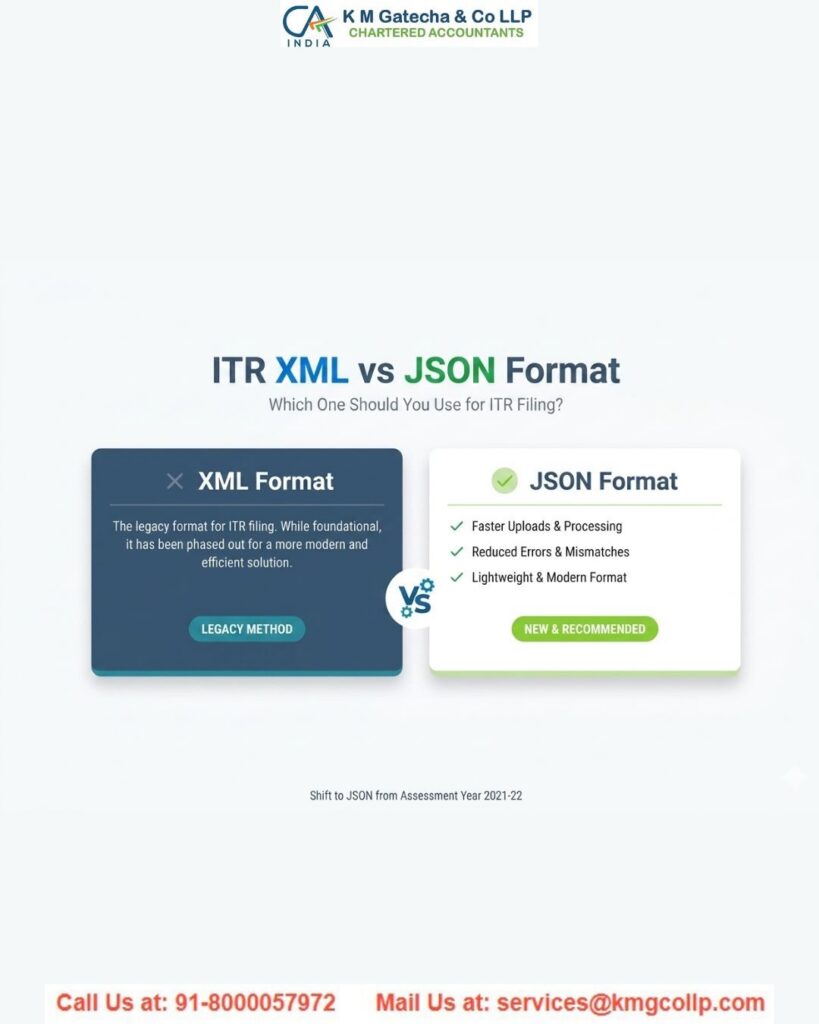
JSON, or JavaScript Object Notation, is a text-based format used for storing and exchanging structured information. It is easy to read and process, making it suitable for online tax filing systems.
The Income Tax Department requires ITR-U filing through JSON because it offers:
- Standardized data submission
- Reduced manual errors
- Faster data validation
- Compliance with e-filing requirements
How to Download JSON Offline Utility
Step 1:
Visit the official Income Tax e-filing portal and go to the “Downloads” section. Select the relevant Assessment Year.
Step 2:
Download the required utility for the applicable ITR form and install it.
Step 3:
After installation, open the utility and navigate to the homepage.
Step 4:
Click on “Continue” and proceed to file your return for the chosen assessment year.
Tax filing platforms also provide self-filing options and expert assistance for filing updated returns, revised returns, and belated returns efficiently.
Disclaimer: The content on this website is for informational purposes only and does not constitute legal, financial, or professional advice. Please consult qualified experts before acting on any information. K M GATECHA & CO LLP accepts no liability for errors, omissions, or outcomes from the use of this content. This site is not an advertisement or solicitation.


