
India’s international taxation framework is changing rapidly, especially for non-residents, multinational businesses, and taxpayers claiming treaty benefits. With the shift from Form 10F to Form 41, the government is moving toward a more structured and technology-driven Double Taxation Avoidance Agreement (DTAA) compliance system.
These changes are designed to improve transparency, reduce tax disputes, and strengthen cross-border tax reporting under the new income tax framework.
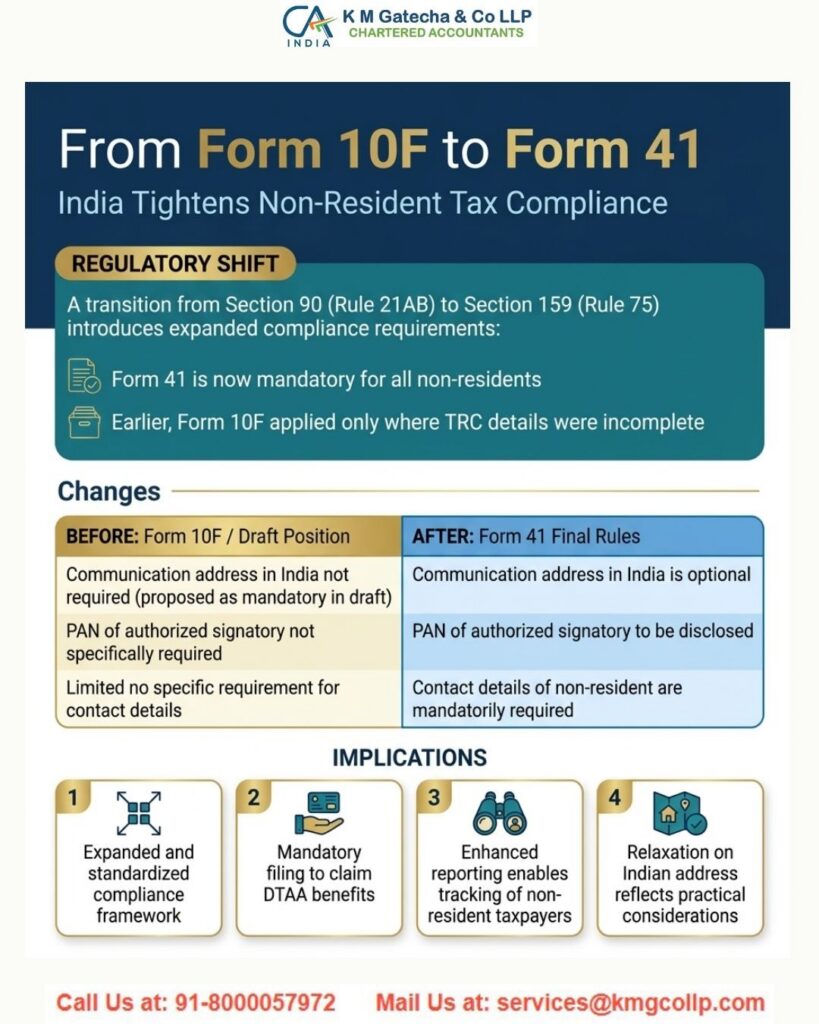
What Is DTAA?
A Double Taxation Avoidance Agreement (DTAA) is a tax treaty signed between two countries to prevent the same income from being taxed twice.
DTAA helps:
- Avoid double taxation
- Reduce tax burden on foreign income
- Clarify taxing rights between countries
- Promote international trade and investment
For example, if a non-resident earns income in India, DTAA may reduce withholding tax or provide exemptions.
What Is Form 10F?
Form 10F has traditionally been used by non-resident taxpayers to claim DTAA benefits in India when some required details were not available in the Tax Residency Certificate (TRC).
Purpose of Form 10F:
- Claim lower tax deduction under DTAA
- Submit residency-related information
- Support treaty benefit claims
Non-residents receiving:
- Royalty income
- Technical service fees
- Interest income
- Dividend income
often needed Form 10F for tax relief.
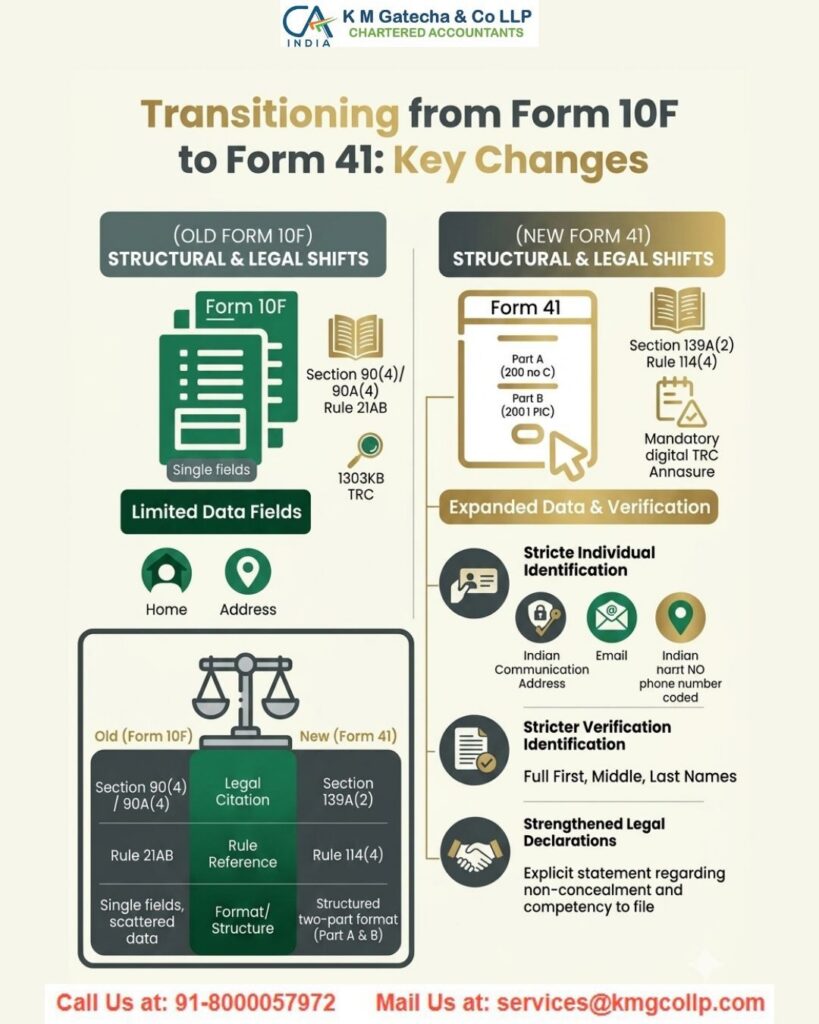
Why Is India Moving Toward Form 41?
The transition toward Form 41 signals a broader compliance shift under India’s tax administration.
The objective is to:
- Improve reporting transparency
- Digitize treaty compliance
- Reduce misuse of DTAA claims
- Create standardized documentation
Authorities are aiming for better monitoring of international tax transactions.
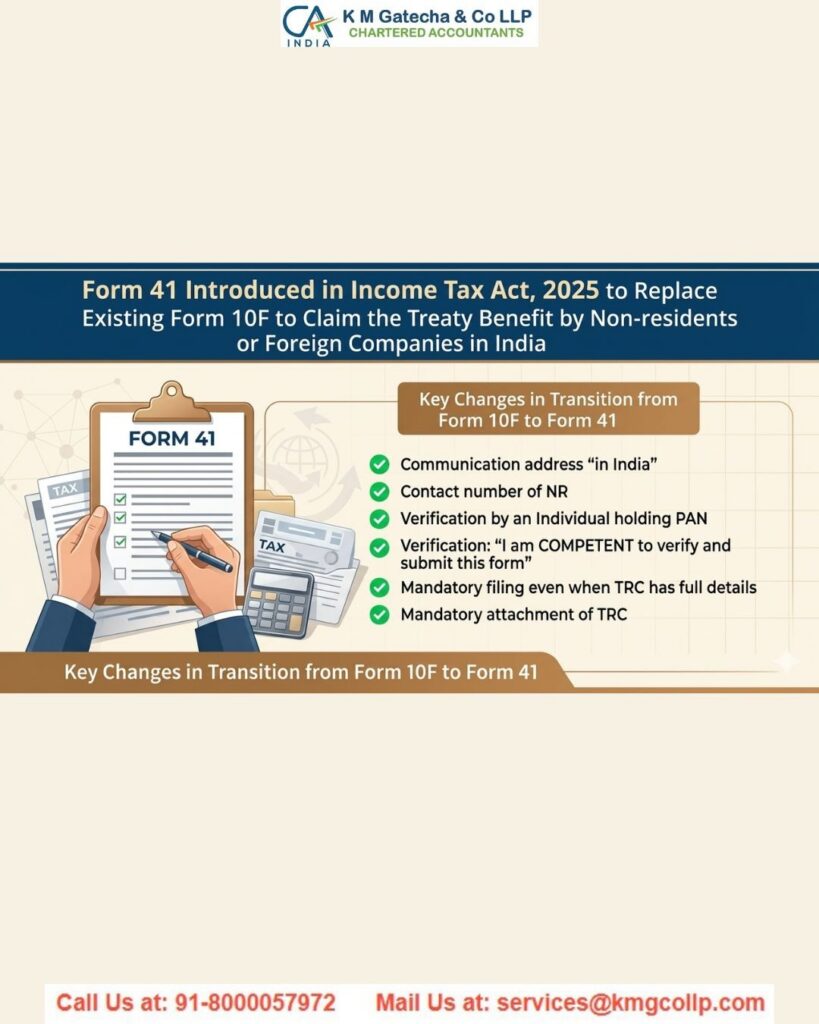
Key Changes in India’s New DTAA Compliance Era
1. Increased Documentation Requirements
Taxpayers may need to provide more detailed information while claiming treaty benefits.
2. Stronger Verification Process
Cross-border tax claims may face stricter scrutiny.
3. Greater Digital Compliance
Electronic filing and validation are becoming central to tax procedures.
4. Better Transparency in International Taxation
The new system aims to reduce treaty abuse and ensure genuine claims.
Who Will Be Affected?
These changes mainly impact:
- Non-resident individuals (NRIs)
- Foreign companies earning Indian income
- Multinational corporations
- Businesses making foreign payments
- Tax deductors handling cross-border remittances
Importance of Proper DTAA Compliance
Incorrect treaty claims can lead to:
- Higher TDS deductions
- Tax disputes
- Penalties
- Delays in refund processing
Proper compliance ensures smooth tax treatment and legal certainty.
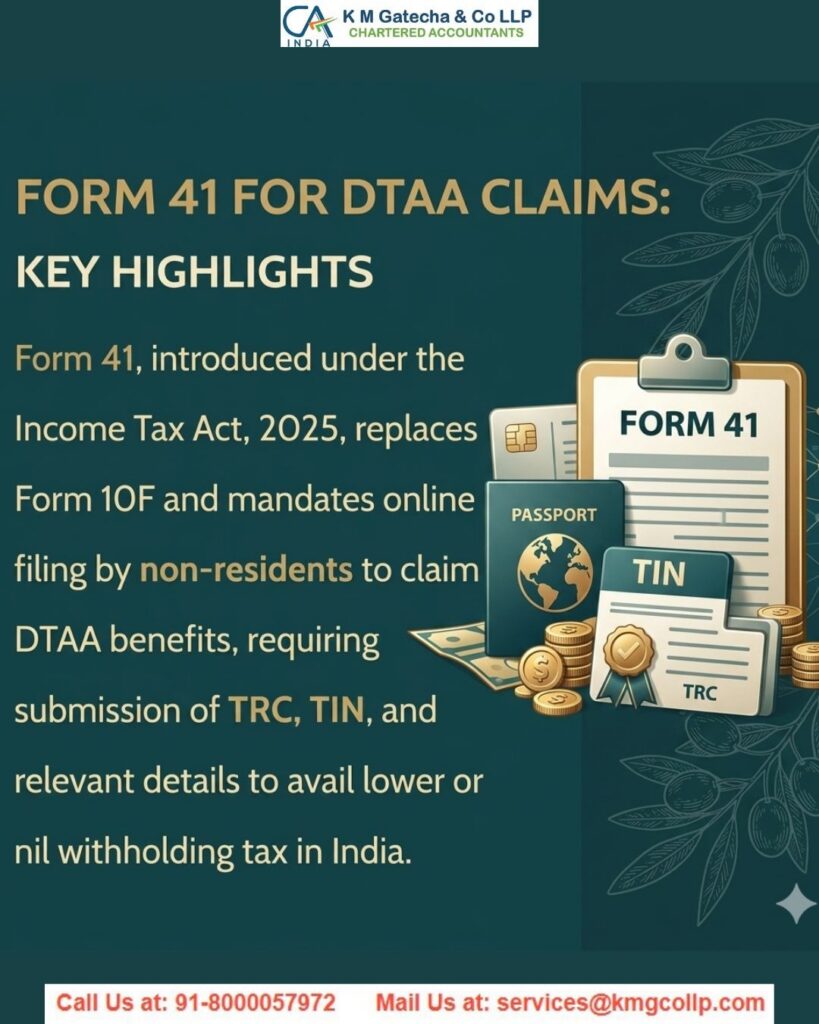
Documents Commonly Required for DTAA Claims
Taxpayers generally require:
- Tax Residency Certificate (TRC)
- PAN card (if applicable)
- Self-declaration documents
- Form 10F / updated prescribed forms
- Supporting income documents
How Businesses Should Prepare
To stay compliant under the new DTAA framework:
- Review international transactions regularly
- Maintain proper documentation
- Ensure correct withholding tax treatment
- Monitor updated tax rules
- Seek professional tax advice when needed
Disclaimer: The content on this website is for informational purposes only and does not constitute legal, financial, or professional advice. Please consult qualified experts before acting on any information. K M GATECHA & CO LLP accepts no liability for errors, omissions, or outcomes from the use of this content. This site is not an advertisement or solicitation.