Non-Resident Indians (NRIs) are liable for Tax Deducted at Source (TDS) on income earned in India. As per the latest update issued by the Central Board of Direct Taxes (CBDT) on 27 September 2023, the process for obtaining lower or nil TDS certificates for NRIs has been revised.
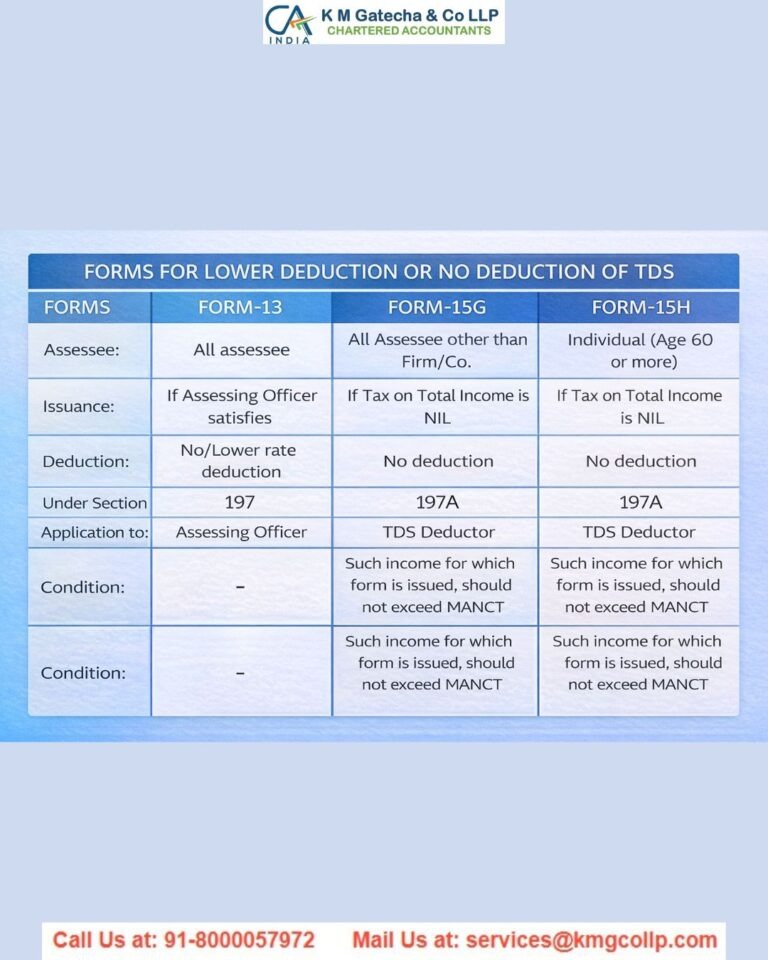
Unlike resident taxpayers, NRIs cannot submit Form 15G or Form 15H to avoid TDS deductions. Instead, they are required to apply directly to the Assessing Officer for a lower or nil deduction certificate. Let us understand the process and rules related to obtaining a lower TDS certificate for NRIs.
What is TDS for NRIs?
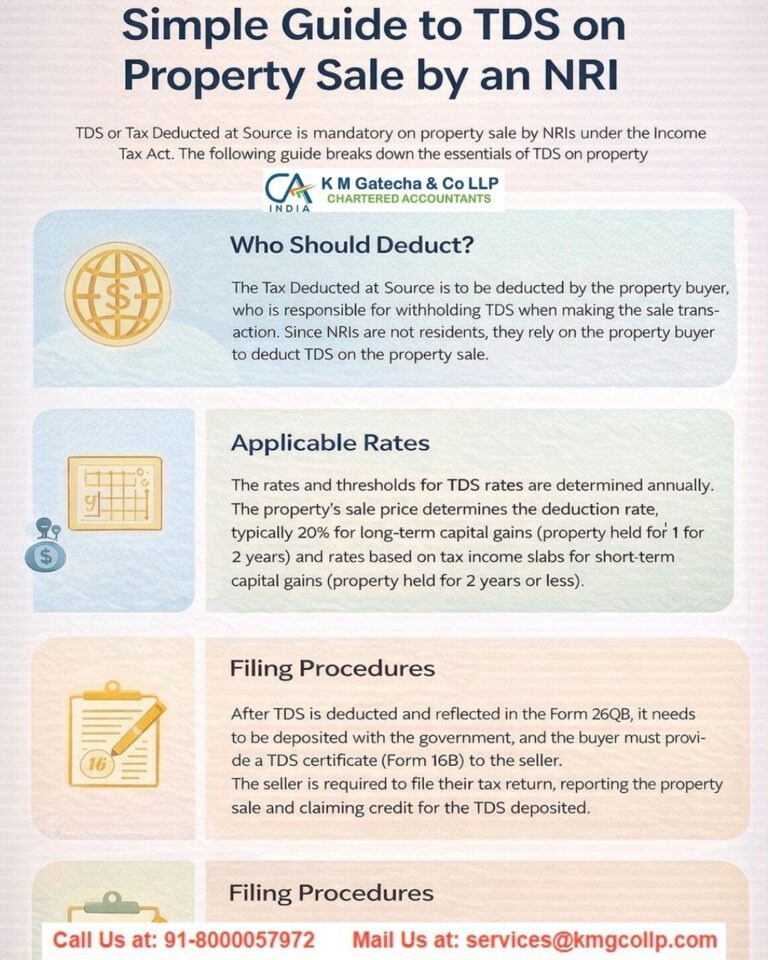
Section 195 of the Income Tax Act governs TDS on payments made to Non-Resident Indians.
Key Features of Section 195
- Section 195 applies to any person making payments to an NRI, including individuals, HUFs, firms, companies, non-residents, or any other legal entity.
- TDS is applicable on all payments made to NRIs except salary payments covered under Section 192 and certain interest payments covered under Sections 194LB, 194LC, and 194LD.
- TDS must be deducted either at the time of credit to the NRI’s account or at the time of payment, whichever is earlier.
- There is no minimum threshold limit for deduction of TDS under Section 195.
Which Incomes are Commonly Subject to TDS for NRIs?
NRIs commonly earn income in India through:
- Interest income
- Rental income
- Dividend income
- Capital gains
- Professional or technical service fees
The applicable TDS rate depends on the type of income earned.
The person making the payment is responsible for deducting TDS and depositing it with the Income Tax Department. NRIs should verify whether the correct TDS rate has been applied and provide relevant documents wherever required.
NRIs must also disclose Indian income and TDS details in their Income Tax Returns and can claim credit for the tax deducted while filing returns.
Application for Lower or Nil TDS by the Payer
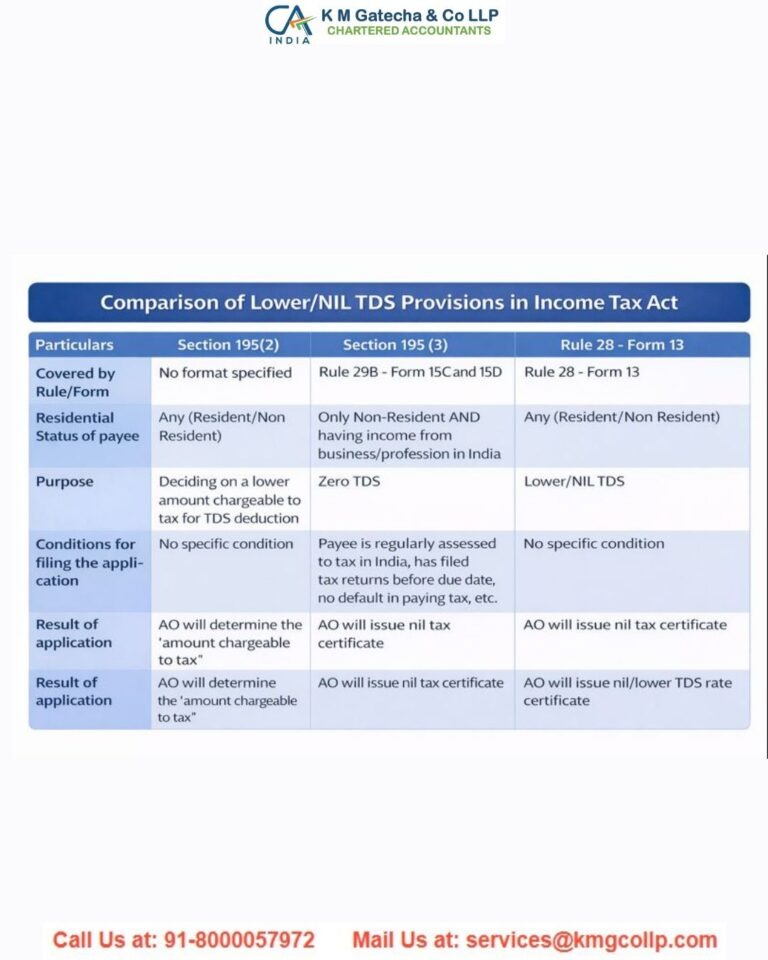
If the payer believes that the entire payment made to the NRI is not taxable, they may apply to the Assessing Officer by filing Form 15E for a lower or nil deduction certificate.
Since NRIs cannot submit Form 15G or Form 15H, they must obtain a lower or zero TDS certificate directly from the Assessing Officer. This certificate enables the payer to deduct TDS at a reduced rate or not deduct TDS at all.
For example, individuals earning substantial interest income from fixed deposits may face significant TDS deductions despite having low overall tax liability. In such cases, they may apply for a lower or nil TDS certificate.
What is Form 13?
Form 13 is the application form used to request a lower or nil deduction certificate from the Assessing Officer.
After reviewing the details and supporting documents, the Assessing Officer may issue a certificate authorizing deduction of TDS at a lower rate or nil rate.
How to File Form 13?
The following steps are involved in filing Form 13:
Step 1
Log in to the TRACES portal.
Step 2
Go to the “Statements/Forms” section.
Step 3
Select “Request for Form 13.”
Step 4
Choose your residential status.
Step 5
Select the request type as “Original.”
Step 6
Choose the relevant financial year.
Step 7
Select the application type as “Online.”
Step 8
Basic details of the authorized person registered on TRACES will be auto-filled.
Step 9
Enter the state and district details.
Step 10
Provide the responsible TAN, nature of receipt, and required TDS/TCS rate.
Step 11
Upload details of income and estimated tax liability for the current year and previous four years.
Step 12
Complete e-verification using the available verification method.
Changes in the Lower/Nil TDS Application Process for NRIs
CBDT has introduced important changes in the lower or nil TDS application process for NRIs.
Earlier, applications could be verified through methods such as Aadhaar OTP or mobile OTP. However, the TRACES portal has now removed these verification methods.
Currently, Digital Signature Certificate (DSC) is the only available verification method for submitting Form 13 applications online.
What Happens After Filing Form 13?
After submitting Form 13, the following process takes place:
Verification of Application
The Assessing Officer reviews the details and justification provided in the application.
System-Based Evaluation
The Income Tax Department system evaluates the recommended TDS rate based on the applicant’s financial details.
Decision by the Assessing Officer
Approval
If the application is approved, a lower or nil TDS certificate is issued specifying:
- Approved TDS rate
- Validity period
- TAN and deductor details
Rejection
If the Assessing Officer determines that the existing TDS rate is appropriate, the application may be rejected.
Use of Certificate
The lower or nil TDS certificate is valid only for the deductor mentioned in the certificate and cannot be used universally for all deductors.
Independent Decision by AO
If the Assessing Officer approves a TDS rate different from the system recommendation, proper justification must be recorded.
Due Date for Filing Form 13
The last date for filing Form 13 is 15 March of the relevant financial year.
For example, if an individual wants lower TDS deduction for FY 2023-24, Form 13 should be filed on or before 15 March 2024.
Documents Required with Form 13
The following documents are generally required while submitting Form 13:
- Signed Form 13
- Copy of Income Tax Returns for the previous three financial years
- Assessment orders for previous years
- Financial statements and audit reports, if applicable
- Projected Profit & Loss account for the current year
- Income computation statements
- Copy of PAN card
- TAN details of deductors
- E-TDS return acknowledgments for previous years
- Estimated income details for the financial year
- Documents based on the nature of income
- Details of previous TDS defaults, if any
After submission, the jurisdictional Assessing Officer generally disposes of the application within 30 days from the date of receipt. The officer may request additional clarification or supporting documents before approving or rejecting the application.
Understanding NRI taxation rules and filing forms such as Form 13 can often be complicated and time-consuming. Professional assistance can help NRIs ensure proper compliance and smooth tax management.
Disclaimer: The content on this website is for informational purposes only and does not constitute legal, financial, or professional advice. Please consult qualified experts before acting on any information. K M GATECHA & CO LLP accepts no liability for errors, omissions, or outcomes from the use of this content. This site is not an advertisement or solicitation.