Under the Foreign Exchange Management Act (FEMA), Non-Resident Indians (NRIs) are not permitted to continue operating a regular savings account in India after becoming non-residents. They must convert their existing savings account into either an NRE or NRO account. Continuing to use a normal savings account after acquiring NRI status may attract penalties. NRE and NRO accounts provide NRIs with a convenient way to manage foreign earnings as well as income generated in India.
What is an NRE Account?
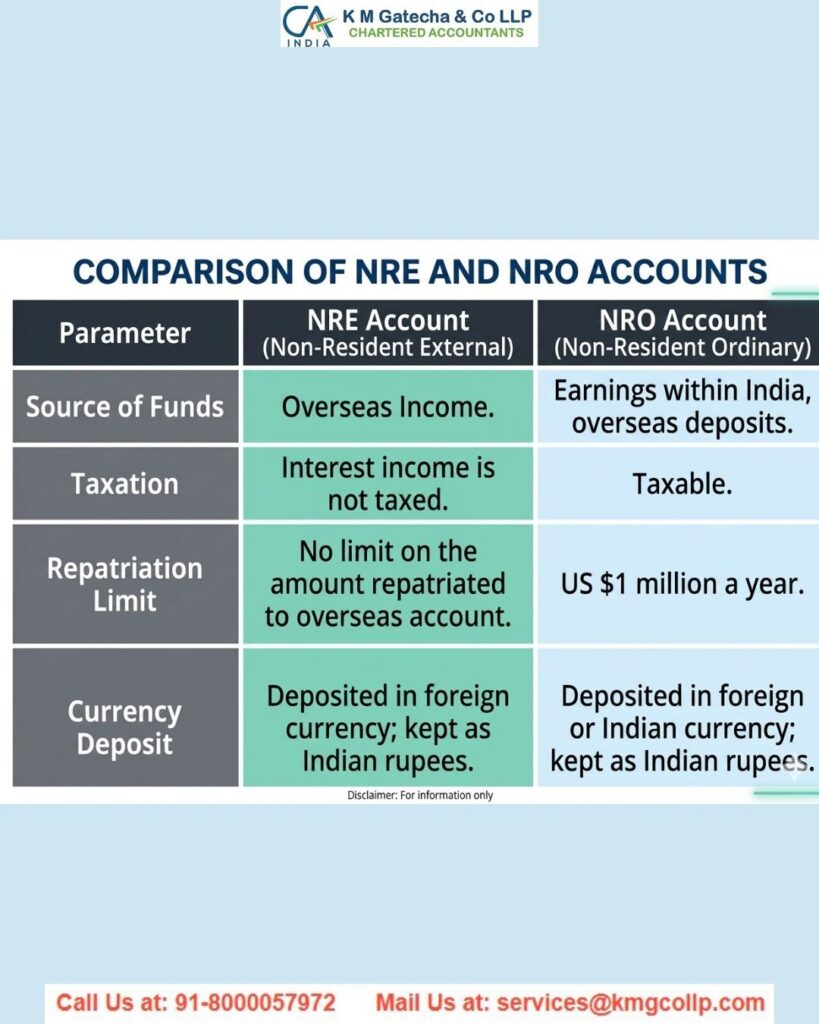
A Non-Resident External (NRE) Account is an Indian Rupee-denominated bank account designed for NRIs to deposit income earned abroad in foreign currency. NRE accounts can be opened as savings accounts, current accounts, recurring deposits, or fixed deposits. These accounts may be opened individually or jointly with another NRI.
NRE accounts offer complete repatriation of both principal and interest amounts. The interest earned on these accounts is fully exempt from tax in India, making them a preferred option for NRIs managing overseas income.
What is an NRO Account?
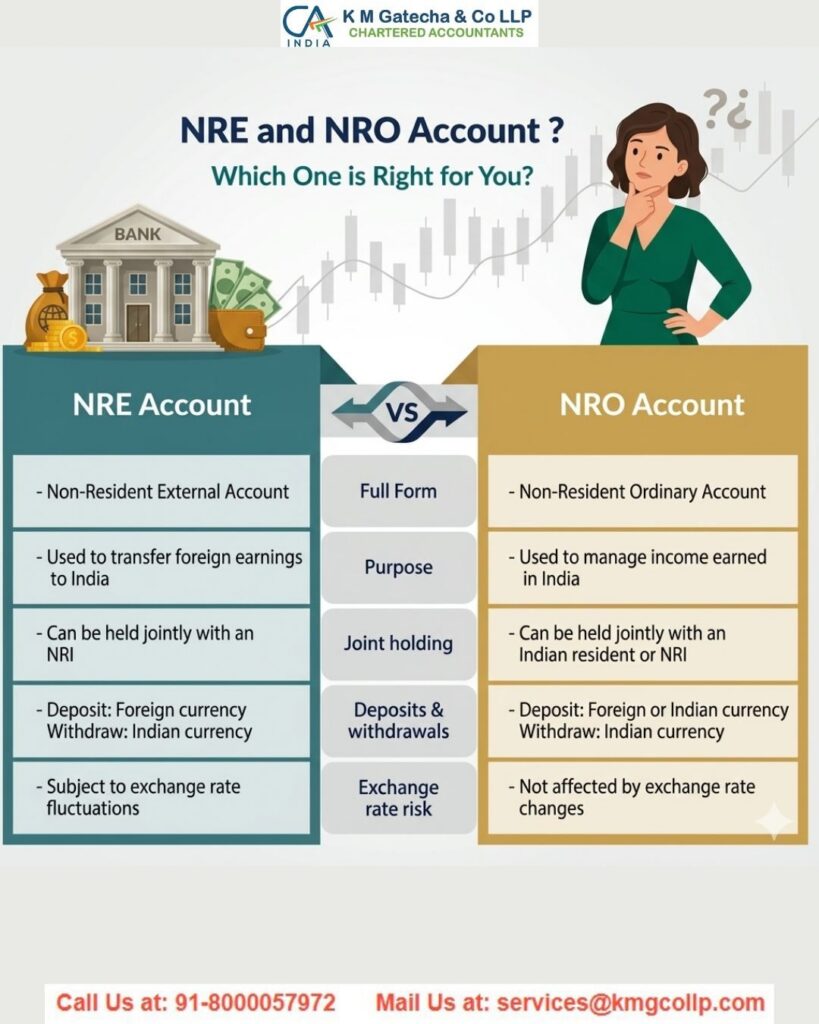
A Non-Resident Ordinary (NRO) Account is meant for NRIs to manage income earned in India, such as rent, dividends, pension, or interest income. Deposits can be made in both Indian and foreign currency, but withdrawals are allowed only in Indian Rupees.
NRO accounts are available as savings, current, or fixed deposit accounts. These accounts can be held jointly with either a resident Indian or another NRI. They also allow NRIs to invest in mutual funds and other financial products and offer the facility of loans against fixed deposits.
Deposits and Withdrawals in NRE and NRO Accounts
In an NRE account, only foreign income earned outside India can be deposited in foreign currency. The bank converts the deposited amount into Indian Rupees before crediting it to the account. Income earned in India cannot be directly deposited into an NRE account.
An NRO account allows deposits in both Indian and foreign currency. Foreign currency deposits are converted into INR by the bank before being credited.
For both NRE and NRO accounts, withdrawals can be made only in Indian Rupees. Funds can be accessed through ATMs, online transfers, cheques, or direct bank withdrawals.
Taxation and Exemptions on NRE and NRO Accounts
NRE Account
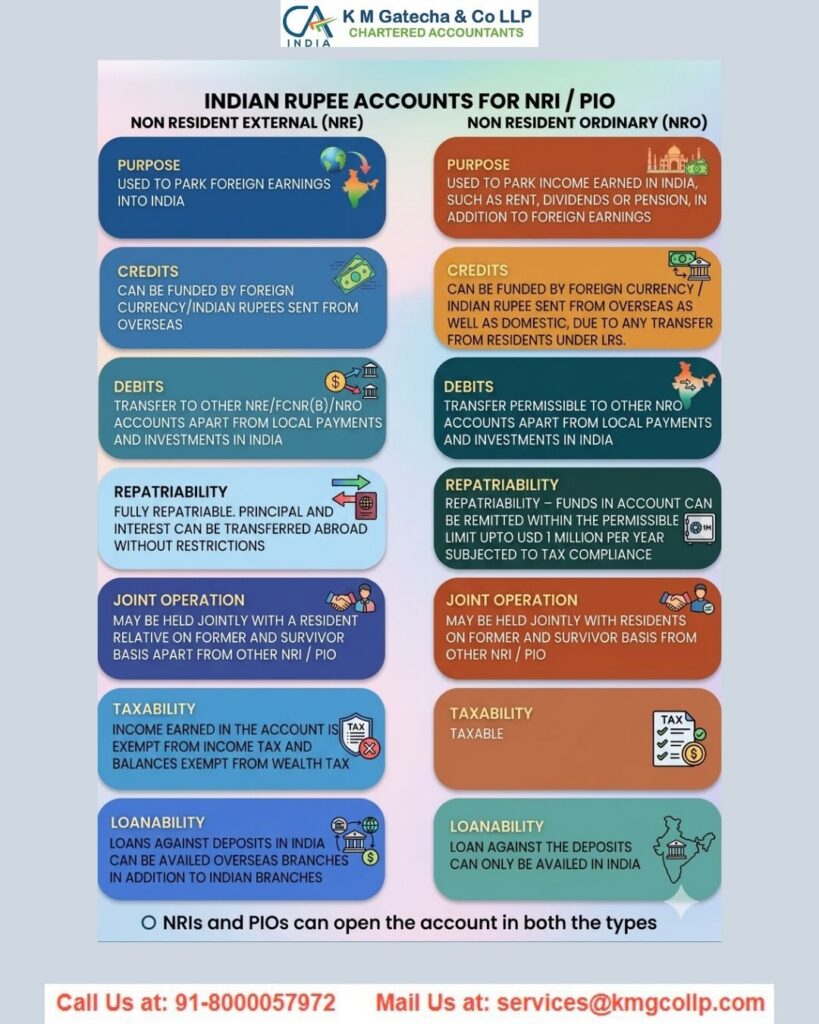
- Interest earned is completely tax-free in India.
- Both principal and interest amounts are freely repatriable abroad.
- Exemptions are available from wealth tax and gift tax.
- Funds cannot be directly used for spending in India without conversion into INR.
NRO Account
- Interest earned is taxable and subject to TDS at 30% or as per applicable DTAA rates.
- Repatriation is allowed up to USD 1 million per financial year after payment of taxes.
- Interest income does not qualify for tax exemption.
- Funds can be directly used for expenses within India.
Key Differences Between NRE and NRO Accounts
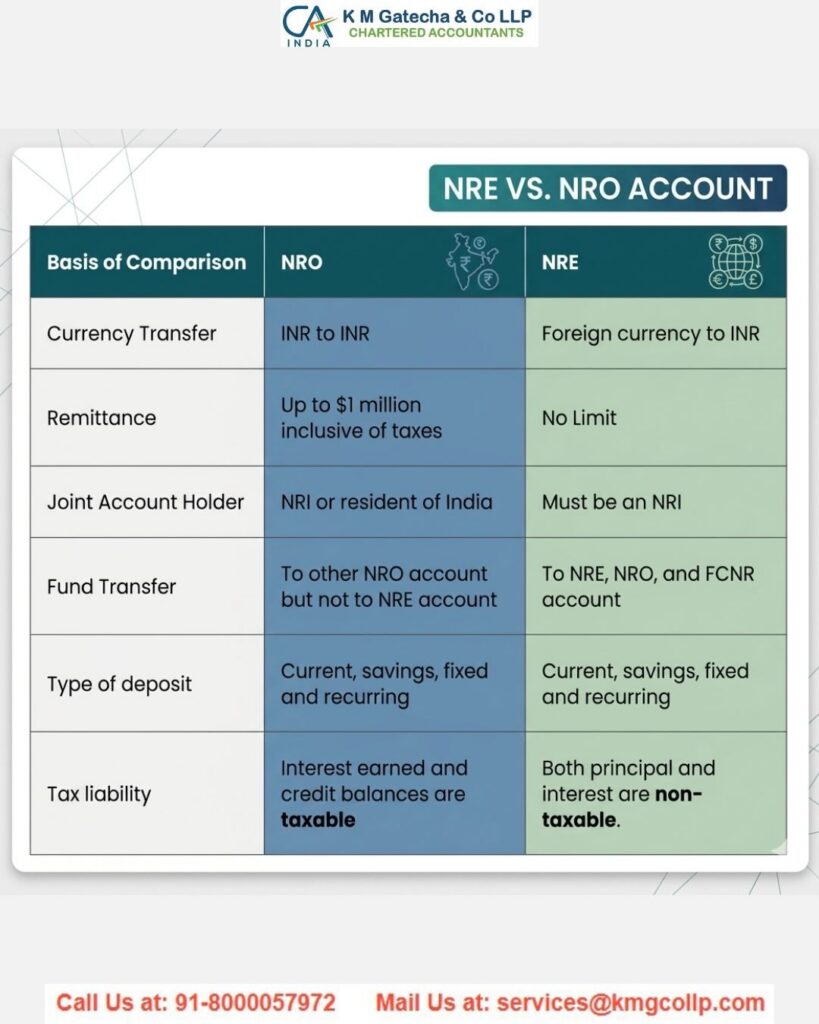
| Feature | NRE Account | NRO Account |
| Tax on Interest | Fully tax-free | Taxable with TDS |
| Repatriation | Full principal and interest | Up to USD 1 million per year after tax |
| Currency for Deposit | Foreign currency only | Indian and foreign currency |
| Usage in India | Requires conversion to INR | Directly usable |
| Tax Exemptions | Available | Not available |
| Main Purpose | Managing overseas income | Managing Indian income |
Which Account Should You Choose?
NRE Account
- Suitable for depositing foreign earnings in India.
- Interest earned is tax-free.
- Offers complete repatriation of funds.
- Best for NRIs looking to manage overseas income efficiently.
NRO Account
- Ideal for handling income earned within India.
- Allows deposits from Indian and foreign sources.
- Interest is taxable.
- Useful for managing rent, dividends, pension, and similar income.
Joint Account Facility
An NRO account can be opened jointly with a resident Indian or another NRI. An NRE account can only be jointly held with another NRI.
Investments Through NRE and NRO Accounts
Both NRE and NRO accounts can be used for investing in India, including investments in mutual funds, shares, and securities. Depending on the type of investment, NRIs may also need a separate trading account to participate in the Indian stock market.
Disclaimer: The content on this website is for informational purposes only and does not constitute legal, financial, or professional advice. Please consult qualified experts before acting on any information. K M GATECHA & CO LLP accepts no liability for errors, omissions, or outcomes from the use of this content. This site is not an advertisement or solicitation.