Capital gain refers to the profit earned from transferring a capital asset. Capital assets include both movable and immovable properties such as land, buildings, and residential houses. Any profit arising from the sale of such assets is taxable under the Income Tax Act. Understanding short-term capital gains tax on property is important for property owners and investors involved in real estate transactions. When a property is sold within 24 months from the date of acquisition, the resulting gain is treated as a short-term capital gain and taxed accordingly.
Income Tax Act 2025 Update
The Income Tax Act, 2025 has replaced the terms “Previous Year” and “Assessment Year” with “Tax Year.” For example, income earned during 2025-26 will now be referred to as Tax Year 2025-26. However, since many taxpayers are more familiar with the terms FY and AY, they continue to be commonly used for easier understanding.
The new Act has also simplified several provisions by renumbering sections and reducing the number of schedules and clauses.
What is a Short-Term Capital Asset?
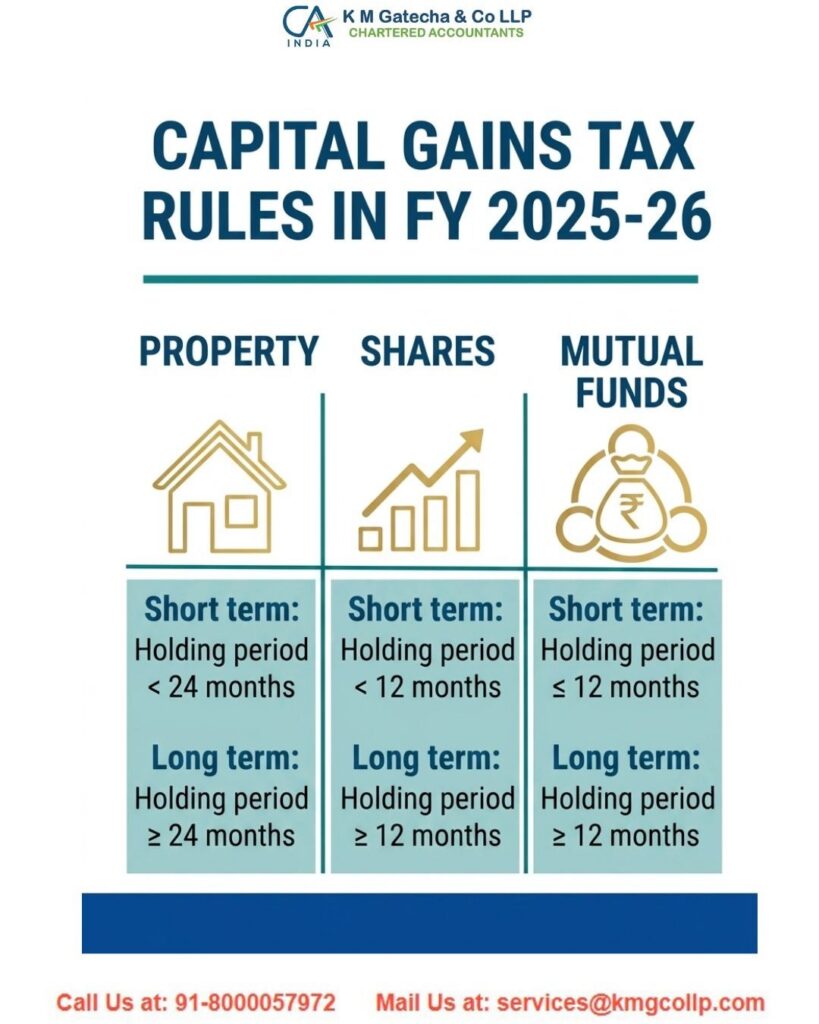
A short-term capital asset is an asset or property sold within a specified holding period from the date of purchase. In the case of immovable property, if the asset is transferred within 24 months from acquisition, it is treated as a short-term capital asset. If sold after 24 months, the resulting gain is considered a long-term capital gain.
What is Short-Term Capital Gain on Property?
Short-term capital gain on property arises when an immovable property is sold before completing 24 months from the date of acquisition. Such gains are taxed according to the applicable income tax slab rates of the taxpayer.
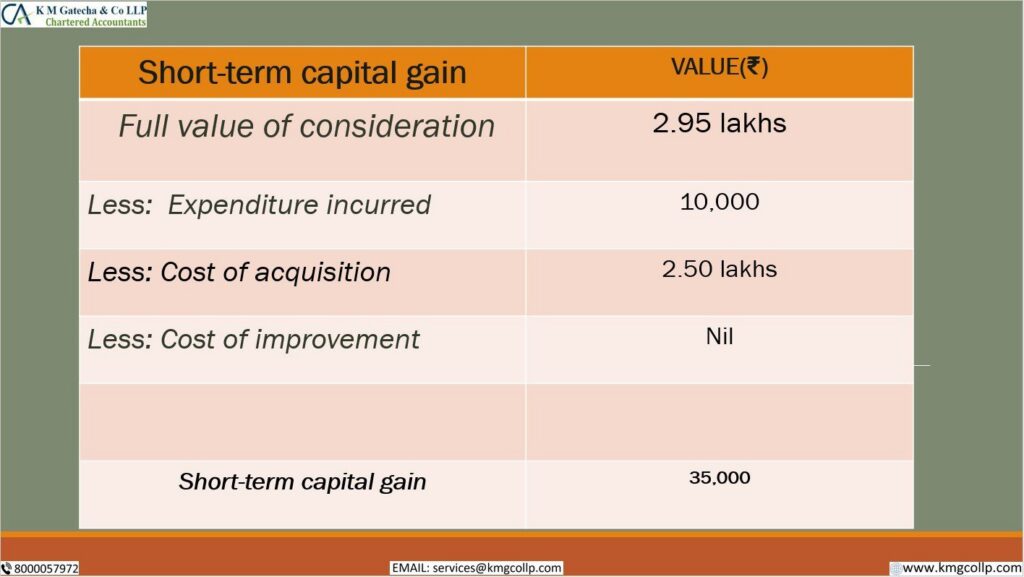
The calculation of short-term capital gain is as follows:
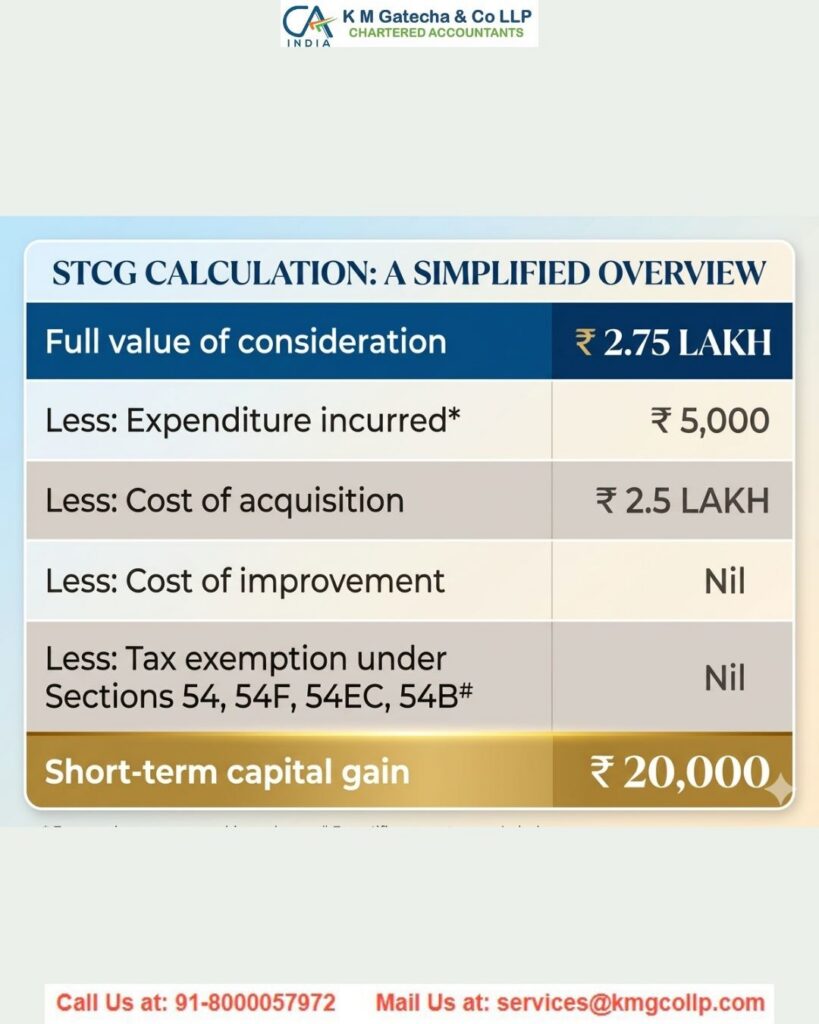
Short-Term Capital Gain = Sale Value – (Cost of Acquisition + Cost of Improvement + Transfer Expenses)
Tax on Short-Term Capital Gains from Property
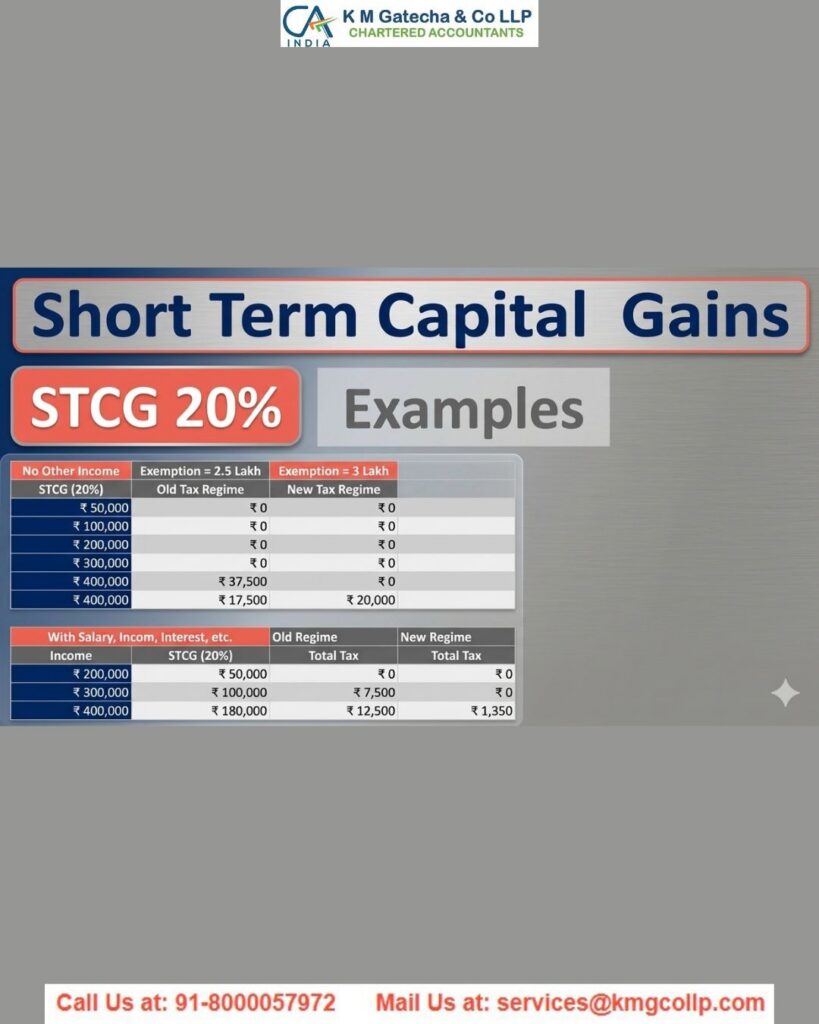
The tax on short-term capital gains is charged based on the taxpayer’s applicable slab rate. For example, if a person falls under the 30% tax bracket and earns a short-term capital gain of Rs. 6 lakh, the gain will be taxed accordingly along with surcharge and cess, wherever applicable.
The gain or loss is determined after deducting the purchase cost, expenses on improvement, and expenses related to the sale from the final sale value.
Formula for Calculating Short-Term Capital Gain
The formula for calculating short-term capital gain on property is:
Short-Term Capital Gain = Sale Consideration – (Cost of Acquisition + Improvement Cost + Transfer Expenses)
The resulting amount is added to the taxpayer’s total income and taxed according to the applicable slab rates.
Properties Treated as Short-Term Capital Assets
Immovable properties sold within 24 months are treated as short-term capital assets. These include:
- Residential houses
- Buildings
- Land
- Agricultural land, subject to specified conditions
Property investments are generally considered beneficial because they tend to appreciate over time and are relatively independent of market fluctuations.
Example of Short-Term Capital Gain Calculation
Suppose Mr. Sharma purchased a house for Rs. 10,00,000 in October 2020 and sold it in July 2021 for Rs. 10,80,000. He also paid brokerage charges of Rs. 12,000 during the sale.
Since the property was held for only nine months, the gain qualifies as short-term capital gain.
| Particulars | Amount |
| Sale Value of Property | Rs. 10,80,000 |
| Less: Brokerage Expenses | Rs. 12,000 |
| Net Sale Consideration | Rs. 10,68,000 |
| Less: Cost of Acquisition | Rs. 10,00,000 |
| Short-Term Capital Gain | Rs. 68,000 |
This gain will be taxed according to the applicable slab rate of the taxpayer.
Exemptions Available on Short-Term Capital Gains
The following basic exemption limits may be available while calculating taxable income:
| Category | Age | Old Regime | New Regime |
| Individuals | Below 60 Years | Rs. 2,50,000 | Rs. 3,00,000 |
| Individuals | 60 to 80 Years | Rs. 3,00,000 | Rs. 3,00,000 |
| Individuals | Above 80 Years | Rs. 5,00,000 | Rs. 3,00,000 |
| HUF | — | Rs. 2,50,000 | Rs. 3,00,000 |
| NRIs | — | Rs. 2,50,000 | Rs. 3,00,000 |
Tax Implications on Property Sale
Short-term capital gains are taxed according to the applicable slab rate of the individual. For example, if an individual earning a gain of Rs. 5,00,000 falls under the 10% tax slab, the tax liability on such gains would be Rs. 50,000.
However, if the property is purchased for resale purposes by a property dealer, it is treated as stock-in-trade. In such cases, the income is considered business income instead of capital gains and is taxed under the head “Profits and Gains from Business or Profession.”
Important Terms Related to Short-Term Capital Gain
Sale Consideration
Sale consideration refers to the total amount received on the transfer of property. If the sale value is lower than the value adopted by the Stamp Valuation Authority (SVA), then the SVA value is treated as the sale consideration for tax purposes.
Cost of Acquisition
The amount paid to acquire the property, including expenses such as legal fees, brokerage, and commission, is called the cost of acquisition.
In case of gifted property, the holding period and cost of acquisition are considered from the previous owner.
Cost of Improvement
Expenses incurred for renovation, repair, or modification of the property are treated as the cost of improvement.
Transfer Expenses
Expenses directly related to the transfer or sale of the property, including legal and brokerage charges, are considered transfer expenses.
Important Note
Indexation benefit is not available while calculating short-term capital gains. Also, gains from properties treated as stock-in-trade are not taxed under capital gains provisions.
Understanding short-term capital gains tax on property helps taxpayers calculate their liability accurately and claim eligible exemptions. In case of confusion regarding taxation or calculations, professional guidance can help ensure proper tax compliance and planning.
Disclaimer: The content on this website is for informational purposes only and does not constitute legal, financial, or professional advice. Please consult qualified experts before acting on any information. K M GATECHA & CO LLP accepts no liability for errors, omissions, or outcomes from the use of this content. This site is not an advertisement or solicitation.