
What Happens if You Don’t File Your Income Tax Return (ITR)?
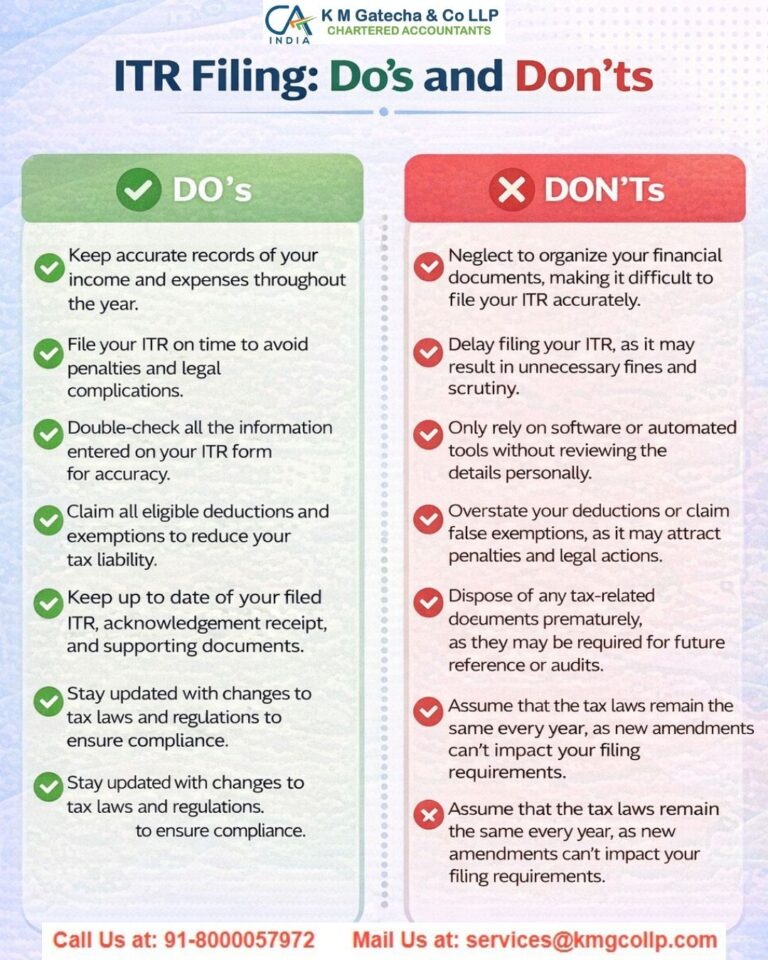
Filing your Income Tax Return (ITR) within the due date is mandatory for eligible taxpayers. Failure to file your ITR on time can result in penalties, interest, notices from the Income Tax Department, and even prosecution in serious cases. An ITR contains details of your income, expenses, assets, and tax liability for a financial year. Hence, non-filing can create both financial and legal complications.
What is an ITR? (What Happens if You Don’t File Your Income Tax Return (ITR))
An Income Tax Return (ITR) is a document filed with the Income Tax Department that declares a taxpayer’s income, deductions, investments, and taxes paid during a financial year. It helps determine whether additional tax is payable or if a refund is due.
You are required to file an ITR in the following situations:
- If your total income exceeds the basic exemption limit.
- If you want to claim an income tax refund.
- If you hold foreign assets or earn foreign income.
- If you are a company or firm, irrespective of profit or loss.
- If you wish to carry forward business or capital losses.
- If deposits in current accounts exceed ₹1 crore.
- If deposits in savings accounts exceed ₹50 lakh.
- If foreign travel expenses exceed ₹2 lakh.
- If electricity expenses exceed ₹1 lakh annually.
- If TDS/TCS exceeds ₹25,000 (₹50,000 for senior citizens).
- If business turnover exceeds ₹60 lakh.
- If professional income exceeds ₹10 lakh.
Basic Exemption Limit for FY 2024-25
| Age | Old Tax Regime | New Tax Regime |
| Below 60 years | ₹2.5 lakh | ₹3 lakh |
| 60 years to below 80 years | ₹3 lakh | ₹3 lakh |
| 80 years and above | ₹5 lakh | ₹3 lakh |
Note: Under the new regime, the exemption limit for FY 2025-26 has been increased to ₹4 lakh.
Importance of Filing ITR
Legal Compliance
Filing ITR is compulsory if your income exceeds the exemption limit. Non-compliance can lead to penalties, interest, and prosecution under the Income Tax Act.
Claiming Tax Refunds
If excess tax has been deducted, filing your ITR is necessary to claim a refund.
Income Proof
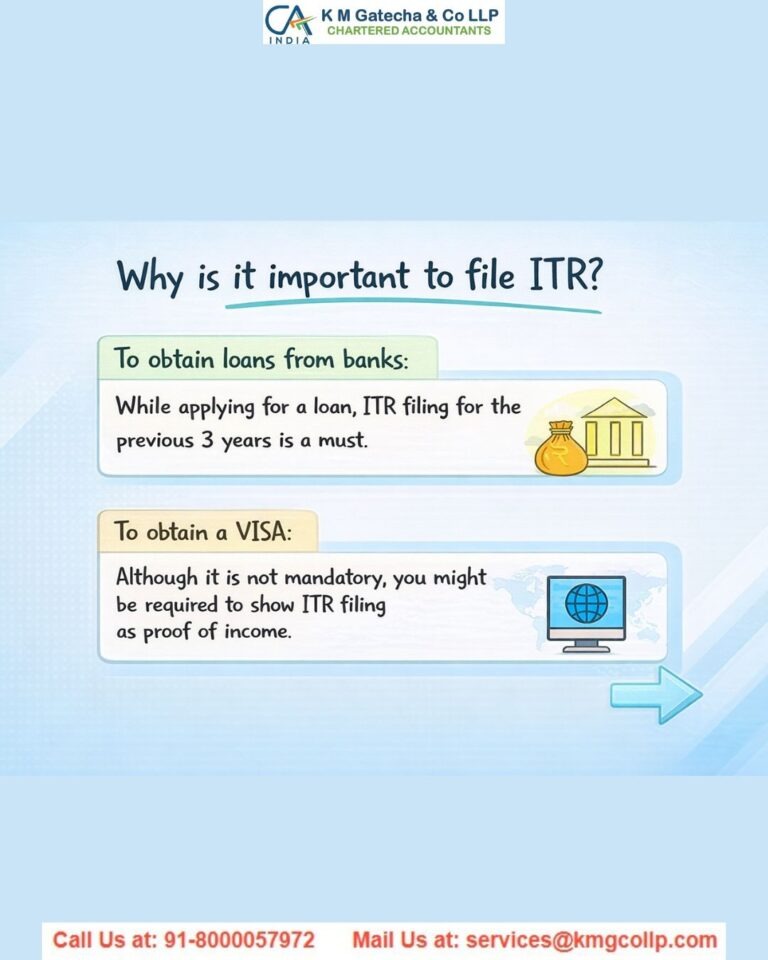
ITRs act as valid proof of income for visa applications, loans, and financial transactions.
Carry Forward of Losses
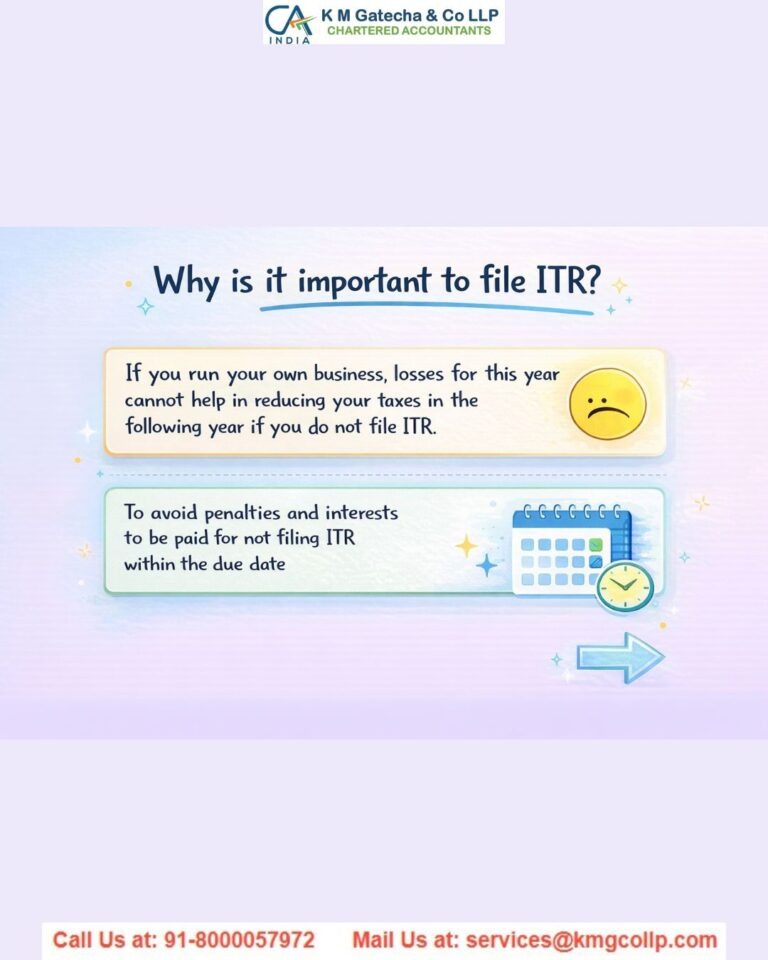
Filing ITR on time allows taxpayers to carry forward business and capital losses for future adjustment.
Avoid Penalties and Interest
Timely filing helps avoid penalties under Section 234F and interest under Sections 234A, 234B, and 234C.
Better Financial Planning
ITRs help maintain proper financial records and improve tax planning.
Loan and Credit Approvals
Banks and financial institutions often ask for ITRs before approving loans or credit cards.
Civic Responsibility
Taxes contribute to infrastructure, healthcare, education, and public welfare.
Easy Handling of Tax Notices
Regular filing simplifies responding to notices from the Income Tax Department.
Consequences of Not Filing ITR
If you fail to file your ITR within the due date for the relevant assessment year, you may face the following consequences.
Note: The ITR filing deadline for FY 2024-25 has been extended to 15th September 2025.
Penalty and Interest
If you miss the due date, you may still file a belated return, but penalties and interest will apply.
Penalty under Section 234F
- Income up to ₹5 lakh: Penalty up to ₹1,000
- Income above ₹5 lakh: Penalty of ₹5,000
Interest under Section 234A
Interest at 1% per month is charged on outstanding tax liability from the due date until the actual filing date.
Penalty under Section 271H
Failure to file TDS/TCS returns may attract:
- Penalty ranging from ₹10,000 to ₹1,00,000
- Additional late fee of ₹200 per day until filing
Loss of Benefits
Carry Forward of Losses
Business and capital losses cannot be carried forward if the return is not filed within the due date.
Delay in Refund Processing
Income tax refunds may get delayed or rejected if ITR is not filed.
Note: The Revised Income Tax Bill 2025 allows refund claims even when returns are filed after the due date.
Difficulty in Providing Income Proof
Freelancers and self-employed individuals generally use ITRs as proof of income. Without ITRs, it may become difficult to establish financial credibility.
Loan and Visa Rejections
Financial institutions and embassies usually ask for ITRs of the last three years. Non-filing can negatively impact loan approvals and visa applications.
Prosecution for Non-Filing of ITR
Failure to file ITR can lead to prosecution:
- If tax due exceeds ₹25,000: Imprisonment from 6 months to 7 years along with a fine.
- If tax due is below ₹25,000: Imprisonment from 3 months to 2 years along with a fine.
Choosing the Tax Regime
From FY 2024-25, the new tax regime is the default regime. Taxpayers filing belated returns cannot opt for the old tax regime and must pay tax according to the new regime rules.
How to Check if Your ITR is Filed?
Step 1
Visit the official Income Tax e-filing portal.
Step 2
Log in using your PAN and password.
Step 3
Go to:
E-file > Income Tax Return > View Filed Returns
Step 4
You can view all your filed returns on the portal.
Due Dates for Filing ITR
| Category of Taxpayer | Due Date |
| Individuals & HUFs (Non-audit cases) | 31st July |
| Individuals & HUFs (Audit cases) | 31st October |
| Companies | 31st October |
| LLPs, Firms, AOPs, BOIs (Audit cases) | 31st October |
| LLPs, Firms, AOPs, BOIs (Non-audit cases) | 31st July |
Note: The due date for FY 2024-25 has been extended to 15th September 2025.
Who is Exempt from Filing ITR?
Under Section 194P, certain senior citizens are exempt from filing ITR if:
- They are above 75 years of age.
- They are residents of India.
- Their income consists only of pension and interest income.
- The interest income is earned from the same bank where pension is received.
- They submit the required declaration to the specified bank.
The bank will deduct TDS after considering eligible deductions and rebates, thereby removing the need to file ITR.
Ignoring your ITR filing obligations can lead to penalties, notices, financial complications, and even legal action. Filing your return on time ensures compliance, financial transparency, and access to various benefits. If you need assistance with ITR filing, expert guidance can help make the process smooth and hassle-free.
Disclaimer: The content on this website is for informational purposes only and does not constitute legal, financial, or professional advice. Please consult qualified experts before acting on any information. K M GATECHA & CO LLP accepts no liability for errors, omissions, or outcomes from the use of this content. This site is not an advertisement or solicitation.