Understanding Restricted Stock Units (RSUs) and their taxation is important for making informed financial decisions. RSUs are a type of employee compensation where employers grant company shares to employees under certain conditions known as restrictions. These restrictions remain applicable for a fixed period or until specific conditions are fulfilled. This article explains the meaning of RSUs, their taxation in India, and the complete form of RSU.
What are Restricted Stock Units (RSUs)?
Restricted Stock Units are a form of compensation in which a company grants shares of its stock to employees. Employees can sell these shares only after the vesting period is completed.
The vesting period is the duration during which employees are not allowed to sell the shares. Companies use vesting schedules to ensure employees meet certain conditions before gaining ownership benefits. For example, vesting may depend on achieving performance targets or continuing employment for a specified period.
Until the vesting conditions are fulfilled, employees cannot use RSUs for financial gains.
Types of Restrictions on RSUs
RSUs may carry different types of restrictions that determine when they become available to employees.
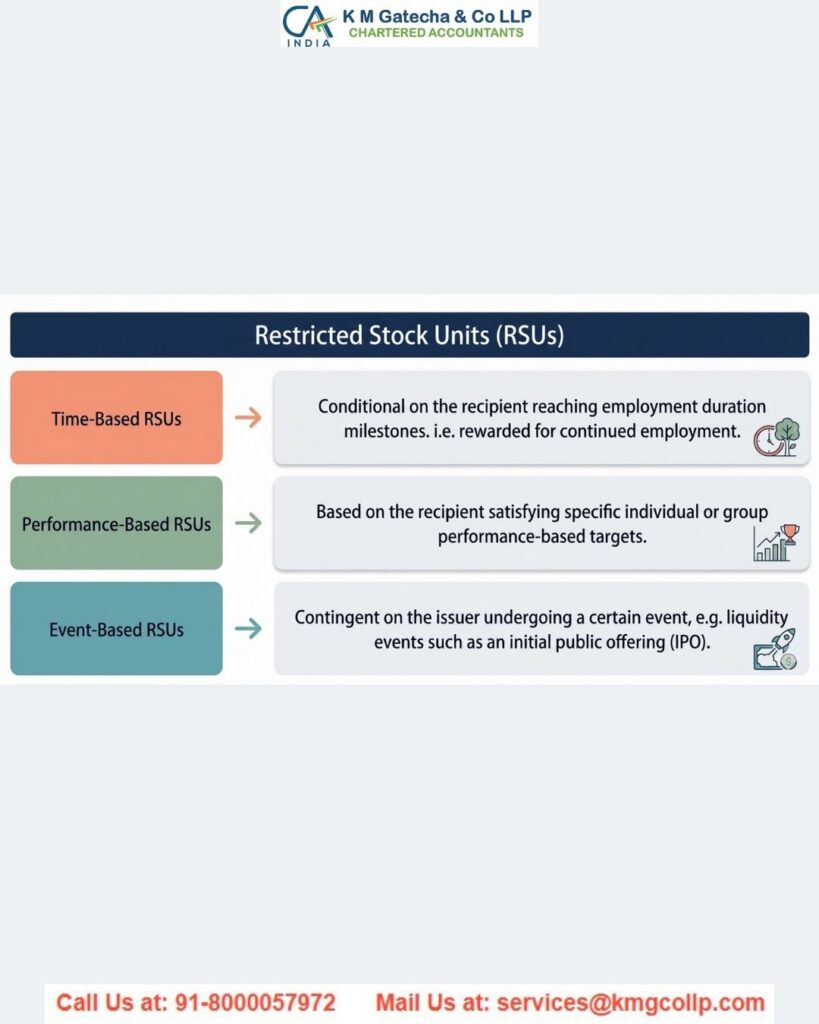
1. Time-Based Restrictions
Many companies offer RSUs to reward long-term employee loyalty. In such cases, vesting depends on the employee remaining with the company for a predefined period.
2. Performance or Milestone-Based Restrictions
Some RSUs vest only after employees achieve specific performance goals. For example, a salesperson may receive vested RSUs after meeting a sales target.
3. Combined Restrictions
Certain RSUs require employees to satisfy both time-based and performance-based conditions before vesting takes place.
What Can Employees Do with RSUs?
Once the vesting period is completed, employees may sell part or all of their vested shares. Depending on market conditions and future expectations, they can either sell the shares immediately or continue holding them for potential future gains.
Advantages of Restricted Stock Units
Restricted Stock Units offer several benefits to both employers and employees.
Employee Retention
RSUs encourage employees to stay with the company for longer periods, improving employee retention.
Increased Motivation
They help improve employee morale and motivate individuals to contribute to the company’s success.
Capital Appreciation Opportunity
Employees can benefit from capital gains if the company’s stock value increases over time after vesting.
Lower Administrative Costs
Since RSUs are notional shares before vesting, companies generally incur lower tracking and administrative expenses compared to actual stock issuance.
Disadvantages of Restricted Stock Units
Despite their advantages, RSUs also have certain limitations.
No Dividend Benefits
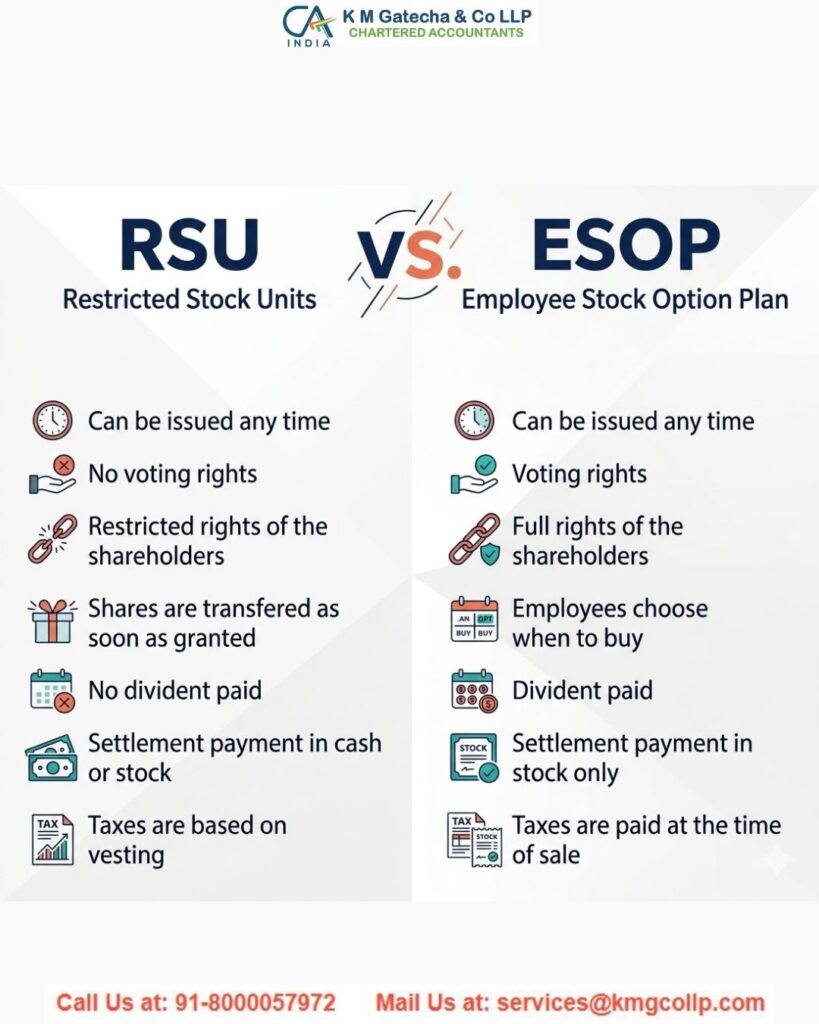
RSUs generally do not provide dividend payments because they are not actual shares before vesting.
Risk of Forfeiture
If an employee leaves the company before completing the vesting period, unvested RSUs are forfeited. For instance, if an employee is entitled to 2,000 RSUs over four years but resigns after three years, the remaining unvested units are lost.
Limited Liquidity
RSUs cannot usually be used for immediate financial needs before vesting, limiting their usefulness during emergencies.
Taxation of RSUs in India
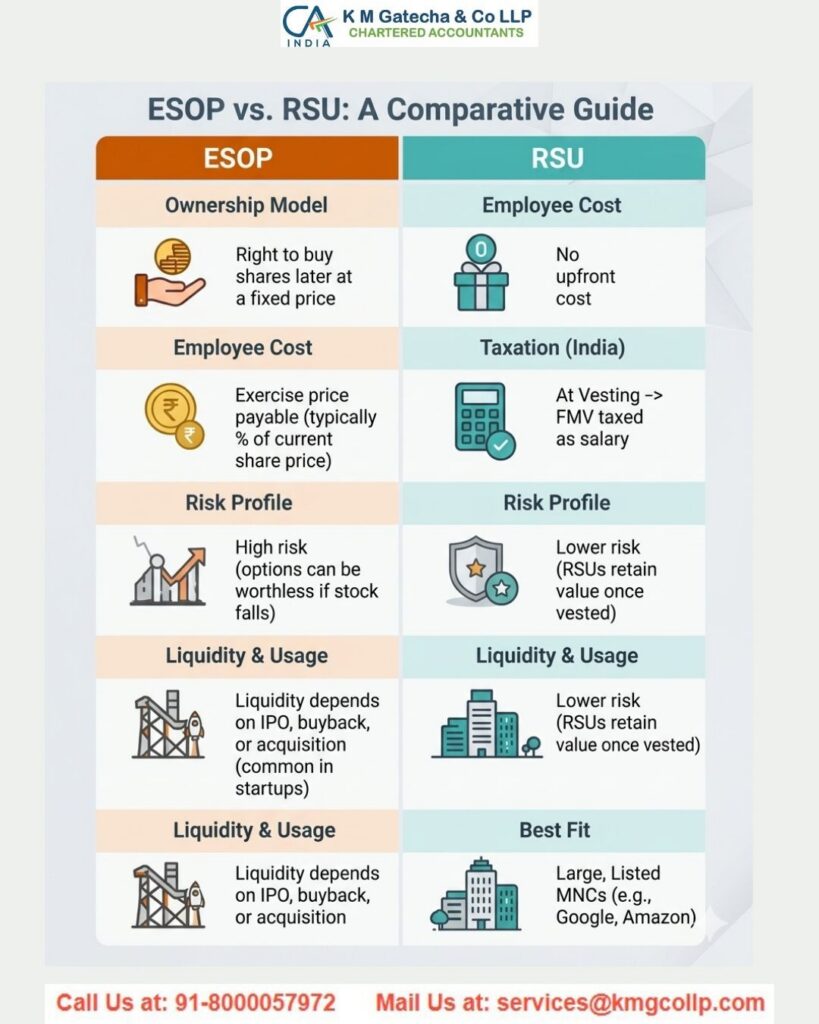
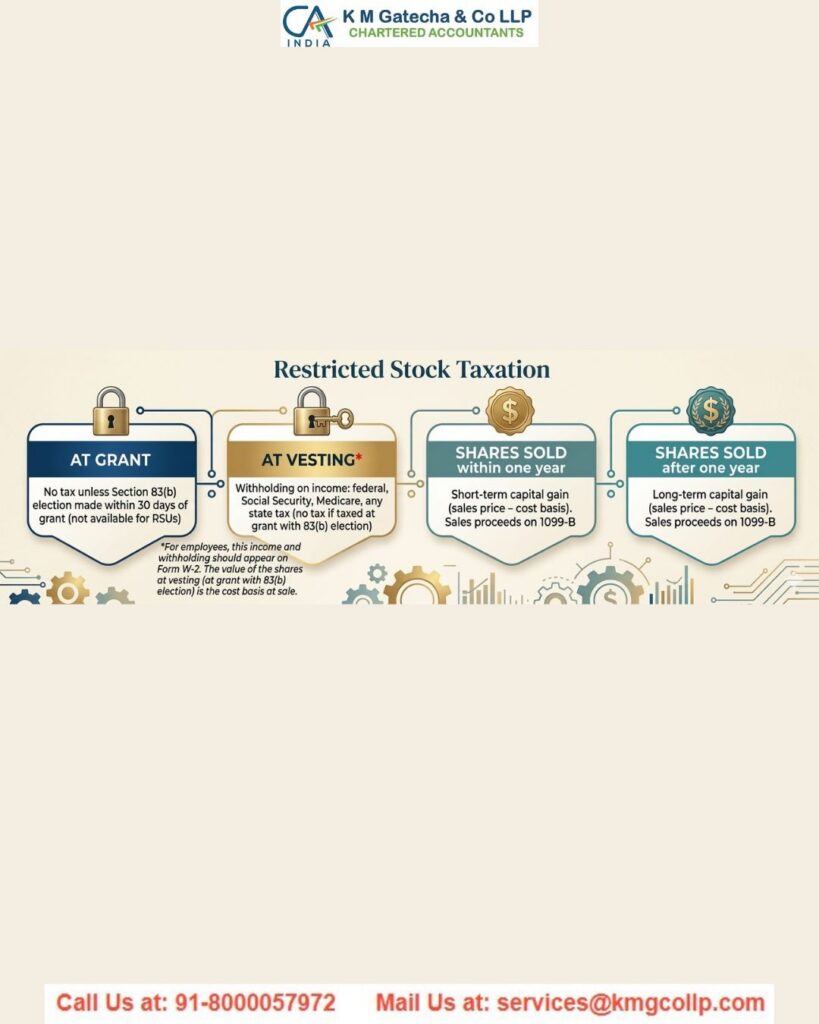
The taxation of RSUs in India is similar to the taxation of equity shares. The Fair Market Value (FMV) of shares on the vesting date is considered for tax purposes.
Taxation applies at two stages:
- At the time of vesting
- At the time of sale of shares
Taxation at the Time of Vesting
When RSUs vest, the value of shares received is treated as a perquisite under salary income and taxed according to the applicable income tax slab.
Sell-to-Cover Method
Under this method, a portion of shares is sold by the employer to recover the employee’s tax liability. The remaining shares are transferred to the employee.
For example, if an employee receives 1,000 shares and falls under the 30% tax slab, the company may sell 300 shares to pay taxes and transfer the remaining 700 shares.
Same-Day Sale
In this case, all vested shares are sold immediately. Taxes are deducted, and the employee receives the net sale proceeds in cash instead of shares.
Upfront Tax Payment
Employees may also choose to pay the tax liability directly and retain all vested shares.
Taxation on Sale of RSU Shares
When employees sell vested RSU shares, any profit earned is treated as capital gains. The tax treatment depends on the holding period between the vesting date and the sale date.
| Type of Shares | Short-Term Capital Gain | Long-Term Capital Gain |
| Listed Indian Shares | Held for less than 12 months – taxed at 15% | Held for more than 12 months – taxed at 10% |
| Unlisted Shares | Held for less than 24 months – taxed as per slab rates | Held for more than 24 months – taxed at 20% |
Additional Rules
- Long-term capital gains up to ₹1 lakh on listed shares are exempt.
- Indexation benefit is available only for long-term capital gains on unlisted shares.
Final Thoughts
Restricted Stock Units can be a valuable part of employee compensation, offering opportunities for long-term wealth creation and employee retention. However, employees should clearly understand vesting conditions, restrictions, and taxation rules before making financial decisions. Proper tax planning and professional guidance can help employees manage RSU taxation efficiently and remain compliant with Indian tax laws.
Disclaimer: The content on this website is for informational purposes only and does not constitute legal, financial, or professional advice. Please consult qualified experts before acting on any information. K M GATECHA & CO LLP accepts no liability for errors, omissions, or outcomes from the use of this content. This site is not an advertisement or solicitation.