
DTAA Explained: How NRIs Can Claim Tax Benefits & Avoid Double Taxation
An individual’s residential status plays a major role in deciding how their income is taxed in India. Non-Resident Indians (NRIs) and Persons of Indian Origin (PIOs) often plan their stay in India carefully to avoid being taxed in both India and the foreign country where they reside.
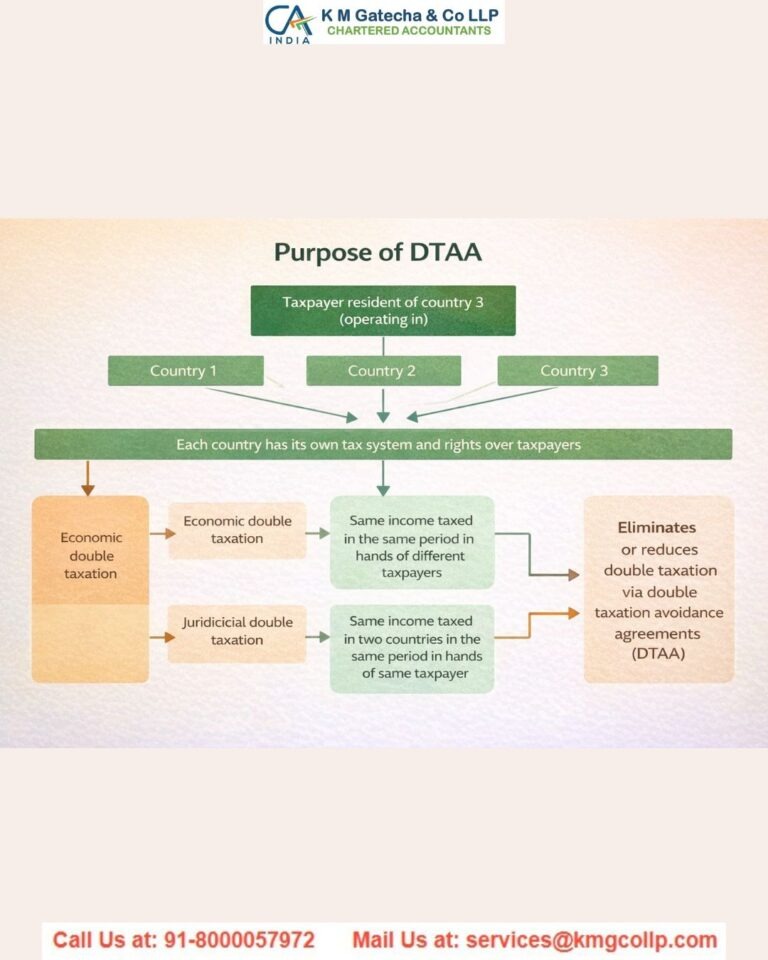
However, residential status may change due to unavoidable situations, which can result in the same income becoming taxable in two countries. To prevent this issue and promote international economic cooperation, countries enter into Double Taxation Avoidance Agreements (DTAA).
This guide explains DTAA, its benefits, and how NRIs can use it to reduce their tax burden.
What is Residential Status?
An individual’s residential status is mainly determined based on the number of days spent in India during the relevant financial year and previous years. Broadly, taxpayers are classified into:
- Resident
- Non-Resident (NRI)
- Resident but Not Ordinarily Resident (RNOR)
The taxation rules in India differ according to residential status.
For instance, if an NRI operates a foreign business from India during their stay, the income from that business may become taxable in India even if they qualify as RNOR for that year.
What is DTAA?
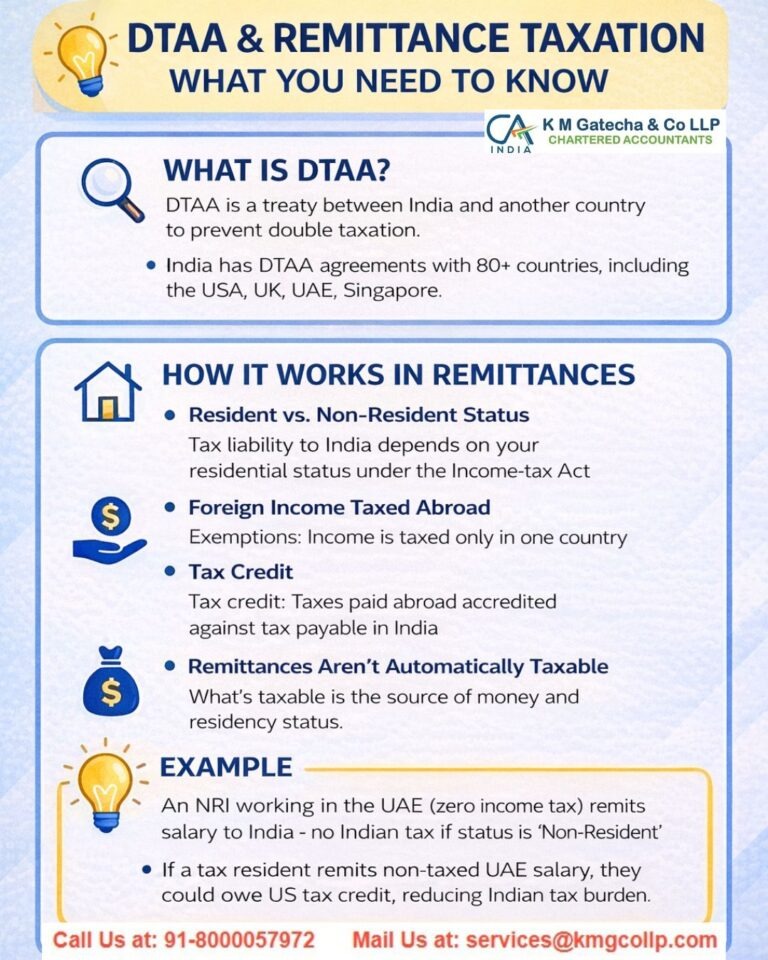
DTAA stands for Double Taxation Avoidance Agreement. It is a tax treaty signed between two countries to ensure that taxpayers do not pay tax twice on the same income.
The agreement helps NRIs and foreign residents by reducing or eliminating double taxation on income earned in one country while residing in another.
Benefits Available Under DTAA
NRIs can enjoy several tax benefits under DTAA agreements.
Exemption of Certain Income in India
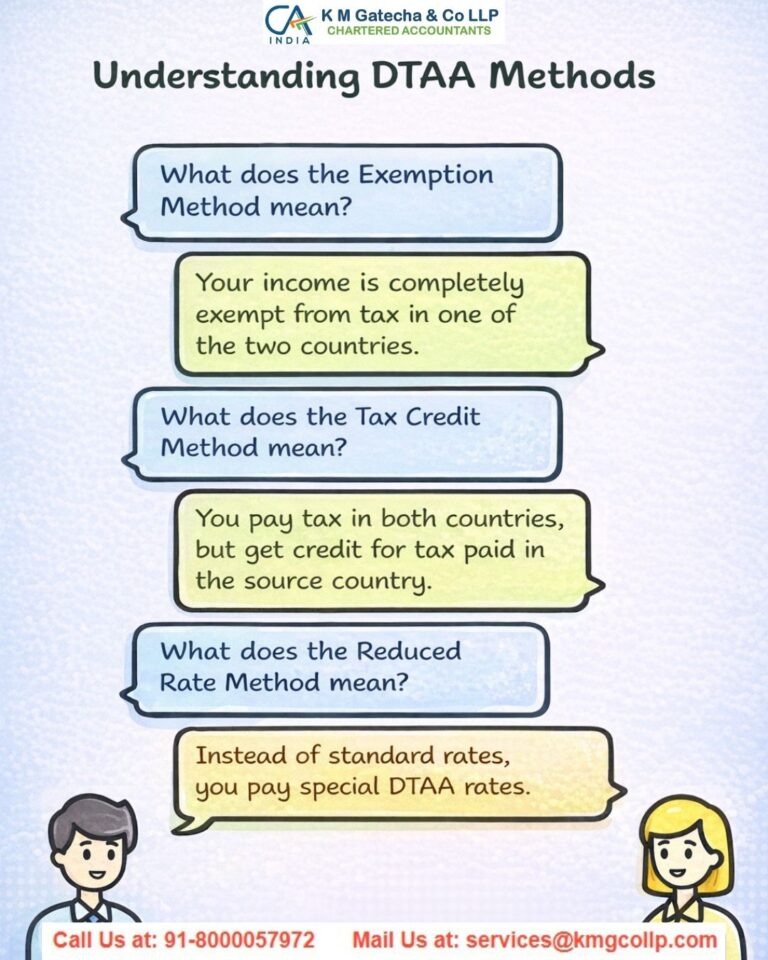
Under DTAA provisions, some income earned by an NRI abroad may be exempt from tax in India depending on the agreement between the two countries.
Common exempt income includes:
- Salary income earned abroad
- Interest income from foreign deposits
- Dividend income
- Pension income
The treatment of income depends on the DTAA signed between India and the respective country.
Tax Credit for Taxes Paid Abroad
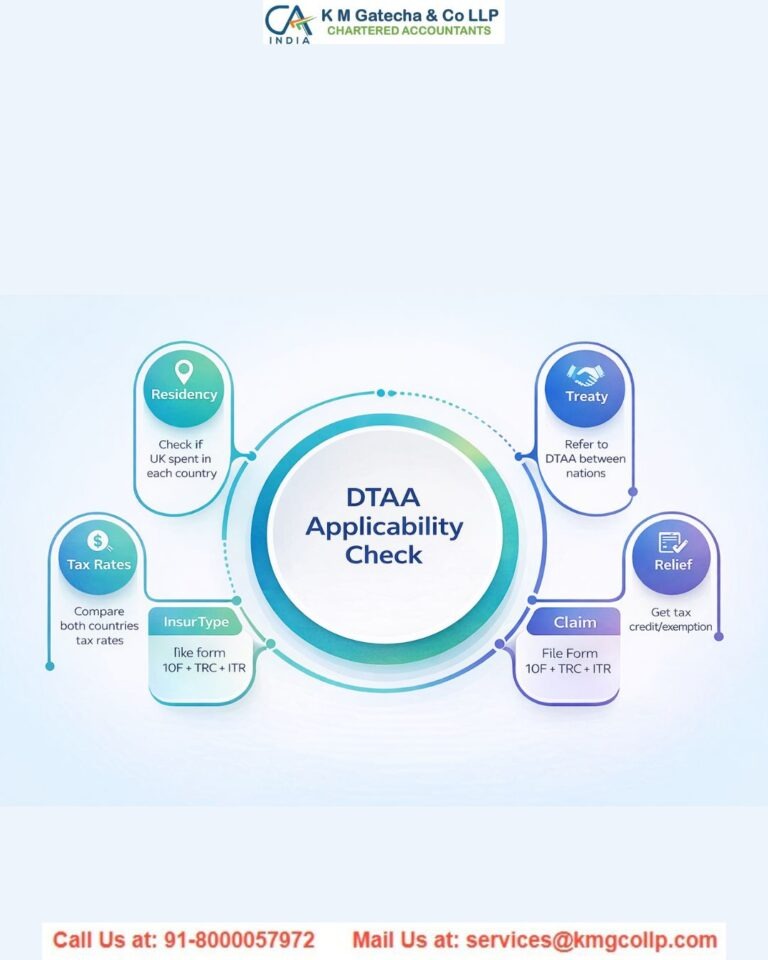
If an NRI has already paid tax on income in a foreign country, they can usually claim a tax credit in India for the same income.
This means:
- The foreign tax paid can be adjusted against Indian tax liability.
- The credit cannot exceed the tax payable in India on that income.
Example
Suppose an NRI pays ₹50,000 as tax in another country on a particular income, and the tax payable in India on the same income is ₹60,000. In this case, the taxpayer can claim a credit of ₹50,000 and only pay the remaining ₹10,000 in India.
Reduced Tax Rates Under DTAA
Many DTAAs provide concessional tax rates on specific categories of income.
Examples of Reduced Tax Rates
- Royalty income may be taxed at lower rates such as 10%.
- Interest income from loans or bonds may attract concessional tax rates.
- Dividend income may also be taxed at reduced rates under DTAA provisions.
Example
Under the India-USA DTAA, interest income may be taxed at 15% instead of the standard higher domestic tax rate.
DTAA Rates
DTAA agreements specify the tax rates applicable to various types of income earned by residents of the treaty countries.
If an NRI earns income in India, Tax Deducted at Source (TDS) may be deducted at the rates prescribed under the DTAA instead of normal domestic tax rates.
Generally, DTAA rates range between 7.5% and 15%, depending on the country and nature of income.
Types of Income Covered Under DTAA
NRIs can avoid double taxation on several types of income, including:
- Salary earned in India
- Income from house property in India
- Capital gains arising in India
- Interest on fixed deposits in Indian banks
- Interest from savings bank accounts in India
Importance of DTAA for NRIs
DTAA helps NRIs by:
- Preventing double taxation
- Reducing overall tax liability
- Providing tax certainty
- Encouraging foreign investments
- Simplifying cross-border taxation
Documents Required to Claim DTAA Benefits
To claim DTAA relief in India, NRIs generally need:
- Tax Residency Certificate (TRC)
- PAN card
- Form 10F
- Self-declaration
- Relevant income documents
These documents help establish eligibility for treaty benefits.
Conclusion
Double Taxation Avoidance Agreements are highly beneficial for NRIs and foreign taxpayers earning income in India. By understanding residential status, applicable DTAA provisions, and available exemptions, taxpayers can significantly reduce their tax burden and avoid paying taxes twice on the same income.
Proper tax planning and compliance are essential to fully utilize DTAA benefits. If you are facing difficulties in claiming DTAA relief or filing your income tax return, professional guidance can help simplify the process and ensure maximum tax savings.
Disclaimer: The content on this website is for informational purposes only and does not constitute legal, financial, or professional advice. Please consult qualified experts before acting on any information. K M GATECHA & CO LLP accepts no liability for errors, omissions, or outcomes from the use of this content. This site is not an advertisement or solicitation.