
Belated, Revised, and Updated ITR: Which ITR Should You File After Missing the Deadline?
Every individual whose annual income exceeds the basic exemption limit is required to file an Income Tax Return (ITR) by 31st July to avoid penalties and legal complications. Although 31st July is the standard due date for filing an ITR, the Income Tax Act allows taxpayers to file returns even after the deadline in certain situations.
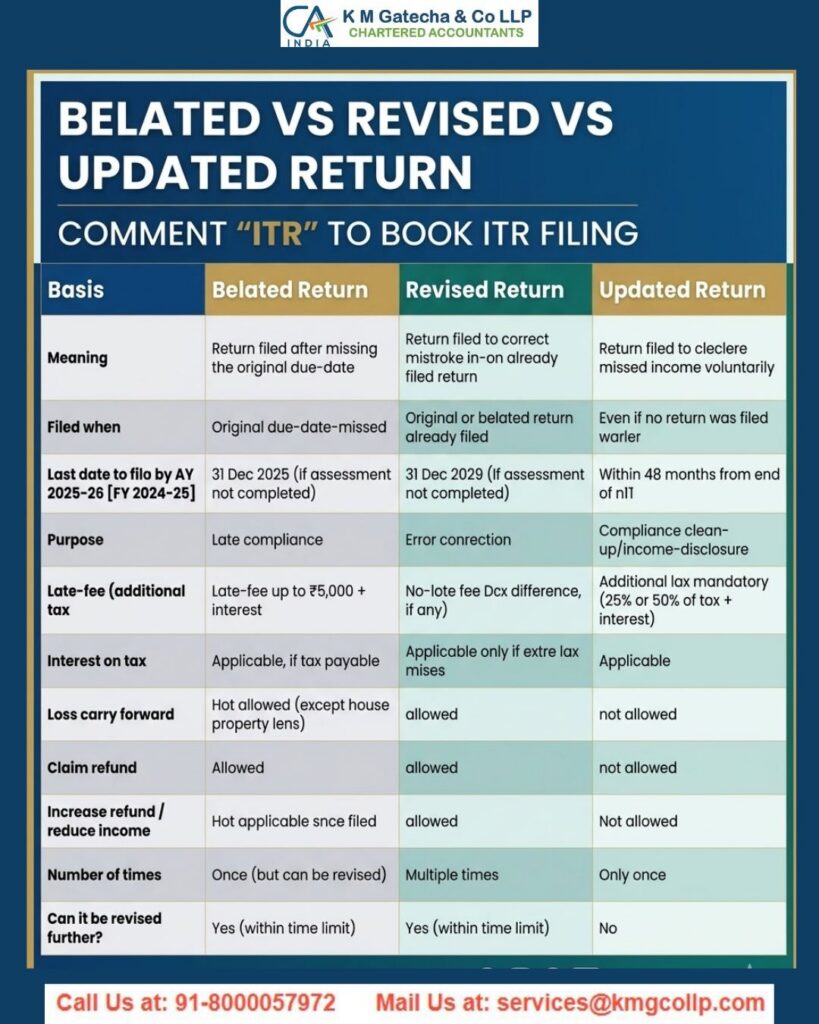
If you missed filing your ITR for FY 2022-23 within the due date, you still have three available options — Belated Return, Revised Return, and Updated Return (ITR-U). This article explains the differences between these return types, their filing process, and the applicable penalties and interest.
What is the Due Date for Filing ITR in India?
The due date for filing an ITR without any penalty or late fee is generally 31st July every year. For FY 2023-24, the due date is 31st July 2024.
Timely filing of ITR helps taxpayers remain compliant with tax laws, avoid penalties, and maintain proper financial records.
Failure to file ITR on time may result in penalties and interest under Section 234F of the Income Tax Act.
ITR Filing Due Dates for FY 2023-24
| Taxpayer Category | ITR Filing Due Date | Audit Report Due Date |
| Businesses (Audit Cases including LLPs, Companies, Firms) | 31st October 2024 | 30th September 2024 |
| Businesses (Non-Audit Cases) | 31st July 2024 | — |
| Association of Persons (AOP) | 31st July 2024 | — |
| Body of Individuals (BOI) | 31st July 2024 | — |
| Individuals | 31st July 2024 | — |
| Trusts, Colleges, Political Parties (Audit Cases) | 31st October 2024 | 30th September 2024 |
| Trusts, Colleges, Political Parties (Non-Audit Cases) | 31st July 2024 | — |
| Return under Section 92E | 31st October 2024 | — |
| Transfer Pricing Cases | 30th November 2024 | — |
| Revised Return | 31st December 2024 | — |
| Belated Return | 31st December 2024 | — |
What are the Options After Missing the ITR Filing Deadline?
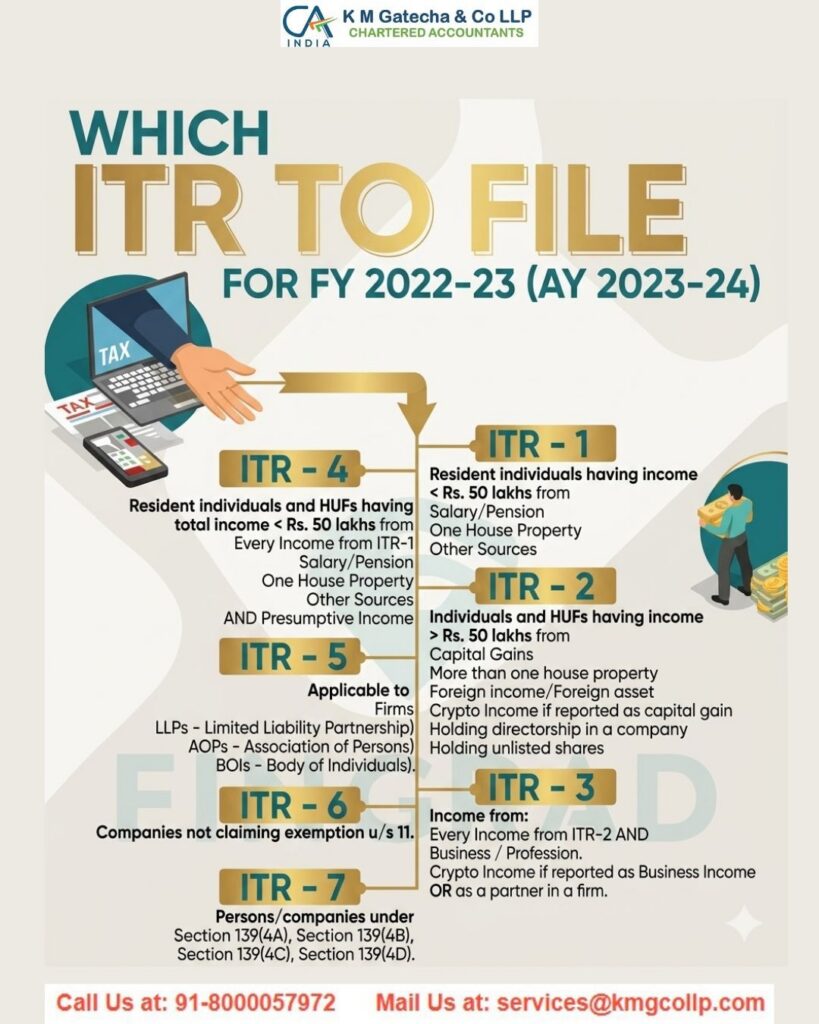
If you fail to file your ITR before 31st July, the Income Tax Act still allows you to file your return through different options depending on your situation.
The available options are:
- Belated Return
- Revised Return
- Updated Return (ITR-U)
Each option has different conditions, procedures, and consequences.
Belated ITR
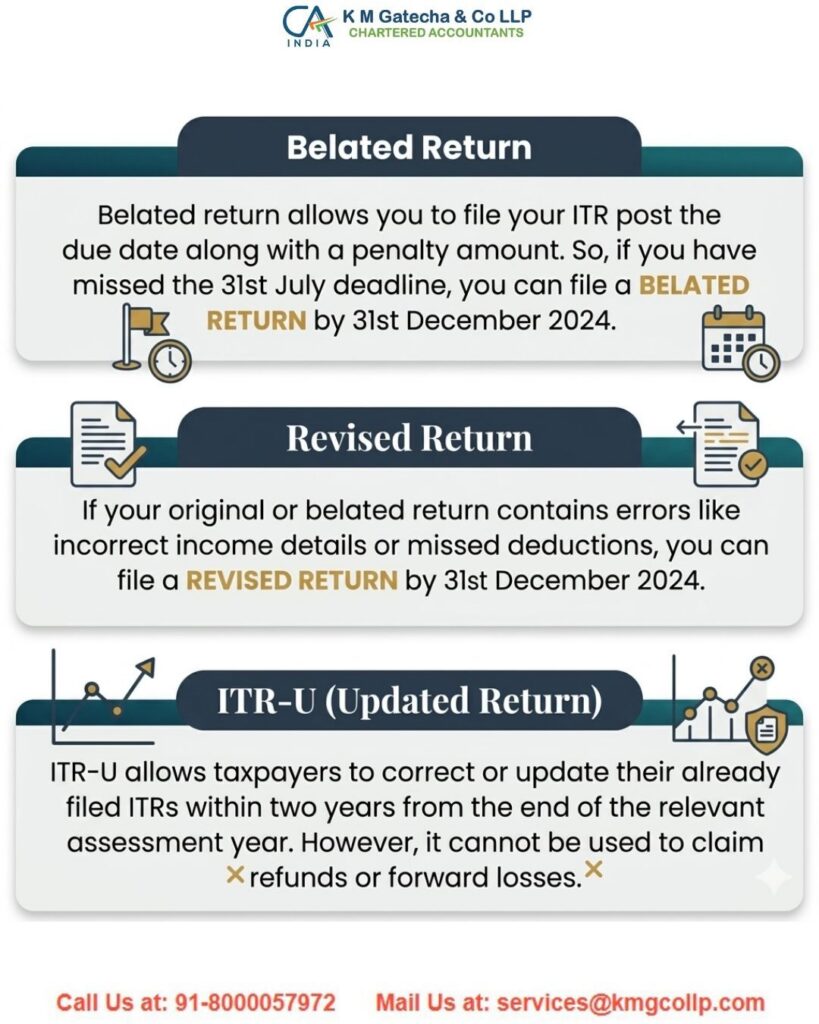
A belated return is meant for taxpayers who missed the original due date for filing their ITR. It allows taxpayers to remain compliant and avoid strict legal action by the Income Tax Department.
Belated returns can be filed under Section 139(4) of the Income Tax Act up to 31st December of the relevant assessment year. However, taxpayers must pay applicable penalties and interest.
Penalty for Belated Return
Under Section 234F:
- Taxpayers with income up to ₹5 lakh may have to pay a penalty up to ₹1,000.
- Taxpayers with income above ₹5 lakh must pay a penalty of ₹5,000.
How to File a Belated ITR
The process for filing a belated return is similar to filing an original return.
- Log in to the Income Tax e-filing portal.
- Fill in all required details.
- Select Section 139(4) while choosing the filing type.
- Submit and verify the return.
There is no separate ITR form for belated returns.
Interest on Belated Return
Interest under Section 234A is charged at 1% per month on outstanding tax liability.
Additional interest under Sections 234B and 234C may also apply in cases of shortfall in advance tax payment.
Revised ITR
A revised return is filed to correct mistakes made in an originally filed ITR. Common errors include incorrect bank details, omitted income, or wrong information.
Taxpayers can revise their return multiple times before the deadline.
The last date for filing a revised return is 31st December of the relevant assessment year.
How to File a Revised Return
A revised return can only be filed if the original return has already been filed.
Steps include:
- Log in to the e-filing portal.
- Choose the applicable ITR form.
- Select Section 139(5) while filing.
- Enter the acknowledgment number and filing date of the original return.
- Submit and verify the revised return.
Penalty and Interest on Revised Return
No separate penalty or additional interest is charged for filing a revised return. However, if additional tax liability arises due to correction of income, applicable interest may still apply.
Updated ITR or ITR-U
Introduced in Budget 2022, ITR-U allows taxpayers to update their returns even after the revised and belated return deadlines.
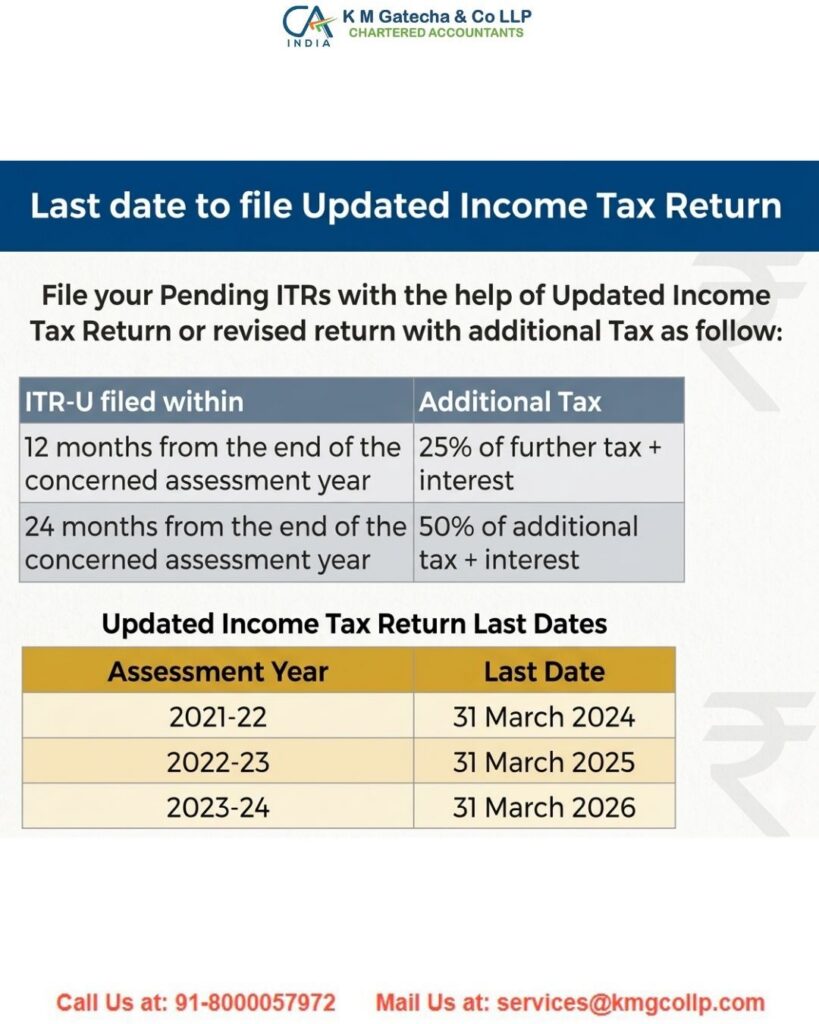
Taxpayers can file an updated return within two years from the end of the relevant assessment year. It can be used for missed returns, omitted income, or incorrect disclosures.
However, ITR-U cannot be filed to:
- Claim additional refunds
- Declare lower income
- Increase losses
How to File ITR-U
ITR-U must be filed along with the applicable ITR form.
The form includes:
- Part A – General information
- Part B – Updated income and tax computation
Taxpayers must provide accurate details and pay additional taxes before filing.
Additional Tax on ITR-U
If ITR-U is filed:
- Within one year from the end of the assessment year – additional 25% tax and interest is payable.
- After one year but before two years – additional 50% tax and interest is payable.
Which Return Should You Choose?
The correct return type depends on your situation:
- If you missed filing your return completely, file a Belated Return.
- If you filed your return but made mistakes, file a Revised Return.
- If you want to correct previous years’ returns or disclose missed income later, file an Updated Return (ITR-U).
Understanding the differences between belated, revised, and updated returns can help taxpayers remain compliant and avoid unnecessary penalties. If you are unsure which option is suitable for you, professional tax assistance can simplify the filing process and help ensure accuracy.
Disclaimer: The content on this website is for informational purposes only and does not constitute legal, financial, or professional advice. Please consult qualified experts before acting on any information. K M GATECHA & CO LLP accepts no liability for errors, omissions, or outcomes from the use of this content. This site is not an advertisement or solicitation.