
Form 141 TDS Rule 2026: Complete Guide to the New Challan-Cum-Statement
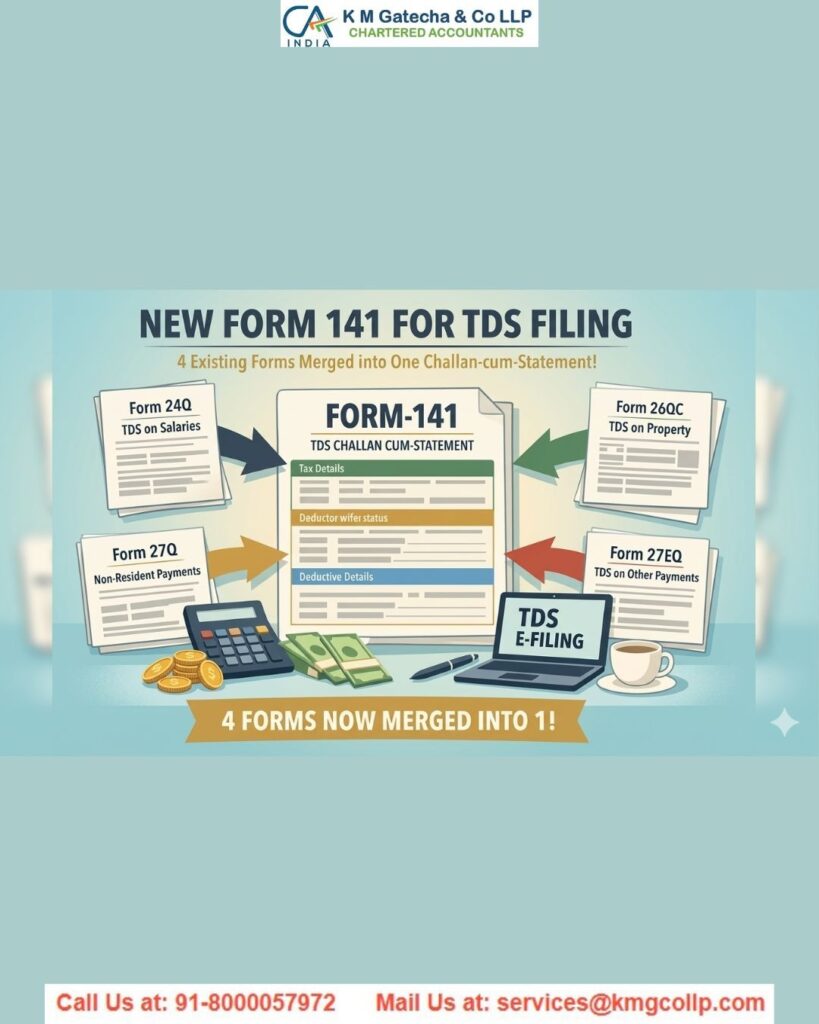
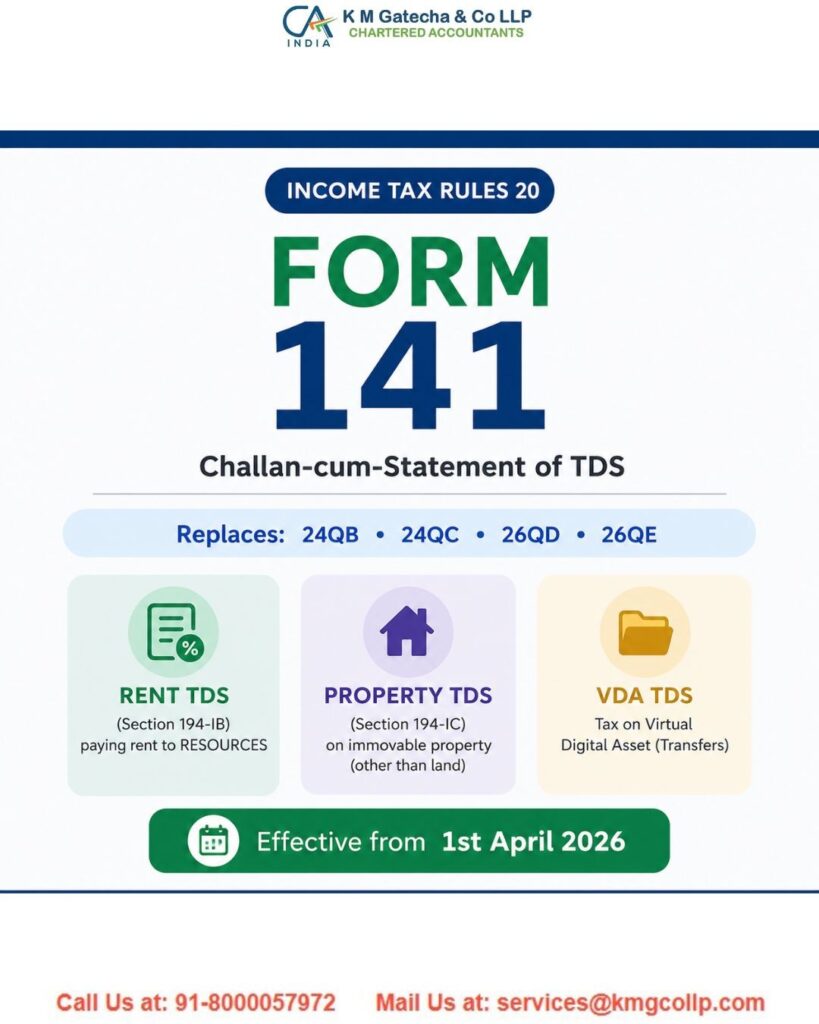
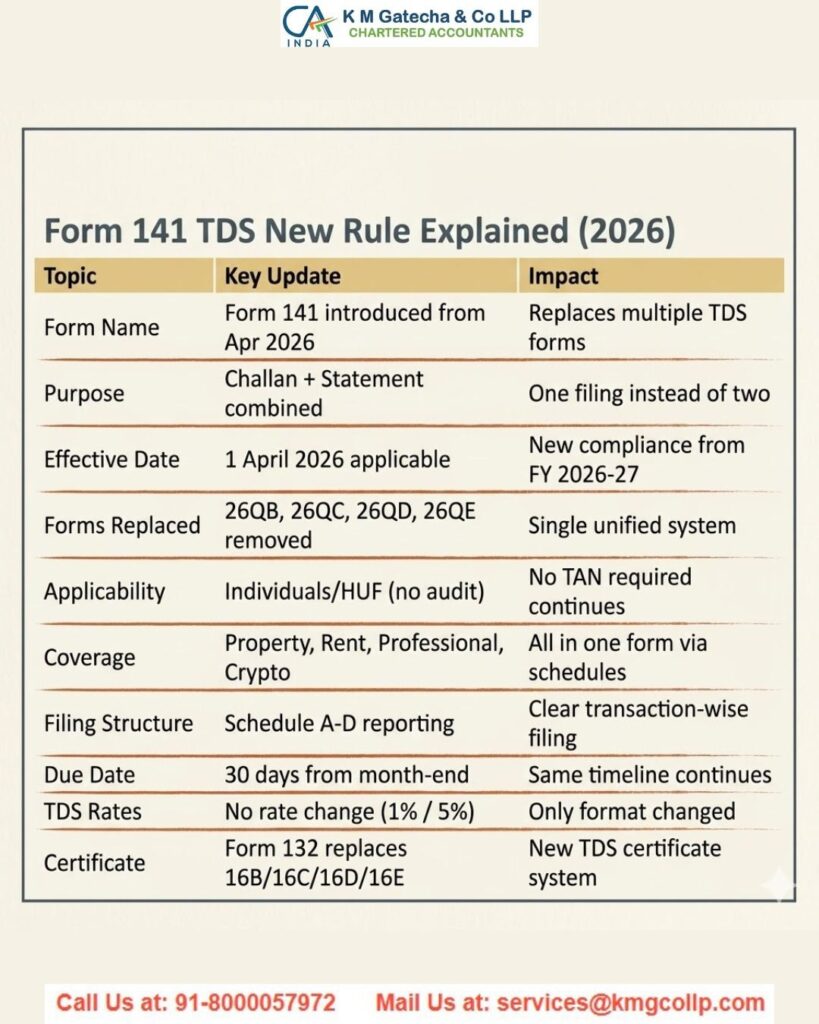
The Income Tax Department has introduced Form 141 from 1 April 2026 to make TDS filing simpler.
Earlier, people had to use different forms like 26QB, 26QC, 26QD, and 26QE depending on the type of payment. This made the process confusing and time-consuming.
Now, Form 141 brings all these into one single form. It reduces confusion, saves time, and helps avoid mistakes while filing TDS.
What is Form 141 in TDS?
Form 141 is a new single form for reporting and paying TDS on certain transactions. It combines:
- TDS payment
- Transaction details
- Details of the person receiving payment
All in one place, making the process easier and reducing mistakes.
Why Form 141 Was Introduced
Form 141 is mainly for individuals and HUFs who are not required to do a tax audit but still need to deduct TDS in some cases.
It covers these transactions:
- Section 194-IA – TDS on buying property
- Section 194-IB – TDS on rent above ₹50,000 per month
- Section 194M – TDS on payments to contractors or professionals
- Section 194S – TDS on crypto or digital asset transactions
This form is especially useful for individuals involved in high-value transactions, making TDS compliance simpler and more organized.
Applicability of Form 141
Form 141 applies in cases where individuals or HUFs (not required to undergo tax audit under Section 44AB) need to deduct TDS.
It covers these sections:
- Section 194-IA – TDS on purchase of property
- Section 194-IB – TDS on rent above ₹50,000 per month
- Section 194M – TDS on payments to contractors or professionals
- Section 194S – TDS on crypto or digital assets
Who Should File Form 141 in 2026?
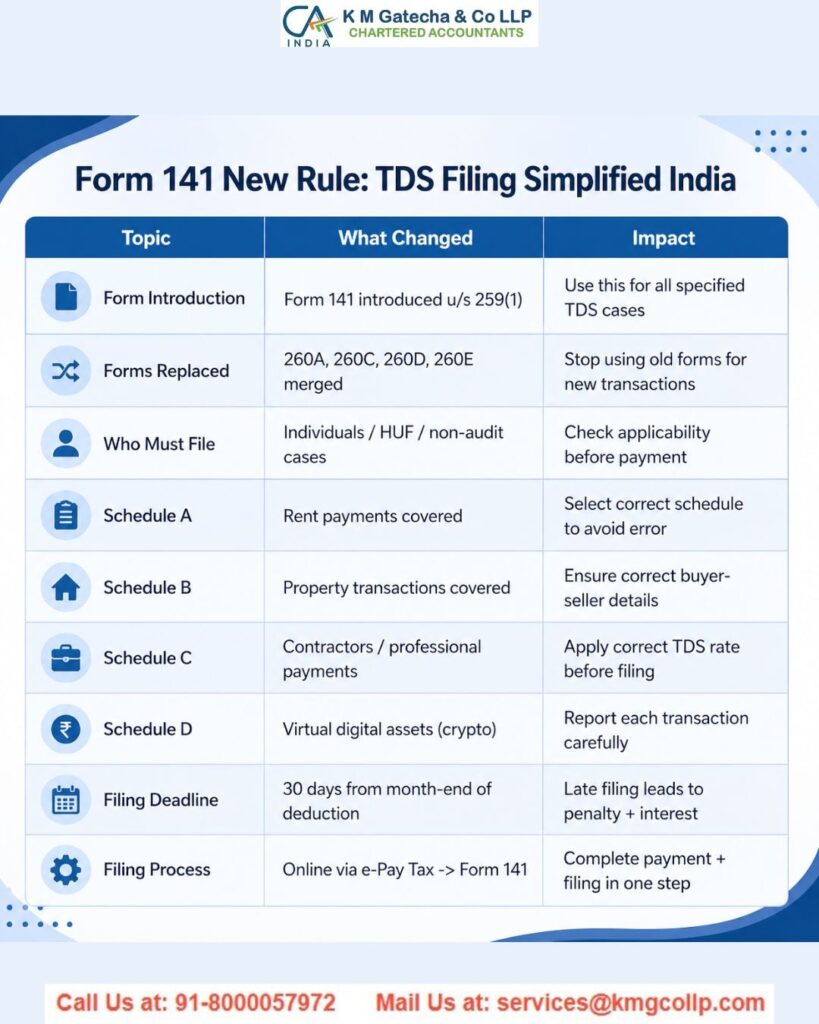
Form 141 must be filed by:
- Individuals
- HUFs (Hindu Undivided Families)
- Those not covered under tax audit (Section 44AB)
- Anyone making payments where TDS is applicable under the above sections
Forms Replaced by Form 141
Form 141 replaces multiple earlier forms:
- Form 26QB – For property transactions
- Form 26QC – For rent payments
- Form 26QD – For contractor or professional payments
- Form 26QE – For digital asset transactions
Now, all these are combined into one single form, making filing easier.
Applicability Date of Form 141
- Effective from: 1 April 2026
- Applicable from: Financial Year 2026–27 onwards
- For earlier transactions, old forms will still be used
Due Date for Filing Form 141
Form 141 must be filed:
- Within 30 days from the end of the month in which TDS is deducted
The timeline remains the same as before.
How to File Form 141
- Log in to the Income Tax portal
- Select Form 141
- Choose the correct section:
- Schedule A → Rent
- Schedule B → Property
- Schedule C → Contractor/Professional
- Enter required details:
- PAN of both parties
- Transaction amount
- Payment date
- TDS amount
- Pay TDS using the online challan
- Submit the form
- Download the acknowledgement
This system links payment and reporting together for better accuracy.
Details Required to File Form 141
- PAN of the person deducting TDS and the receiver
- Type and amount of transaction
- Date of payment or credit
- TDS amount
- Details of property, rent, or contract
- Instalment details (if applicable)
Make sure all details are entered correctly, as the system checks data automatically.
Example of Form 141 for Property Transaction
Suppose an individual buys a property worth ₹75 lakh:
- TDS is applicable at 1% under Section 194-IA
- Total TDS = ₹75,000
Under the new system:
- The buyer will file Form 141 (Schedule B)
- Enter property and party details
- Pay the TDS and submit the form within 30 days
This replaces the earlier requirement of filing Form 26QB.
Disclaimer: The content on this website is for informational purposes only and does not constitute legal, financial, or professional advice. Please consult qualified experts before acting on any information. K M GATECHA & CO LLP accepts no liability for errors, omissions, or outcomes from the use of this content. This site is not an advertisement or solicitation.